
Introduction
The black cherry tree is the largest native cherry in North America. It also stands alone as the only one worth real money for its timber. Botanists call it Prunus serotina, and it grows tall and fast across the eastern half of the continent. Yet plenty of people walk right past one and never know what it is. That gap costs you, because few native trees pull more weight in a yard.
Start with the wildlife and the numbers speak loud. The Georgia wildlife agency reports a headline figure worth knowing. Black cherry and its woody Prunus cousins host 454 species of moths and butterflies, and more than 40 bird species feed on the fruit. That wildlife value ranks the tree second only to oaks, says Dr. Doug Tallamy. Among native trees, that is elite company. The caterpillars feed the songbirds, and the fruit feeds turkeys, deer, and mice.
Most guides hand you only one piece of this tree, so you benefit when three angles arrive at once. The first is clear identification, so you can tell black cherry from its look-alikes. Chokecherry and sweet cherry trip up the most people. The second is the real wildlife value, backed by sources and numbers rather than a vague nod. The third is the cyanide hazard in its leaves, which can kill livestock fast and deserves a straight answer.
The same tree splits opinion hard. Native-plant gardeners prize it as a fast growing tree that feeds the whole food web, while others write it off as a weed and cut it down. Europe even brought it over as a prized ornamental, despite that rough name back home. So which view fits your yard? The sections ahead settle that for you, starting with how to spot a true black cherry on sight.
What Is a Black Cherry Tree
The black cherry tree is a tall deciduous tree of eastern North America. Its scientific name is Prunus serotina. It is the largest native cherry on the continent. It is also the only native cherry worth real money as timber. That sets it apart from every other wild cherry you might find.
Do not mix it up with the sweet or wild cherry, which is Prunus avium. That is the tree most people picture when they hear the word cherry. It came over from Europe. It gives you the cherries you buy at the store. Black cherry is a whole different tree. The identification section below shows you how to tell them apart fast.
A grown black cherry reaches 60 to 90 feet tall. The spread runs 35 to 50 feet, and it grows fast in full sun. The native range stretches from Nova Scotia and Ontario in the north down to Florida and Texas. The heart of the timber crop sits on the Allegheny Plateau of Pennsylvania and New York. It does well across a wide band of hardiness zones, from cold zone 3 to warm zone 9.
Black cherry is a shade-intolerant pioneer. It needs open sky and cannot get going under a shady canopy. It rushes into old fields and forest gaps after logging, fire, or wind knock down the bigger trees. This is why it shows up uninvited along fence rows and field edges. You often miss it until it has taken root.
That fast, opportunist habit is the key to the whole tree. Birds drop the seeds, the seedlings race for the light, and within a few years you have a young black cherry where bare ground used to be. Knowing this helps you plan where to plant one on purpose, and it explains why so many of these trees seem to plant themselves.
Size, Growth, and Lifespan
I never planted the biggest black cherry in my Pennsylvania yard. A bird dropped the seed in zone 6, in the damp back corner where my lawn meets the woods edge. In only a handful of years that seedling shot up past the kitchen window. The first season it cleared my waist. By the next summer it topped the fence, and the season after that I looked up at it from the back porch.
That kind of speed is normal for this fast growing tree. In full sun, young black cherry adds about 18 inches (46 cm) of height a year, and vigorous seedlings push past 36 inches (91 cm). Feed one well and the growth rate climbs to 4 to 6 feet (1.2 to 1.8 m) per year. Most of that surge happens in the first 10 years, which is why my back-corner tree filled in so fast.
The mature height depends on where the tree grows. UF/IFAS Extension puts landscape trees at 60 to 90 feet (18 to 27 m) tall. The spread runs 35 to 50 feet (11 to 15 m), which gives you that classic oval crown. USDA Silvics records old forest specimens that top 100 feet (30 m). Both numbers are right. A yard tree and a forest giant just grow into different shapes, so judge the tree size by the setting.
Here is how the full arc plays out, from a fast seedling to a slow old giant.
Years 1 to 10
Rapid juvenile growth of roughly 18 inches (46 cm) a year in full sun, reaching fruit-bearing age near year 10.
Years 10 to 30
Steady upward and outward growth fills in the oval crown, but heavy fruit crops usually wait until about 30 years.
Years 30 to 80
Peak size and seed production, with mature height of 60 to 90 feet (18 to 27 m) and a 35 to 50 foot (11 to 15 m) spread.
Years 80 and beyond
Growth slows and mortality rises past 80 to 100 years, though rare forest trees live well over 250 years.
The black cherry lifespan matches that pattern. Most trees start to fade past 80 to 100 years as growth slows and trees die off faster. A few outlast the rest by a wide margin. USDA Silvics documents one forest specimen that reached 258 years old with a trunk 48 inches (122 cm) across. So you plant a tree that races up fast for a decade, then settles in for a long, steady life.
Identifying Black Cherry Trees
From the kitchen window one spring I kept staring at the bark on my back-corner tree. Dark scaly plates climbed the trunk and looked exactly like scorched potato chips glued to the wood. Weeks later the drooping white flower clusters opened, but only after the leaves were already out. That bark and that late bloom told me what I had.
Black cherry identification comes down to four things you can check in any season. The bark, the leaves, the flowers, and the fruit each give you a clear signal. Most people mix this tree up with sweet cherry or wild cherry, but those clues sort it out fast.
Start with the black cherry bark because it shifts so much as the tree ages. Young trunks stay smooth and reddish-brown with rows of horizontal lenticels, the small raised pores that mark all cherry bark. Old trunks crack into those dark, near-black plates that earned the burnt potato chip nickname. The black cherry leaves back this up. They run 2 to 4 inches long, glossy and dark green, with fine incurved teeth and a tapered tip.
The flowers seal it. Black cherry hangs small white blooms on drooping white racemes 4 to 6 inches long, and they open in mid-to-late May after the leaves emerge. Many ornamental cherries flower on bare branches instead, so that timing is a quick giveaway. Crush a twig and you'll catch a faint almond scent from the cyanide compounds inside. Use the table below to run through each feature one at a time.
Bark
- Young bark: Smooth and reddish-brown to gray with distinct horizontal lenticels, the small raised pores that mark cherry bark.
- Mature bark: Splits into dark reddish-brown to nearly black scaly plates, often compared to burnt or scorched potato chips.
- Inner bark: Reddish-brown, fragrant, and bitter, the source historically tapped for wild cherry cough syrup.
Leaves
- Shape: Alternate, simple, and oblong to oval, measuring about 2 to 4 inches (5 to 10 cm) long with a tapered tip.
- Margins: Finely toothed with incurved teeth, glossy dark green above and paler beneath, often with rusty hairs along the midrib.
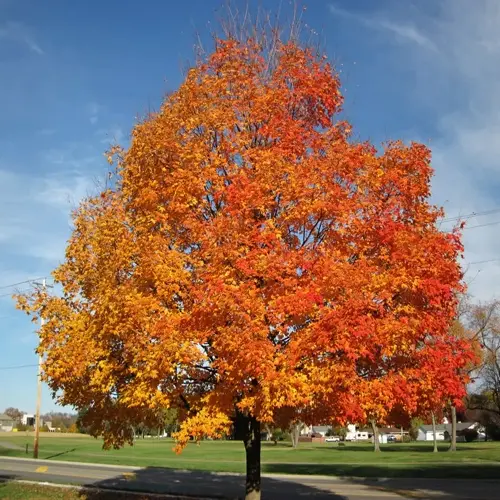
- Fall color: Turns yellow to red in autumn, and crushed leaves or twigs give off a faint almond-like scent.
Flowers
- Form: Small white five-petaled flowers packed onto drooping racemes 4 to 6 inches (10 to 15 cm) long.
- Timing: Open mid-to-late May after the leaves emerge, unlike many ornamental cherries that bloom on bare branches.
- Scent: Lightly fragrant and showy, drawing in bees and other pollinators during the bloom window.
Fruit
- Size: A round one-seeded drupe roughly a quarter inch (6 mm) across, hanging in loose clusters.
- Ripening: Shifts from green to red and finally dark purple-black, ripening from August to mid-September.
- Note: Edible pulp stains pavement and is loved by birds, but the seed inside carries cyanide compounds.
The hardest look-alike is chokecherry. It is a smaller cousin, and its racemes are much shorter. Pin cherry and the European sweet cherry fool people too. Stuck between black cherry and chokecherry? Check the side-by-side comparison later in this guide. It lays out the details that settle it.
Wildlife and Pollinator Value
Few native trees pull their weight in a food web the way this one does. The black cherry wildlife value is not a vague selling point. Woody Prunus including black cherry feed 454 species of moths and butterflies, and more than 40 bird species eat the fruit. Dr. Doug Tallamy at the University of Delaware ranks Prunus his second-best food plant of all. Only the oaks beat it.
That ranking is what makes it a keystone tree. A keystone plant feeds the caterpillars that almost nothing else can. Those caterpillars are the protein that nesting songbirds feed their chicks. So one tree you plant does double duty. It is a host plant for insects, and a buffet for the bird species that hunt them. Few yard trees come close.
Moths and butterflies
- Host scale: Woody Prunus including black cherry support 454 species of moths and butterflies per Georgia DNR, citing Tallamy.
- Why it matters: Caterpillars feeding on the leaves become the protein that nesting songbirds rely on to raise their young.
- Notable visitors: Eastern tiger swallowtails and coral hairstreaks are among the butterflies drawn to the tree.
Birds
- Fruit eaters: More than 40 bird species eat the ripe drupes, from cedar waxwings and wood thrushes to woodpeckers and wild turkeys.
- Seed spread: Bird-digested seeds germinate at higher rates than undigested seeds after cold stratification, per USDA FEIS.
- Seasonal pull: The August to September fruit ripening lines up with peak feeding demand for many migrating birds.
Mammals
- Fruit lovers: Gray and fox squirrels, chipmunks, opossums, raccoons, and even black bears feed on the fallen fruit.
- Browsers: White-tailed deer browse the fresh foliage without harm, unlike livestock that eat wilted leaves.
- Mast value: USDA Silvics describes the fruit as important mast for many nongame birds, squirrels, deer, and turkey.
Pollinators
- Nectar source: The fragrant white racemes draw bees and other pollinators during the mid-to-late May bloom window.
- Ranking: Tallamy rates Prunus his second-most-valuable food-plant genus, behind only the oaks.
- Garden role: Planting one native black cherry adds far more food-web support than most ornamental landscape trees.
Black cherry and other woody plants in the genus Prunus serve as host plants for 454 species of moths and butterflies.
The white flowers feed bees and other pollinators through the late-spring bloom. USDA Silvics calls the fruit key mast for birds, squirrels, deer, and turkey. The deal runs both ways. Birds eat the fruit, then pass the seeds. Those seeds sprout at higher rates than undigested ones, per USDA FEIS. That is how the tree spreads along your fence rows and field edges.
If you want native trees for wildlife, this is one of the strongest picks you can make. A single black cherry feeds caterpillars, songbirds, and mammals on the same patch of your yard. You get far more living return than most landscape trees will ever give you.
Toxicity and Safety
Most guides give you one vague line about black cherry toxicity and move on. The real story is sharper than that. The leaves hold a compound called a cyanogenic glycoside. It turns into cyanide gas, or prussic acid, the moment a leaf gets crushed or starts to wilt. A healthy tree on your property is not the danger. A broken limb on the ground is.
The numbers from Penn State Extension show why pasture owners take this seriously. As little as 1.2 to 4.8 pounds of wilted leaves can kill a 1,200-pound cow. For a 180-pound sheep, the lethal amount drops to just 0.18 to 0.72 pounds. Signs hit fast too, often within 15 to 20 minutes of eating the leaves, and death follows soon after. There is rarely time to call a vet.
Cyanide poisoning livestock owners fear most hits ruminants hardest, and there is a clear reason for it. A cow or sheep has a rumen, a warm and wet stomach chamber built to break down plant matter. That same setup is the perfect place to release hydrogen cyanide from the damaged leaves. Horses lack a rumen, so they face less risk, though you should still keep cherry brush away from them.
Now for the part that should ease your mind. Wilting is the trigger, so a downed tree or a snapped branch is what creates the threat, not a tree standing in your yard. Fallen leaves lose their cyanide as they dry on the ground over the following days. Deer browse fresh, unwilted black cherry foliage with no harm at all, per USDA Silvics records. The ripe fruit pulp carries far less risk than the leaves, twigs, and seeds.
Timing matters more than most people expect. The threat runs highest early in the growing season and right after a normal-moisture spell breaks into drought. Young leaves carry the most cyanide potential at those times. If a storm drops limbs during that window, clean up the same day. The steps below show you exactly how to handle downed cherry safely.
Dog owners ask about this too, and black cherry is toxic to dogs in the same way. The wilted leaves, twigs, and seeds hold the cyanide, while a small amount of ripe fruit pulp poses little threat. Keep your dog from chewing fallen branches after a storm, and rake up brush before a curious pet finds it.
Walk pasture edges after any storm or pruning, since broken and wilting limbs are the main trigger for cyanide poisoning.
Drag fallen black cherry limbs and brush completely out of reach of cattle, horses, and sheep before the leaves wilt.
Block access to any downed tree until the foliage has fully dried and dropped, since wilted leaves are the most dangerous stage.
Burn, chip, or compost the brush away from grazing animals, as fallen leaves lose most of their cyanide once detached and dried.
Never leave wilted black cherry leaves where livestock can reach them. As little as 1.2 to 4.8 pounds (0.5 to 2.2 kg) can kill a 1,200-pound (545 kg) cow within 15 to 20 minutes.
Growing and Caring for It
The back corner of my Pennsylvania yard stayed soggy from March through June. It was a low pocket of heavy clay, and every patch of lawn I seeded there turned to mush and rot. One spring a volunteer black cherry tree pushed up out of that wet ground on its own. Within a few seasons it stood taller than the fence. It soaked up the water that drowned everything else I tried.
That tough wet-then-dry clay never slowed it down, and my zone 6 yard sits right in its comfort range. Good black cherry tree care starts with matching the site to the tree instead of fighting your soil. This native handles a wider mix of conditions than most ornamentals you can buy.
It wants full sun because it is shade-intolerant. It shrugs off clay, sand, or loam at almost any pH, as long as you give it well-drained soil. Once the roots take hold it turns drought tolerant and rarely asks for water in a normal year. It is hardy across USDA zones 3 to 9. But one Tennessee study ranked it the most flood-intolerant of 39 trees tested. So skip your truly soggy spots.
Plan around its shallow roots before you plant. They spread wide and sit near the surface, which makes the tree sensitive to soil compaction and tough to move once it settles in. Keep it well back from patios and walkways too, since the fruit stains pavement and turns into a slip hazard underfoot.
Watch for eastern tent caterpillar and fall webworm. Prune out their tents early, before they strip a branch bare. Expect this tree to self-seed hard along fence rows and field edges too. It even spread through parts of Europe after gardeners brought it over as an ornamental. Some folks pull the young volunteers as weeds. Others, like me, are happy to let a good one stay.
Light
- Best exposure: Full sun brings the strongest growth, since black cherry is shade-intolerant and struggles in deep shade.
- Tolerance: It accepts partial shade but grows slower and thinner, so reserve those spots for understory plants.
- Placement: Give it an open site where it can rise above neighbors rather than getting shaded out by them.
Soil
- Range: Tolerates clay, sand, and loam at acidic or alkaline pH, as long as the site drains well.
- Avoid: It is highly flood-intolerant, ranking most sensitive of 39 species in a Tennessee flood test, so skip soggy ground.
- Roots: Shallow, wide-spreading roots are sensitive to compaction, so keep heavy traffic and paving away from the base.
Water
- Establishment: Keep young trees evenly moist through the first seasons while the wide root system takes hold.
- Maturity: Once established it shows high drought tolerance and rarely needs supplemental watering in normal years.
- Drainage: Always favor well-drained spots, since standing water harms this species more than dry spells do.
Siting and upkeep
- Distance: Place it well away from patios, walkways, and foundations because the staining fruit makes a slip and litter hazard.
- Transplanting: Move it only when young, as the shallow roots make established trees difficult to relocate successfully.
- Pests: Watch for eastern tent caterpillar and fall webworm, and prune out tents early before they defoliate branches.
5 Common Myths
Black cherry and the chokecherry are the same tree, so the names can be used interchangeably for any wild cherry you find.
They are different species. Black cherry is a large forest tree to 90 feet, while chokecherry is a shrub or small tree usually under 30 feet.
Black cherries are poisonous fruit that no person should ever eat, since the whole plant contains dangerous cyanide compounds.
Ripe pulp is edible and made into jams and liqueurs. Only the seeds, leaves, twigs, and unripe fruit carry the cyanide-forming compounds.
Because the tree grows so tall and fast, a black cherry must have a deep anchoring taproot reaching far underground.
Black cherry actually has a shallow, wide-spreading root system, which is why it is sensitive to compaction and hard to transplant once established.
Deer will be poisoned if they browse black cherry foliage, just as cattle and horses are harmed by the leaves.
Deer eat fresh, unwilted black cherry foliage without harm. The serious danger is wilted leaves from downed limbs, mostly for cattle, horses, and sheep.
Black cherry is only a weed tree with no real value, so it is best removed wherever it pops up in a yard.
It is a top wildlife plant and a prized cabinet wood. It hosts 454 moth and butterfly species and feeds more than 40 bird species.
Conclusion
The black cherry tree asks you to hold three things in your head at once. You have to tell it apart from chokecherry and pin cherry. You have to respect what it feeds. And you have to know where black cherry toxicity turns into real danger. Get all three right and the tree stops being a mystery.
The numbers do the heavy lifting here. A mature tree reaches 60 to 90 feet (18 to 27 m) across USDA zones 3 to 9. It feeds 454 moth and butterfly species plus more than 40 kinds of birds, which puts its wildlife value second only to oaks. Yet just 1.2 to 4.8 pounds of wilted leaves can kill a 1,200-pound cow within minutes. The same tree that builds a food web can poison a pasture.
So the verdict is plain. Black cherry is an outstanding wildlife and timber tree. It shines on open ground, rural lots, and naturalized edges with full sun and well-drained soil. It is a poor pick for a small tidy yard, a spot beside a patio, or any ground above grazing livestock. The fruit stains pavement, the roots run shallow, and downed limbs near animals are a real hazard.
Few native trees give back as much for as little fuss, which makes black cherry a strong swap for the ornamentals planted on every other block. The real question now is not what the tree does. It is whether your land is the right home for one.
Glossary
- Cyanogenic glycoside
- A plant compound that breaks down into toxic cyanide when the plant tissue is crushed, chewed, or wilted.
- Drupe
- A fleshy fruit with a single hard-shelled seed inside, such as a cherry, peach, or plum.
- Lenticel
- A small raised pore on bark that lets a tree exchange gases; black cherry has distinctive horizontal lenticels on its young bark.
- Mast
- The nuts, seeds, and fruit that wild trees and shrubs produce as food for wildlife.
- Prunasin
- A natural cyanide-forming compound (cyanogenic glycoside) stored in black cherry leaves, twigs, and seeds that releases poisonous cyanide when the plant tissue is damaged or wilts.
- Prunus serotina
- The scientific name for the black cherry tree, North America's largest native cherry species.
- Raceme
- A long, unbranched flower cluster in which individual flowers grow on short stalks along a central stem, like the drooping white flower spikes of black cherry.
- Shade-intolerant
- Describes a plant that needs full sun and grows poorly in shade.
External Sources
Frequently Asked Questions
Where do black cherry trees grow best?
Black cherry grows best in full sun with moist, well-drained soil. It is hardy across USDA zones 3 to 9 and tolerates clay, loam, and sandy soils.
How big does a black cherry tree get?
Mature black cherry trees usually reach 60 to 90 feet (18 to 27 m) tall with a 35 to 50 foot (11 to 15 m) spread. Forest trees can top 100 feet.
What is the difference between black cherry and chokecherry?
Black cherry is a large tree to 90 feet with dark plated bark, while chokecherry is a small tree or shrub usually under 30 feet with smoother gray bark.
Are black cherry trees toxic to dogs?
Yes. The leaves, twigs, bark, and seeds contain cyanide-forming compounds that can harm dogs if chewed, especially wilted leaves. Ripe fruit pulp is far less risky.
Are black cherries safe to eat?
Ripe black cherry pulp is edible and used in jams, jellies, and liqueurs. Do not eat the seeds, leaves, or unripe fruit, which contain cyanide compounds.
What is the lifespan of a black cherry tree?
Most black cherry trees live around 80 to 100 years, after which growth slows and decline sets in. One documented forest specimen reached 258 years old.
What should you not plant near a black cherry tree?
Avoid placing it over pasture grazed by livestock and near shallow-rooted, sun-loving plants that cannot compete with its wide roots and dense summer shade.
How close to a house should you plant a black cherry tree?
Plant black cherry at least 30 feet (9 m) from a house. Its 35 to 50 foot spread, staining fruit, and litter make a closer spot a poor choice.
Does a black cherry tree have deep roots?
No. Black cherry has a shallow, wide-spreading root system rather than a deep taproot, which makes it sensitive to soil compaction and tricky to transplant.
Should I plant a black cherry tree?
Plant black cherry if you want a fast-growing native that feeds wildlife and you have open space away from patios and grazing animals. Skip it for tidy, small yards.