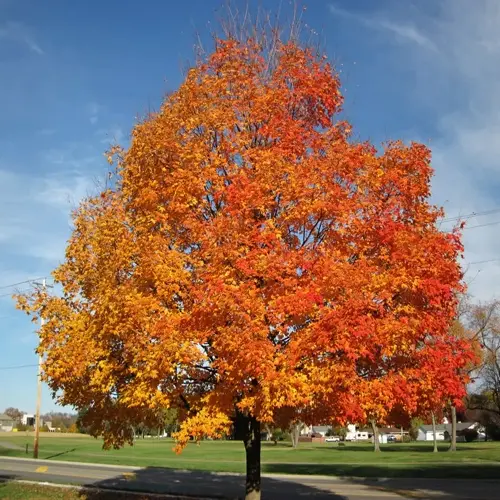

At my back corner, where the mowed lawn meets the woods edge, a black cherry glows tall and green. The grass there stays patchy on heavy clay that holds water. The tree drinks up that same wet clay and shoots past the maples around it. So you can see what it wants from one glance. The best black cherry growing location is an open spot with full sun and moist, well-drained soil. It does this across USDA zones 3 to 9, which covers most of the country.
The sun part is not a soft wish. Black cherry is a pioneer tree, and it cannot stand shade. It sets up where light pours in. Good black cherry growing conditions start with an old field, a fence row, or a fresh gap in the forest where a big tree fell. Plant yours under a dense canopy and it will stretch, thin out, and give up in a few years. Give it the open sky it wants instead. If your yard is mostly shaded, this is the wrong tree for you.
Drainage is the other hard rule you cannot skip. A Tennessee flooding study tested 39 species at once. Black cherry came out the most flood-intolerant of them all. Its roots will not sit in standing water for long. My back corner still works because the clay holds moisture but drains after a storm. A true low spot that stays soggy for days is a different story. That kind of wet ground rots the roots and kills the tree fast. So check how your spot behaves after a heavy rain before you dig.
Pick a spot that gets sun most of the day. It should dry out within a day or two after heavy rain. Skip any ground that puddles and stays wet, since soggy roots are the fastest way to lose a black cherry.
The native range is huge, and that tells you how flexible this tree is. USDA Silvics maps it from Nova Scotia and Ontario in the north. It runs all the way south to Florida and Texas. The best timber grows on the Allegheny Plateau of Pennsylvania and New York. The climate and soil there grow tall, straight trees. Furniture makers prize that wood for its rich color and clean grain. So unless you live in a true desert, your region is likely fine for it.
Soil type matters less than you might think. The best soil for black cherry is loose and drains well. Still, the tree handles clay, sand, and loam without much fuss. It also takes a wide pH range. You can grow it in acidic or alkaline ground and it will not complain. What it really wants is air at the roots and steady moisture. There is no single perfect recipe of dirt to chase. So do not stress over a soil test before you plant your tree.
When you plant one, give it room and light. An open, sunny, well-drained spot beats a sheltered corner every time. Stay away from soggy ground at all costs. Once your tree settles in, you get a nice bonus too. An established black cherry shows high drought tolerance. It shrugs off the dry spells that stress thirstier trees in your yard. So you can skip the daily watering chore once the roots take hold. Match the site to the sun and the drainage. After that, your tree mostly takes care of itself.
Read the full article: Black Cherry Tree: Growth, Wildlife, Safety