
Introduction
You have seen those brown bricks at the garden store and wondered if they work. Coco coir is the spongy stuff made from coconut husks. Gardeners use it as a peat moss alternative in seed trays, pots, and raised beds. Most pages about it just repeat the same few claims. This guide ties each point to real research instead.
Think of coconut coir as a clean, thirsty sponge. It holds water and air at once, which roots love. But that sponge starts out empty of food. So you have to add the nutrients yourself. That one fact trips up more new growers than anything else, and most guides barely mention it.
Here is where the usual article falls short. You will read that coir holds 10 times its weight in water. You will read that it sits at a perfect neutral pH. Neither claim comes with a source. The truth is more useful. A 2002 study by Abad and colleagues tested 13 coir samples. They found the pH lands in a workable 5.2 to 6.8 range, with the sweet spot near 5.2 to 6.3. That is slightly acidic, not neutral. It means coir needs little or no lime before you plant.
Coir works as a soilless growing medium for a simple reason. It is a renewable byproduct of the coconut trade. Makers reclaim it from husks once tossed as waste. That makes it a favorite for sustainable gardening. Still, coir carries its own cost from processing and shipping. The full picture matters, so this guide weighs both sides.
Below you get the parts thin guides skip. We cover the real downsides and the salt content you may need to flush. We explain why coir often needs CalMag. You will see the mix ratios that drain well. We also sort out which plants love coir and which still prefer peat. Each big claim points back to a study or a university source.
What Coco Coir Is and Does
A dry, brick-hard block of compressed coir sat on my potting bench like a solid clay tile. I dropped it in a bucket by the back fence raised bed, poured water over it, and walked off. Twenty minutes later it had swelled into a soft, crumbly pile that filled the whole bucket. That one soak showed me how much water this stuff takes on.
Coco coir is the leftover husk of the coconut, the rough material between the hard shell and the outer skin. Coconut processors used to dump it as waste. Now you can buy it as a soilless growing medium for your seeds, pots, raised beds, and hydroponics setup.
When you shop, the husk shows up in three main forms. Coir pith, also sold as coco peat, is the fine spongy dust that holds water like a sponge. Coir fiber is the long stringy strands that add air and structure to your mix. Coir chips are chopped chunks of husk that open up big air pockets around roots. Most bags blend these to balance moisture and drainage for you.
The numbers back up its reputation for water retention. One study by Abad and colleagues tested 13 industrial coir samples. They found an average pH of about 5.6, which is near neutral and needs little or no lime. Their cation exchange capacity ran from 31.7 to 95.4 cmol per kg. That number tells you how well a medium grabs and holds nutrients and water. Higher numbers mean it hangs onto more of what your plants need.
Coir is also close to chemically inert, so it does not feed your plants much on its own. It runs high in potassium but low in available nitrogen, calcium, and magnesium. Treat it as a structure and moisture medium first, then handle feeding as a separate job with your fertilizer and CalMag.
Coir Pith (Coco Peat)
- What it is: The fine, spongy dust between the coconut husk fibers, sold as compressed bricks and blocks that expand many times in water.
- Best for: Seed starting, potting mixes, and water retention, since the fine particles hold moisture like a sponge while staying light.
- Watch out: Used alone it can stay too wet, so most growers blend it with perlite or coarse material for drainage.
- Property note: Near-neutral pH around 5.2 to 6.8 means little or no liming is needed before planting.
Coir Fiber
- What it is: The longer, stringy strands from the husk that add structure and air space to a growing mix.
- Best for: Improving aeration and drainage in mixes, and lining hanging baskets where it slows water loss.
- Pairs well with: Coir pith, balancing the pith's high water holding with extra air around the roots.
- Durability: Fibers break down slowly, so they keep a mix open and airy for a long time.
Coir Chips
- What they are: Chopped pieces of husk that act like small chunks, creating large air pockets in a mix.
- Best for: Orchids, aroids, and other plants that need a chunky, fast-draining root zone with plenty of air.
- Behavior: Chips drain quickly while still holding some moisture, which suits epiphytes and heavy feeders.
- Reuse: Chips hold their shape across seasons, so they are easy to rinse and reuse in container mixes.
Buffered and Washed Coir
- What it is: Coir that has been rinsed to lower salts and soaked in a calcium and magnesium solution before sale.
- Why it matters: It reduces the salt and nutrient lock-out problems that catch out growers using raw, cheap coir.
- Best for: Sensitive seedlings and hydroponics, where a stable, low-salt starting point protects young roots.
- Cost note: Buffered products cost more than basic bricks but save the work of flushing and pre-treating at home.
The main use of coir pith is as an agricultural substrate.
Coco Coir vs Peat Moss
The coco coir vs peat moss debate gets messy. Most garden sites lean on weak claims and brand talk. So let me hand you the part that holds up. A team at Utah State University tested both. They found that high-quality coir is a fair stand-in for sphagnum peat or sedge peat in soilless mixes.
That same work showed the win goes both ways. Majesty palms grew better in coir than in sedge peat. But peat plants kept higher chlorophyll. Peat also pushed tomatoes to ripen faster in some trials. Neither side sweeps the table, and the right pick depends on what you grow.
The clearest split is pH. A pH comparison puts coir near neutral at about 5.2 to 6.8. So it needs little or no lime before you plant. Sphagnum peat runs more acidic, closer to 3.0 to 4.5. That low number is great news for blueberries, azaleas, and other acid-lovers.
- Near-neutral pH of about 5.2 to 6.8, so it needs little or no liming before planting.
- Renewable coconut byproduct that resists breakdown and can often be rinsed and reused.
- Holds water and air well, but is naturally low in nitrogen, calcium, and magnesium.
- Can carry high salt content that varies by source, so flushing is sometimes needed.
- More acidic, roughly pH 3.0 to 4.5, which suits blueberries, azaleas, and other acid-lovers.
- Harvested from slow-forming peat bogs that store carbon, raising sustainability concerns.
- Holds moisture well and is widely available, but breaks down faster than coir over time.
- Lower in salts than some coir, but can be hard to re-wet once it dries out completely.
Sustainability is the part where people want a clean winner. There isn't one. Peat comes from slow bogs that lock up carbon, and digging them sets it free. That is why the United Kingdom is phasing out peat for home gardeners. The push is sending more growers toward coir as a renewable peat moss alternative.
But coir is not free of footprint either. It travels far by ship and takes plenty of freshwater to rinse and process before it reaches you. So you are weighing bog carbon against shipping miles, a real trade-off rather than a tidy good-versus-bad story.
High-quality coir dust appears to be an acceptable substitute for sphagnum or sedge peat in soilless container media.
Downsides, Salt, and CalMag
My pepper seedlings sat pale and stalled on the kitchen windowsill trays. I had potted them two weeks earlier into a batch of cheap unbuffered bricks. The new leaves came in a washed-out yellow and the plants stopped growing taller, even with good light and steady warmth. I pulled them, flushed the coir with clean water until it ran clear, then fed them a CalMag supplement at half strength. Within a week the green came back and they pushed out fresh growth.
The downsides of coco coir are real, and they will trip you up more than any other part of using it. Coir is low in nitrogen, calcium, and magnesium, but it runs high in potassium. That imbalance causes nutrient lock-out, where the potassium crowds out calcium and magnesium so your plants cannot take them up. Pale leaves and stalled seedlings are your first sign that something is off.
Salt is the other problem. The salt content in coir comes from how the husks soak in water during processing, and it varies a lot from one batch to the next. Electrical conductivity, or EC, is just a quick way to measure those dissolved salts. One study by Abad and colleagues tested 13 coir samples and found salinity running from 39 to 597 mS per meter, a huge spread. A separate PeerJ study by Chromkaew measured coir dust at 4.14 to 4.68 mS per cm, the highest of all the carriers they tested.
That source swing is why online advice clashes so much. Two bricks can behave like different products depending on how the husk was washed and how long it sat in a stockpile. The fix is simple and worth the few extra minutes. Soak the coir, flush it with clean water until the runoff looks clear, then feed a CalMag supplement to cover the calcium and magnesium it lacks. Do that and your seedlings start strong instead of starving.
Do not plant straight into cheap unbuffered coir. Soak and flush it with clean water first, then add a calcium and magnesium supplement so seedlings are not starved or salt-burned.
How to Use and Mix Coco Coir
Rain hit my back-fence raised bed and the water just ran off the surface and out the sides within a minute. I had rebuilt that bed over the weekend with a 3 parts coir to 1 part perlite mix, and it finally drained the way a bed should.
The season before had been a slow disaster. I packed the bed with straight coir and no drainage amendment, and it sat soggy after every watering. Roots stayed wet, growth stalled, and I lost half my pepper starts to root rot before I figured out the blend was the problem.
Knowing how to use coco coir starts before you ever plant. You rehydrate the brick, flush and buffer it, then build the right mix for what you are growing. Skip those steps and you fight wet feet and nutrient lock-out all season.
Start by learning to rehydrate coir brick blocks. A compressed block looks small, but it swells into several times its size once it soaks up warm water. One brick can fill a whole tub with soft, crumbly medium, so use a bigger container than you think you need.
Place a compressed coir brick in a large tub and add warm water. It will swell into several times its size, breaking apart into a soft, crumbly medium.
Rinse cheap or unbuffered coir with clean water to wash out excess salts, then soak it in a calcium and magnesium solution to prevent lock-out.
Blend 3 parts coir with 1 part perlite for most containers and raised beds, or use 1 part coir, 1 part vermiculite, and 1 part compost for a Mel's Mix style blend.
Plant into the moist mix, then feed regularly since coir supplies little nitrogen, calcium, or magnesium on its own.
Water deeply because the surface dries faster than the core, and rinse and reuse the coir up to about three times across seasons.
Coir often dries at the surface while staying wet underneath. Check moisture a couple of inches (about 5 cm) down before watering again so roots do not stay soggy.
The coir perlite mix at a 3 to 1 ratio handles most containers and raised beds well. For a Mel's Mix style potting mix, swap in 1 part coir, 1 part vermiculite, and 1 part compost instead. That blend holds moisture but still feeds your plants, since coir on its own gives them little to eat.
Stick with that mix ratio and water deeply each time. Coir's fine particles dry fast up top while the core stays damp, so a quick splash fools you into thinking the pot is dry. Soak it through, then check a few inches down before you reach for the hose again. You can also rinse and reuse the coir up to three times before it breaks down.
Best Plants for Coco Coir
Two trays of tomato and pepper seedlings sat on my kitchen windowsill in fed coir, next to a spare flat I had started in old potting soil. The coir seedlings popped their roots through the bottom holes first and stood a full inch taller within a week. That head start is the short answer to what grows best in coco coir for most home growers.
Heavy feeders like tomatoes and peppers thrive in coir because you control the feeding from day one. Coir gives almost no nitrogen, calcium, or magnesium on its own, so you add what the plant needs. That same control makes coir a strong pick for seed starting and container gardening, where roots stay airy and moist.
I trust this match because the research holds up. A 2023 study in Scientific Reports grew sweet peppers in coir. They hit 501 to 524 mg of vitamin C per 100g dry weight. Peppers in loamy soil reached only 363 to 403 mg. Vitamin E came out higher too. The peppers were not just bigger. They were better food.
Coir is not a fit for every plant though. Acid-loving plants such as blueberries, azaleas, and rhododendrons want peat's low pH and struggle in coir's near-neutral range. Plant those in coir and you fight the medium all season. The list below covers the best plants for coco coir and how to keep each one fed.

Tomatoes and Peppers
- Why they fit: These heavy feeders love coir's moisture holding and air, as long as you keep up a steady feeding program.
- Research note: Sweet peppers grown in coir produced higher vitamin C and vitamin E than those in loamy soil in a 2023 study.
- Feeding: Add a balanced fertilizer plus CalMag, since coir gives almost no nitrogen, calcium, or magnesium on its own.
- Setup: A 3 parts coir to 1 part perlite mix in containers or raised beds suits both crops well.
- Watering: Water deeply and consistently, as steady moisture supports fruit set and reduces blossom problems.
- Reuse: Rinse and reuse the coir for a season or two, refreshing nutrients and CalMag each time.
Strawberries
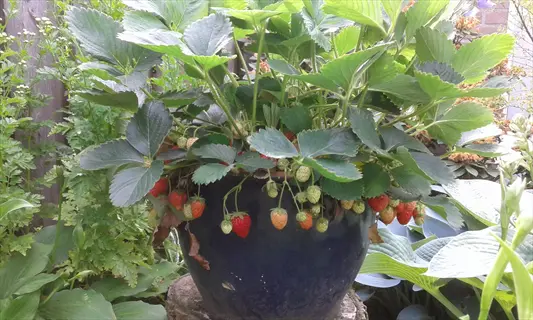
- Why they fit: Strawberries thrive in coir-based containers and grow bags, which drain freely and stay airy around the roots.
- Moisture: Coir holds even moisture that helps strawberries fruit, while still letting excess water drain away.
- Feeding: Use a potassium-friendly feed plus CalMag, since coir is high in potassium but low in calcium and magnesium.
- Cleanliness: A pathogen-free soilless medium reduces some soil-borne problems compared with garden ground.
- Containers: Hanging baskets and troughs lined or filled with coir keep berries off the soil and easy to pick.
- Reuse: Refresh the mix between seasons and replace any coir that has broken down too far.
Leafy Greens and Herbs
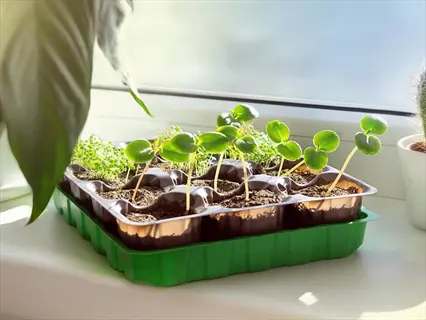
- Why they fit: Fast-growing greens and herbs respond well to coir's steady moisture and light, airy texture.
- Seed starting: Coir is excellent for starting seeds, giving roots a soft, even medium to establish in.
- Feeding: Greens need nitrogen, which coir lacks, so a regular liquid feed keeps leaves green and growing.
- Indoors: Coir works well for windowsill herb pots and small indoor greens with controlled watering.
- Drainage: Mix in perlite so the medium stays airy and avoids staying waterlogged for tender roots.
- Turnover: Quick crops let you cycle and reuse the coir often across the growing season.
Houseplants and Palms
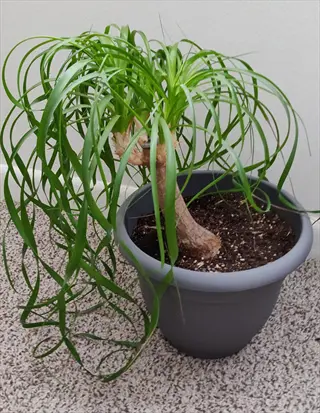
- Why they fit: Many houseplants and palms grew as well in coir as in peat in University trials, with stable structure over time.
- Stability: Coir changed the least in air porosity and water holding over eight months, a plus for long-lived potted plants.
- Chunky options: Coir chips suit orchids and aroids that need a chunky, fast-draining root zone with plenty of air.
- Feeding: Use a regular houseplant feed, since coir alone will not supply enough nutrients over time.
- Repotting: Coir's slow breakdown means less frequent mix collapse between repottings.
- Watering: Let the surface dry slightly and check deeper moisture before watering potted plants again.
University trials back up the houseplant case. Majesty palm and Anthurium grew as well in coir as in peat, and coir held its structure better over an eight month run. That stability matters most for the long-lived plants you repot the least.
Pick the crop to the medium and coir rarely lets you down. Feed your heavy feeders, add CalMag to fix what coir lacks, and leave the acid-lovers in peat. Get that match right and your trays will run ahead just like mine did.
Choosing Quality and Coir Cost
Not all coir is the same, even when two bags sit side by side on the shelf. Researchers tested 13 coir samples from around the world. The salt levels ran from 39 to 597 mS per meter. The cation exchange capacity, which tells you how well the coir holds nutrients, swung just as wide from 31.7 to 95.4 cmol per kg. One brand can be clean and ready, while the next bag burns your seedlings.
Why the huge gap? It comes down to the husk, how the maker rinses it, and how long it sat in a pile near the ocean. Coir that drains in a salt marsh for months soaks up that salt. That is the whole reason high-quality coco coir gets washed and buffered before it reaches you. Cheap raw product skips those steps to hit a lower price.
Cost tracks the work that went into it. Compressed coco coir bricks are almost always the cheapest way to buy, since you pay nothing to ship water and the block expands once you soak it. Loose bags cost more for the ease. Buffered or OMRI listed options sit at the top, since someone already rinsed the salt and treated the coir for you. Use the table below to match the form to your project before you check any coir price.
Here is a simple buying checklist. Look for the words washed, buffered, or OMRI listed on the label, and treat a cheap raw brick as a flush-it-first product. If a bag stays quiet about salt or rinsing, plan to soak and drain it twice before you plant. For organic beds, check that the OMRI listing is real and printed on the package, not just hinted at in the ad copy.
One last point on sustainable gardening. Coir is a renewable byproduct of the coconut harvest. Choosing it spares the peat bogs that release stored carbon when we strip them. Still, coir gets rinsed with fresh water and shipped a long way, so it carries its own footprint. Buying a clean, well-made product you can reuse for years is the most honest way to keep that footprint low.
5 Common Myths
Coco coir is completely pH neutral, sitting exactly at 7.0, so it never needs any checking or adjustment before planting.
Coir is slightly acidic, usually 5.2 to 6.8 with an optimal range near 5.2 to 6.3, which is workable but not exactly neutral.
Coco coir feeds your plants on its own because it is made from organic coconut material that breaks down into nutrients quickly.
Coir is essentially inert and low in nitrogen, calcium, and magnesium, so plants need added fertilizer and often CalMag to thrive.
All coco coir is the same product, so the cheapest brick on the shelf performs exactly like any premium buffered option.
Quality varies widely by source and processing, with salinity ranging from 39 to 597 mS per meter, so buffering and flushing matter.
Coco coir is always the most sustainable choice because it is a renewable byproduct with no real environmental footprint at all.
Coir is renewable, but processing and long-distance shipping carry their own footprint, so its edge over peat depends on context.
You can grow any plant in coco coir since it suits every crop and houseplant equally well in every situation.
Acid-loving plants like blueberries and azaleas prefer peat's lower pH, so coir is not the right medium for every plant.
Conclusion
You came here for real numbers, not the same recycled claims, so here is what the research actually shows. Coco coir sits at a slightly acidic pH of about 5.2 to 6.3, which means it needs little or no lime before you plant. It also runs low in nitrogen, calcium, and magnesium, so the medium itself will not feed your plants for you.
Those gaps are easy to close once you know about them. Rinse new coir to drop the salt, watch your EC, and add CalMag so your leaves stay green. Do that and coir holds its own against peat. In one greenhouse trial, peppers grown in coir beat soil on vitamin C and vitamin E. A Utah State study found coir a fair swap for peat in container mixes.
So the honest bottom line is simple. Coir is an excellent, renewable medium when you feed it, manage the salt, and match it to the right plants. It is not a magic do-everything product, and any guide that sells it that way is skipping the parts that matter. Treat it as a base you build on, and it rarely lets you down.
As a peat moss alternative, coir is a strong default for seed starting, container gardening, and raised beds. Its steady texture and water holding really pay off there. Peat still wins for acid lovers like blueberries and azaleas that want a lower pH. Peat use is now limited in places like the United Kingdom. So coir is set to stay a top pick for sustainable gardening at home.
Glossary
- Buffered coir
- Coir that has been pre-washed to remove salts and soaked in calcium and magnesium before sale.
- CalMag
- A calcium and magnesium supplement added to coir to prevent the deficiencies it is prone to.
- Cation exchange capacity
- A measure of how well a growing medium can hold and release nutrients for plant roots.
- Coco coir
- A renewable growing medium made from the fibrous husk of coconuts, used as a peat moss alternative.
- Coir pith
- The fine, spongy dust between coconut husk fibers, also called coco peat, sold as compressed bricks.
- Electrical conductivity
- A reading of how much dissolved salt is in a medium or solution, used to judge salinity.
- Inert medium
- A growing material that supplies almost no nutrients on its own, so plants must be fed.
- Sphagnum peat
- A water-holding, acidic material harvested from peat bogs and traditionally used in potting mixes.
External Sources
Frequently Asked Questions
What is coco coir good for?
Coco coir works well for seed starting, container and raised-bed mixes, hydroponics, soil conditioning, and mulch.
What are the downsides of coco coir?
Main downsides are:
- It is inert and low in nitrogen, calcium, and magnesium, so it needs feeding
- It can carry high salt content that requires flushing
- Quality varies widely between sources and batches
What plants do not like coco coir?
Acid-loving plants like blueberries, azaleas, and rhododendrons prefer peat's lower pH over coir.
Is coco coir better than potting soil?
Coir drains and aerates better but lacks nutrients, so the best choice depends on your plant and setup.
Can plants grow in just coco coir?
Yes, but only with a full feeding program, because coir on its own supplies almost no nutrients.
Can I mix coco coir with soil?
Yes, mixing coir into soil improves water retention, structure, and aeration, usually at 20 to 50 percent by volume.
What grows best in coco coir?
Tomatoes, peppers, strawberries, leafy greens, and many container and houseplants grow well in fed coir.
Is it better to use peat moss or coco coir?
Coir is more renewable and near-neutral; peat suits acid-loving plants, so the better choice depends on use.
Is coco coir a waste product?
It is a coconut industry byproduct made from husks once treated as waste, now reclaimed as a growing medium.
What is the price of coco coir?
Price varies by form, brand, and region, with compressed bricks usually the most affordable starting point.