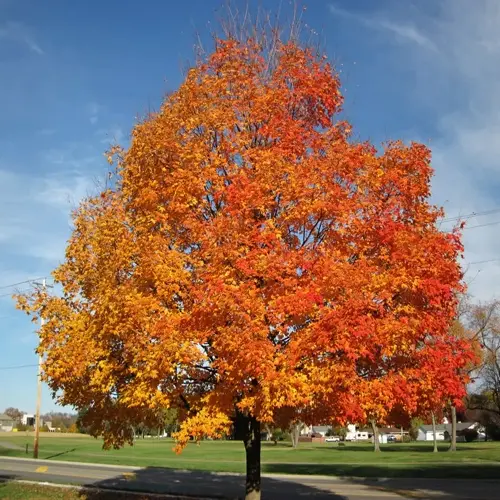

No, a black cherry tree does not have deep roots. The black cherry root system is shallow and wide, not a single taproot that drives straight down. This catches a lot of people off guard. A tree can reach 90 feet (27 m) tall and still hold the ground with black cherry shallow roots that run sideways, close to the surface. The crown is huge, but the anchor below your feet is broad and flat.
Picture the roots as a wide plate, not a deep spike. They spread out past the edge of the canopy to find water and air near the topsoil. Most of the feeder roots sit in the top 12 to 18 inches (30 to 46 cm) of soil. That is where the tree does its real work, so that is the zone you need to look after. The roots can reach out well past the drip line, often a good bit wider than the branches above them. So the part of your yard the tree depends on is bigger than it looks.
This shallow habit has a real cost, and UF/IFAS flags it plainly. A black cherry is sensitive to soil compaction. When the ground over those roots gets packed hard, air and water can no longer reach them. Foot traffic on a worn path does it. So does a parked car, a paved patio, or heavy equipment rolling across the root zone during a build. The tree cannot breathe down there, and it slowly loses strength. You may not see the damage for a year or two. Then the canopy thins, leaves drop early, and you wonder what went wrong above when the trouble started below.
The wide, shallow spread also makes transplanting black cherry a hard job once a tree settles in. Moving a tree means cutting roots, and most of this tree's roots fan out well beyond the trunk. You cannot dig a root ball big enough to keep them. So you slice off most of the feeder roots, and an established black cherry rarely bounces back from that loss.
Age is the deciding factor here. A young nursery tree has a small, tight root mass you can lift with the ball intact. That is why a sapling moves so much better than a mature tree. If you want one in your yard, plant it young and plant it once. Set a small whip or container tree in the spot you actually want, and let it grow there for good. A tree under a few years old has the best odds of taking hold. The bigger the tree, the more roots you leave behind in the old hole, and the longer the recovery if it survives at all.
Protecting the root zone is simple once you know where it is. Keep heavy traffic, parking, and paving off the ground under the canopy and a bit past it. Spread mulch instead of laying pavement beneath the tree. A loose layer of wood chips, two to three inches (5 to 8 cm) deep, keeps the soil soft, holds moisture, and feeds the roots as it breaks down. Just keep the mulch off the trunk itself.
So the deep-root idea is a myth worth dropping. A black cherry holds on with a broad, shallow net of roots, and that net needs soft, open soil to thrive. Give it room, skip the pavement, and put a young tree in its forever spot. Do that, and the black cherry root system will support a tall, healthy crown for decades without a fight.
Read the full article: Black Cherry Tree: Growth, Wildlife, Safety