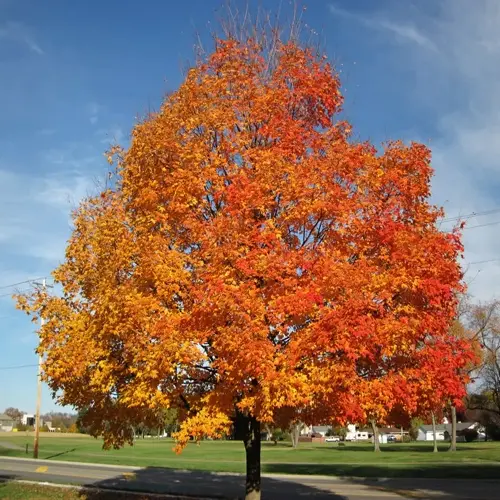

Each late summer I watch cedar waxwings strip the fruit off the volunteer black cherry in the damp back corner of my Pennsylvania yard. The whole tree hums with them. That corner sat patchy and bare for years, where my lawn always gave up on the heavy clay. Now it is the busiest spot I own. So should you plant one too? Planting a black cherry tree makes sense if you want a fast native that feeds your local wildlife. You also need open space in your yard, away from patios and grazing animals. Skip it if your space is small and tidy.
The whole choice comes down to your site, not the tree. I think of the black cherry pros and cons as two ends of a scale. On the good side you get fast growth and deep wildlife value. You also get wood that furniture makers pay top dollar for. On the rough side your yard gets fruit that stains hard, roots that run shallow, and leaves that turn toxic to grazing animals. Match your tree to the right ground and the perks win with room to spare.
- You want a fast-growing native that feeds birds, butterflies, and bees.
- You have open, sunny, well-drained space away from buildings.
- You value wildlife habitat or future cabinet-grade timber.
- Your yard is small, tidy, or paved where staining fruit causes problems.
- Livestock graze beneath where wilted leaves could fall.
- You need a low-litter shade tree close to a patio or foundation.
The wildlife case is the strongest reason to plant one. The Georgia DNR reports that black cherry hosts 454 moth and butterfly species. That number is huge. All those caterpillars become food for nesting birds in spring. More than 40 bird species eat the fruit later in the year. That is why my corner fills up with waxwings. Dr. Doug Tallamy ranks black cherry second only to oaks for the wildlife it supports. Few ornamental trees come close to that kind of value, and most native ones do not either.
The downsides are just as real, so be honest about them. The fruit drops in late summer and stains decks, cars, and walkways a deep purple. I planted mine far from any path, and I am glad I did. The roots stay shallow and can lift nearby pavement over the years. The biggest warning is for animals. Wilted leaves release cyanide, so they can poison cattle, horses, sheep, and goats. Keep this tree well away from any spot where livestock graze or rest.
Care stays light once you pick the right spot. Give it full sun and ground that drains well after rain. Water it through the first two summers while the roots take hold. After that you can mostly leave it be, and it shrugs off dry spells. The tree grows fast, so plan for its full size from day one. A patio that feels far away now will sit under heavy fruit drop in ten years. I lined mine up against the woods edge so the mess just feeds the soil.
So is black cherry worth planting? For the right yard, yes, and it is hard to beat. Choose it for your rural lot, your naturalized area, or a wildlife garden with room to spare. You get a native powerhouse that feeds birds, bees, and butterflies for decades. Pass on it if your yard is compact or paved, or if you keep grazing animals. Read your site first, and your answer will be clear. My back corner went from dead grass to a feeding station, and I would plant another one without a second thought.
Read the full article: Black Cherry Tree: Growth, Wildlife, Safety