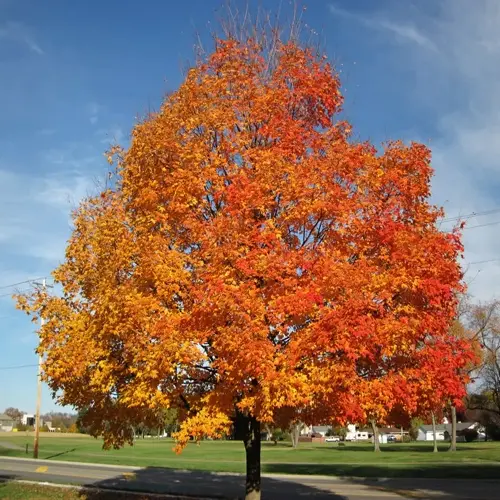

The main split in black cherry vs chokecherry comes down to size. Black cherry grows into a large tree that can reach 90 feet, while chokecherry stays a shrub or small tree, usually under 30 feet. One towers over your head. The other grows at eye level along fence lines and stream banks.
The fastest tell is size paired with bark. A mature black cherry stands tall with dark, scaly plates that curl off the trunk. Chokecherry stays low and keeps smoother gray bark well into old age. If you can spot the trunk from a distance, you have most of your answer before you even check a single leaf.
These are two different species. People lump them together and call both wild cherry. In Latin, black cherry goes by the name Prunus serotina. The chokecherry name is Prunus virginiana, a close cousin but not a match. They share a plant family and a few traits, so the names get swapped all the time. But they are not the same plant. The gaps matter once you start to work with either one in the yard.
Bark drives most chokecherry identification once a plant gets some age on it. Young black cherry has smooth bark too, which trips people up. The grown tree is the giveaway. Older black cherry bark breaks into dark plates that look like burnt potato chips. That rough, flaky look does not show up on chokecherry, which holds its gray sheen far longer.
- Large tree up to 90 feet tall at maturity.
- Leaves 2 to 4 inches (5 to 10 cm) long with fine, incurved teeth.
- Old bark cracks into dark scaly plates like burnt potato chips.
- Fruit ripens dark and turns sweeter, used in jelly and wine.
- Shrub or small tree, usually under 30 feet tall.
- Leaves more rounded with sharp, pointed teeth along the edge.
- Gray bark stays smoother and tighter on the trunk for years.
- Smaller fruit that stays more astringent and puckers the mouth.
Leaves settle any case you cannot call by bark alone. Black cherry leaves run 2 to 4 inches (5 to 10 cm) long with fine teeth that curve inward toward the tip. Chokecherry leaves look more rounded and oval, edged with sharp, pointed teeth that stand out. Both have a row of tiny glands where the leaf meets the stalk, so check shape and teeth instead.
Fruit gives you one more check in late summer. Both trees hang their cherries in long clusters, and both start red before they darken. Black cherry fruit sweetens as it ripens and goes into jelly, syrup, and wine. Chokecherry fruit stays smaller and far more astringent, with a bite that puckers your whole mouth. The name fits the taste.
Here is the safety part that applies to both. The leaves and seeds of each species hold cyanide compounds, and wilted leaves are the real danger for grazing animals. So the same careful handling covers either plant. Never let livestock reach broken or fallen branches of black cherry or chokecherry. Keep the pits away from kids and pets the same way you would with any wild cherry.
Good black cherry tree identification leans on three traits at once. Look for the tall trunk with burnt potato chip bark. Look for the long leaves with fine teeth. Look for the dark, sweet fruit. Chokecherry runs the other way at every step. It stays short and shrubby with smoother bark and tart fruit. Only black cherry ever grows to timber size. So if you stand under a true forest tree, you almost surely have black cherry.
Read the full article: Black Cherry Tree: Growth, Wildlife, Safety