Ornamental · Lamiaceae
Bugleweed
Ajuga reptans
Hand it part shade and good drainage, and bugleweed unrolls a fast carpet of color, as long as you hold it within bounds.
Partial shade
Every 5–10 days
USDA 3–9
4–9 in · 10–23 cm
Overview
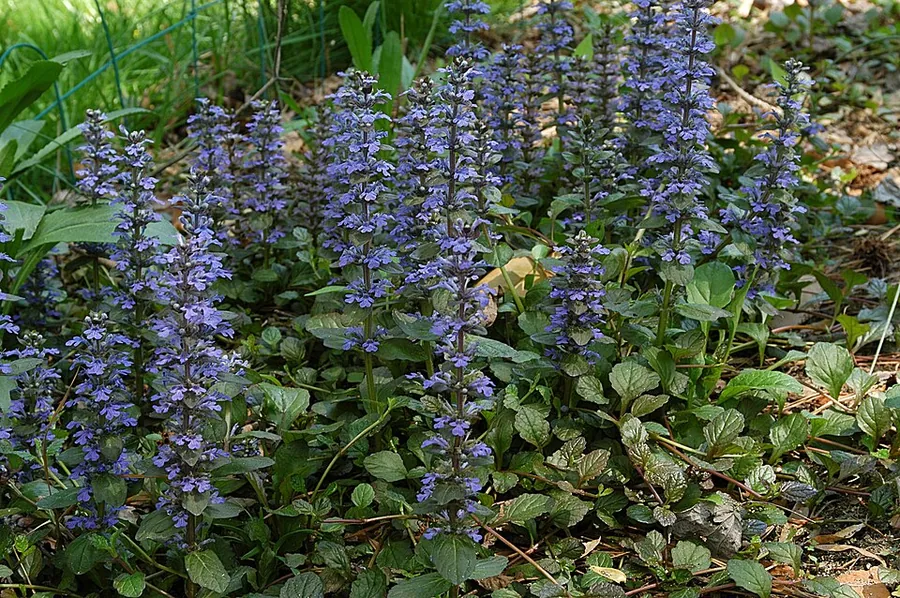
Bugleweed is a low, quick-spreading groundcover out of the mint family, prized for the thick mat of glossy leaves it lays across shaded soil. Come mid to late spring it pushes up short spikes of blue flowers that stand clear of the leaf layer. It brushes off cold down to USDA zone 3 and copes with anything from full sun to deep shade, which is why it settles in under trees and across slopes where little else takes hold.
What makes it handy is the same trait that makes it a handful. It moves on stolons, runners that creep along the surface and root as they travel, so a single plant weaves itself into one unbroken carpet inside a season or two. Leave it loose and it strides clean out of the bed and into the grass, which means the labor with bugleweed leans less on keeping it alive and more on pinning it where you want it.
Plant it in average, well-drained soil with breathing room around the leaves and it wants for almost nothing. The single soft spot to mind is crown rot, which grabs hold quickly in heavy, sodden ground or a packed mat through a humid summer.
Care
The short version: part shade suits it best, though it takes sun straight through to full shade, in average soil with good drainage. Hold it evenly moist without letting the ground turn soggy, split it every couple of years, and edge the bed so it cannot stray.
Light
Bugleweed leans toward part shade, yet it bends further than most groundcovers. It will accept the full stretch from open sun to deep shade, though the leaf color tends to deepen with a little cover from the fiercest afternoon glare.
Water
Hold the soil evenly moist and let the surface dry a shade between drinks, somewhere around every 5 to 10 days once it has settled. It will weather a moderately dry stretch, but sitting wet is the true threat, since waterlogged ground calls in crown rot.
Soil
Set it into average, humusy, well-drained loam. A pH spanning 5.5 to 7.0 suits it, and it manages clay or sand, but it will not pardon soggy, poorly drained ground for any length of time.
Temperature
This is a hardy plant, holding across an enormous span from -40°F to 100°F (-40°C to 38°C). Cold gives it no pause. Heat braided with humidity is the larger worry, since that pairing is exactly what stirs crown rot awake.
Humidity
Plain outdoor humidity sits fine with it, so there is no number to chase. Air movement is what counts, because muggy, stagnant air resting over a crowded mat is the very condition rot needs to travel.
Feeding
Bugleweed seldom asks to be fed and usually carries itself on decent ground. Should the planting start to look worn, a light spring topdressing of compost or a balanced fertilizer is all it takes.
Pruning
Shear or mow away the spent flower spikes once bloom fades to neaten the stand, and cut tattered foliage back hard to revive it. Dividing every 2 to 3 years works on two fronts at once, easing the crowding and trimming back the threat of crown rot.
Repotting
Instead of moving it up a pot, bugleweed gets lifted and divided every 2 to 3 years once the mat grows crowded. Keep an eye out for dense, matted growth, dead or thinning centers, and slacker flowering, each a flag that it is time to split.
Size & spacing
Plants hug the ground at just 4 to 9 inches (10 to 23 cm) tall, while each one fans out 12 to 24 inches (30 to 60 cm) wide and presses on. Space them with that reach in mind, since the runners will sew shut any gaps you leave by themselves.
When to plant
Bugleweed is a hardy perennial with no narrow planting window to chase. Tuck new plants in through spring or fall while the air stays mild, and the blue flower spikes arrive in mid to late spring, roughly May into June.
Northern hemisphere
Southern hemisphere
Typical months for a temperate climate: start earlier in warm zones, later where spring frosts linger.
- Plant: Spring or fall
- Harvest: Mid to late spring (roughly May to June)
Hardiness
USDA hardiness zones: 3–9
Temperature: down to -40°C
Troubleshooting
Most trouble with bugleweed sorts into two piles: the plant marching where it has no business, and rot taking root where the soil stays wet. Both head off far easier than they undo. Find the match below and step in while the planting is still in good shape.
Circular patches that slump and brown out fast
What you are watching is crown and root rot, a fungal collapse that flares up in hot, sticky weather and creeps in widening rings through a packed mat. The crowns go soft and mushy right at the soil line, and an entire stand can fold as the rot fans out. Dig the dead rings out together with the tainted soil hugging them, then loosen the bed with sharper drainage and thinning so air can slide between the plants.
Fix:
- Remove and discard affected plants and surrounding infested soil
- Improve drainage and increase air circulation by thinning
- Divide crowded plantings every 2-3 years
- Apply a labeled fungicide where the problem is severe
Runners that wander out of the bed and into the grass
Look closely and you will find slim horizontal stolons snaking out from the parent clump, each one anchoring down and lifting a fresh rosette of leaves wherever it touches soil, which is how stray patches surface out in the turf. Follow those runners back to the main colony and lift the wanderers with their rooted plantlets attached. A deep edge sunk between bed and grass draws the firmest line, and splitting the clumps every couple of years keeps the mat from shouldering outward to begin with.
Fix:
- Pull or dig out runners and stray rosettes, removing rooted plantlets entirely
- Install a deep physical edging or hard border between the bed and lawn
- Divide and thin the planting regularly to keep it contained
- Avoid using it as a direct lawn edging
Stunted, listless plants despite steady care
When the leaves shrink and the whole plant loses steam without a clear reason, two culprits sit at opposite ends: root-knot nematodes chewing on the roots underground, or aphids massed on the soft new growth above. Tug a faltering plant loose and scan the roots for knobby galls, then turn over the tender tips and hunt for the insects. A jet of water or a dose of insecticidal soap clears aphids, but nematode-ridden plants should come out for good, with no susceptible groundcover going back into that same patch.
Fix:
- Remove severely affected plants and avoid replanting susceptible groundcover in the same spot
- Rinse aphids off with water or treat with insecticidal soap
- Maintain plant vigor with proper spacing and drainage
Toxicity
Reassuring news for homes with pets and children. Bugleweed never makes the toxic-plant lists, and it counts as safe around cats, dogs, and people the same. The most a stray mouthful is likely to bring on is a short bout of stomach upset, just like plenty of plants that were never meant for eating.
Safe for
People · Cats · Dogs · Horses · Rabbits · Livestock · Birds
Cats None
The glossy leaves hold nothing toxic to cats, so a stolen nibble is no cause for alarm. Swallow a full mouthful and a cat may get a passing bout of stomach upset, the way any non-food greenery can sit wrong.
Dogs None
Dogs can mouth the foliage with no genuine danger. The most a hefty serving tends to produce is a little drool or a soft stool that sorts itself out.
Horses Safe
Nothing in the leaves or stems poisons horses, and the plant has no record of giving them grief. A horse that crops a patch of it should come away just fine.
Rabbits Safe
Rabbits can nibble the foliage safely, since it carries no toxic compounds. As with any unfamiliar green, offer it gradually so their gut can settle into it.
Livestock Safe
Cattle, goats, and sheep run no risk of poisoning from grazing the leaves. The plant simply never appears on the toxic lists kept for farm animals.
Birds Safe
Backyard hens and other birds can peck the foliage with no harm done. Not one part of the plant holds anything that would hurt them.
People Safe
The plant carries no poisoning risk for people, children who taste a leaf included. It is grown for the sheet of leaf color it rolls across the ground, not for the table, so there is no call to eat it.
Not poisonous, but pets that nibble the foliage may experience mild, temporary stomach upset, as with many non-food plants.
Varieties
Past the plain green species, bugleweed turns up in a string of selections bred for leaf color, leaf size, and habit. These are the ones worth filing away by name.
Burgundy Glow
Its tricolor leaves wash together pink, cream, and green, giving a brighter, softer mat than the plain green species lays down.
Black Scallop ('Binblasca')
Glossy and scallop-edged, its leaves carry such deep pigment that they read as near-black across the bed.
Catlin's Giant
Outsized bronze-green leaves and unusually tall flower spikes give this selection far more bulk and reach than the rest.
Chocolate Chip ('Valfredda')
Its small, narrow, glossy leaves in chocolate-burgundy keep this one compact and restrained, a tidy fit for cramped corners.
Ajuga genevensis (Geneva bugleweed)
A close relative that throws no runners at all, so it stays much tamer underfoot and takes more sun than common bugleweed.
How to propagate
Bugleweed ranks among the easiest plants to bulk up, since its whole life is spent stamping out copies of itself. Pulling a clump apart or lifting a rooted runner hands you new plants for free.
DivisionEasy
Spring or fall · A few weeks to one season
Splitting clumps is the simplest and most common route to more bugleweed. Pry up a crowded mass in spring or fall, tease apart the rooted rosettes and the runners threading between them, and set the pieces back in, where they take hold within a few weeks to a season. Repeating it every 2 to 3 years also holds crown rot off.
LayeringEasy
Growing season · A few weeks
The plant layers itself with no help from you. Through the growing season, rooted plantlets sprout on their own along the stolons, so you snip off a well-anchored one and shift it elsewhere, where it grips the soil in a few weeks.
SeedModerate
Spring · One season or more
The plain species can be grown from seed sown in spring, though it needs a season or more to knit together. The snag is with named cultivars, which refuse to come true from seed and are better pulled apart by division.
Myths
Bugleweed is a tidy groundcover that stays neatly where you plant it.
It rides out on above-ground stolons and slips past its borders without much trouble, rooting into the lawn and the beds next door before the spread registers. Plan on firm containment from the start, and hand it the drainage and moving air it needs to shrug off crown rot.