Herb · Lamiaceae
Basil
Ocimum basilicum
Hand it sun, heat, and a steady pinch, and basil pours soft green leaves into the kitchen all summer long.
Full sun
Every 7–10 days
50–86°F · 10–30°C
60–90 days
Overview
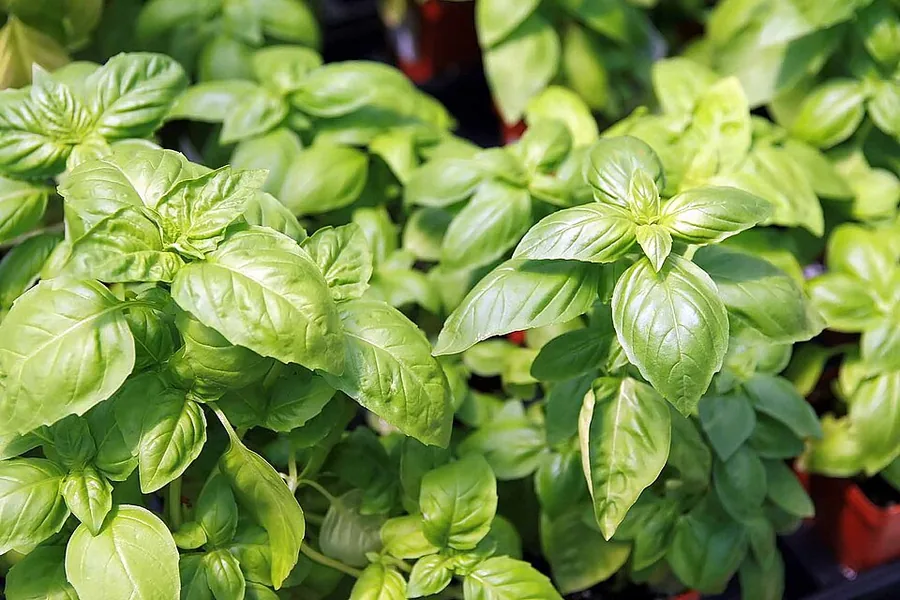
Basil is the first herb most cooks pull from the garden, a soft, tender annual in the mint family whose roots reach back to the warm stretches of Asia and Africa. It shoots up quickly and drinks in heat, settling as happily in a backyard bed as in a clay pot on a sun-warmed sill. Hand it light and warmth and the stems crowd with fragrant, glossy leaves.
Each plant lasts a single season and tops out between 12 to 24 inches (30 to 60 cm) tall depending on the kind. Left to its own way it stretches upward, flowers, and goes to seed, but a gardener who keeps nipping the soft tips drives that strength back down into the leaves. That single habit shapes how full your harvest grows more than anything else.
Basil is gentle with a beginner, yet it holds two hard lines. It buckles at frost and cold ground, and it sours quickly in close, humid air where downy mildew takes root. Keep it warm, leave space for air to slip between the stems, and pour water at the base, and the rest unfolds with little trouble.
Care
The short version: sun and heat, soil held evenly damp with water poured at the base so the leaves stay dry. Feed it lightly, nip the tips often, and never push it out into cold ground.
Light
Basil leans toward full sun, six hours a day or more, the light that brews the oils behind its taste. A little afternoon shade is fine where summers turn fierce, but a starved plant grows pale, leggy, and weak.
Water
Hold the soil evenly damp, soaking it well every 7 to 10 days as the rain dictates. Potted plants drink down faster and want a closer eye. Always pour at the base, since beaded leaves are an open gate for downy mildew.
Soil
Set it into rich, free-draining loam turned through with compost. A pH in the 6.0 to 7.5 band suits basil, so most sound garden ground takes it without any bother.
Temperature
Heat is where basil flourishes, somewhere around 50°F to 86°F (10°C to 30°C), and it runs fastest near the warm end. Frost finishes it, and cold soil stalls the young plants, so warmth leads every other concern.
Humidity
Middling humidity of 40% to 60% is all it asks, so there is no figure to chase. What weighs far more is moving air, since dead, damp air pooling around packed plants is exactly how downy mildew gets going.
Feeding
Keep a light hand on the feed. A balanced 5-10-5 fed once or twice through the season covers basil, and feeding it sparingly holds the flavor sharp, since a rush of growth waters down the oils.
Pruning
Nip the soft growing tips often to send the plant out into bushy side shoots, and snap off the flower buds the second they show. That steady nipping is what keeps the leaves arriving and the taste at full strength.
Repotting
Grown for a single year, basil seldom needs real repotting. Just move seedlings up into wider pots as they fill the old ones, before the roots begin to wind and the soil empties of water too fast.
Size & spacing
Each plant climbs 12 to 24 inches (30 to 60 cm) tall and fans 12 to 18 inches (30 to 45 cm) across. Leave that much breathing room so air slides between them and disease stays away.
When to plant
Warmth is the whole story with basil, and frost flattens it. Get seeds going indoors in late winter, hold the plants back until every chill has lifted and the ground has warmed, then pick leaves clear through summer until the first frost draws the curtain.
Northern hemisphere
Southern hemisphere
Typical months for a temperate climate: start earlier in warm zones, later where spring frosts linger.
- Sow: 6-8 weeks before the last spring frost; germinates best at media temperatures of at least 70°F
- Plant: After all danger of frost when soil is warm and nighttime temperatures stay above 50°F
- Harvest: Harvest leaves continually once plants have several sets of leaves; pinch off flower buds to delay bolting and prolong leaf production
Hardiness
USDA hardiness zones: 2–11
Temperature: down to -46°C
Troubleshooting
With basil, the leaves are usually the first to tell on a problem, be it a disease, a feeding pest, or the urge to flower. Read those early marks and you can move before a small fault runs across the patch. Find the match below, then act while acting still counts.
Yellow patches above, a gray-purple fuzz beneath
Those yellow patches sitting over a velvety gray-purple coat on the leaf undersides mean basil downy mildew, a quick-spreading disease that thrives in clammy, still air. The moment that fuzz shows, the plant is lost, so lift it and burn or bag it. Open up the spacing on the survivors, aim water at the soil, and reach for tough cultivars such as 'Prospera' when you replant.
Fix:
- Remove and destroy affected plants immediately
- Increase plant spacing and prune for airflow
- Water at the base to keep foliage dry
A fast collapse with brown streaks climbing the stem
Fusarium wilt is a soil fungus that chokes the stem from within, painting brown streaks up its core, and nothing reverses it once it settles in. Lift the plant whole, bag it for the trash rather than the compost pile, and begin again on clean ground with fresh media. The reliable shields are resistant cultivars and clean, disease-free seed.
Fix:
- Remove and destroy infected plants
- Do not compost affected material
- Replant in a different location or use fresh sterile media
Soft brown roots and a plant slumping in cold, soggy ground
Root rot creeps in where the ground stays sodden or too chilly for the roots to manage. Sound roots feel firm and gleam white, while rotting ones go soft, brown, and sour-smelling. Sharpen the drainage, hold back on the watering, and leave plants indoors until the soil warms past 50°F (10°C) before you set them out.
Fix:
- Improve drainage and reduce watering frequency
- Remove severely affected plants
- Allow soil to dry between waterings
Flower spikes rising and leaves losing their edge
Slim flower spikes climbing from the tips signal bolting, the plant's race to seed once it ripens or the days stretch long and hot. After the spikes appear, fresh leaves arrive smaller and taste washed out. Nip the buds the instant they form and keep cutting leaves, and the plant holds its full, leafy shape and its flavor.
Fix:
- Pinch off flower buds as soon as they appear
- Harvest and prune leaves regularly to delay flowering
Torn holes and lace-thin leaves
Two feeders leave the leaves looking shot through. Japanese beetles work in daylight, eating the green away until only a skeleton of veins remains, and slugs and snails chew their ragged holes after dark and trail glistening silver behind them. Drop the beetles into soapy water, ring the slugs with traps or barriers, and stay on top of the count while it is still small.
Fix:
- Hand-pick beetles into soapy water
- Apply insecticidal soap for soft-bodied pests
- Set out slug traps or barriers
Toxicity
This is the easy part. The plant is non-toxic, grown for the table, and poses no threat to a household of cats, dogs, horses, rabbits, livestock, birds, or young children. Worst case, a nosy animal gulps a large helping and feels a passing twinge in its gut before the feeling fades.
Safe for
People · Cats · Dogs · Horses · Rabbits · Livestock · Birds
Cats None
A cat can taste basil with no harm done. Should one bolt down a big helping of greenery, it may bring the leaves back up, but the spell passes by itself.
Dogs None
Basil sits fine with dogs. At most, a greedy mouthful brings a short, mild churn in the belly that settles before long.
Horses Safe
Horses come to no grief near basil. The plant holds nothing that troubles them.
Rabbits Safe
Rabbits may browse the soft green leaves all they like, and plenty greet a fresh sprig as a prized snack.
Livestock Safe
Goats, sheep, and cattle can nibble basil with nothing to fear from it.
Birds Safe
The leaves carry no danger for birds, and yard hens will gladly peck their way through a patch.
People Safe
This is a culinary herb raised for the plate, fresh or cooked, with no concern for grown-ups or little ones.
No special handling precautions are needed; basil is non-toxic and edible.
Varieties
Basils run into the dozens, from sweet Italian leaves to fiery and ornamental ones, yet only a few show up in most gardens. These are the names worth carrying in your head.
Genovese
The broad-leaved Italian sweet basil that defines pesto, prized for its deep flavor yet the most vulnerable of all to downy mildew.
Thai basil
A purple-stemmed type carrying notes of anise and licorice, rising 24 to 36 inches and central to the kitchens of Southeast Asia.
Purple Ruffles
An ornamental kept for its crinkled, dark purple foliage as much as for anything it brings to a dish.
Spicy Globe
A neat dome of a plant standing just 8 to 10 inches, sized for tucking into pots and lining a path.
Prospera
A Genovese-styled selection bred to resist downy mildew, with a tight habit that takes well to a container.
Companions
Basil earns its old reputation as a tomato's best neighbor, sharing the same warm, sunny, well-drained ground the two crops both want.
Plant near
Tomato: Basil is a traditional interplanting companion for tomatoes in the vegetable garden, sharing similar warm-season, full-sun, well-drained growing conditions.
How to propagate
Hardly any plant multiplies as willingly as basil, whether you tip seed from a packet or take free copies off a plant already in the ground.
SeedEasy
Sow indoors 6-8 weeks before last frost or direct sow after frost when soil is warm · Germinates in 5-10 days at about 70°F; transplant-ready in roughly 3-4 weeks
Seed is where most gardeners begin. Press it a quarter inch under the surface, 6 to 8 weeks ahead of your last frost, and hold the media warm at 70°F (21°C) or higher so the seeds wake on cue. The first green shoots push up in 5 to 10 days and stand ready to move out in about 3 to 4 weeks, or you can sow straight into warm ground.
Stem cuttingsEasy
Any time during the growing season from healthy non-flowering shoots · Roots form in water in about 1-2 weeks
Few plants copy themselves as readily as basil. Snip a 4-inch length from a strong shoot that has not flowered at any point in the season, peel the lower leaves off the stem, and stand it in a glass of water, where white roots thread out within a week or two before the cutting goes into its own pot as a twin of the parent.
Myths
Basil leaves turn poisonous once the plant flowers and must be discarded.
Flowers change nothing about how safe the leaves are to eat. They only soften in flavor as the plant pours its strength into seed, and that is the reason gardeners pinch the buds away, not any sign of spoilage.
Basil has to be fed often and heavily to thrive.
A gentle touch serves it far better. Heavy feeding dilutes the oils that carry the flavor in each leaf, so one or two feedings across the whole season cover everything it asks for.