Herb · Lamiaceae
Hyssop
Hyssopus officinalis
Given full sun and lean, fast-draining soil, hyssop shows off narrow aromatic leaves and bee-loved blue-purple spikes.
Full sun
Every 7–14 days
USDA 4–9
12–24 in · 30–60 cm
Overview
Hyssop is a woody-based perennial from the Mediterranean, an herb of the mint family grown for centuries in the kitchen and the medicine chest. Up close it is a low, bushy mound built from slender, deep green leaves set in close pairs along upright stems, each leaf narrow and firm and giving off a sharp, minty scent when brushed. Hardy through USDA zones 4 to 9, its slim foliage weathers hard cold and dry heat with little change.
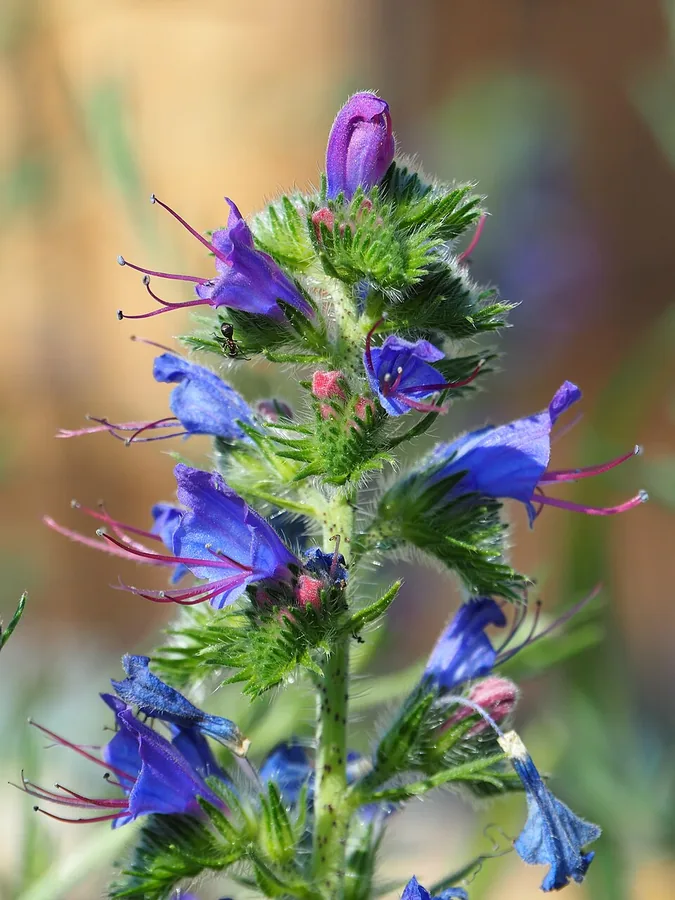
In summer the mound sends up narrow flower spikes crowded with small blue-purple blooms, so densely packed along the stem that the whole spike reads as a band of color, and bees and butterflies work over them constantly. The plant wants full sun and fast-draining soil to keep its stems firm and its leaves close-set. In soggy ground the crisp green foliage soon slackens, which is the one condition it will not take.
As the years pass the lower stems thicken and pale into bare wood, and the plant grows open below with foliage retreating to the tips. A spring cut brings soft new green shoots crowding back from the base, and because it self-seeds so freely, small fresh green seedlings turn up nearby to carry it on.
Care
The short version: hyssop wants full sun, lean sharply drained soil, and only occasional water once its roots take hold. A spring cut keeps the slim green foliage dense, it barely needs feeding, and it is renewed every few years before the base hardens into bare wood.
Light
Hyssop takes its firmest, densest form in full sun, which packs the growth tight, fills the spikes with color, and sharpens the scent of the leaves. It endures partial shade, but a shaded plant stretches open and floppy and carries far fewer of the summer flower spikes.
Water
The top half of the soil dries out between waterings, and then the plant takes a deep drink. Once its roots are set, hyssop is drought-tolerant and needs only occasional water, and soggy, waterlogged ground is the one thing that softens its firm stems and slim leaves.
Soil
Hyssop roots into well-drained loam, sandy, or shallow rocky soil where most herbs falter. It takes a pH from 6.0 to 8.0 and holds its color and firmness even in poor, dry ground, so sharp drainage counts for more than any richness in the soil.
Temperature
The plant is hardy across a wide band from -22°F to 86°F (-30°C to 30°C). That cold tolerance is what carries its slim, semi-evergreen foliage through winter outdoors as a perennial in USDA zones 4 to 9.
Humidity
Hyssop favors dry air, around 30% to 50%, matching the lean Mediterranean ground it comes from. Damp, still air settles a chalky mildew over the green leaves, so moving air keeps the foliage cleaner than any exact reading.
Feeding
Hyssop is a light feeder that colors up on almost nothing. A single spring feed of balanced fertilizer or a little compost is plenty, and a heavier hand only pushes soft, floppy green growth at the cost of the scent.
Pruning
Hyssop is cut back by about one-third in early to mid spring to shape the mound and clear winter-browned stems, then sheared lightly once the spikes fade. Regular cutting keeps the base from hardening into bare wood, though the plant is still renewed every few years.
Repotting
A container-grown hyssop needs a larger pot only every 2 to 3 years. Roots winding around the pot or slipping through the drainage holes, water racing straight through, and slowing growth are the visible signs.
Size & spacing
The plant builds a compact mound about 12 to 24 inches (30 to 60 cm) tall and 12 to 18 inches (30 to 45 cm) across. That much space lets air slip between the leafy stems and keeps the green foliage sound.
When to plant
Hyssop keeps the pace of a hardy perennial. Seed is started indoors in late winter, about 8 to 10 weeks before the last frost, and the young green plants go out in spring once the cold breaks. The narrow blue-purple spikes open from early summer into fall, and the slim leaves hold the most flavor when cut just before or as the spikes color up.
Northern hemisphere
Southern hemisphere
Typical months for a temperate climate: start earlier in warm zones, later where spring frosts linger.
- Sow: Late winter to early spring, about 8-10 weeks before the last expected frost
- Plant: Spring, after danger of frost has passed
- Harvest: Blue-purple flower spikes from early summer into fall (roughly June-September), highly attractive to bees and butterflies; harvest aromatic leaves just before or at flowering for best flavor
Hardiness
USDA hardiness zones: 4–9
Temperature: down to -34°C
Troubleshooting
Hyssop is an easy herb, and most of its troubles show first in the look of the plant, the leaves, the stems, or the hidden roots, and trace back to too much water or too little sun. A close look at the green foliage and the base catches these signs early. Match what you see below and act before the plant fades.
Limp stems and blackened roots in wet ground
In waterlogged soil the once-firm stems go limp and the plant slumps, while below ground root rot blackens the roots to a dark, mushy pulp that gives off a sour smell. Drying the soil out or lifting the plant to sandier ground checks the decay. Roots reduced to soft, dark strands are past saving, and the plant is cleared away.
Fix:
- Reduce watering and let soil dry
- Improve drainage or move to a raised/sandier site
- Remove and discard severely rotted plants
Bare woody stems with leaves only at the tips
The lower stems harden into bare, pale wood while the narrow green leaves cluster only at the tips, leaving the plant leggy and see-through. Full sun and a spring cut of about one-third coax soft new shoots and fresh foliage from low down. The woody, thickened base builds up with age no matter what, so the plant is renewed every few years from cuttings or divisions.
Fix:
- Move to or site in full sun
- Cut back by about one-third in spring to encourage bushy regrowth
- Replace old woody plants with fresh divisions or cuttings
Small, weak plants over swollen roots
The plant stays small and thin-leaved even under good care, and lifting it reveals roots swollen into hard, knotted lumps, the calling card of root-knot nematodes in the soil. No cure clears them, so the galled plants are pulled and the next hyssop set in fresh ground. Organic matter worked through the bed feeds the soil life that holds the pest in check.
Fix:
- Remove and discard affected plants
- Rotate planting location
- Improve soil with organic matter
A chalky white bloom on the green leaves
A chalky, flour-like film dulls the deep green of the upper leaf surfaces, and it smears away under a finger to reveal powdery mildew beneath. Thinning the growth for airflow, stripping the coated leaves, and keeping the foliage dry hold it back. The dusting spoils the crisp green look but leaves the plant itself largely sound.
Fix:
- Improve spacing and air circulation
- Remove affected foliage
- Avoid overhead watering
Toxicity
For a home with pets or children, garden hyssop is safe. Its slim green leaves and blue-purple flowers are a long-standing culinary and tea herb, with no toxicity reported for cats, dogs, livestock, or people in normal amounts. The one thing to keep out of reach is the concentrated essential oil, which is far removed from the fresh green plant.
Safe for
People · Cats · Dogs · Horses · Rabbits · Livestock · Birds
Cats None
A cat that bites into the narrow green leaves comes to no harm, since the foliage holds no toxin.
Dogs None
A dog can crush the aromatic stems underfoot or chew a leaf without harm, as the plant carries nothing toxic.
Horses Safe
Horses grazing past the low green mound take no harm from hyssop.
Rabbits Safe
Rabbits can safely nip the slim leaves, though the sharp, minty scent turns most of them away.
Livestock Safe
Cattle, goats, and sheep are safe beside the plant, and its pungent, aromatic leaves keep them from grazing it hard.
Birds Safe
Birds take no harm from the plant, whose blue-purple flower spikes pull in bees and butterflies more than any feathered visitor.
People Safe
The slim green leaves and blue-purple flowers are a long-standing kitchen and tea herb, safe to eat in normal amounts. Only the concentrated essential oil, dense with pinocamphone, is a concern in large doses.
Concentrated hyssop essential oil contains pinocamphone and can be neurotoxic and seizure-inducing in large doses; keep concentrated oil away from pets and children, but the garden plant and culinary leaf are regarded as non-toxic.
Varieties
The species carries blue-purple spikes, the form most gardeners know, but a couple of color variants shift that flower color for anyone wanting a different shade in the mound.
Alba
Alba opens pure white flower spikes where the species carries blue-purple ones.
Rosea
Rosea colors its spikes a soft pink instead of the species blue.
How to propagate
Hyssop multiplies with ease from more than one starting point. Seed raises fresh green seedlings, soft cuttings copy a chosen plant, and division splits an old woody clump, and each is simple enough for a beginner.
SeedEasy
Spring (start indoors in late winter or sow outdoors after frost) · Germinates in about 2-3 weeks; establishes over the first growing season
Seed is the plainest route to a stand of hyssop. Sown indoors in late winter or straight outdoors once frost lifts, the tiny seedlings push up their first slim green leaves in about 2 to 3 weeks and thicken into a mound over the first season. The mature plants then scatter seed freely, dropping volunteers to lift and move around the garden.
Stem cuttingsModerate
Late spring to summer from softwood/semi-ripe growth · Roots in several weeks; establishes over a few months
Cuttings copy a chosen plant leaf for leaf. They are taken from healthy, non-flowering shoots in late spring or summer while the green stems are still soft to half-ripe, and roots form over several weeks before the young plant fills out across a few months.
DivisionEasy
Spring · Re-establishes within one growing season
Splitting a thick old clump is the quickest way to make more. An established plant lifted in spring and teased or cut apart at the woody crown gives pieces that each re-establish within a single growing season.
Myths
Garden hyssop is poisonous to people and pets.
The slim green leaves and blue-purple flowers of the garden plant are a long-used culinary and tea herb, and extension sources report no toxicity for cats, dogs, or people. Only the concentrated essential oil is a genuine concern, since it holds pinocamphone that can be neurotoxic and cause seizures in large doses.
Hyssop and anise hyssop are the same plant.
The name is shared but the genus is not. True hyssop is Hyssopus officinalis, a Mediterranean herb with a woody base and narrow leaves, while anise hyssop is Agastache foeniculum, a separate plant grown mostly for its licorice scent.