Ornamental · Lamiaceae
Hummingbird Mint
Agastache foeniculum
Stand it in a sunny, sharp-draining bed, and the spikes of anise hyssop thrum with bees and hummingbirds clear through summer.
Full sun
Every 7–14 days
USDA 4–8
2–5 ft · 0.6–1.5 m
Overview
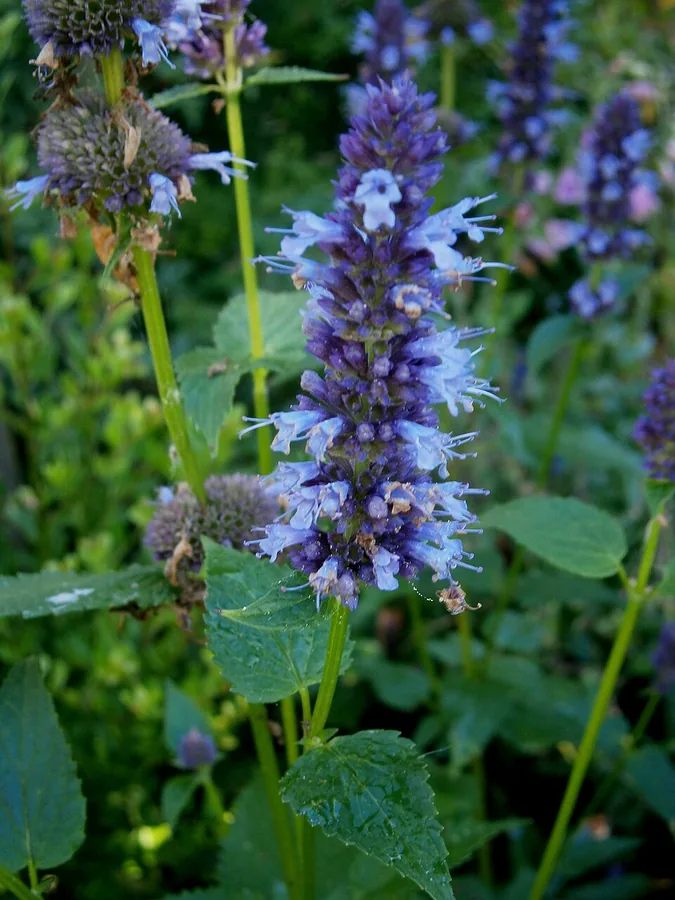
Anise hyssop wears its hummingbird mint name well, with bees, butterflies, and hummingbirds threading its blooms from June through September. A mint by family yet a tidy one in habit, it lifts slim, upright spikes of soft blue-lavender flower above leaves that breathe out anise and licorice at the lightest brush of a hand.
It is an easy perennial for a sun-washed bed, hardy from zone 4 to zone 8 and unbowed by cold reaching -29°F (-34°C). Once its roots take hold it asks for almost nothing, riding out parched spells and standing untouched beside the deer and rabbits that strip the tender plants around it.
Give it space and crumbly, free-draining soil, and a lone clump swells into a 2 to 5 foot (60 to 150 cm) column of bloom that sways at the back of a border. The flowers pour out nectar for pollinators through summer, and the dry, rust-brown seed heads left standing draw finches deep into winter, so the plant keeps its place long after the color fades.
Care
The short version: full sun and crumbly, free-draining soil are the heart of it, because this plant dreads sodden roots far more than a parched stretch. Soak it deeply, then let the top half of the soil go dry and dusty before the next drink, feed with a light hand if at all, and snip the spent spikes through summer to keep fresh bloom rising.
Light
Plant anise hyssop in full sun and the stems stand thick and firm under the heaviest crown of bloom. A patch of afternoon shade is tolerated, but in thin light the stalks lean and flop and the flowers thin out, while shade also opens the leaves to the powdery mildew they would otherwise resist.
Water
Soak the ground deeply, then leave it be. Wait until the top half of the soil crumbles dry before the next drink, a rhythm that lands near every 7 to 14 days. An established clump shrugs off drought, but soil that stays slick and wet is the one thing certain to rot it out.
Soil
Rich earth is no concern, and the plant takes hold in loam, gritty sand, or even stony, lean ground so long as it drains freely. Aim for a pH between 6.0 and 7.5, and steer clear of any low hollow where rainwater stands and glints after a storm.
Temperature
Hardy across zone 4 to zone 8, anise hyssop weathers cold biting down to -29°F (-34°C) and heat climbing to around 95°F (35°C). That broad sweep of tolerance is why it lingers where many a softer perennial simply gives out.
Humidity
Plain outdoor air suits it, so there is no figure to chase down. What counts is a moving breeze, since crowded, still, muggy plantings are exactly the close, damp pockets where powdery mildew dusts in.
Feeding
This is a plant that thrives on a thin diet. Feed it only now and then, with no more than a light scatter of balanced fertilizer or a crumble of compost across the growing season. Pour on more and you get soft, leaning stems where the flower spikes should be.
Pruning
Snip the faded, browning spikes through August to keep fresh bloom pushing up. Let the dry stalks stand stiff through winter for the birds, then cut back to the new green growth in spring; shearing down to about 12 inches that spring drives a fuller, more branching mound.
Size & spacing
Look for a clump that rises 2 to 5 feet (60 to 150 cm) tall and fans 1.5 to 3 feet (45 to 90 cm) wide. Give it that whole footprint so air drifts freely between the stems and mildew finds no still, damp corner to settle.
When to plant
Once rooted in, anise hyssop keeps the slow, returning pulse of a perennial. Sow seed indoors through the gray weeks of late winter, set young plants out after the last frost when the soil has warmed under your fingers, and the spikes color the bed from June through September. Let the dried, standing stalks weather the winter, then shear back to the fresh green shoots in spring.
Northern hemisphere
Southern hemisphere
Typical months for a temperate climate: start earlier in warm zones, later where spring frosts linger.
- Sow: 8 to 10 weeks before the last spring frost
- Plant: after the last spring frost once soil has warmed
- Harvest: Blooms June to September
Hardiness
USDA hardiness zones: 4–8
Temperature: down to -34°C
Troubleshooting
Nearly every stumble with anise hyssop leads back to one thing: soil that sits wet and airless. Loosen the drainage and let a breeze move through, and the plant rarely calls for your hand. Match the look of the trouble below, then step in while the fix still bites.
A slumping plant over a black, slimy base
What you are seeing is crown or root rot, born of ground that stays sodden rather than any disease a spray could reach. The crown turns soft and dark under your fingers, the base goes slick and waterlogged, and the stems eventually fold to the ground. Cut the watering back and sharpen the drainage, lift away any plant gone to mush, and bed firm, healthy divisions into soil loose enough to drain.
Fix:
- Improve drainage and reduce watering
- Remove and discard severely affected plants
- Replant healthy divisions in well-drained soil
A floury white bloom across leaves and stems
That powdery gray-white dust filming the leaves and stems is powdery mildew, settling in wherever the air hangs heavy and the planting grows close and damp. It clouds the surface of the foliage far more than it threatens the plant. Thin the stand and widen the gaps so a breeze can slip through, strip off the most coated leaves, and keep droplets off the foliage.
Fix:
- Improve air circulation by spacing and thinning
- Remove affected foliage
- Avoid overhead watering
Rusty, brown freckles scattered over the leaves
Small raised pustules in burnt orange, or darker brown blotches, mark rust and fungal leaf spots creeping across foliage that dries too slowly. The blemishes scar the surface but in most years leave the plant whole beneath. Pick off the freckled leaves and burn or bin them, loosen the planting so air threads through, and pour the water low at the base so the leaves never sit wet.
Fix:
- Remove and destroy infected leaves
- Improve air circulation
- Avoid wetting foliage
Toxicity
The safety picture is an easy one. Anise hyssop holds no toxins at all, so it sits safely among cats, dogs, horses, livestock, and children alike. Its leaves cross over into the kitchen as a herb, lending teas and baked goods a sweet anise flavor, while the strong, cool scent quietly waves most browsing animals off on its own.
Safe for
People · Cats · Dogs · Horses · Rabbits · Livestock · Birds
Cats None
A cat that bats at the leaves and takes a bite faces nothing harmful, since the plant holds no toxic compounds. Gulp down a big leafy mouthful of nearly anything green and a little drool or a brief upset stomach can follow, yet anise hyssop puts a cat at no real risk.
Dogs None
Dogs share the bed with it untroubled. The most a foliage-chewing dog tends to feel is a short gurgle in the belly, the same as any harmless plant brings on, and one whiff of that sharp anise note usually turns a nose away after the first taste.
Horses Safe
Horses can crop the grass right up to it without harm, as no part of the plant is poisonous to them. The scented, licorice-tinged leaves hold no draw for a horse, so the clump stands untouched at the pasture edge.
Rabbits Safe
Rabbits run no danger near it at all. The plant carries a rabbit-resistant streak, so they tend to lope past the aromatic foliage in favor of softer, sweeter greens elsewhere.
Livestock Safe
Cattle, goats, and sheep can graze the field beside it in safety, with no toxin lurking in the leaves. The cool, minty licorice smell steers most stock toward other forage and leaves the upright stand intact.
Birds Safe
Anise hyssop holds no harm for birds and lays out a table for them across the year. Finches grip the dry, knobbed seed heads still upright in winter, and the summer spikes pull in hummingbirds and pollinators on the wing.
People Safe
More than merely harmless, the leaves earn a spot in the kitchen, releasing a sweet anise or licorice taste into teas, salads, and baked goods. No part of the plant brings any danger to children.
Varieties
A handful of striking anise hyssop cultivars are worth knowing by sight and by name. These are the faces that turn up most often on the nursery bench.
Blue Fortune
A favorite hybrid carrying thick, bottlebrush spikes of blue-lavender that hold their color for weeks.
Golden Jubilee
Grown above all for its bright golden-yellow leaves, which glow beneath the slim lavender spikes rising over them.
Blue Blazes
A tall cultivar topped with vivid, upright spikes of violet-blue flower that stand out across a bed.
How to propagate
Anise hyssop fills out a garden with little effort, whether you carve apart a tired old clump or simply let it sprinkle its own seedlings through the beds.
DivisionEasy
Spring or fall · One growing season
Dividing is honest, hands-in-the-dirt work. Heave a settled clump from the ground in spring or fall, tear the tangled crown into firm, rooted pieces, and press the divisions back into loose, well-drained soil. Each one needs a full growing season to knit in below and bulk out above before it looks like much.
SeedEasy
Spring; self-seeds readily in the garden · First season from transplanted seedlings
Anise hyssop self-seeds freely, dropping volunteers that sprout in tufts around the parent, so the simplest path is lifting those little seedlings and tucking them where you want them in spring. To raise that crop, let the late-summer spikes brown and ripen instead of cutting them, and the transplants swell to a fair size within their first season.
Myths
Anise hyssop is a true mint that will take over the garden.
It does sit among the mints, yet it never sprawls and smothers the way the true mints do. Its creep is gentle, a slow push of rhizomes underground paired with a scatter of self-sown seed, and it often proves a short-lived perennial rather than a ground-swallowing spreader.
Anise hyssop is related to true hyssop and tastes like it.
The name hints at a kinship that is not there, since the plant belongs to the genus Agastache, not the true Hyssopus. Pinch a leaf and a sweet, cool anise or licorice scent rises off your fingers, the very thing that carries it into teas, salads, and baked goods.