
Introduction
The name cypress trees covers a surprising number of very different plants, not one single tree you can picture. A swamp giant in Louisiana, a tall green spear in Tuscany, and a fast hedge in your neighbor's yard can all wear that same label. Sort out which one you actually mean, and the right care suddenly makes sense.
These are big, long-term trees, and the numbers prove it. The bald cypress reaches about 100 feet tall and lives 400 to 600 years, according to the USDA Forest Service. I watched a homeowner set a row 4 feet apart for instant privacy, and the trees were already crowding at head height. You are not planting a shrub. You are setting up a tree that may outlive your house by centuries, so the spot you pick matters more than most people think.
Picking the right variety is only half the job. The other half is disease and spacing, and that is where most cypress problems actually begin. You will get the facts that decide whether a cypress thrives or browns out and dies young. Get the spacing wrong and crowding drives the canker diseases that kill privacy screens within a few years.
To get oriented fast, split the types of cypress trees into three groups. The deciduous bald cypress drops its needles each fall. The columnar Italian cypress stays narrow and tall. The Leyland cypress is a fast hybrid evergreen conifer people plant for quick privacy. Three very different trees, one confusing shared name. The rest of this guide untangles them and shows you how to choose and grow the one that fits your yard.
Types Of Cypress Trees
My back-fence screen of Leighton Green Leyland cypress filled in fast and looked perfect for years in my Zone 7 Virginia yard. Then two trees in the row browned out and died from canker, because I had set them too close together. The survivors stand wide and healthy. The gaps where the dead ones came out still show.
The right cypress for you depends on your site and your spacing. It does not depend on how good the plant tag looks at the garden center. Each type below does one job well, so match the tree to the spot in your yard before you buy.
These trees all sit in one plant family. Yet they split into three separate groups, and that split drives most cypress naming mix-ups. The bald cypress group is the odd one out. The Italian and Leyland group holds the true cypress. The Hinoki group is a so-called false cypress. So the word cypress on a label tells you less than you might think.
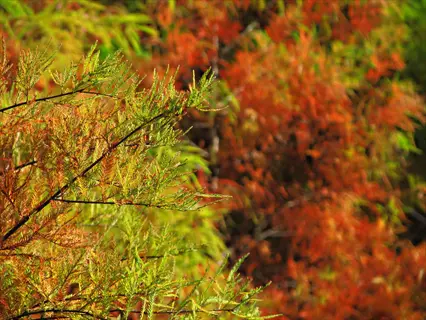
One fact may catch you off guard. Bald cypress and pond cypress are a deciduous conifer. That means they drop their soft needles each fall. The foliage turns a warm copper-orange first. Your tree looks dead in winter, then leafs back out in spring. The rest of the cypress here stay green all year.
Bald Cypress (Taxodium distichum)
- Type: A deciduous conifer native to Southeastern and Gulf Coastal Plain wetlands that drops soft, feathery needles each fall after they turn copper-orange.
- Size: Grows to about 100 feet tall with a trunk near 5 feet across, though landscape trees often settle closer to 50 to 70 feet.
- Site: Famous for tolerating standing water, yet adapts well to ordinary upland yard soil, and hardy across roughly USDA zones 5 to 10.
- Feature: Produces woody knees from its roots near water, and yields decay resistant heartwood that gave old growth its tidewater redcypress reputation.
- Lifespan: A long-lived tree, with stands of 400 to 600 year old trees once common and a few specimens reported near 1,200 years.
- Use: Excellent as a large shade tree, rain garden anchor, or specimen where there is room for its eventual height and spreading base.
Italian Cypress (Cupressus sempervirens)
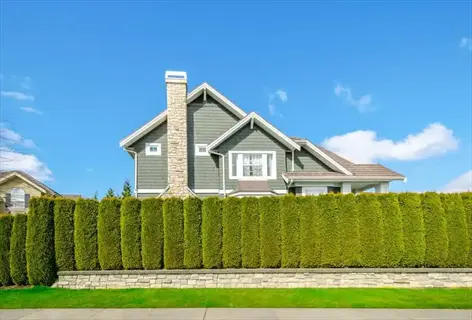
- Type: A slender evergreen with a tight columnar form that reads as a strong vertical exclamation point in formal landscapes.
- Size: Climbs 40 to 60 feet tall yet stays narrow, with no more than about 3 feet of width at maturity.
- Site: Hardy in USDA zones 7B to 11, needs full sun and well drained soil, and offers high drought tolerance once established.
- Feature: Its narrow profile frames entrances and large buildings, but UF/IFAS warns it grows much too tall for most home yards.
- Problems: Mites are a frequent pest, root rot strikes in poorly drained soil, and canker has killed many trees in California.
- Use: Best as a tall screen planted close together, a driveway frame, or an accent around large structures rather than a small yard centerpiece.

Leyland Cypress (x Cupressocyparis leylandii)
- Type: A fast growing sterile hybrid of Monterey cypress and Alaska-cedar that must be propagated from cuttings rather than seed.
- Size: Can exceed 100 feet tall and reach close to 50 feet wide in some regions, growing roughly 2 to 4 feet per year.
- Site: Cold hardy to about USDA zone 6, around minus 8 Fahrenheit, shade intolerant, and best on well drained upland soil.
- Feature: Marketed as a cheap, instant privacy screen, which is the very reason it is so often planted far too close together.
- Problems: Highly prone to Seiridium and Botryosphaeria cankers and root rots once crowded, with no effective chemical cure.
- Use: Works as a screen or windbreak only when given 12 to 15 feet of spacing and good air movement around each tree.
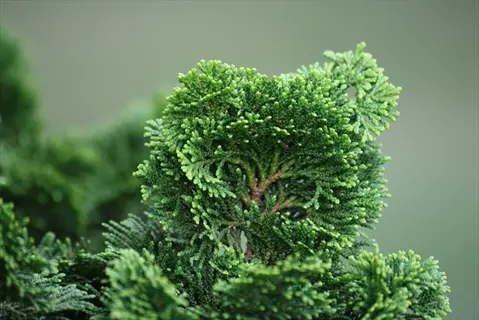
Arizona And Hinoki Cypress
- Arizona cypress: A fast growing native reaching 30 to 40 feet tall with a 15 to 25 foot spread, valued as a windbreak and specimen in full sun.
- Hinoki falsecypress: Naturally reaches 50 to 75 feet, though its many dwarf cultivars are popular for bonsai and small garden accents.
- Site: Both want full sun and well drained soil, with Arizona cypress well suited to hot, dry sites where other conifers struggle.
- Feature: Arizona cypress offers blue-green to silvery foliage, while Hinoki falsecypress brings rich texture and a refined, layered branch habit.
- Naming: Hinoki is a falsecypress in the genus Chamaecyparis, a reminder that not every plant called cypress is a true Cupressus.
- Use: Arizona cypress suits rural windbreaks and screens, while dwarf Hinoki forms fit containers, foundation beds, and Japanese-style gardens.
Notice how the size numbers swing here. Italian cypress stays under 3 feet wide, while Leyland cypress can spread close to 50 feet in the wrong spot. Read those mature figures before you dig, and give your tree the room it needs. That one habit would have saved my two dead Leylands, and it can save your screen too.
Compare Cypress At A Glance
Most people pick a cypress on looks alone, then regret it five years later when the tree outgrows the spot. The smarter move is to match the tree to the job. Do you need a fast screen, a fix for a wet corner, a formal accent by the door, or something that fits a small yard? Each goal points you to a different tree.
The table below lines up the main types of cypress trees so you can scan mature size, hardiness zone, and best use in one place. The number buyers skip most is mature width, and it matters more than height. Italian cypress holds a slim 3 ft (0.9 m) wide column, while a Leyland can spread toward 50 ft (15 m) in some regions. That gap decides whether the tree fits your fence line or wrecks it.
Read those height and width figures as regional maximums, not promises. A Leyland that hits 100 ft (30 m) tall and 50 ft (15 m) wide does so on a good open site over many years, and many never get there. Its growth rate runs about 2 to 4 ft (0.6 to 1.2 m) per year. That speed is why people reach for this fast-growing cypress when they want a quick screen. Just give it the room that speed demands.
Use the best-use column as your starting point. Bald cypress earns its place in a wet corner or as a wide shade tree. Italian cypress works as a narrow formal accent where space is tight. Hinoki gives you accent and dwarf forms for small beds. Pick the tree that fits the job and the zone, and the care that follows gets a lot simpler.
Planting And Spacing Cypress
The inner branches on my back-fence Leighton Green Leyland screen browned out two summers after I planted it here in Zone 7 Virginia. I had set the row too tight for a fast wall of green, so the middle of each tree stayed damp and never dried between rains. I pulled out every other tree to open the gaps, and the airflow came back. Within a year the survivors pushed fresh green growth where the dead needles had been.
That spacing number is the part most buyers get wrong, so start with the math before you dig. Leyland cypress needs a minimum of 12 to 15 feet between trees, a figure backed by both Clemson and UGA. A narrow Italian cypress stays under 3 feet wide its whole life, so you can set those about 3 feet apart for a tight column wall. Get the gap right first, then the site and the hole fall into place.
Wide spacing is disease prevention, not just a look. When trees sit too close, the inner branches can't dry out, and the trapped moisture raises the humidity inside the canopy. That damp, still air is what feeds needle blight and canker on Leyland cypress. Give each tree room and you cut its biggest health risk before it ever starts.
Start planting cypress trees in full sun and well-drained soil, and measure the mature width before you commit to a spot. Buyers chase a quick privacy screen and forget how big these trees get. UGA calls planting too close the single most common Leyland mistake. A screen that hugs a fence today turns into a 50-foot wall, and in a decade it presses hard against the boards. Here is the order I follow for every tree I put in the ground.
Choose full sun and well drained soil, and measure the mature width so the tree clears fences, structures, and neighboring plants as it grows.
Give Leyland cypress at least 12 to 15 feet between trees for airflow; columnar Italian cypress can sit about 3 feet apart for a tight screen.
Dig a hole about twice the width of the root ball but no deeper, so roots spread outward without settling too low in the soil.
Set the root ball level with the surrounding grade, backfill with native soil, and firm gently to remove large air pockets.
Add 2 to 4 inches (5 to 10 cm) of mulch, keeping it off the trunk, then water deeply to settle the soil around the roots.
Planting Leyland cypress just a few feet apart for an instant screen is the mistake that drives its worst diseases; give every tree 12 to 15 feet so air can move through the row.
Watering Feeding And Mulching
Caring for cypress comes down to three habits you get right early. Watering cypress the smart way during the first year or two sets up everything that follows. Add a little mulch and the rare feed, and your tree mostly takes care of itself after that.
Young trees want about 1 to 2 inches (2.5 to 5 cm) of water per week while their roots spread out. The trick is how you deliver it. Soak the soil deeply, then let the top dry out a bit before the next drink. Deep, slow watering pulls roots downward, where they find moisture in a drought. Shallow daily sprinkles do the opposite. They keep roots near the surface, lazy and exposed, and that weakens the tree for life.
Now for the good news. Established trees need almost none of this. Once your cypress settle in after a season or two, they turn drought tolerant and pull through dry spells on their own. So all that careful watering really only applies while the roots get started. The routine below breaks down each habit by stage.
- Watering: Give young trees about 1 to 2 inches (2.5 to 5 cm) of water per week, soaking deeply and letting the soil dry slightly between waterings.
- Establishment: Keep up regular watering through the first season or two; once established, most cypress are drought tolerant and need extra water only in long dry spells.
- Mulching: Spread 2 to 4 inches (5 to 10 cm) of mulch over the root zone, pulled back from the trunk to prevent rot and discourage pests.
- Feeding: Apply a balanced slow-release fertilizer such as 8-8-8 or 10-10-10 in spring if growth is weak; mature trees in decent soil rarely need feeding.
- Drainage: Avoid soggy, poorly drained spots and never overwater, since standing moisture around the roots invites the root rots cypress is prone to.
A ring of mulching does a lot of quiet work here. Lay it 2 to 4 inches (5 to 10 cm) deep over the roots, but keep it pulled back from the trunk so the bark stays dry. It locks in moisture, blocks weeds, and feeds the soil as it breaks down.
Fertilizing cypress trees is the step you can almost forget. A mature tree in decent ground rarely asks for a thing. If young growth looks pale or slow, give it a balanced slow-release feed like 8-8-8 or 10-10-10 in spring. One warning beats any feeding schedule. In soggy, badly drained soil, too much water hurts a cypress far faster than too little. Standing water around the roots invites root rot, so let the ground breathe between drinks.
Cypress Pests And Diseases
Most cypress diseases have no chemical cure, and that one fact should change how you treat your trees. The two cankers that kill the most cypress, Seiridium canker and Botryosphaeria, both shrug off fungicides once they take hold. Your real defense is airflow and clean tools, not a spray bottle.
The trouble almost always starts with crowding. Trees planted too close trap moist air between their branches, and that humidity feeds canker and needle blight all season long. Healthy, well-spaced cypress fight off the same fungi that flatten a packed row. The chain runs from tight spacing to trapped humidity to disease. That is why thinning a crowded hedge does more good than any spray on the shelf.
Knowing which problem you have changes what you do next, so here is a quick field guide to the four that matter most.
Seiridium Canker
- Symptoms: Yellow to reddish-brown foliage appears on scattered branches first, followed by sunken cankers that often ooze resin.
- Spread: Moves by rain, overhead irrigation, and contaminated pruning tools, and can take years from infection to visible cankers.
- Control: No fungicide is effective or practical; prune out infected wood and disinfect tools with a 10% bleach solution between cuts.
- Prevention: Reduce stress through proper spacing and watering, since stressed and crowded trees are far more susceptible to infection.
Botryosphaeria Dieback
- Symptoms: Stress-associated dieback forms deeply sunken, V-shaped cankers that show little or no resin, the key difference from Seiridium.
- Triggers: Drought, heat, and root stress weaken trees and open the door to this opportunistic fungal canker.
- Control: Like Seiridium, it has no chemical cure, so management relies on removing affected branches and reducing tree stress.
- Prevention: Keep trees vigorous with good siting and watering, because healthy, unstressed cypress resist this dieback far better.
Phytophthora Root Rot
- Symptoms: Yellowing then browning needles mimic drought stress, but the real damage is hidden in rotting roots below ground.
- Conditions: Strikes poorly drained, compacted soils, and hits young plants hardest while established mature trees are seldom affected.
- Control: Improve drainage and avoid overwatering, since once aboveground symptoms appear the root damage is already irreversible.
- Replanting: The pathogen persists in soil for years, so do not replant cypress where trees have already died from root rot.
Bagworms And Mites
- Bagworms: Females lay 500 to 1,000 eggs inside each spindle-shaped bag, and heavy feeding can defoliate and kill branches.
- Timing: Bacillus thuringiensis works best on young larvae in May and loses effect once bags exceed about half an inch.
- Limits: Systemic neonicotinoids give less than 10% control of bagworms, so timing and handpicking matter more than spraying.
- Mites: Spider mites are a frequent cypress pest, especially on Italian cypress, causing stippled, dull, fading foliage in hot dry weather.
The fastest way to tell the two cankers apart is the resin. Seiridium cankers often ooze sticky resin, while Botryosphaeria cankers show little or no resin at all. That single check tells you which fungus you face, even though the treatment is the same for both. You cut out the bad wood and you wipe your blades with a 10% bleach mix between cuts so you do not carry the spores down the row.
Bagworms reward early eyes. One female packs 500 to 1,000 eggs into each bag, so a few missed bags this year turn into a chewed, bare hedge the next. Hit young larvae in May, because the systemic sprays many people reach for give under 10% control once the bags harden. With Phytophthora root rot the rule is even simpler. The fungus lives in the soil for years, so once a tree dies from it you do not plant another cypress in that same spot.
Seiridium canker is one of the most destructive fungal diseases affecting Leyland cypress in South Carolina landscapes.
Bald Cypress And Wetlands
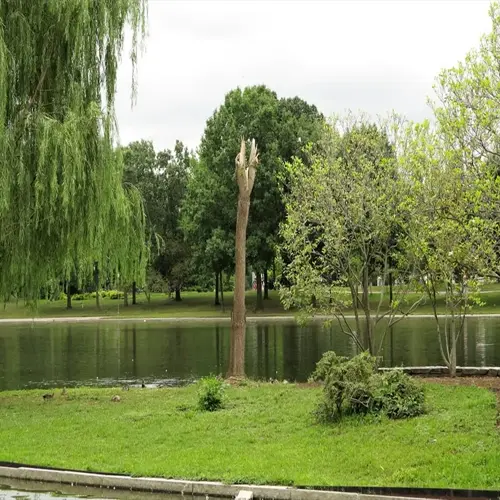
Every November my one bald cypress turns copper-orange against the gray back fence. It sits in the damp low corner of my Zone 7 Virginia yard. The soft needles drift down for two weeks straight. I planted it six years ago near the fence line where rain pools after a storm. The ground stays damp but never floods. In six years it has not pushed up a single knee.
That tracks with what the science says. A bald cypress is a deciduous conifer. It grows needles like a pine but drops them every fall like an oak. The famous bald cypress knees are woody bumps that rise from the roots. They range from a few centimeters to over 12 feet (3.6 m) tall, and the height depends on the site.
Their height simply mirrors the water level around the tree. You may hear that the knees breathe for the roots in soggy ground. The USDA reports no confirmed physiological function for them at all. My tree sits on damp soil with no standing water, so it has no reason to raise one. If your site never floods, expect the same from your own tree.
Cypress swamps and other forested wetlands that receive periodic nutrient subsidies from floodwaters probably are some of the world's most productive ecosystems.
The numbers back up that claim. One Florida floodplain forest measured 15,700 kg per hectare (14,000 lb per acre) of new growth in a single year. Floodwater drops fresh nutrients across the wetland each season. The trees turn that gift into a wall of green wood and needles. You will not match that pace in a yard, but it shows you how much this tree loves wet, rich ground.
A cypress swamp also explains why this tree built its reputation for lasting wood. Old-growth heartwood holds an oil called cypressene that fights rot. Builders prized it for shingles, docks, and fence posts that sit in water. That decay-resistant wood is the real deal in old trees. Just know that the second-growth lumber you buy today comes from younger trees and lacks the same rot resistance.
5 Common Myths
Bald cypress can only grow in swamps or standing water and will fail if you plant it in an ordinary dry yard.
Bald cypress tolerates wet ground but does not require it, and it grows well in normal upland yard soil across zones 5 to 10.
Leyland cypress stays a tidy small hedge, so you can plant the trees just a few feet apart for an instant screen.
Leyland cypress can reach 100 feet tall and nearly 50 feet wide, and crowding it drives the canker and root diseases that kill it.
Italian cypress is an easy choice for almost any home yard because it stays narrow and never causes trouble.
Italian cypress climbs 40 to 60 feet tall, which UF/IFAS likens to a green telephone pole, so it suits accents not most home yards.
Cypress canker and dieback can be cured if you simply spray the tree with the right fungicide at the first sign of browning.
Seiridium and Botryosphaeria cankers have no effective chemical control, so prevention through spacing, airflow, and clean tools is the real defense.
The knees that rise around a bald cypress exist to feed the tree oxygen, which is why they only appear in water.
Research has found no confirmed function for cypress knees, and their height instead tracks the average water level at the site.
Conclusion
Picking the right cypress comes down to the job you need it to do. Cypress trees split into three groups that rarely swap roles well. Bald cypress is your shade and wet-ground tree, reaching about 100 feet tall across roughly zones 5 to 10. Italian cypress is the tall accent, climbing 40 to 60 feet while staying near 3 feet wide. Leyland cypress is the fast hedge that buyers love and then regret.
That regret almost always traces back to one mistake. People treat a Leyland as a quick privacy screen and plant it tight against a fence or wall. But this tree can hit 100 feet with proper room, so it needs 12 to 15 feet of spacing between plants. Crowd it and you trade airflow for humidity, and humidity is what canker and blight feed on.
Here is the takeaway that saves the most trouble. Match the tree to the site and give it room, and you head off most cypress problems before they ever start. The same rules carry every group. Almost all of them want full sun and well-drained soil, plus deep watering only until the roots take hold. Get those basics right and the rest of your cypress care stays light.
So keep the through-line simple. Choose by job, space for mature size, and watch for canker instead of hoping to spray it away once it lands. There is no spray that reliably cures canker once it sets in. That makes good spacing your real defense. Plan for the tree the cypress becomes, not the small one in the pot, and you will plant with confidence.
Glossary
- Bagworm
- A caterpillar pest that builds a spindle-shaped bag on cypress foliage, where females lay 500 to 1,000 eggs.
- Botryosphaeria dieback
- A stress-related fungal canker of cypress that forms sunken V-shaped cankers showing little or no resin.
- Cupressaceae
- The cypress plant family that includes bald cypress, Italian cypress, Leyland cypress, and several related conifers.
- Cypress knees
- Woody, cone-shaped growths that rise from a bald cypress's roots near water, with height that tracks the average water level.
- Deciduous conifer
- A cone-bearing tree, such as bald cypress, that drops all of its needles each fall instead of staying evergreen.
- Needle blight
- A fungal disease that browns and sheds cypress needles, worsened by the high humidity of crowded, poorly ventilated plantings.
- Phytophthora root rot
- A soil-borne disease that rots cypress roots in poorly drained ground, mimicking drought stress above ground and persisting in soil for years.
- Seiridium canker
- A destructive fungal disease of cypress that browns branches and forms sunken cankers that often ooze resin, with no chemical cure.
External Sources
Frequently Asked Questions
What is special about cypress trees?
Cypress trees stand out for decay resistant wood, long lifespans, adaptable forms, and the bald cypress habit of growing in standing water.
What are the downsides of cypress trees?
Downsides include large mature size, frequent crowding, untreatable canker diseases, bagworms, and winter burn on exposed sites.
How far apart should you plant Leyland cypress?
Plant Leyland cypress at least 12 to 15 feet apart so air can move and trees do not crowd as they widen.
Do cypress trees need wet or boggy soil?
No. Most cypress need well drained soil, and even bald cypress only tolerates wet ground rather than requiring it.
How tall do Italian cypress trees grow?
Italian cypress reaches 40 to 60 feet tall but stays narrow at about 3 feet wide.
Why is my Leyland cypress turning brown?
Browning usually signals canker disease, Phytophthora root rot, bagworm feeding, or winter desiccation on exposed sites.
How long do cypress trees live?
Bald cypress commonly live 400 to 600 years, and a few are reported near 1,200 years old.
Are cypress tree roots a problem for foundations?
Cypress roots are generally not a foundation problem, but the tree's mature size and planting distance matter more.
What is the fastest growing cypress tree?
Leyland cypress is the fastest, adding 2 to 4 feet of height per year on typical sites.
Can cypress trees grow in cold winter climates?
Bald cypress is the hardiest, surviving zone 5, while Leyland handles zone 6 and Italian cypress needs warmer zones.