Ornamental · Dryopteridaceae
Wood Fern
Dryopteris marginalis
Leathery blue-green fronds arch from a low crown, lined underneath with round rows of spore cases.
Partial shade
Every 5–7 days
USDA 3–8
12–24 in · 30–60 cm
Overview
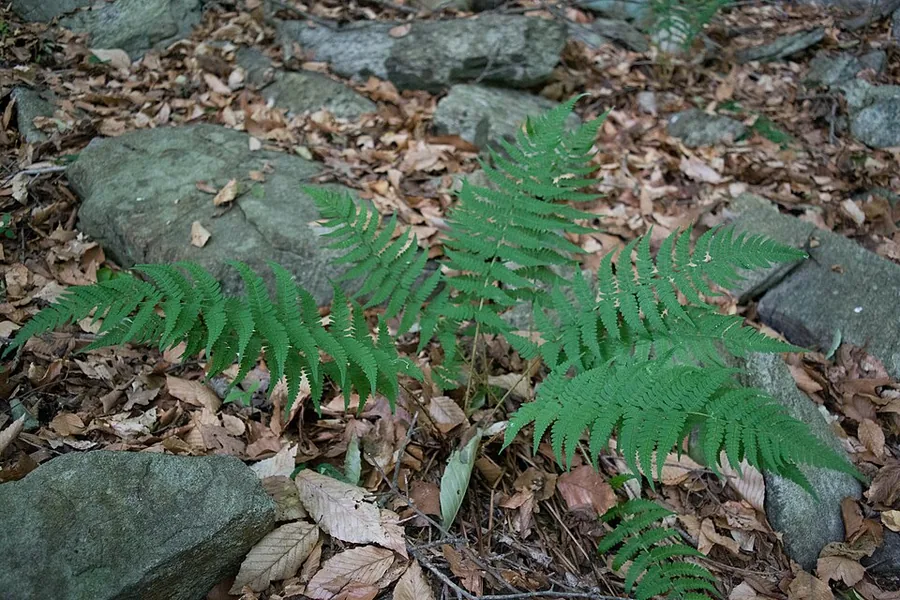
Run a finger along a wood fern frond and it feels leathery and firm rather than papery. The color is a cool blue-green that holds through the season and stays semi-evergreen into winter where the cold is mild. Each blade arches out from a low central crown, giving the clump a rounded, mounded shape.
Turn a frond over and the reason for the name shows itself: rows of small, round spore cases run right along the margins of the underside, neat as stitching. The whole clump stays compact and low, spreading to only about 1 to 2 feet (30 to 60 cm), a tight mound of overlapping fronds. In spring the new growth rises as tightly coiled fiddleheads that slowly uncurl into full blades.
The texture is what sets it apart up close. The fronds stay stiff and leathery to the touch, holding their form long after softer plants have flopped, and their steady blue-green never turns loud. Even the spore cases along the edges add to the look, dotting the underside of each frond in orderly lines.
Care
The short version: partial to full shade, soil kept evenly moist and rich in organic matter, and one yearly trim of the old, tattered fronds before the new fiddleheads uncoil.
Light
Give it partial to full shade, the dim, filtered light beneath a canopy where its blue-green color reads richest. A little morning or filtered sun is fine while the soil stays moist, but under harsh midday sun the frond edges brown and scorch.
Water
Keep the soil evenly moist but never waterlogged, roughly every 5 to 7 days as the weather turns. A settled clump can hold its firm, leathery fronds through a short dry spell, but a long drought leaves the margins crisp and browned.
Soil
Root it in humus-rich, well-drained loam thick with organic matter, the dark, springy ground of a forest floor. It takes any pH from 5.0 to 7.0 without complaint.
Temperature
This fern is tough down to the core, hardy from about -22°F to 86°F (-30°C to 30°C). Deep cold leaves the fronds intact, but hot, dry air draws the moisture from them and they suffer.
Humidity
It holds up at average to moderate humidity, around 40% to 60%. Outdoors that need is easily met, and steady soil moisture with a sheltered spot keeps the fronds firm more than any figure in the air.
Feeding
Ferns are light feeders and want little. A single spring topdressing of compost or a balanced slow-release fertilizer at the start of the season is all the fronds need to color up.
Pruning
Little grooming is called for. In late winter to early spring, cut away the ragged, dead, or winter-browned fronds just before the coiled fiddleheads push up, then leave the fresh growth to open on its own.
Repotting
A wood fern holds its ground for years and dislikes disturbance. Divide the clump every 3 to 5 years only when the crown grows congested, the middle dies back, or the fronds lose their firmness and fullness.
Size & spacing
A mature clump stands about 1 to 2 feet (30 to 60 cm) tall and spreads about as wide, a low mound of arching fronds. Leave each plant that much room so the blades fan out fully and air passes between them.
When to plant
A fern sets no flower and bears no fruit to mark the calendar, only a season to plant. Set it out in spring once the frost has passed, when the fiddleheads are rising, or in early fall while the soil holds warmth. Divide established clumps in those same windows.
Northern hemisphere
Southern hemisphere
Typical months for a temperate climate: start earlier in warm zones, later where spring frosts linger.
- Plant: Spring after frost danger passes, or early fall
Hardiness
USDA hardiness zones: 3–8
Temperature: down to -40°C
Troubleshooting
In the right spot, a wood fern rarely falters, and the fronds themselves show the first sign of trouble. Most of it comes down to too much sun or soil gone dry, read plainly in browning edges or a drooping blade. Match the look below and adjust before it spreads across the clump.
Brown, brittle edges creeping along the fronds
This browning is frond scorch, the mark of too much sun over dry soil. Where the midday sun strikes a frond, the thin margins dry and crisp before the rest of the blade. Move the plant into deeper shade in spring or fall, keep the soil evenly moist, and spread a leaf-litter mulch to hold that moisture at the roots.
Fix:
- Increase watering to keep soil evenly moist
- Provide additional shade or relocate to a shadier site in spring or fall
- Mulch with leaf litter or compost to retain moisture
Fronds drooping and shriveling in a dry spell
When the soil dries well beneath the surface, the leathery fronds lose their stiffness, sag, and may not lift again by morning. This is drought stress, sharpest in a young fern's first season before the roots reach out. Water deeply and steadily, then mulch to trap the moisture around the crown.
Fix:
- Water deeply and consistently
- Apply organic mulch to conserve moisture
Dark or rusty flecks across the fronds
Look closely first, because the neat rows of round dots along the frond edges are the fern's own sori, the spore cases that belong there. A true fungal leaf spot or rust breaks the pattern with ragged, uneven blotches and sets in where the air is still and damp. If it is disease, cut off the marked fronds, open the clump so air can move through, and water at the base to keep the blades dry.
Fix:
- Remove and discard affected fronds
- Improve air circulation and avoid overhead watering
Toxicity
For all its woodland toughness, this is a true fern and safe to grow at home. The marginal wood fern is not listed as toxic to pets, livestock, or people, so a brushed or nibbled frond does no harm. Keep to the usual habit of stopping pets and children from chewing the underground rhizomes of any garden plant.
Safe for
People · Cats · Dogs · Horses · Rabbits · Livestock · Birds
Cats None
A cat can bat at or nibble the leathery fronds without harm, since true ferns like this one hold no toxins for them.
Dogs None
Dogs are safe among the fronds. A curious chew will not poison them, though a big mouthful of any plant can leave a dog with a passing upset stomach.
Horses None
No toxin in these fronds threatens a horse. They are not part of a normal diet, but a grazed mouthful does no real harm.
Rabbits None
Rabbits can move among the fronds safely, and a nibbled tip here and there means nothing.
Livestock None
Cattle, goats, and sheep take no poison from these fronds, which lack the toxins found in some pasture weeds.
Birds None
Pet and backyard birds are in no danger among the foliage.
People None
The fronds are safe to handle and grow around adults and children alike. Some ferns give edible young fiddleheads, but this one is best left uneaten.
Foliage poses little risk, but avoid letting pets or children chew the rhizomes; the marginal wood fern itself is not listed as toxic.
Helpline numbers

United States
ASPCA Animal Poison Control: (888) 426-4435 (fee applies)

United Kingdom
Animal PoisonLine: 01202 509000 (fee applies)

Australia
Animal Poisons Helpline: 1300 869 738
Varieties
The marginal wood fern is the one most gardeners grow, but a few of its Dryopteris relatives share the shade garden, each with its own look. These are the ones to know by sight.
Dryopteris erythrosora (autumn fern)
An Asian relative whose young fronds unfurl a warm coppery bronze before deepening to green.
Dryopteris filix-mas (male fern)
A European and North American species with a stout rhizome once used as a worming medicine that can irritate in quantity.
Dryopteris affinis 'Cristata The King'
A golden-scaled male fern selection whose every frond ends in a dense, crested, tasseled tip.
How to propagate
Wood ferns multiply easily, and the surest way is to split a leathery-fronded clump already growing.
DivisionEasy
Early spring or fall · 1 to 2 growing seasons
Splitting a clump is the quickest way to raise more of these leathery-fronded ferns. In early spring or fall, lift a mature crown and tear it into sections, each holding roots and a live growing point, then bed them back down at once. The new clumps firm up over 1 to 2 growing seasons. Spores will grow ferns too, but the work is slow and needs sterile, humid conditions.
Myths
Ferns must start from seed, just as flowering plants do.
A fern never opens a flower and never drops a seed. The round spore cases packed along the frond undersides do the work instead, which is why the way to get more is dividing the clump, not sowing.
Wood ferns need dense, full shade and burn out in any sun.
A liking for partial to full shade is a preference, not a hard limit. Where the soil stays consistently moist, the fronds take morning or filtered sun without scorching.