Houseplant · Dryopteridaceae
Holly Fern
Cyrtomium falcatum
Glossy, leathery, holly-shaped fronds and a pet-safe, shade-loving nature define this arching fern.
Partial shade
Every 5–7 days
50–75°F · 10–24°C
USDA 6–10
Overview
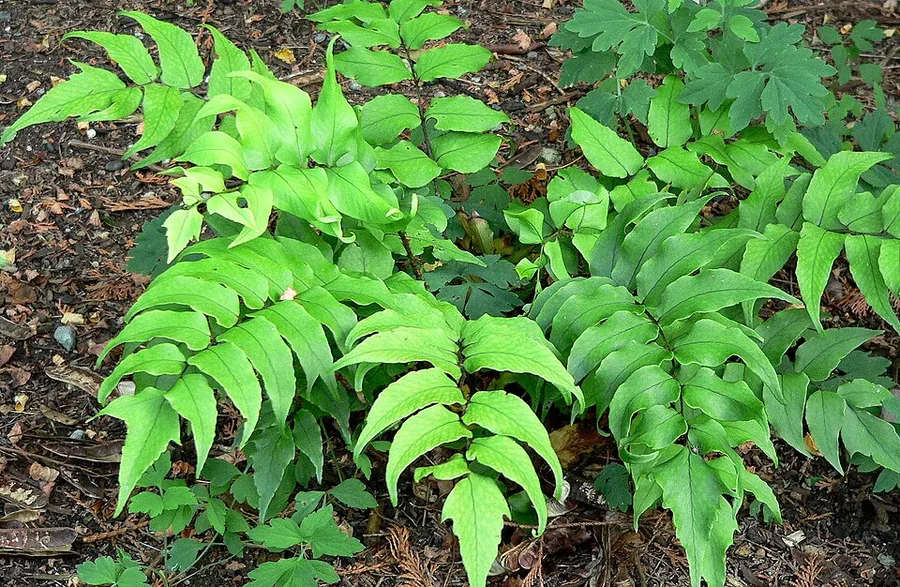
Holly fern earns its name from the leaflets that line each frond: stiff, glossy, and leathery, cut with the toothed outline of a holly leaf. The fronds themselves arch out from a central crown in a deep, shining green, spaced in neat pairs of leaflets along a firm central stalk. It belongs to the wood fern family and comes from East Asia, and for all that holly likeness it is a true fern with no tie to the toxic holly shrub.
Up close the texture is what sets it apart from softer ferns. Each leaflet feels thick and almost waxy between the fingers, its surface catching the light with a hard gloss, and that substance is why the plant shrugs off dry indoor air and dim light. The clump stays modest and full, and because it grows slowly the fronds hold their crisp, sculpted lines for years.
The whole plant reads as dark green and solidly built rather than feathery. It wants steady moisture, shade, and a little humidity to keep those leaflets firm, and it is safe around pets and children, so nothing about its stiff, glossy foliage carries a hidden bite.
Care
The short version: part to full shade, soil kept evenly moist but never soggy, rooms between 50°F and 75°F (10°C to 24°C), and humid air around the glossy fronds.
Light
Holly fern wants part to full shade and holds its deep, glossy green in the bright to medium indirect light of an ordinary room. Direct sun scorches the leathery fronds and bleaches that rich green to a tired yellow, so keep it back from the glass.
Water
Keep the soil evenly moist but never waterlogged, watering roughly every 5 to 7 days once the top of the soil dries. This fern will not forgive a long dry spell, and the firm leaflets are the first to slump when it bakes out between drinks.
Soil
Root it in rich, humusy, well-drained loam that stays evenly damp without packing into mud. It takes a wide pH range from 5.5 to 7.5, so most general potting mixes serve it well with a handful of compost worked through.
Temperature
Ordinary room warmth between 50°F and 75°F (10°C to 24°C) keeps the fronds firm. Cold drafts and hot radiators both pull moisture from the leaflet edges and crisp them brown, so keep the plant clear of each.
Humidity
This is a humidity lover, best held at 50% to 70%. In dry air, group it with other plants or set the pot on a pebble tray, since the fine frond tips brown and shrivel first when the air runs parched.
Feeding
Through spring and summer, feed monthly with a balanced liquid fertilizer diluted to half strength to keep new fronds a deep green. Ease off through fall and winter, when the plant slows and barely pushes fresh growth.
Pruning
No routine pruning is needed. Just cut away any damaged, dead, or winter-burned fronds right at the base, which tidies the clump and clears the crown for new fiddleheads to unfurl.
Repotting
Shift it into a slightly larger pot every 2 to 3 years, or sooner once roots snake out of the drainage holes and water pours straight through. A crown packed tight and bulging against the pot wall is the other sign it is ready.
Size & spacing
Indoors the clump stands 12 to 24 inches (30 to 60 cm) tall and fans 24 to 35 inches (60 to 90 cm) wide, the arching fronds reaching well past the pot rim. Give it room so air slips freely between the fronds and disease stays away.
Troubleshooting
Holly fern is hard to kill, but a few problems mark the fronds indoors. Most trace back to too much water or too little airflow, and the first signs surface on the glossy leaflets and at the crown. Match what you see below and act before it spreads across the foliage.
Leathery fronds gone limp over a mushy, blackened base
When the stiff fronds go limp and the base darkens into a soft, blackened mush, root rot from waterlogged soil is at work. Lift the plant free and study the roots, which should feel firm and show a pale color rather than a browned, slippery softness that smells sour. Cut away every soft root, settle the plant into fresh well-draining mix, and water far more lightly so the crown never stands in wet soil again.
Fix:
- Remove the plant and trim away all soft, blackened roots
- Repot into fresh, well-draining humusy mix
- Reduce watering and ensure the container drains freely
Glossy leaflets paling to yellow beneath sticky tan beads
Those small raised beads of brown or tan riding the frond stalks are scale insects, and the ragged white cottony puffs wedged into the leaf joints are mealybugs. Both pierce the fronds and weep a sticky, shining honeydew that pulls in ants and blackens into sooty mold, while the drained leaflets pale toward yellow. Wipe the bumps away with soapy water or touch each one with 70% alcohol, coat the frond undersides in horticultural oil, and keep the plant apart from the rest until the foliage runs clean again.
Fix:
- Wipe off insects with a cloth dipped in soapy water or 70% isopropyl alcohol
- Treat with horticultural oil or insecticidal soap, covering frond undersides
- Isolate the plant until the infestation clears
Ringed dark spots freckling the shiny leaflets
Sharp-edged brown or black spots, many of them ringed or looking soaked through, mark fungal leaf spot across the glossy leaflets. It spreads where the air hangs still and damp on the frond surfaces. Pick off the blotched fronds and throw them out, open the air around the plant, and pour water straight onto the soil so the leaflets stay dry and the spores find no wet film to travel across.
Fix:
- Remove and discard affected fronds
- Improve air circulation and avoid wetting the foliage when watering
- Apply a fungicide if spotting is widespread
Toxicity
For all their spiny, holly-like edges, these fronds are non-toxic straight through. The ASPCA and extension sources list holly fern as safe for cats, dogs, and horses, and being a true fern it carries none of the poison found in the true holly shrub it mimics. Set it anywhere a curious pet or child might reach and touch.
Safe for
People · Cats · Dogs · Horses · Rabbits · Livestock · Birds
Cats None
A cat can bite clean through a glossy leaflet with no poisoning to follow, since the ASPCA lists holly fern as non-toxic to cats. A cat that swallows a large amount of any plant may cough it back up, but that is the tough frond fiber, not a toxin.
Dogs None
A dog can shred and chew the leathery fronds without harm, because this true fern holds nothing poisonous. A large mouthful of the fibrous leaflets might pass as a mild, brief stomach upset and nothing more.
Horses None
Horses show no toxic reaction to the fronds. This is the harmless true fern, not the toxic English holly whose spiny leaf outline it happens to echo.
Rabbits None
The glossy leaflets hold no compounds that trouble rabbits, so the plant stays safe in their reach.
Livestock None
Grazing animals meet no poisoning risk in these fronds, which carry none of the toxins packed into true holly leaves.
Birds None
Pet and backyard birds can grip the arching fronds and peck at the leaflets with nothing there to harm them.
People None
The fronds pose no poisoning hazard to people, children included, though the plant is grown for its foliage rather than for eating.
No special handling required; safe to grow around pets and children.
Varieties
Most holly ferns sold are the plain species, but a couple of named forms show up, each with fronds cut to a slightly different pattern worth knowing apart.
'Rochfordianum'
A vase-shaped cultivar whose arching, glossy fronds carry leaflets rimmed with coarse fringe and deep, jagged teeth along every edge.
var. maritimum
A more compact form built from smaller leaflets, its fronds a shinier, darker green packed close together.
How to propagate
Holly fern multiplies slowly but steadily, and splitting the dense, fibrous crown of an established clump is far surer than coaxing ferns from spores.
DivisionModerate
Spring · 1-2 months
To raise more holly fern, division in spring is the sure path. Lift a mature clump and pull it into sections so each keeps a fist of its own roots and a few fronds, and those sections knit in over the next one to two months. The undersides of mature fronds shed dust-fine spores too, but spore-grown ferns creep along and fail more often, so most growers part the clump instead.
Myths
Anything bearing glossy, holly-shaped leaflets must be every bit as toxic as the shrub it copies.
The glossy, toothed leaflets do echo the spiny outline of holly, but the resemblance is skin deep. This is a true fern, Cyrtomium falcatum, while the poisonous holly is English holly (Ilex), an unrelated flowering shrub. The fern is non-toxic and safe to keep around pets and children.