Houseplant · Crassulaceae
Aeonium
Aeonium
Hand it strong light, sharp gritty soil, and a parched summer rest, and this cool-season grower keeps its rosettes plump and tight.
Full sun
Every 7–21 days
41–77°F · 5–25°C
USDA 9–11
Overview
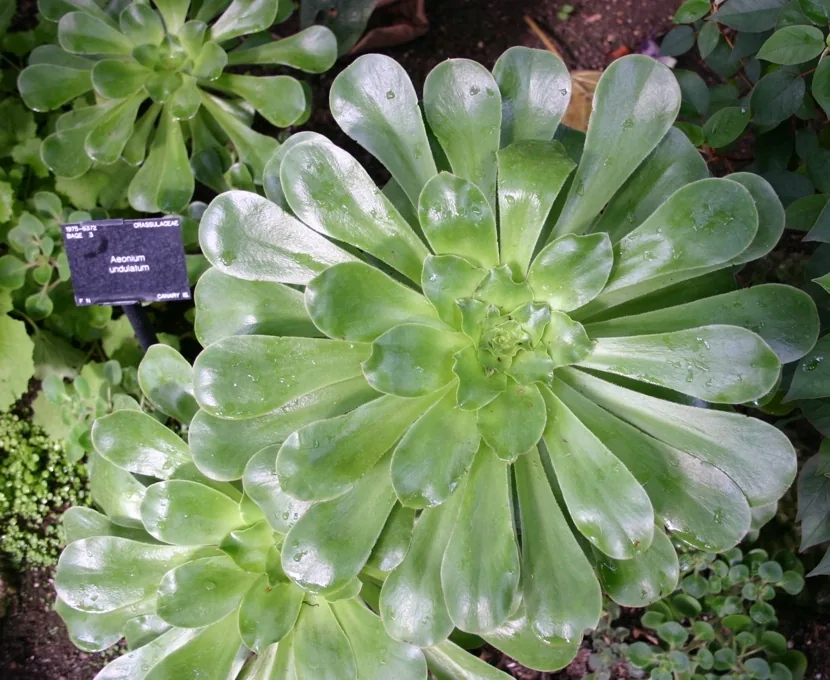
Aeonium gathers its fleshy leaves into neat rosettes at the ends of its stems, a succulent of the stonecrop clan kept as a houseplant or set out in mild gardens. Run a finger over one and the leaves feel firm and waxy, packed in overlapping rings; step back and the whole plant can read as a flat green disc on the soil or a small branching tree on a bare trunk. Its easygoing nature is no exaggeration: a sunny spot and a gritty mix are about all it craves.
The thing that makes Aeonium odd is its upside-down calendar. Where most plants stretch and green up in the warmth and idle through winter, this one flips the script. It puts on growth across the cool season and drifts into a summer-heat lull, its rosettes squeezing shut while the lowest leaves wither and let go. The sight rattles a grower the first time around, but it is simply the plant dozing, not giving up.
Across the genus you find everything from compact sill-sized rosettes to sprawling colonies, and the colors run a long gamut. Some hold a clean bright green, while the celebrated black rose wears rosettes so dark they tip into purple-black. Given a kind climate outdoors it builds a sculptural cushion of stems, and confined to a pot it sits on a bright sill as a tidy, undemanding companion.
Care
The short version: set it in full sun to bright light and a gritty, fast-draining mix. Wet it only once the soil has gone dry in the cool growing season, hold it far drier through the summer lull, and feed at half strength while it is awake and growing.
Light
Give Aeonium full sun to bright light, though it will get by in partial sun or a bright indirect corner indoors. Bathe it in enough light and the rosettes stay snug and tightly packed. Starve it of sun and the stems pull thin and crane sideways, opening bare stretches between the leaves.
Water
Hold off until the soil has gone fully dry, and treat this as the winter grower it is. Through the cool months when it is awake, a soak every 7 to 21 days keeps it content, but in the summer lull let those shut rosettes sit much drier and rest. Wet feet in summer rot the stem faster than anything else.
Soil
Pot it in a gritty, fast-draining mix that lets water rush past the roots instead of pooling there. A pH sitting between 6.0 and 7.0 lands in its sweet spot. Crisp drainage counts for far more than rich feeding, because lingering wetness is the one thing this succulent will not abide.
Temperature
Aeonium settles comfortably from roughly 41°F to 77°F (5°C to 25°C). It carries no real defense against frost, so shield it whenever a freeze looms. Push past the warm end of that band and the plant tucks itself into its summer rest.
Humidity
This succulent leans toward low humidity and takes parched indoor air in stride. No moisture figure needs chasing. A steady breeze moving around the rosettes serves it far better than any pebble tray.
Feeding
Offer a balanced fertilizer thinned to half strength, timed to the cool active stretch from fall through spring. A single feeding each month covers it. Hand it nothing across summer dormancy, while it sits idle and draws up little.
Pruning
Trim leggy or bald stems back down to a leaf rosette to spur fresh side branches. Clip away finished flower stalks and any dead lower leaves so the plant looks clean. What you cut off is hardly trash, since those pieces strike roots without complaint.
Repotting
Move it up a pot every 2 to 3 years, lining the job up with the dawn of the cool growing season so it roots in as it stirs awake. Bump it on when roots wriggle out the drainage holes, the mix parches almost at once, or the rosettes press hard against the rim. Fresh gritty mix primes it for the coming run of growth.
Size & spacing
Depending on the kind, plants stand 6 to 35 inches (15 to 90 cm) tall and fan out 6 to 24 inches (15 to 60 cm) wide. The low saucer types lie almost flush with the soil, while the branching tree forms climb for genuine height. Growth ambles along at a moderate clip, so what you plant looks much like what you live with.
Troubleshooting
Nearly every Aeonium hiccup comes down to a pair of culprits: water and light. The plant flags its own troubles plainly, with mushy flesh, drawn-out stems, or a summer slowdown that reads worse than it really is. Find the picture that matches yours below, then tweak your care before a minor wobble grows into real damage.
A squishy stem or a rosette base turning glassy and see-through
When the stem feels soft and pulpy under a gentle squeeze and the base of a rosette goes glassy and translucent, that is rot from overwatering, and it strikes hardest when a sleeping summer plant sits in damp soil. Slice away every soft, off-color section until your knife meets pale firm flesh, set the clean cuttings aside to scab over, and stand them in dry gritty mix to grow fresh roots. Pair sharp-draining soil with water given only while the plant is awake and growing, and the rot stays gone.
Fix:
- Cut away all rotted tissue back to firm, healthy stem
- Let cuttings callus, then re-root in dry gritty mix
- Withhold water until new roots form
Tight, folded rosettes and dropping bottom leaves in the heat
Watch a rosette pull its leaves inward into a tight little fist while the outer ones go thin and let go, and you are seeing normal summer dormancy rather than a sick plant. This is a cool-season grower taking a hot-weather nap, so the heart of the rosette stays plump and the stem firm under your fingers even as the skirt of leaves curls and falls. Pull back on water, throw a bit of shade over it during the fiercest afternoon glare, and the rosette unfurls again once fall air turns crisp.
Fix:
- Reduce watering and let the plant rest
- Provide light shade from intense summer afternoon sun
- Resume normal care as temperatures cool in fall
Long naked stems wearing rosettes only at their tips
Skinny, drawn-out stems topped by a lone rosette are the plant's way of begging for more light. The stem cranes toward the glass and the leaves drift apart along it, leaving bare gaps where it once held them close. Carry the pot to a sunnier perch that catches a few hours of direct beams, and you can lop off the stretched rosettes and root the tips to coax dense, low growth all over again.
Fix:
- Move to a brighter location with several hours of direct sun
- Behead leggy rosettes and re-root them to restart compact growth
Toxicity
Pet owners and parents can breathe easy: Aeonium is non-toxic and pet-safe. The ASPCA leaves it off its toxic list for cats and dogs, and it carries no poisoning threat to the other creatures wandering a home or yard. An exploratory nibble does nothing, so the plant has every right to a windowsill spot without a second thought.
Safe for
People · Cats · Dogs · Horses · Rabbits · Livestock · Birds
Cats Safe
A cat lounging beside the pot stays perfectly fine, even if it sneaks a mouthful of a fleshy leaf.
Dogs Safe
Should a dog crunch into a whole rosette, no poison waits inside to cause it trouble.
Horses Safe
A horse grazing a stray leaf runs into no poisoning danger at all.
Rabbits Safe
Rabbits sit easy alongside it, so long as greens make up only a slim slice of what they eat each day.
Livestock Safe
Sheep, goats, and cattle can nose around it freely with no poisoning to fear.
Birds Safe
Caged birds and yard chickens alike stay out of harm's way near the rosettes.
People Safe
Even a grabby toddler poking at the plump leaves comes away unharmed.
Varieties
Aeonium turns up in a wide spread of shapes, from rosettes that flatten against the ground to tall stems that mimic miniature trees. The three below show their faces most often and map out that range.
Aeonium 'Zwartkop' (black rose)
Long, forking stems lift up rosettes so deeply purple they look almost coal-black, the very trait behind the black rose name.
Aeonium arboreum
Vivid green rosettes perch on top of bare, woody trunks that lend this kind genuine stature.
Aeonium tabuliforme
A single flat saucer of a rosette lies almost against the soil, its leaves overlapping in snug, crowded spirals.
How to propagate
Few succulents multiply as readily as Aeonium, and the cool growing season is the prime stretch to try. Clip a stem or break off a side rosette, and a brand-new plant follows with barely any work.
Stem cuttingsEasy
During the cool active growing season (fall to spring) · 2 to 4 weeks to root after callusing
Snipping a stem and growing a whole new plant from it is about as effortless as it gets. Make your cut during the cool growing season, leave the raw end to scab over for a few days, then push it into gritty mix where fresh roots will appear in 2 to 4 weeks. One thing to hold in mind: a good many Aeonium rosettes are monocarpic, so the rosette dies once it has flowered.
Offsets & pupsEasy
During the cool active growing season · 2 to 4 weeks once detached and rooted
The branching kinds sprout side rosettes that come away as little plants all on their own. Twist a pup free during the cool growing season, settle it into gritty mix, and it digs in over the next 2 to 4 weeks. Keep in mind that plenty of Aeonium rosettes are monocarpic, so the rosette dies after flowering.
Myths
Aeonium needs frequent watering like a typical houseplant.
Built for drought and growing through winter, this succulent sips rather than gulps. Let it ride out summer dormancy almost bone-dry, and reach for the can only after the soil has gone dry in the cool growing months.
A rosette dropping its lower leaves and closing up in summer means the plant is dying.
Those folded rosettes and falling leaves are the ordinary summer rest of a plant that does its growing in winter. Cool fall weather rouses it back into growth, so set it aside on the dry side and give it time.