Houseplant · Commelinaceae
Silver Inch Plant
Tradescantia zebrina
Give it bright light and a regular pinch, and this striped trailing inch plant packs a pot with color.
Bright indirect
64–75°F · 18–24°C
USDA 8–12
6–9 in · 15–23 cm
Overview
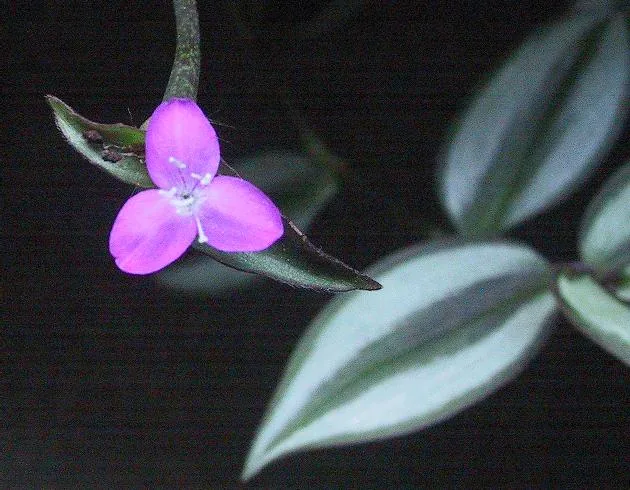
The silver inch plant trails on slim, jointed stems hung with pointed leaves, each blade painted with two silver bands and a deep purple ground on its upper face and washed a solid purple beneath. It belongs to the spiderwort family and grows wild from Mexico down into Colombia, creeping over the ground. Indoors the stems spill over the pot rim in a loose curtain of striped, faintly glossy leaves.
The stems are soft and fleshy, snapping cleanly at their swollen nodes, and they root fast wherever they press on soil, filling back in quickly after a hard cut. What sharpens all that color is strong light, since the silver and purple flatten to a plain green when the plant sits in a dark corner.
A note on the name. The old common name traces back to an antisemitic legend and is now widely dropped in favor of inch plant, silver inch plant, or wandering dude, which is what most growers and references use today.
Care
The short version: bright indirect light keeps the silver-and-purple stripes sharp, water once the soil surface dries and ease off in winter, and pinch the tips often to keep the leaves close-packed rather than leggy.
Light
For the crispest banding, give it bright indirect light, with a little direct morning sun where you can. It will live in low light, but the silver and purple flatten to plain green and the stems draw out long and thin.
Water
Water it well through the growing season, then let the soil surface dry before the next drink, and cut back through fall and winter. Keep it out of soggy soil, since standing wet turns the fleshy stems and roots to rot.
Soil
Root it in a well-drained peaty or loam and sand mix in a pot with drainage holes. It shrugs at pH and sits happily anywhere from 6.0 to 8.0, acidic through to alkaline.
Temperature
Plain room warmth suits it, ideally 64°F to 75°F (18°C to 24°C). Keep it off cold drafts and chilly winter glass.
Humidity
Average household humidity is plenty, so there is no number to hit. When the air runs bone dry, a small lift in humidity keeps the fine leaf tips from browning.
Feeding
Feed monthly with a balanced houseplant fertilizer through spring and summer while it is pushing new leaves. Stop feeding in fall and winter as growth slows.
Pruning
Pinch the stem tips often to keep the leaves close-set and bushy and to head off long, bare stems. The soft tips you remove root with ease, so drop them straight back into the pot.
Repotting
Repot every 1 to 2 years or once the roots crowd the pot, since it grows fast. Look for roots circling the pot or pushing through the drainage holes, thin leggy growth despite good care, or soil that dries almost as soon as you water.
Size & spacing
It stays low at 6 to 9 inches (15 to 23 cm) tall while the stems trail and spread to 12 to 24 inches (30 to 61 cm) across. Give it a shelf edge or a hanging basket so the striped stems can hang free.
Troubleshooting
Almost every fault in an inch plant shows on the stems and leaves and traces to light or water. Flat, greened-out leaves and long, gappy stems call for more light, while soft, browning stems mean the roots sit too wet. Match the look below and act early.
Stems turning soft, brown, and pulpy at the base
When the fleshy stems go soft, brown, and pulpy near the soil, root and stem rot has set in from ground kept too wet, and the whole plant can slump within days. The stem bases squash between your fingers, the soil stays sodden, and a sour smell often hangs over the pot. Cut back to firm, clean tissue, stand those healthy cuttings in fresh, free-draining mix, and throw out the waterlogged soil along with any stem too mushy to save.
Fix:
- Cut away all rotted tissue
- Take healthy cuttings and re-root them in fresh, well-drained mix
- Discard severely rotted plants and waterlogged soil
Fine webbing, cottony specks, and puckered leaves
Several tiny pests settle on the leaves and leave visible traces. Spider mites stretch fine webbing across the joints, aphids clump as soft, pin-sized bodies, and mealybugs sit as little white cottony smudges on the stems and the undersides of the leaves. A firm rinse or a wipe strips the first of them from the foliage. Follow with insecticidal soap or horticultural oil over repeated rounds, and keep the plant set apart so nothing crawls to its neighbors.
Fix:
- Rinse or wipe down foliage to dislodge pests
- Treat with insecticidal soap or horticultural oil and repeat as needed
- Isolate the plant to prevent spread
Silver-purple banding washing out to flat green
The dull, greened-out leaves are the mark of too little light. Starved of it, the silver bands and the purple flush drain away until the blades sit a plain, matte green, and the stems draw out long and thin with bare stretches between one leaf and the next. Set the plant in bright indirect sun or a little morning light, pinch off the drawn-out tips, and the striped, close-packed leaves push back in.
Fix:
- Move to a brighter spot with bright indirect light or some direct sun
- Pinch back stretched stems to encourage compact, colorful new growth
Thin trailing stems bare below and tufted at the tips
Without pinching, the plant ages into a leggy tangle of slender stems that run bare and slightly woody near the base and carry their leaves only in a small tuft at each end. Cutting those naked stems back hard pushes fresh, leafy shoots out lower down. The firm green tips you trim will root, and slipped back into the pot they knit the plant close and full again.
Fix:
- Pinch or cut back leggy stems to force branching
- Propagate the healthy tip cuttings to refill the pot for a fuller plant
Pointed leaf tips going brown and paper-dry
The narrow points and edges of the leaves brown and turn paper-dry first, crisping to the touch while the middle of each blade stays firm and colored, and that is the plant reading too dry at the roots or in the air. A deep watering and a steady routine keep the soil from hardening bone dry between drinks. Where the air is parched, a small rise in humidity spares those fine tips from further scorching.
Fix:
- Water thoroughly and resume a consistent watering routine
- Increase ambient humidity if air is very dry
Toxicity
This is a mild irritant rather than a real poison, though it pays to handle it with care. The clear sap irritates skin, leaving people and pets red and itchy where a broken stem touches them, and a chewed leaf gives a pet a mildly upset stomach. Wear gloves when you prune, and keep the trailing stems clear of animals that like to chew.
Toxic to
Cats · Dogs · Horses · Rabbits · Livestock · Birds · People
Cats Mild
Where a cat drags its coat past a broken stem, the clear sap can leave a red, itchy stripe on the skin. A chewed leaf sets off some drooling and a mildly upset stomach, and the whole reaction stays small.
Dogs Mild
Pushing through the trailing stems can rub a dog's skin red and irritated where the sap smears on, and a chewed stem brings drooling and a little stomach upset. It rarely turns serious, though a keen chewer is best kept clear of the plant.
Horses Mild
The ASPCA lists this plant as causing dermatitis in horses, so the sap on the skin can leave it red and irritated.
Rabbits Caution
The same stinging sap that reddens cats and dogs makes this a poor leaf to offer a rabbit. Keep it well out of reach rather than chance a sore mouth or an upset gut.
Livestock Caution
A grazing animal seldom crosses a houseplant, but the irritant sap would still trouble a goat or sheep that tore off a mouthful, so treat it as one to avoid.
Birds Caution
Firm guidance on birds is thin, and the irritant sap makes caution the safe call. Keep a pet bird from pecking at or shredding the leaves.
People Caution
The sap that beads from a cut stem is a known skin irritant, so handling the plant or taking cuttings can leave your hands red and itchy. Wear gloves when you prune and wash afterward, and keep small children from chewing the foliage.
Wear gloves when taking cuttings or handling extensively, as the sap can irritate skin; wash hands after contact
Helpline numbers

United States
ASPCA Animal Poison Control: (888) 426-4435 (fee applies)
Poison Control: (800) 222-1222



Canada
Poison Centres: 1-844-764-7669
Varieties
Beyond the familiar striped species, a couple of selections show up often and are worth knowing by the look of their leaves.
'Burgundy'
This selection drops the banding for whole deep, dark purple leaves that saturate to their richest tone under bright light.
'Quadricolor'
Its blades run with four tones at once, striped in pink, purple, silver, and green across a single leaf for far more pattern than the plain species.
How to propagate
This ranks among the easiest houseplants to multiply, since almost any fleshy piece you cut will root.
Stem cuttingsEasy
Any time during active growth · Roots in 1-2 weeks
Few houseplants strike this readily. Snip a fleshy stem or tip while the plant is in active growth, set the cut end in water or press it into moist soil, and pale roots thread out within 1 to 2 weeks. The stems are so willing that any node left lying against damp soil sends roots down there on its own.
Myths
The old common name is just a harmless traditional label.
That name traces back to an antisemitic legend and now reads as an ethnic slur. Extension services and plant references have largely moved to inch plant, silver inch plant, or wandering dude, and those are the names worth using.
The inch plant is harmless to pets and people.
The ASPCA lists it as toxic to dogs, cats, and horses, where the sap causes dermatitis. That clear sap can leave human skin red and irritated, and a pet that chews the leaves gets mild mouth and stomach upset. It is a mild irritant, not a deadly poison, but it is not the harmless plant it is often sold as.