Ornamental · Fabaceae
Sweet Pea
Lathyrus odoratus
Sown early and cut often, the sweet pea unfurls scent and color all spring.
Full sun
Every 2–4 days
39–64°F · 4–18°C
50–75 days
Overview
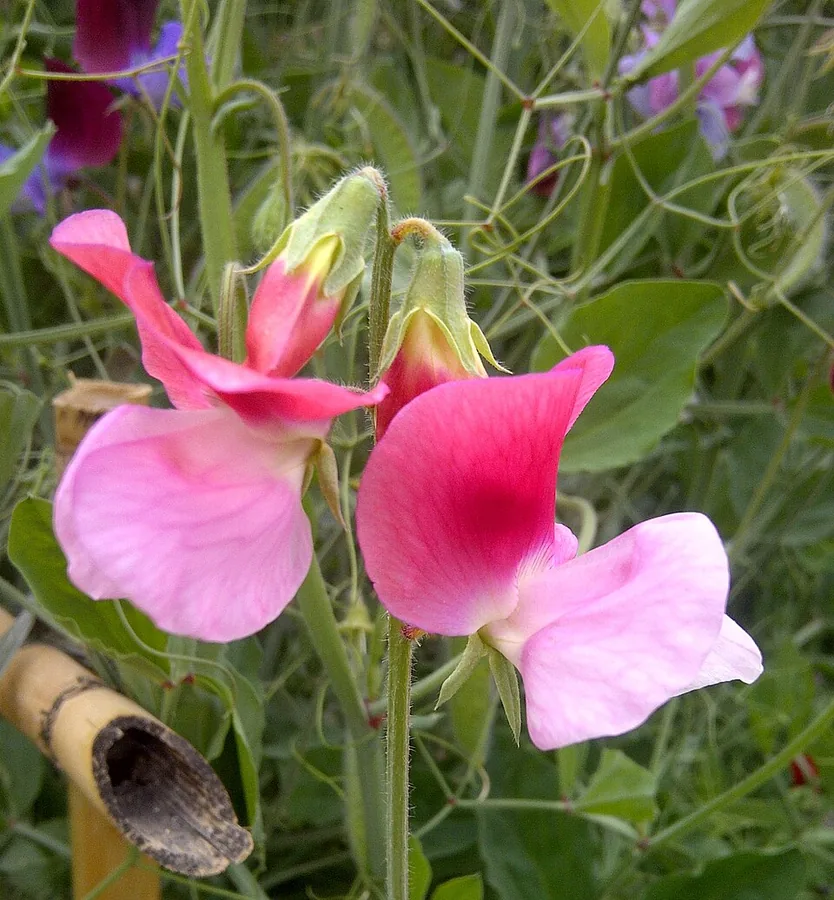
Up close, the sweet pea is all soft, ruffled petals and reaching tendrils. It is a fast-climbing annual in the pea family, its slender stems throwing out thin, coiling tendrils that grip any support and carry a froth of frilled blooms. That heavy sweet scent rising off the flowers is what has kept it in cut-flower gardens for well over a century.
This is a cool-season plant, and its growth shows it. The tender green shoots push up through the chilly weeks of early spring, the ruffled flowers open from May into July, and the whole vine yellows and slackens once the heat arrives. That short, full-petaled run is the trade-off for the color and perfume, and an early sowing draws it out.
The plant rewards a little handling at the start and a steady touch after. The seeds are small and stone-hard, so they take nicking and soaking, and the soil wants even moisture around the roots. Keep snipping the long-stemmed flowers and more keep coming, because once the pods start to swell the plant sets seed and stops, so the more you cut, the longer it blooms.
Care
The short version: full sun, rich and evenly moist soil on the alkaline side, cool growing weather, and steady cutting of the ruffled blooms to keep them coming.
Light
Sweet peas open the most and the fullest blooms in full sun, though they take a little afternoon shade where spring warms early. The more sun the cool-weather growth catches, the thicker the flush of ruffled flowers.
Water
Keep the soil evenly and consistently moist around the roots, watering roughly every 2 to 4 days, and never let the vine wilt while it is in flower. Water low at the base so the leaves stay dry, and set them where the ground drains so the roots never sit sodden.
Soil
Root them in rich, humus-heavy soil that stays moist yet drains, dark and crumbly with organic matter. The plant leans toward the alkaline, so aim for a pH of 7.0 to 7.5.
Temperature
These are cool-weather plants, holding their fresh green growth best between 39°F and 64°F (4°C to 18°C). Both the growth and the flowers slacken once the air turns hot, which is why an early start counts.
Humidity
Ordinary outdoor humidity suits them, so there is no number to hit. Air moving through the leaves matters more, since still, muggy air lets mildew and other spotting diseases settle on the foliage.
Feeding
Feed with a balanced fertilizer about once a month through the growing season. That steady feeding keeps the stems thick and green and the buds forming.
Pruning
Deadhead the spent flowers and keep cutting the long stems, because the moment the pods swell and set seed the plant stops. Once the vine yellows and loosens in the summer heat, pull the whole thing.
Size & spacing
The climbing stems stretch to 3 to 8 feet (91 to 244 cm) and reach for a trellis or netting with their coiling tendrils. Each plant fills out about 2 to 3 feet (61 to 91 cm) across, so give the foliage room and air.
When to plant
Sweet peas put on their soft new growth in the cool of spring and slacken in heat, so timing follows the plant. Start the hard seeds indoors 6 to 8 weeks before your last frost, or sow them straight outside as soon as the soil can be worked, and the ruffled flowers run from late spring until summer heat closes them down. In mild-winter areas, a fall sowing brings the blooms through winter and spring.
Northern hemisphere
Southern hemisphere
Typical months for a temperate climate: start earlier in warm zones, later where spring frosts linger.
- Sow: About 6 to 8 weeks before the last spring frost date; in warm-winter areas seed may be sown in fall or late fall for winter and spring bloom
- Plant: As soon as the soil can be worked in early spring; these are cool-season plants
- Harvest: May to July (spring through early summer; declines in summer heat)
Hardiness
USDA hardiness zones: 2–11
Temperature: down to -46°C
Troubleshooting
Most sweet pea trouble reads plainly on the plant itself: either the whole vine yellowing as the season ends, or the marks of a few familiar pests on the leaves. Look closely to tell ordinary summer decline from a real problem, then match what you see below and act while it still helps.
The whole vine yellows and slumps as summer heats up
When the leaves yellow and the vine slumps in early summer, that is the season ending, not a disease, because sweet peas are cool-season annuals. Once the heat and humidity settle in, no more flowers open. Pull the spent, faded plants, and in warm regions sow again in fall for winter and spring bloom.
Fix:
- Treat as a cool-season annual and enjoy spring bloom
- Remove plants from the garden once they decline
- Sow earlier or, in warm regions, sow in fall for winter/spring bloom
Torn young leaves with glistening trails across them
Those ragged holes and the glistening, shiny trails are the work of slugs and snails on the tender seedlings, heaviest in damp weather. Go out at dusk and pick them off the soft leaves by hand. Clear away leaf litter and other damp hiding spots, and ring the young plants with a barrier or trap.
Fix:
- Handpick slugs and snails in the evening
- Reduce moist hiding spots and use barriers or traps around young plants
Twisted new leaves, clustered specks of insects, and a white powdery film
Two things often mark the leaves at once. Aphids and mites cluster on the soft new growth as tiny specks and curl it, while powdery mildew, leaf spot, or rust dust or blotch the leaves once the plants sit crowded and damp. Spray the aphids off with water, open the planting to move air through it, and keep the foliage dry.
Fix:
- Wash off aphids with water or treat as needed
- Improve air circulation and avoid overhead watering to reduce foliar disease
Toxicity
The pods tell the danger. Sweet pea forms plump, pea-like pods, and those pods and their seeds hold a neurotoxic amino acid that causes lathyrism, with weakness and lasting nerve and bone damage, in people, horses, and livestock that eat enough, plus stomach upset in cats and dogs. However familiar those pods look, keep them well away from children, pets, and grazing animals.
Toxic to
Cats · Dogs · Horses · Rabbits · Livestock · Birds · People
Cats Mild
A nibble of the soft leaf or stem can bring drooling, vomiting, and a sour stomach. The real hazard is in the seeds and the pods, where a larger or repeated helping can leave a cat weak and shaky on its feet.
Dogs Mild
Chewed foliage tends to bring vomiting and an upset gut. It is the dogs that split open the pods and swallow the seeds that risk weakness and the nervous-system signs of lathyrism.
Horses Toxic
Horses are hit hard. Eating the plant brings weakness, lethargy, restless pacing, head pressing, tremors, and seizures, and a severe case can be fatal.
Rabbits Toxic
The same neurotoxic amino acids packed into the seeds and pods make this plant unsafe for rabbits, so keep it well out of reach rather than offering any as forage.
Livestock Toxic
Cattle, sheep, and goats that graze the seeds over time develop lathyrism, with muscle weakness and lasting damage to the skeleton and nerves. Fence them away from the plants entirely.
Birds Toxic
The poisonous seeds and pods make sweet pea a poor choice around poultry and pet birds, which readily peck at seed. Keep the seed pods out of their reach.
People Caution
Despite the name, no part of this plant is food. The pods and seeds are poisonous, and eating seeds over time can cause lathyrism, with weakness and nerve and bone damage, so keep children away from the seed pods.
Keep seeds and pods away from pets and children; do not confuse the ornamental sweet pea with edible garden peas. The pods are inedible and poisonous.
Helpline numbers

United States
ASPCA Animal Poison Control: (888) 426-4435 (fee applies)
Poison Control: (800) 222-1222



Canada
Poison Centres: 1-844-764-7669
Varieties
The groups differ most in the flowers themselves, in the size, ruffle, and depth of color of the blooms and the length of their stems. These are the ones worth knowing by their look and scent.
Spencer types
The classic exhibition and cut-flower group, carrying large, deeply frilled and ruffled blooms on long, straight stems.
Old-fashioned / Grandiflora types
The blooms are smaller and plainer, but they carry the strongest, sweetest scent, the fragrance that gave the species its name.
Cupani / Matucana
An heirloom bicolor close to the wild original, its flowers a deep maroon and violet with an intense fragrance.
Dwarf / bush types
Compact, low, mounding plants that need little or no support, which suits them to containers and edging.
How to propagate
Sweet peas grow from seed, and the seed is the whole obstacle: a small, stone-hard bead with a coat too tough to let water in until you break it.
SeedModerate
Sow indoors 6 to 8 weeks before last frost, or direct sow in early spring as soon as soil can be worked; in mild climates sow in fall. · Germinates in roughly 1 to 3 weeks; flowering begins about 50 to 75 days after sowing.
Sweet peas grow from seed, and that small, stone-hard seed is the one obstacle. Nick or file through the tough coat and soak each seed in warm water for about 24 hours before sowing so it can swell and sprout. Start them indoors 6 to 8 weeks before your last frost, or press them straight into the ground in early spring once the soil can be worked, and in mild-winter areas sow in fall. The seeds break the surface in roughly 1 to 3 weeks, and the first ruffled flowers open about 50 to 75 days after sowing.
Myths
Sweet pea seeds and pods are edible like garden peas.
The pods look almost exactly like edible garden pea pods, but the ornamental sweet pea is a different plant. Its seeds and pods are poisonous, and eating the seeds over time can cause lathyrism, a serious nerve and skeletal disorder. Grow it for the flowers, never for the table.
Sweet peas keep blooming all summer long.
These are cool-season annuals, and the ruffled flowers open from spring into early summer only. Once the heat and humidity arrive the leaves yellow and the vine fades fast and usually needs pulling, so the show is a spring one, not a summer one.