Ornamental · Fabaceae
Lupine
Lupinus polyphyllus
Give it full sun, cool roots, and lean soil, and lupine throws up tall spires of color from late spring into summer.
Full sun
Every 3–7 days
USDA 4–8
3–4 ft · 0.9–1.2 m
Overview
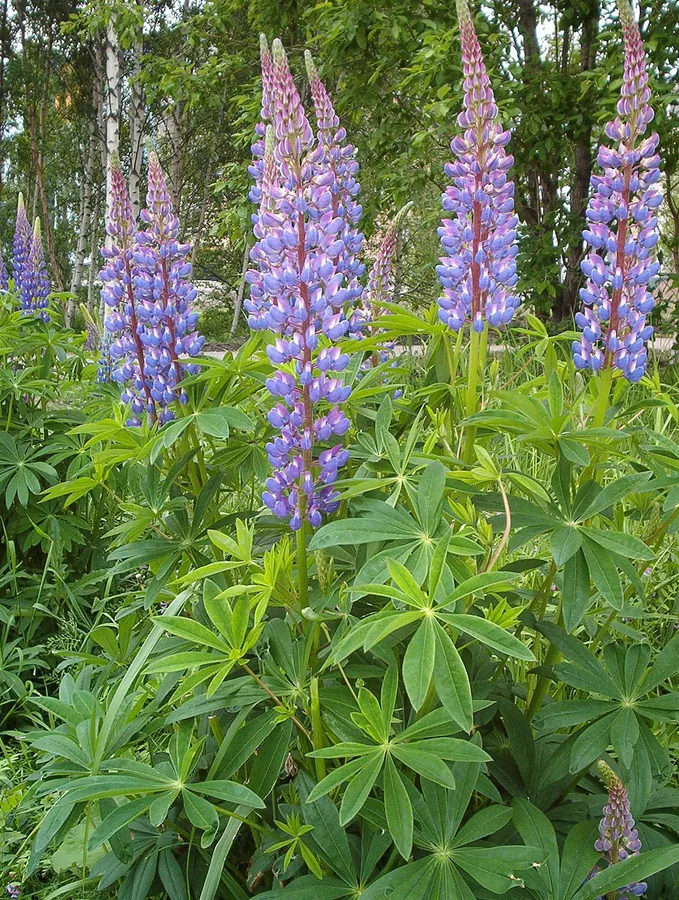
Lupine builds its show from the ground up: a low fan of deeply divided leaves, each one splayed into narrow leaflets like the spokes of a wheel, out of which rise tall, straight spires studded top to bottom with pea-like flowers. The blooms crowd the stem so tightly that the whole spike reads as a solid column of color. Few border plants throw a bolder shape into the early-summer bed.
Most garden plants come from the Russell hybrids, a strain bred for fat, densely packed spikes in clear solid tones and vivid two-tone combinations, where the wings and keel of each little flower catch one shade and the standard petal another. They are perennials, if short-lived ones, and they look their best where summers stay cool. A sunny spot with sharp drainage sets those columns rising fast.
One detail sits behind the looks. Every part of the plant, from the divided leaves to the hard seeds inside their pods, carries quinolizidine alkaloids, packed heaviest into the seeds and pods themselves. That chemistry makes lupine a serious poison for grazing animals and no snack for people. It is a plant to look at closely, not to taste.
Care
The short version: lupine takes full sun with cool roots, moderately rich, well-drained, slightly acidic soil kept evenly moist, a light hand with feeding, deadheading of the faded spikes, and fresh plants every few years.
Light
Lupine wants full sun, and in it the spires stretch tallest and the flower color runs deepest along the whole spike. It will take partial shade, the afternoon kind especially in hot regions, but a shadier spot thins the spikes into fewer, looser flowers.
Water
Keep the soil evenly moist without letting it turn heavy and wet, since lupine wants medium moisture rather than a boggy footing. In warm regions a layer of mulch holds the roots cool and the moisture steady. Sharp drainage counts for as much as the water itself.
Soil
Plant lupine in moderately rich, well-drained loam worked through with organic matter. It leans acidic and sits happiest at a pH of 5.5 to 6.5, so chalky or heavy ground holds it back.
Temperature
This is a cold-hardy plant that carries through winters down to -29°F (-34°C) yet chafes at real heat much past 84°F (29°C). Cool summers keep it vigorous, while hot, humid ones shorten its life.
Humidity
Average outdoor humidity suits lupine, so there is no figure to chase. What matters is airflow, because still, damp air around a crowded stand is what films the leaves with powdery mildew.
Feeding
As a nitrogen-fixing legume, lupine makes much of its own and needs very little feeding, a light low-nitrogen feed at most. A dusting of legume inoculant on the roots at planting yields sturdier, better-performing plants.
Pruning
Deadhead the spent spikes as their color drains to draw out a second flush, hold the plant's vigor, and rein in self-seeding. Once flowering fades, cut the tired foliage back to refresh the low fan of leaves.
Size & spacing
Lupine lifts its spires 3 to 4 feet (91 to 122 cm) tall in bloom above a leafy clump about 12 to 18 inches (30 to 46 cm) across. Give each plant that room so air moves through the foliage and mildew stays off the leaves.
When to plant
Lupine keeps to a cool-season rhythm. The seed goes down in fall or indoors in late winter, the young plants move outside in spring once frost has passed, and the spikes climb into flower from May into July.
Northern hemisphere
Southern hemisphere
Typical months for a temperate climate: start earlier in warm zones, later where spring frosts linger.
- Sow: 6 to 8 weeks before last spring frost; nick/scarify and soak seed to aid germination
- Plant: Spring after last frost, or sow seed in fall
- Harvest: May to July
Hardiness
USDA hardiness zones: 4–8
Temperature: down to -34°C
Troubleshooting
Lupine stays mostly clean, but a few familiar troubles show up on the leaves and the fresh, rising shoots. Spotted early, most are easy to set right. Match the look of the damage below, then act before it spreads.
A chalky white dust filming the leaves and stems
That flat, floury white film is powdery mildew, a fungus that grips the leaves and stems where the air hangs still around crowded or shaded plants. Opening the clump so the leaves dry, watering low at the base, and clearing the worst-dusted foliage strip the coating back.
Fix:
- Improve air circulation by thinning and spacing plants
- Avoid overhead watering
- Remove and dispose of badly affected foliage
Small soft insects packed onto the tips and spikes
Those pinhead-sized, soft-bodied specks massed on the freshest shoots and rising flower spikes are aphids, and their feeding leaves the tips buckled and curled. A hard jet of water knocks the clusters loose, insecticidal soap finishes the clingers, and lady beetles pick off the rest. A lighter hand with nitrogen keeps the soft, sap-filled growth they crowd onto in check.
Fix:
- Spray plants with a strong jet of water to dislodge aphids
- Apply insecticidal soap if needed
- Encourage natural predators such as lady beetles
A full clump thinning and dying out within a few years
Lupine is a short-lived perennial at heart, and hot, humid summers wear its crown down faster still. The spikes shrink and the clump loses vigor within 2 to 5 years, so slipping in fresh plants, keeping it to cool-summer spots or growing it as an annual where the heat bears down, and letting a little seed drop all keep the planting going.
Fix:
- Replace plants every few years
- Grow in cool-summer sites or treat as annual in hot zones
- Allow some self-seeding or start new plants from seed
Torn-edged holes eaten into soft young leaves
Ragged-edged holes chewed into soft young leaves, trailed by a drying silver shimmer of slime, mark the work of slugs and snails feeding after dark. Picking them off by torchlight or trapping them, clearing the damp litter and thick mulch they hide under near the crowns, and ringing the plants with a barrier or iron-phosphate bait protect the tender seedlings.
Fix:
- Hand-pick at night or set out traps
- Reduce damp hiding spots and mulch buildup near crowns
- Use barriers or iron-phosphate baits
Toxicity
Lupine is a poisonous plant behind its handsome spikes. Every part holds quinolizidine alkaloids, densest in the hard seeds and their pods, and grazing animals pay the steepest price. Pregnant cattle face the worst of it, since the teratogen anagyrine causes crooked calf disease, and no part of the plant is safe for people to eat off the stem.
Toxic to
Cats · Dogs · Horses · Rabbits · Livestock · Birds · People
Cats Toxic
The quinolizidine alkaloids turn a cat's stomach, bringing on vomiting and diarrhea. A larger mouthful, above all of the hard seeds, can carry into drooling and tremors, so the plant belongs out of a cat's reach.
Dogs Toxic
A dog that chews the leaves or spikes usually meets vomiting and diarrhea first. The seeds carry the densest alkaloid load, and a larger dose can leave a dog agitated, trembling, and unsteady on its feet.
Horses Severe
Horses are struck hard by the alkaloids, which bring muscle weakness, a wavering stagger, and other nervous signs. The seeds and pods are the most dangerous parts and should never reach their feed or grazing.
Rabbits Severe
Lupine is not safe forage for rabbits. The same quinolizidine alkaloids that poison larger grazers reach a rabbit's small body just as surely, so the leaves, seeds, and pods belong well away from them.
Livestock Severe
Cattle, sheep, and goats fall into muscular weakness, ataxia, and nervous signs from the alkaloids. The gravest danger is a pregnant cow grazing lupine on gestation days 40 to 100, when the teratogen anagyrine causes crooked calf disease, with skeletal contracture deformities and the occasional cleft palate.
Birds Severe
The alkaloid-dense seeds and pods poison birds, and the rest of the plant is no safer. Poultry and pet birds belong away from lupine entirely.
People Caution
No part of garden lupine is casually edible. The bitter seeds are packed with alkaloids and turn into food only after a long soaking and debittering, so the whole plant stays off the menu and children should not sample the seed pods.
Keep grazing animals, especially pregnant cattle, away from lupines; seeds and seed pods are the most alkaloid-rich parts.
Helpline numbers

United States
ASPCA Animal Poison Control: (888) 426-4435 (fee applies)
Poison Control: (800) 222-1222



Canada
Poison Centres: 1-844-764-7669
Varieties
Most garden lupines come from a few well-known strains and selections. These are the ones you will meet most often.
Russell Hybrids
George Russell's classic strain raises tall, densely packed spikes in both saturated bicolors and clean solid shades, though seed saved from your own plants will not breed true.
The Governor
This bushy Russell-type selection stands out for the crisp blue-and-white banding of its bicolor spikes.
Manhattan Lights
A compact hybrid that lifts purple-and-yellow bicolor spikes on stiff, upright stems.
How to propagate
Lupine is grown almost entirely from seed, hard round seeds whose tough coat needs a little help before it will sprout.
SeedModerate
Sow in fall, or start indoors 6 to 8 weeks before last spring frost · Blooms the first or second year from seed depending on sowing time
Lupine springs willingly from seed once the hard, water-tight coat is breached. Nicking or scarifying each seed and soaking it before sowing lets water reach the embryo, and a dusting of legume inoculant on the roots settles the young plants in. Sowing goes in during fall or indoors 6 to 8 weeks before the last frost, with bloom following the first or second year depending on when the seed goes down. Hybrids, though, will not come true from garden-saved seed.
Myths
Lupines are deadly to dogs and cats, so any contact is an emergency.
For a dog or cat, a nibble of lupine usually ends at vomiting or diarrhea and little more. The grave danger falls on grazing livestock, above all pregnant cattle, where the alkaloids cause poisoning and the teratogen anagyrine triggers crooked calf disease.
You can save seed from Russell hybrid lupines and get identical plants.
Seed gathered from a hybrid scatters into a mix of unpredictable seedlings, not copies of the parent plant. Only purchased seed or vegetative propagation reliably reproduces a named strain.