Ornamental · Fabaceae
Hyacinth Bean
Lablab purpureus
Give it heat, full sun, and a tall trellis, and hyacinth bean throws purple flowers and glossy pods clear into fall.
Full sun
Every 5–7 days
50–95°F · 10–35°C
90–120 days
Overview
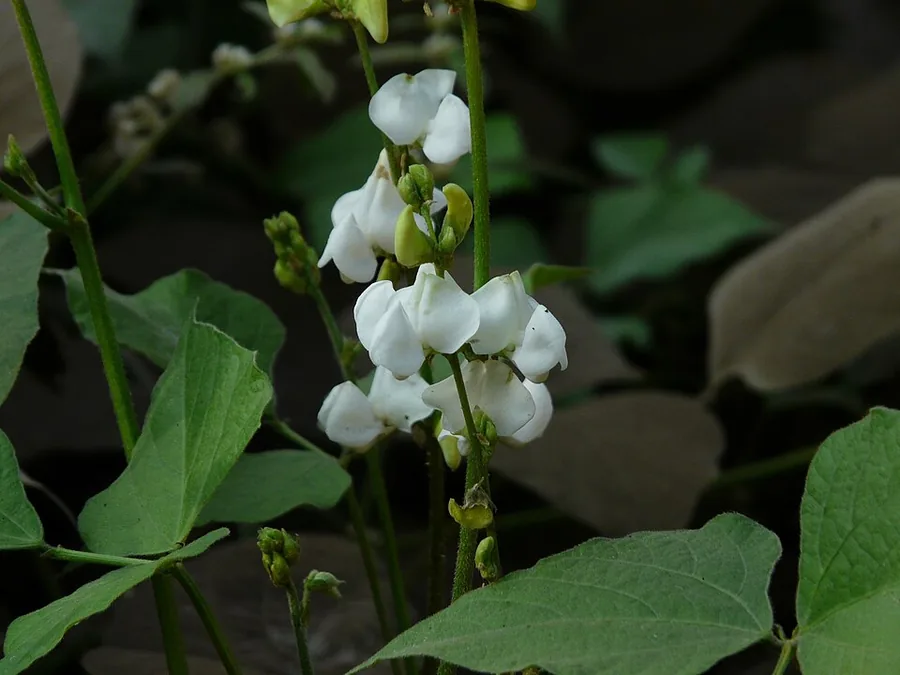
Hyacinth bean is a fast climbing vine hung with spikes of purple or white flowers that ripen into glossy reddish-purple pods, flat and smooth-skinned, holding their deep color right up to frost. It belongs to the pea and bean family, and warm climates keep it alive for years, though most gardeners grow it as a summer annual from seed. Its twining stems can climb well past head height in a single season.
The color is what draws the eye up close. The flat pods gleam as richly as the flower spikes, their reddish-purple skin catching the light, and few climbers pack an arbor or fence with this much pigment as fast. Because it loves heat, its stems keep lengthening and setting fresh flowers through the dog days when other vines flag.
One detail sets it apart from an edible garden bean. The raw mature seeds and pods, for all their tempting shine, carry cyanogenic compounds and are toxic eaten raw, safe only after thorough cooking, so those glossy pods are best admired rather than eaten.
Care
The short version: full sun and real warmth, light well-drained soil kept evenly moist while the vine establishes, a balanced feed that goes easy on nitrogen, and a sturdy trellis to carry the fast, heavy stems.
Light
Hyacinth bean wants full sun, ideally 6 or more hours a day, to flower well and deepen the reddish-purple of its pods. It takes a little afternoon shade, but too much shade stretches the stems leggy and thins the bloom.
Water
Keep the soil evenly moist while the vine roots in, then ease off, since an established plant tolerates some drought. Water deeply through hot, dry spells, and favor light, well-drained ground over soil that stays soggy.
Soil
Average, fertile, well-drained loam suits it, at a pH of 6.0 to 7.5. It is not fussy about richness, so good drainage counts for more than a heavily fed bed.
Temperature
This heat lover runs best between 50°F and 95°F (10°C to 35°C) and slows when the air turns cool. Frost kills the stems outright, so the vine goes out only once the cold has passed for the year.
Humidity
Ordinary outdoor humidity is plenty, so there is no level to hit. Good airflow matters more, since crowded, damp leaves invite the round spots of leaf spot.
Feeding
Feed monthly through summer with a balanced fertilizer. As a legume it fixes its own nitrogen, so keep high-nitrogen feeds light, since they swell the leaves at the cost of the flower spikes.
Pruning
Pinch the growing tips early to push the stems into branching, and little cutting follows. Remove spent pods to keep fresh flowers forming, then cut the frost-killed vine back at the end of the season.
Repotting
not typically grown in containers; grown as an annual from seed each year
Size & spacing
Expect a vigorous climber of 10 to 20 feet (3 to 6 m) tall, its stems spreading 3 to 6 feet (91 to 183 cm) across. Give it a sturdy trellis or arbor and room to run so the heavy, twining growth has something to grip.
When to plant
Hyacinth bean runs on heat and dies back at the first frost. Sow it outdoors only after the cold has passed and the soil has warmed, or start it indoors 6 to 8 weeks ahead for a head start, and its flower spikes open from summer right up to fall frost.
Northern hemisphere
Southern hemisphere
Typical months for a temperate climate: start earlier in warm zones, later where spring frosts linger.
- Sow: 6 to 8 weeks before the last spring frost
- Plant: after danger of frost has passed and soil is warm
- Harvest: summer to frost (roughly June until first fall frost)
Hardiness
USDA hardiness zones: 10–11
Temperature: down to -1°C
Troubleshooting
Hyacinth bean is tough and shrugs off most trouble, and the marks that do appear are usually the work of pests rather than disease. Look over the leaves and new growth for the early signs below, where a chewed edge or a fleck of color first gives the problem away, and step in before it spreads across the vine.
Leaves flecked pale and yellow under fine webbing
In hot, dry weather spider mites dot the leaf surface with countless pale flecks until the green fades to a dull, sanded yellow. The specks stir when a leaf is tapped over white paper, and the thinnest silk webbing threads across the undersides. A hard rinse washes them off and lifts the humidity around the foliage, and insecticidal soap or horticultural oil finishes any that cling on.
Fix:
- Hose down foliage to dislodge mites and raise humidity
- Apply insecticidal soap or horticultural oil if infestation persists
Short, stalled vines carrying only scattered flowers
Hyacinth bean lives for heat, so cool weather leaves the vine short and stalled, its flower spikes thin and scattered where warmth would fill them. The same stunting shows when seedlings go into ground that has not yet warmed and before the last frost has cleared. Wait for warm soil and a sheltered, full-sun spot, and the vine lengthens and blooms once the temperatures climb.
Fix:
- Wait to plant until soil is warm and frost danger has passed
- Provide a full-sun, sheltered, warm site
Leaves eaten down to a lacy green skeleton
Leaves worked into a fine, see-through lace are the sign of Japanese beetles, whose metallic green-and-copper bodies glint in clusters over the vine through summer. They grind away the soft tissue between the veins and leave the pale vein network standing like a skeleton. Lift them off by hand in the early morning, and let light feeding pass, since the fast vine throws out fresh leaves and covers the gaps.
Fix:
- Hand-pick beetles in early morning and drop them into soapy water
- Tolerate light damage, since vines push out fresh foliage and survive well
New shoots crimped, glazed, and puckered
Fresh shoot tips and buds that crimp, pucker, and turn glossy underneath carry aphids, tiny soft-bodied green or black insects packed in dense colonies. Turn a young leaf and you find them clustered along the veins beneath a shine of sticky honeydew. A hard jet of water strips them off, and insecticidal soap deals with a colony that swells beyond that.
Fix:
- Spray colonies off with a strong jet of water
- Apply insecticidal soap to heavy infestations
Dark round blotches ringed with yellow on the leaves
Round brown blotches that widen through wet, muggy weather are fungal leaf spot, each mark holding a fairly clean circular edge, some rimmed in a soft yellow halo. As more leaves take the infection the separate spots bleed into one another across the blade. Strip away the worst leaves, send the water to the base rather than over the foliage, and give the vine room so its leaves dry between soakings.
Fix:
- Remove and discard badly affected leaves
- Improve air circulation and avoid overhead watering
Toxicity
For all their glossy, ripe-looking shine, the colorful pods are a look-don't-eat feature. The raw mature seeds and pods hold cyanogenic glycosides that are toxic to people and animals alike, and only thorough cooking makes the young pods safe. Keep the shiny pods and smooth seeds away from children, pets, and grazing animals.
Toxic to
Cats · Dogs · Horses · Rabbits · Livestock · Birds
Safe for
People
Cats Caution
A cat that bites into the raw, glossy seeds or pods can end up drooling, vomiting, and sore in the stomach from the cyanogenic compounds. Keep the shiny purple pods out of a cat's reach.
Dogs Caution
Dogs are the most likely to crunch the bright, flat pods, and the raw beans inside can bring on stomach upset, retching, and a heavy lethargy. Clear any fallen pods from where a curious dog roams.
Horses Caution
The cyanide-releasing compounds packed in the raw beans and green foliage can leave a horse weak, breathing hard, and off its feed. Keep the vine fenced away from grazing horses.
Rabbits Caution
The raw seeds and pods are not safe browse for rabbits and can set off gut trouble and lethargy. Keep the trimmed vine away from them entirely.
Livestock Caution
Cattle, goats, and sheep can take in enough cyanide from a large feed of the raw beans to stagger, breathe hard, and, at worst, collapse. Keep grazing stock off any planting hung with pods.
Birds Caution
Pet and backyard birds should not peck the raw mature seeds, glossy as they look, since they carry the same cyanogenic glycosides. Offer only feed known to be safe.
People Young cooked pods safe
The young, tender pods are eaten in many countries once they have been cooked all the way through. The raw mature beans are another thing entirely and must be boiled in several changes of water first, since raw they release cyanide that can cause nausea, dizziness, and worse. Never eat the raw beans or pods.
Keep the colorful pods and seeds away from children and curious pets; never eat raw mature beans or pods. Only thoroughly cooked beans are safe.
Helpline numbers

United States
ASPCA Animal Poison Control: (888) 426-4435 (fee applies)
Poison Control: (800) 222-1222



Canada
Poison Centres: 1-844-764-7669
Varieties
A few named forms turn up in gardens, told apart chiefly by the color of their flowers and pods. These two are the ones worth knowing by sight.
Ruby Moon
The most widely grown ornamental form, wearing deep purple stems and glossy reddish-purple flat pods that catch the light through the whole season.
Alba (white-flowered form)
A white-flowered, white-seeded form whose plain green pods carry none of the reddish-purple pigment of the usual type.
How to propagate
Hyacinth bean grows from seed, sprouting fast and sending its twining stems up faster still, so a single packet of the hard, smooth seeds covers a lot of trellis in one warm season.
SeedEasy
Sow outdoors after frost when soil is warm, or start indoors 6 to 8 weeks before the last frost. · Germinates in roughly 1 to 3 weeks; grows rapidly to cover a trellis in a single season
Hyacinth bean grows from its hard, smooth seeds each year, sown outdoors after frost once the soil is warm or started indoors 6 to 8 weeks before the last frost. Soaking or nicking that tough seed coat quickens the 1 to 3 week germination, and from there the twining stems climb a trellis within a single season. Set a sturdy trellis or arbor in place before the growth surges, and gather ripe seed in fall to sow again next spring.
Myths
It is a bean, so the pods and seeds can be eaten raw straight off the vine.
For all their glossy, edible-looking sheen, the raw mature seeds and pods hold cyanogenic glycosides and are toxic eaten raw. Mature beans are safe only after thorough cooking, boiled in several changes of water, and across the US the plant is grown for its color rather than the table.