Ornamental · Osmundaceae
Royal Fern
Osmunda regalis
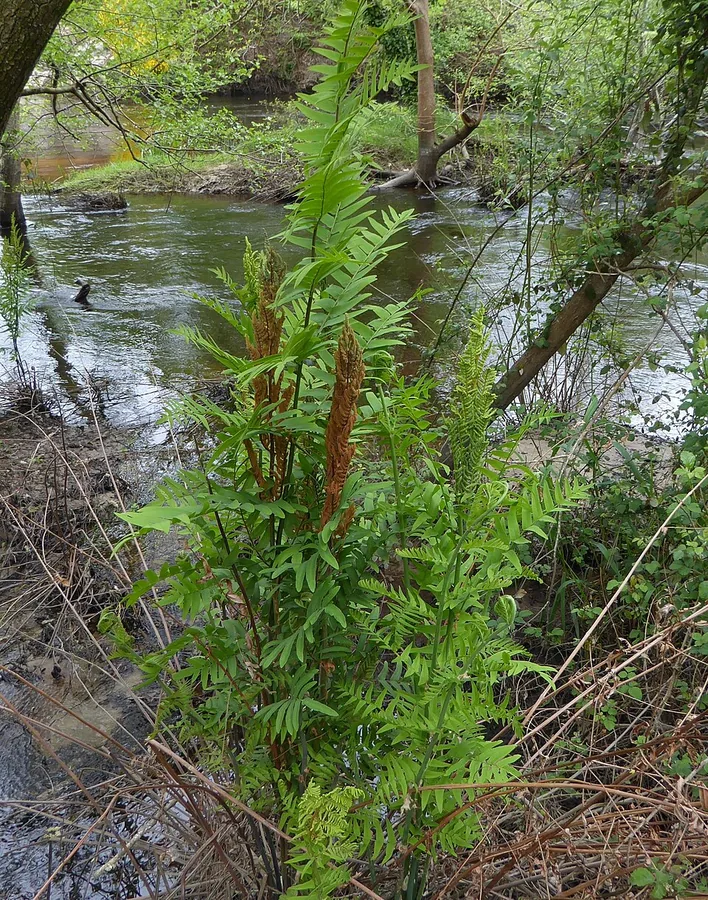
Tall green fronds arch from a woody crown, their fertile tips flushing rusty brown with spores.
Partial shade
Every 2–4 days
USDA 3–9
2–6 ft · 0.6–1.8 m
Overview
Royal fern is a big fern with a bold outline. From a low, woody crown it throws up tall, arching fronds that can stand 6 feet (180 cm) high, each one divided into many small green leaflets along its length. Massed together, the fronds build a rounded, shrub-scale clump. It belongs to the ancient family Osmundaceae, and its fertile fronds carry a distinctive feature at their tips.
The tips of the fertile fronds are what catch the eye up close. As the season goes on they change from green to a rusty brown, crowded with tightly packed sporangia that hold the spores. That crowded, rust-colored cluster looks a little like a flower head, which is how the plant picked up the name flowering fern, though no true flower is there.
In spring the new growth appears as tightly coiled fiddleheads that slowly unroll into full fronds. The plant is deciduous, so the green fronds brown and die down in autumn, leaving the woody crown to overwinter and push a fresh set of coils the following year. The mature clump reads as a solid, arching mound of green through the growing season.
Care
The short version: royal fern wants partial shade and soil kept constantly damp to wet, on the acidic side and rich in organic matter. Hold that steady moisture, feed it lightly in spring, and disturb the crown as little as possible once it settles.
Light
Partial shade, the dappled light beneath open trees, keeps the fronds green and unmarked. The plant will grow in full shade or full sun, but full sun works only where the soil stays wet, since dry roots under bright light leave the fronds scorched and brown at the edges.
Water
Constant moisture is what keeps the fronds full and upright. The soil should stay moist to wet and never dry, with water every 2 to 4 days and more in heat or sun. Growing at a pond margin or in a bog, the plant even stands with its roots in shallow water.
Soil
The roots run through moist, rich, humusy, acidic ground, ideally a pH of 4.5 to 6.5. Clay, loam, or sand all suit it as long as they hold water, and dark leaf mold or compost worked into the soil keeps the fronds a deep green.
Temperature
The crown endures a wide swing of temperature, from -31°F to 86°F (-35°C to 30°C). That cold tolerance carries it through far-northern winters, when the fronds die away and the bare crown waits to send up new coils.
Humidity
The fronds hold best in damp air, around 50% to 80%. Still, humid pockets near water keep the foliage from drying at the edges, which is why the plant looks its greenest beside a pond or stream.
Feeding
The plant feeds lightly, and too much does nothing for it. A spring topdressing of dark compost or leaf mold over the crown is usually plenty, or a single balanced slow-release feed as the first coils appear.
Pruning
There is little to cut. The faded, browned, or frost-killed fronds are removed in late autumn or early spring, before the new fiddleheads uncurl, and the rest of the clump is left standing.
Repotting
A container plant is moved on only every 3 to 4 years, since the roots resent disturbance. The tells are roots pushing from the drainage holes, the woody crown rising in a knot above the soil, and fronds coming in shorter and thinner.
Size & spacing
A full-grown clump stands 2 to 6 feet (60 to 180 cm) tall and spreads 2 to 3 feet (60 to 90 cm) wide, the fronds arching out from a central crown. Set plants that far apart so each one can build its rounded, mounded shape.
When to plant
Royal fern moves through the year in clear stages. New crowns go into cool, damp ground in spring or early autumn, the coiled fiddleheads unroll into fronds as the weather warms, and the fertile tips take on their rusty color from late spring into summer.
Northern hemisphere
Southern hemisphere
Typical months for a temperate climate: start earlier in warm zones, later where spring frosts linger.
- Plant: Spring or early autumn
- Harvest: Non-flowering; spore-bearing fertile frond tips develop late spring to summer
Hardiness
USDA hardiness zones: 3–9
Temperature: down to -40°C
Troubleshooting
Most of what goes wrong with a royal fern shows first in the fronds, and it usually starts with soil that dried out. Browned edges, yellowing, and thin, undersized fronds all point back to moisture, so look at the soil first. The symptoms below describe what each problem looks like on the plant.
Frond Edges And Tips Turning Brown And Crispy
Dry, brittle brown along the frond edges is the mark of drought stress, which this fern will not tolerate. It needs soil that stays moist to wet, so dry roots, hard sun, or a drying wind burn the delicate tips first. Deep watering, a mulch over the roots, and part shade for potted plants bring the green back to new growth.
Fix:
- Water deeply and keep soil consistently moist to wet
- Apply organic mulch to conserve moisture
- Move container plants to part shade or provide afternoon shade
- Trim badly damaged fronds at the base
Fronds Yellowing And Collapsing Early In Summer
When drought sets in, the whole plant can yellow and fold as it drops into early dormancy months ahead of schedule. The fronds look finished, but the woody crown below usually lives on and raises fresh coils the next spring. Steady deep watering, plus cutting away the slumped fronds, sets it right.
Fix:
- Resume deep, consistent watering to keep soil wet
- Cut back collapsed fronds; the crown usually re-flushes the following spring
Pale, Washed-Out Fronds Of Weak Growth
Fronds that come up thin and yellow-green usually signal soil that is too alkaline or too lean for this acid-loving fern, and patchy moisture pales them further. Fibrous, acidic material such as leaf mold or composted bark dug around the roots, with even watering, deepens the color and firms the growth.
Fix:
- Incorporate fibrous, acidic organic matter such as leaf mold or composted bark
- Maintain even moisture
Toxicity
Royal fern is a true fern, and no part of it, frond, stalk, or spore, is considered poisonous. A chewed frond may bring on a little brief stomach upset, but there is no real toxin in the tissue. The one physical caution is contact, since the fine hairs on the fronds and the dust-like spores can leave sensitive skin slightly irritated, so hands are worth washing after handling.
Safe for
People · Cats · Dogs · Horses · Rabbits · Livestock · Birds
Cats None
Royal fern is a true fern and safe for cats to be around. A bite of frond might bring a little drooling or a short bout of upset stomach, and no more.
Dogs None
The fronds hold nothing that poisons a dog. A chewed piece tends to cause only mild, short-lived stomach upset.
Horses None
Horses can graze beside it safely, as the fronds carry no toxin. A large mouthful of the leafy growth can loosen the gut for a short time, and that is all.
Rabbits None
Rabbits can nibble the fronds without harm. Like any new leafy green, it is best offered a little at a time so their gut adjusts.
Livestock None
Cattle, goats, and sheep are not poisoned by the fern, which makes it safe along the wet margins of grazing land.
Birds None
Neither the fronds nor the spores hold any toxin for garden or pet birds to worry about.
People None
No part of the plant poisons people, children included. The young coiled fiddleheads of some ferns are eaten once cooked, though the spores and the fine hairs on the fronds can lightly irritate sensitive skin.
Royal fern is not known to be toxic, but as with any non-food plant, chewing fronds may cause mild, transient gastrointestinal upset, and spores or frond hairs can be a minor contact irritant.
Varieties
The plain species is the one most often grown, but a few named forms differ in the color or shape of their fronds. These are the ones you are most likely to come across.
'Purpurascens'
Its emerging fiddleheads and stalks come up a deep purple-bronze, a strong contrast against the green of the older fronds.
'Cristata'
The frond and pinna tips divide into crested, forked ends that give the plant a tasselled, frilled edge throughout.
var. spectabilis
This is the royal fern of North America, at times treated as a species of its own, Osmunda spectabilis.
'Gracilis'
A narrower, more compact form whose freshly unrolled fronds carry a reddish tint.
How to propagate
Royal fern makes more of itself in two ways: the woody crown can be split into rooted pieces, or the dust-fine spores from the fertile tips can be sown to raise new plants.
DivisionModerate
Early spring or autumn · 1 to 2 growing seasons
The surest increase comes from splitting the woody crown in early spring or autumn, cutting it into pieces that each keep roots and a growing point. The plant resents disturbance, so the crown is divided only now and then, and a fresh piece needs 1 to 2 growing seasons to root down and build a full clump. Spores are the finer route: the short-lived green spores are scattered on moist, sterile peat the moment they ripen, held humid and shaded, and take several months to raise green prothalli and then the first tiny fronds.
Myths
Royal fern flowers, since it is known as the flowering fern.
No flower ever opens on it. The flower-like heads at the frond tips are dense knots of sporangia holding spores, and the plant reproduces by spores rather than flowers or seeds.
Ferns grow from seeds.
Ferns bear no seed. Royal fern grows from the spores shaken from its rusty fertile tips, or from splitting the woody crown into new plants.