Houseplant · Malvaceae
Money Tree
Pachira aquatica
Glossy fanned leaflets on a smooth braided trunk, the money tree is pet-safe and quick to grow.
Bright indirect
64–75°F · 18–24°C
USDA 10–12
6–8 ft · 1.8–2.4 m
Overview
The money tree, Pachira aquatica, grows into a full tree in the wetlands of Mexico and Central and South America. Kept indoors it holds to a manageable 6 to 8 feet (183 to 244 cm), carrying glossy hand-shaped leaves that splay out from the crown like open green fingers. Each leaf splits into several leaflets that radiate from a single point, catching the light on their smooth, deep green surfaces above a slim trunk.
That trunk is what sets the plant apart up close. Most are sold as several trunks braided together, slim green-brown stems plaited by hand and left to knit into one firm, textured column as they thicken. The bark stays smooth and pale on young growth, and the woven strands stay visible along its length, so the trunk reads as a braid rather than a single stem.
The foliage sits at the top on thin, upright stalks, each palmate leaf spreading five or more tapered leaflets into a loose fan. New growth pushes out soft and bright before deepening to the mature glossy green, and the leaflets stay broad and smooth-edged, hanging with a slight droop that gives the crown its full, leafy look.
Care
The short version: those glossy leaves stay fullest with soft bright light, a thorough drink once the upper soil turns dry, tropical warmth, moist air, and drainage that never leaves the roots submerged.
Light
Money trees hold their glossy green best in bright, indirect light, near a window but out of the direct beam. They tolerate medium light and even some shade, which is why they hang on in dim rooms, though the deepest color and fullest crown come in the brightest spot short of harsh sun.
Water
Let the top of the soil dry between waterings, then water it through. The plant suffers far more from wet roots than dry ones, and standing water rots them from below. Let the soil bake too dry, and the leaflets yellow and drop from the crown.
Soil
Grow it in a moist but well drained potting mix, something with peat, perlite, and a little loam or sand so water drains cleanly past the roots. The plant takes a wide pH band in stride, from 6.0 to 8.0.
Temperature
Keep it in ordinary room warmth, between 64°F and 75°F (18°C to 24°C). As a tropical plant it has no tolerance for cold, so keep the smooth-barked stems clear of chilly drafts and frosty windows in winter.
Humidity
This tropical plant favors high humidity, and moist air keeps the leaflets supple and glossy. Average indoor air will do, but it grows better with extra moisture, so group it with other plants or set it near a humidifier in a dry, heated room.
Feeding
Feed monthly with a balanced houseplant fertilizer through spring and summer while new leaflets are pushing out. Ease off in fall and winter, when growth slows and the plant needs far less.
Pruning
Prune to shape the leafy crown and hold its size, which the plant takes well. The slim, flexible young stems are the ones growers braid together while they stay green and pliable, so any braiding belongs to the trunks' young, bendy stage.
Repotting
Repot every 1 to 2 years, or sooner once pale roots begin circling the pot or slipping out the drainage holes. Water running straight through and growth that stalls are the other signs the roots have filled their space.
Size & spacing
Indoors a money tree reaches about 6 to 8 feet (183 to 244 cm) tall, its fanned crown riding above a slim braided trunk, though a modest pot keeps it far shorter. Give it headroom and a quarter turn now and then so the leaflets fill in evenly toward the light.
Troubleshooting
Money trees are hardy, and nearly every problem shows first in the leaves or roots and traces back to water or light. Yellowing foliage, softened brown roots, and pale scorched patches each tell you something specific. Match what you see below and adjust before a small change spreads.
Wilting plant with soft, brown roots
Under soil that stays wet, the pale firm roots turn dark and slippery, and root rot takes over. They come out of the pot brown and mushy, giving off a sour smell, while the leafy crown above wilts and softens in soaked soil. Clear away every rotted root down to firm white tissue, then repot into fresh, well drained mix in a pot that drains.
Fix:
- Remove from wet soil and cut away rotted roots
- Repot into fresh well-drained mix in a pot with drainage
- Water only after the top of the soil dries
Leaves turning yellow and dropping
The glossy green leaflets fade to a flat yellow and let go when watering swings too far either way. A rootball baked bone dry does it, and soggy, waterlogged roots do the same, while a fresh move into a darker or draftier corner can shake loose more foliage. Hold the plant in one place, water once the top of the soil dries, and feed lightly through the growing season to keep the crown full.
Fix:
- Adjust watering so the top of the soil dries between waterings but the rootball is never bone-dry or waterlogged
- Stabilize the plant's location and light exposure
- Raise ambient humidity and feed during the growing season if nutrient-deficient
Glistening sticky coating, cotton-textured clumps, or gnats circling the soil
Kept indoors, the leaves and stems can draw the usual sap suckers. The white, cottony tufts of mealybugs tuck into leaf joints, scale sits as small hard bumps along the stems, aphids gather in soft clusters on new growth, and fungus gnats drift in dark specks over damp soil. Wipe or wash them off the foliage, treat with insecticidal soap or horticultural oil if they hold on, and let the soil surface dry to end the gnats.
Fix:
- Wipe off or wash off pests
- Treat with insecticidal soap or horticultural oil as needed
- Let soil surface dry to discourage fungus gnats
Papery bleached streaks and browned tissue across the leaflets
Where hard sun strikes the glossy leaf surface, the green bleaches to pale straw and browns into dry bleached or browned patches across the leaflets aimed at the window. The plant reads best in bright but filtered light, and the raw midday beam is more than the foliage can take. Draw it back from the glass or soften the light with a sheer curtain, then trim away the most scorched leaves.
Fix:
- Move to a spot with bright indirect light or filtered sun
- Remove badly scorched leaves
Toxicity
For homes with pets or children, the money tree is safe across the board. The ASPCA lists it as non-toxic to cats, dogs, and horses, and no toxic principle has been identified in its leaves, stems, or seeds. A glossy leaf within reach of a curious dog or a toddler is no cause for worry.
Safe for
People · Cats · Dogs · Horses · Rabbits · Livestock · Birds
Cats None
The ASPCA lists the money tree as non-toxic to cats, with no toxic principle identified. A curious cat that bites into a glossy leaflet comes to no harm.
Dogs None
Dogs are safe around it too. The ASPCA names it non-toxic to dogs, so a leaf torn loose or a stem gnawed to a stub will not poison them, though a big mouthful of any greenery can still upset a sensitive stomach.
Horses None
The ASPCA clears the money tree for horses as well. No toxic compound sits in the leaves or stems, so a stolen bite is harmless.
Rabbits Safe
Nothing in a money tree threatens a rabbit. The plant holds no toxic principle, so a nibbled leaflet brings at most a little digestive grumbling from the unfamiliar green.
Livestock Safe
Grazing animals such as goats and sheep face no poisoning from this plant, which carries no identified toxin in leaf or stem.
Birds Safe
A pet bird can perch and pick near a money tree without risk, since none of its glossy parts are toxic to them.
People Safe
The money tree is safe around children, with no toxic compound identified. Its large seeds are even eaten in parts of its native range, so a leaf in a small hand is no cause for alarm.
How to propagate
You can raise more money trees from stem cuttings, fresh seed, or air layering, though cuttings are the route most growers take, since the plant rarely sets seed indoors.
Stem cuttingsModerate
Spring to summer · Several weeks to root
Cut softwood or stem sections in spring or summer, while the stems are green and growing. Stand them somewhere warm and humid, and pale new roots push from the cut base over several weeks. Steady warmth and even moisture are what carry a cutting to rooting rather than shrivel.
SeedModerate
When fresh seed is available · Germinates readily from fresh seed
The large, rounded saba nuts split and sprout readily while the seed is fresh, so they go into soil soon after collection. The catch is that houseplants rarely flower, and a plant that never flowers sets no seed, which is why cuttings remain the common route.
Air layeringModerate
Spring to summer · Several weeks
Air layering works as a third route, best done in spring or summer. A section of stem is nicked and wrapped to stay moist, and fresh roots break from the wounded bark over several weeks before the new plant is cut free.
Myths
Those interlaced trunks plait themselves as the wood thickens.
No plant twists its own trunk into that neat plaited column. Growers weave the slim young stems together by hand while they stay soft and green, and the separate trunks knit together into one as they thicken and firm. The braid is a nursery trick, not a natural growth form.
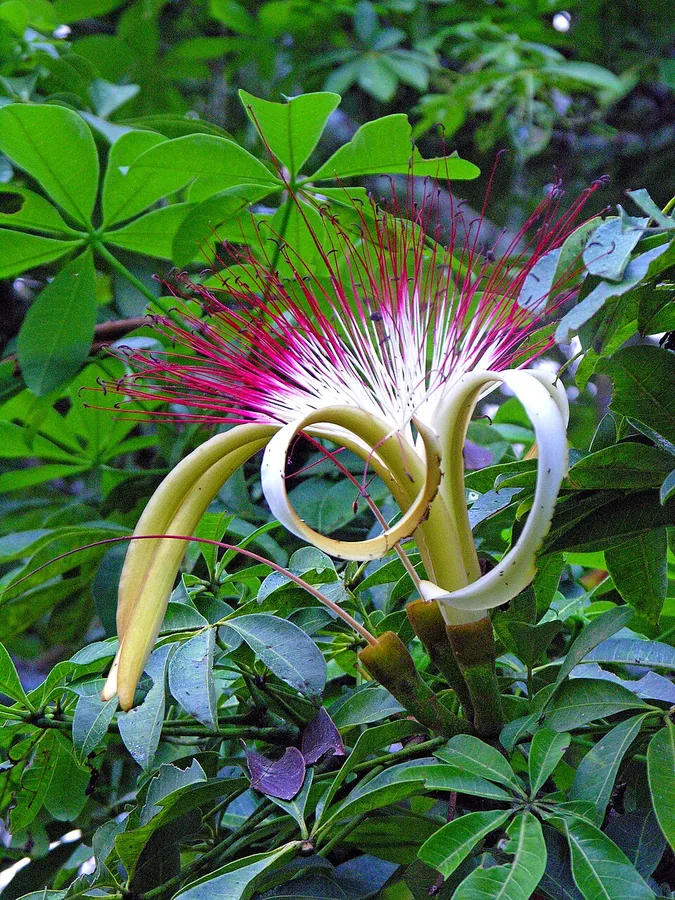
Indoors the money tree opens its showy blossoms for patient owners.
The showy flowers rarely appear on a plant kept indoors, and a braided one shows them even less. Pachira aquatica saves its blooms for plants grown outdoors over several years. Indoors, the draw is the glossy palmate foliage, not the flowers.