Tree · Moraceae
Common Fig
Ficus carica
Give it full sun and steady summer water, and a fig hangs its branches with sweet fruit for decades.
Full sun
Every 7–14 days
50–95°F · 10–35°C
USDA 7–10
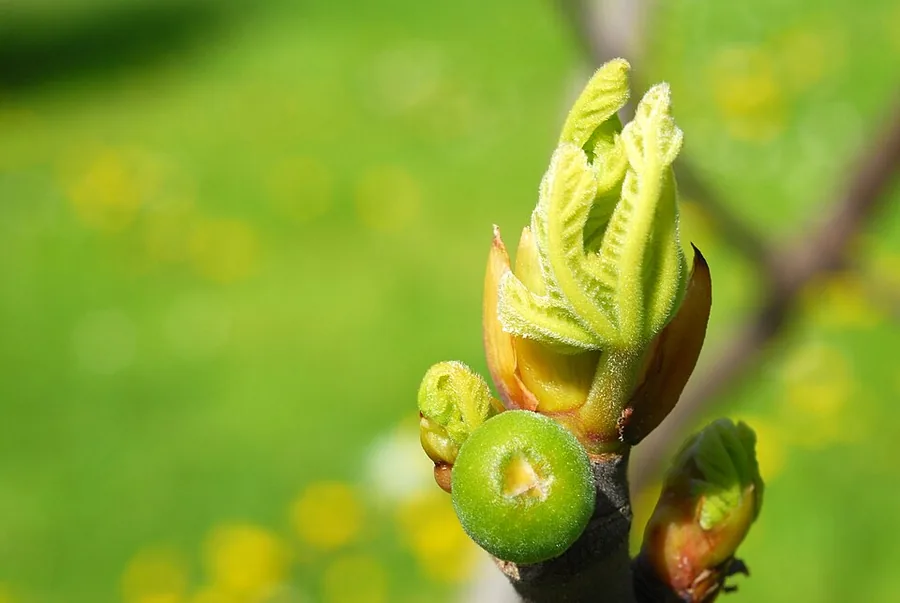
Overview
Up close, a fig is all broad, deep-lobed leaves on a deciduous frame, the foliage spreading wide and dropping clean away each winter. It belongs to the mulberry family and has grown around the Mediterranean for thousands of years. The plant is forgiving and fast, pushing from a single bare cutting to a branched, fruiting tree in only a few seasons.
The fruit is the strange, wonderful part. What looks like a swelling teardrop is really a hollow pouch holding the tree's tiny flowers hidden inside, never on show, so the common home-garden kinds fill it with fruit on their own with no pollinator at all. The tree runs fast and large, its canopy stretching 10 to 30 feet across in open ground, though a pot keeps the same spreading form small enough for a patio.
Snap any leaf or green stem and the plant gives itself away: a bead of milky, irritant sap wells up white at the break and can sting bare skin or bother a pet. The ripe fruit, by contrast, is perfectly safe to eat, so the only real handling note is gloves at pruning time and a tree set where the dog cannot reach the leaves.
Care
The short version: root a fig in full sun and rich, well-drained soil, water it deeply through the season without letting the ground go soggy, prune in late winter, and feed it from spring into early summer.
Light
A fig wants full sun pouring over its broad leaves to ripen sweet fruit and keep the canopy clean of disease. It will take a little partial shade, but the crop comes in smaller and later for it.
Water
Water deeply and regularly through the growing and fruiting season, since steady moisture is what swells the fruit and holds each one on the branch. The roots will not stand soggy, waterlogged soil, so let the top inch or so dry between waterings. A blanket of mulch keeps the moisture even underneath and cuts down on dropped fruit.
Soil
Plant in rich, well-drained loam that stays moist without turning to mud around the roots. A fig likes a pH from 6.0 to 7.0 and recoils from alkaline ground, so dig in plenty of dark organic matter before planting.
Temperature
Figs soak up heat, growing best between 50°F and 95°F (10°C to 35°C), and they look their lushest in mild zones. Where winter bites harder the whole top can die back to bare wood while the roots hold on below.
Humidity
Plain outdoor air around 40% to 60% is all a fig's leaves ask for. Open airflow through the canopy counts for far more than any reading, since leaves left crowded and damp soon show the rusty marks of disease.
Feeding
Feed from spring through midsummer, roughly April to July, with a balanced granular fertilizer such as 8-8-8 or 10-10-10 scattered around the base. Stop by late summer so no soft, tender shoots push out before winter, and ease the rate in colder zones so the wood hardens off firm.
Pruning
Prune in late winter when the tree stands bare and dormant and every branch is in plain view. Cut away dead wood and thin to an open, bushy outline, removing up to a third or half of the past year's growth to draw out fresh branching, and never leave a stub behind. Fruit forms on the new wood, so keep the cuts light enough to spare the coming crop.
Repotting
A potted fig wants fresh footing every 2 to 3 years. Renew the soil and trim the roots once you see them spiraling the inside of the pot or pushing pale tips out the drainage holes, or once the soil dries out almost the moment you water.
Size & spacing
Set in open ground, a fig grows fast and broad, its leafy canopy reaching 10 to 30 feet (3 to 9 m) tall and about as wide. Leave it that much open space from walls and other trees, or hold the same spreading shape smaller in a large pot.
When to plant
A fig is a warm-climate tree that needs a long, hot season before its fruit will swell and soften. Young plants go into the ground in late winter or early spring once hard frost has passed, and the main crop ripens on the branches from late summer into fall.
Northern hemisphere
Southern hemisphere
Typical months for a temperate climate: start earlier in warm zones, later where spring frosts linger.
- Plant: Late winter to early spring once hard-frost danger passes, using dormant bare-root or container plants
- Harvest: Main crop ripens late summer into fall (about July to October); the tiny flowers are hidden inside the fruit and are not showy
Hardiness
USDA hardiness zones: 7–10
Temperature: down to -18°C
Troubleshooting
A fig is rarely a fussy tree, and the marks of trouble show up plainly: on the roots underground, across the broad leaves, or in the swelling fruit. Caught early, the signs below are easy to read and the fix is usually simple sanitation. Match what you see on the plant, then act before it spreads.
Wilting, yellowing growth above swollen, knobbled roots
A fig that grows weak and yellow, then turns up rounded, knot-like swellings strung along its lifted roots, is hosting root-knot nematodes, worst in sandy ground that has carried the pest before. No spray will cure the roots once the galls form. Lift and destroy the worst plants, set clean stock into fresh soil, and heap on mulch to keep the surviving roots full and firm.
Fix:
- Remove and destroy severely infected plants
- Replant with clean or container-grown stock in fresh, nematode-free soil
- Mulch heavily and water well to support remaining root vigor
Mottled yellow-brown patches and leaves that let go too soon
Yellow-brown blotches spreading across the leaves, each one backed by reddish-brown powdery pustules on the underside, is the signature of fig rust, a fungus. It seldom kills a tree, but a bad year can leave the canopy bare early. Rake up and destroy the fallen leaves to clear the spores, thin the branches to let air slip through, and spray a labeled fungicide only when the rust storms back hard year after year.
Fix:
- Rake up and destroy fallen leaves to remove spores
- Thin the canopy to improve air circulation
- Apply a labeled fungicide only if damaging epidemics recur yearly
Glistening, oozing fruit that smells sharply of fermentation
A swelling fruit that turns soft, weeps, and gives off a sour, alcoholic smell has caught souring, the work of yeasts that insects carry in through the open eye at the base of each fig. Pick the fruit the moment it ripens and clear away anything already leaking and spoiled. A tight- or closed-eye cultivar like Celeste seals that opening and keeps most of the trouble out.
Fix:
- Harvest fruit promptly as it ripens
- Remove and dispose of spoiled fruit
- Grow closed- or tight-eye cultivars such as Celeste
Toxicity
The ripe fruit is sweet and safe, but the green parts of the tree are another matter. Break a leaf or stem and a milky white sap beads up at the wound, thick with ficin and psoralens that sting the mouth, gut, and skin. Keep pets from chewing the foliage, and wear gloves and long sleeves when you prune, since that white sap can blister bare skin in sunlight.
Toxic to
Cats · Dogs · Horses · Rabbits · Livestock · Birds
Safe for
People
Cats Mild
A cat that chews the leaves or stems drools and may vomit, its mouth left sore and irritated. Where the milky sap touches skin it can raise a red, itchy rash.
Dogs Mild
A dog that gnaws a leaf or stem drools, turns queasy, and paws at its mouth. The sap can redden and inflame the skin at every spot it touches.
Horses Mild
That same milky sap stings a horse's mouth and gut, bringing on drooling and a touch of colic if it eats the leaves or stems.
Rabbits Caution
There is little reason to let a rabbit near the foliage, since the irritant sap is no kinder to its small mouth and gut than to any other animal. Keep the leaves and stems out of reach.
Livestock Caution
Grazing animals usually leave figs alone, but the sap in the leaves and stems can still sting the mouth and stomach, so it is best kept off the menu.
Birds Caution
Birds may peck at the soft ripe fruit without trouble, yet the sap-filled leaves and stems are an irritant best avoided.
People Ripe fruit safe
Ripe figs are a sweet treat and safe to eat. The catch is the white sap from leaves and stems, which can burn the skin and blister into a rash in sunlight, so wear gloves and long sleeves when you prune.
Wear gloves when pruning, as the sap can irritate skin and, combined with sunlight, cause photodermatitis.
Helpline numbers

United States
ASPCA Animal Poison Control: (888) 426-4435 (fee applies)
Poison Control: (800) 222-1222



Canada
Poison Centres: 1-844-764-7669
Varieties
Hundreds of fig cultivars exist, but a few stand out for the look and character of their fruit, whether for sweetness, dependable cropping, or sheer toughness. These are the ones worth picturing.
Celeste
Celeste is a small, sweet fig whose tightly closed eye seals souring organisms out, and it carries cold better than most common types.
Brown Turkey
Brown Turkey is a vigorous, dependable bearer of large fruit grown right across the Southeast, and it also goes by the name Texas Everbearing.
Chicago Hardy
Chicago Hardy is about the toughest fig there is, its roots surviving hard freezes and pushing fresh green growth from the base even after the top has died back to bare wood.
How to propagate
A fig roots from its own bare wood with little persuasion, and a single plant offers several free ways to raise another.
Stem cuttingsEasy
Late winter to early spring, using 8 to 10 inch dormant cuttings of one-year-old wood · About one growing season before transplanting in fall
This is the easiest route in. Take 8 to 10 inch dormant cuttings of one-year-old wood in late winter or early spring, bare and leafless, and push them into soil so one or two buds sit just above the surface. Figs root readily from this hardwood, and the young plants are ready to lift and move in fall after about a season's growth.
LayeringEasy
Spring to summer · About one growing season
Let the tree's own habit do the work. From spring through summer, pin a low branch to the ground and mound soil over it, or dig up one of the rooted suckers that rise from the base and replant it. Either way a new fig stands ready in roughly a season.
Air layeringModerate
Late spring to summer on semi-hardwood shoots · Several weeks to root, then pot up
Reach for this when a bigger, further-along plant is wanted at once. Wound a semi-hardwood shoot in late spring or summer, pack the cut in damp moss, and pale roots thread through the moss over several weeks before you sever the shoot and pot it up.
Myths
Each fig must be pollinated by a fig wasp before fruit appears.
The common figs grown in home gardens fill their fruit with no pollination at all, the tiny flowers maturing hidden inside the pouch on their own. Only Smyrna, San Pedro, and caprifig types lean on the fig wasp, and that insect cannot survive across most of the US anyway. A common type fruits unaided.
Fruit growing on a pet-toxic plant carries the same poison.
The ripe fruit is edible and safe for people. The danger is the irritant milky sap that beads from cut leaves and stems, not the soft figs you pick and eat.