Houseplant · Moraceae
Fiddle-leaf Fig
Ficus lyrata
Set it in bright indirect light and one unmoving spot, and the fiddle-leaf fig answers with huge, lacquered, violin-shaped leaves.
Bright indirect
USDA 10–12
2–10 ft · 0.6–3 m
Overview
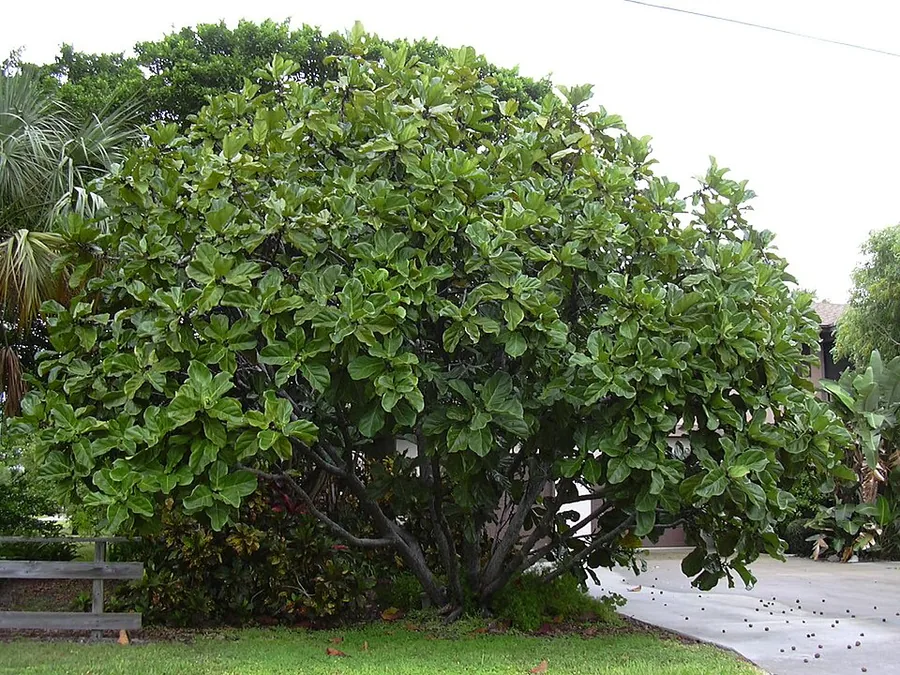
The fiddle-leaf fig is the plant people bring home when one tall, sculptural shape is meant to carry an entire room. A member of the fig family, it traces back to the humid forests of western and west-central Africa, where it rises into a full tree. Penned indoors it stands as a slender, upright specimen plant, its trunk hung with wide, lacquered leaves shaped like the body of a violin.
The fear that surrounds it outruns the plant. It wants little, yet the one thing it insists on is consistency: the same well-lit corner, the same drink on the same rhythm, no surprise relocations or cold gusts. Hold that line and it overlooks the rest. Shuffle it room to room or swing the watering wildly and it protests with brown blotches and shed leaves.
Tended right, it stretches from a tabletop pot toward the ceiling across a few seasons, topping out near 2 to 10 feet (60 cm to 3 m) under a roof. The price of that towering, glossy display is the milky sap inside, which burns skin and harms animals, so the plant belongs on a perch beyond cats, dogs, and small hands.
Care
The short version: bright indirect light, an even watering habit that lets the top few centimeters of soil go dry, a fast-draining acidic mix, and one warm, gust-free corner where the plant can root in and stay put.
Light
Stand it in bright indirect light, near a window where the sun lands beside the leaves rather than straight on them. It puts up with part shade, but a hard afternoon sun burns pale patches into the broad green, so diffuse that light or shift the plant out of its reach.
Water
Reach for the can once the top few centimeters of soil feel dry, testing with a finger pushed in about 2 inches. The plant bristles at either extreme, so never let the rootball parch through and shrink off the pot wall, and never leave it standing in wet feet. Slow the pace as fall slides into winter.
Soil
Settle it into a fast-draining, loamy, acidic potting mix that grips a little moisture yet never turns to mud. Keep the pH at or under 6.0, and pot it in something with drainage holes so every watering drains clean through the bottom.
Temperature
Hold the room warm, above 55°F (12.8°C), and out of the path of cold glass and drafts. Lurching temperatures rank high among the reasons leaves blotch or fall, so an even, settled indoor corner serves it well.
Humidity
Ordinary household air carries enough moisture, so there is no target reading to hit. Sweeping the wide leaves clean now and then earns more than misting ever will, since a dust-free surface drinks in the light.
Feeding
Through spring and summer, give it a weekly drink of diluted liquid fertilizer at a 3-1-2 (N-P-K) ratio, folded right into the watering. That heavier nitrogen feeds the plant's appetite for leaf. Once growth winds down for the year, hold the food.
Pruning
The fiddle-leaf fig handles the shears without sulking, so cut it back to shape it or hold its height any time the urge strikes. Pull on gloves first, since the milky sap bleeding from a fresh cut stings the skin.
Repotting
Move it to a larger pot every 1 to 2 years once it crowds the one it has, though a snug root run never bothers it much. Step up a size when roots poke through the drainage holes or the soil drains in a flash and shrinks back from the pot's rim.
Size & spacing
24–120 in (61–305 cm) tall
Troubleshooting
Nearly every fiddle-leaf fig complaint writes itself across the leaves, and nearly all of it leads back to water or some shift in the plant's surroundings. Catch the marks while they're fresh and you can clear the cause before it travels leaf to leaf. Find your symptom below, then move.
Dark, spreading blotches across the green
When brown patches creep over the broad green leaves, the cause sits below the soil far more often than above it: overwatering and root rot. A chilly draft, a hot vent blowing nearby, or a watering schedule that lurches from drenched to parched will mark the foliage the same way. Feel the soil, look at the roots, slide the plant clear of any draft, and lock in an even watering rhythm before the next drink.
Fix:
- Let the soil dry appropriately and confirm the pot drains freely
- Move the plant away from drafts, vents, and cold windows
- Re-establish a consistent watering routine; trim rotted roots if root rot is present
Big leaves letting go of the stem
A fiddle-leaf fig drops those heavy leaves whenever its surroundings shift under it. The frequent trigger is inconsistent watering, though a cold draft, a sharp swing in warmth, or carrying the plant to a fresh corner can shake leaves loose just as fast. Settle it in one place, hold the watering steady, and the shedding eases.
Fix:
- Keep watering consistent
- Avoid moving the plant once it is settled
- Protect from cold drafts and hot/dry air from vents
Tacky film, fine webbing, or crawlers on the foliage
Figs kept indoors tend to attract the familiar sap-sucking pests: scale, aphids, mealybugs, thrips, and spider mites, with the mites homing in on dusty surfaces and the dry warmth of a heated room. Flip each leaf and scan the underside for tiny bodies, thread-thin webs, or a sticky sheen of honeydew. Sponge and rinse the foliage clean, dose it with insecticidal soap or horticultural oil, and stand the plant away from its neighbors until the bugs are beaten.
Fix:
- Wipe leaves and rinse foliage
- Treat with insecticidal soap or horticultural oil as directed
- Isolate the plant until the infestation is controlled
Pale burned blotches on the window-side leaves
Washed-out, crisped patches signal leaf scorch from raw direct sun striking the surface. The clue is where they land: only on the leaves angled toward the glass, and at their worst after a blast of hard afternoon light. Draw the plant back into soft bright indirect light, or screen it from the fiercest rays, and the leaves that unfurl next come in unblemished.
Fix:
- Move to bright indirect light
- Shield from direct afternoon sun
Wide leaves gone flat and gray under a coat of dust
The plant's broad, flat blades catch dust the way a shelf does, and a gray film over them shuts out the light the plant feeds on and chokes the way it breathes. The signal is a dull, gray surface where there should be a sheen. Run a damp cloth over the tops and undersides and the green snaps back to glossy.
Fix:
- Wipe the top and bottom of the leaves with a damp cloth or paper towel
Toxicity
Keep this one well clear of curious animals. From root to leaf it holds a milky sap thick with the enzyme ficin, which inflames the mouth and gut of cats, dogs, and other creatures and sets off drooling and vomiting once they chew. That same sap stings human skin, and nothing on the plant is edible, so handle it gloved and station it where animals and children cannot get at it.
Toxic to
Cats · Dogs · Horses · Rabbits · Livestock · Birds · People
Cats Toxic
Bite into a leaf and a cat ends up with a raw, stinging mouth, ropes of drool, and vomiting that usually follows fast. Where the milky sap touches fur or skin, the surface can turn red and swollen.
Dogs Toxic
A dog that chews the foliage gets a sore mouth and a churning stomach, heavy strings of saliva, and vomiting. Smears of sap on the muzzle or paws can leave the skin reddened and tender.
Horses Toxic
That same ficin-rich latex burns a horse's mouth and digestive tract, setting off drooling and a queasy gut. Keep the plant somewhere a horse can never reach it.
Rabbits Toxic
Not a single part of this fig is fit for a rabbit to gnaw. The stinging sap inflames the mouth and unsettles digestion, so the whole plant stays strictly off the menu.
Livestock Toxic
Goats, sheep, and other grazers can come away with a burning mouth and an upset stomach after tasting the latex. Nothing on the plant is worth that gamble for them.
Birds Toxic
The harsh sap is dangerous for pet birds, and even a nibble can set off a reaction. Keep their perches and reach clear of the leaves and any freshly cut stems.
People Caution
Nothing here is meant to be eaten, and the milky sap can leave bare skin flushed, itchy, and sore. Slip on gloves before you trim or handle cut stems, and rinse your hands once the job is done.
The milky sap (latex) can irritate skin; wear gloves when pruning or handling cut stems
Helpline numbers

United States
ASPCA Animal Poison Control: (888) 426-4435 (fee applies)
Poison Control: (800) 222-1222



Canada
Poison Centres: 1-844-764-7669
Varieties
Almost every fiddle-leaf fig on a shelf is the plain wild species, though a handful of named forms slip through, most of them more compact or splashed with variegation. Here are the few worth recognizing.
Bambino
This dwarf form holds at a fraction of the wild species' size, the obvious choice when only a tabletop or a snug corner is free.
Compacta
Reaching about 5 feet with smaller leaves crowded tight along the stem, it carries a denser, rounder shape than the long-limbed species.
Little Sunshine
A small, variegated pick valued for its modest stature and its patterned, two-toned leaves.
Variegata
Its leaves are brushed with green and cream, and it shows up so seldom on shelves that catching one in stock counts as luck.
How to propagate
One fiddle-leaf fig can become two straight from the plant on your shelf, and the route there is a stem cutting. All it really takes is a steady wait and a pair of gloves.
Stem cuttingsModerate
Spring through summer during active growth · Roots over several weeks under warm, humid conditions
To raise another fiddle-leaf fig, snip a stem cutting in spring or summer, while the plant is pushing fresh green from the tips. Held in warmth and damp air, the cut stem grows roots over several weeks. Glove your hands before the first cut, because the milky sap that wells up stings bare skin.
Myths
Fiddle-leaf figs are nearly impossible houseplants to keep alive.
The dread around this plant outpaces how it actually behaves. It looks demanding, yet steady light, a careful hand with water, and one spot it never leaves cover almost everything it asks for. Hand it those and it grows on quietly.
Brown spots on the leaves always mean the plant is thirsty.
Reaching for the watering can is usually the wrong instinct here. Brown spots trace back far more often to overwatering and root rot, or to cold drafts and lurching temperatures, than to a plant that has gone dry. Feel how wet the soil is and study where the pot sits before another drink goes in.