Bulb · Begoniaceae
Tuberous Begonia
Begonia × tuberhybrida
Hand it shade, even moisture, and good airflow, and the tuberous begonia repays you with enormous summer flowers.
Partial shade
Every 2–4 days
55–75°F · 13–24°C
98–120 days
Overview
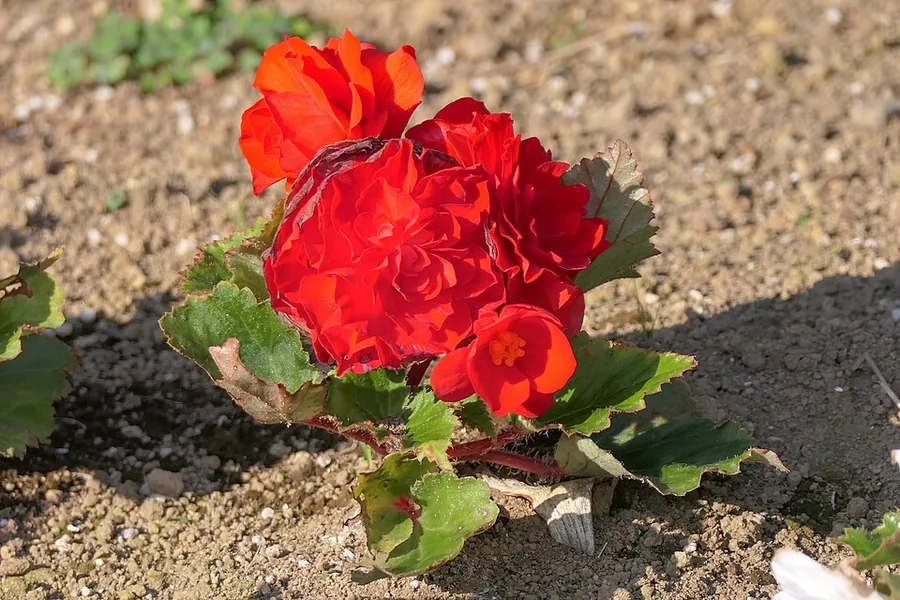
The tuberous begonia is grown for its flowers, which rank among the largest and most saturated any shade garden can produce. It rises not from fibrous roots but from a swollen underground tuber, and that tuber drives the whole show: it fuels a long summer of bloom, then sleeps through winter ready to wake again. Set it in a bed, a pot, or a hanging basket as you like.
Warm-season by nature, these plants recoil from both frost and fierce sun, which marks them as a shade gardener's flower. Their petals span the spectrum from soft pastels to deep reds, in forms ranging from camellia-like doubles to trailing kinds that pour over a basket's edge. Most hold a compact frame, climbing 12 to 24 inches (30 to 61 cm) tall.
None of this is difficult once two facts sink in. A soggy soil rots the tuber, so drainage and a measured touch with the watering can decide whether it survives. Pitch the light and water correctly and it carries big blooms from midsummer to frost.
Care
The short version: partial to dappled shade, soil held evenly moist yet never soggy, rich and free-draining ground, and a cool, breezy spot that lets the foliage dry off and stay disease-free.
Light
Set them in partial to dappled shade, the soft pool of light beneath a tree or along the cool side of a wall. A little mild morning or late-afternoon sun is welcome, but the harsh midday glare scorches the foliage and stalls the flowers.
Water
Hold the soil evenly moist but never soggy, soaking it every 2 to 4 days as the surface begins to dry. The tuber carries its own water store, so a drowned pot rots it from underneath. Let the top layer dry a little between drinks.
Soil
Set them into rich, well-drained loam worked through with plenty of organic matter. A pH between 5.5 and 7.0 suits them, and brisk drainage counts above all else, since pooled water is what kills the tuber.
Temperature
They sit happiest between 55°F and 75°F (13°C to 24°C). Heat past that band stresses the plant and sheds the buds, while frost shuts the season down on the spot.
Humidity
Average humidity serves them well, so there is no figure to chase. Airflow counts for far more than moisture in the air, since still, damp conditions are precisely what mildew and gray mold need to settle in.
Feeding
These are heavy feeders. Across the growing season, from spring into late summer, hand them a dilute balanced fertilizer roughly every two weeks to keep those big flowers coming.
Pruning
Nip the growing tips early to drive bushier growth and more blooms, and pluck spent flowers as they fade. When late summer rolls in, cut the plant back and taper off the water to ease it into dormancy.
Repotting
Run them on a yearly cycle. Lift the tubers each fall, hold them cool and dry through winter, then start them in fresh medium come spring rather than leaving them stuck in tired, crowded soil.
Size & spacing
Plants climb 12 to 24 inches (30 to 61 cm) tall and spread 12 to 18 inches (30 to 46 cm) wide. Allow each one that much room so air can move freely and the leaves stay dry.
When to plant
Tuberous begonias run on a yearly rhythm set by the tuber. Wake the tubers indoors in late winter, move the plants outside only once the last frost is behind you, and take in the bloom from midsummer until the cold sends the tuber back into sleep.
Northern hemisphere
Southern hemisphere
Typical months for a temperate climate: start earlier in warm zones, later where spring frosts linger.
- Sow: Start tubers indoors February to April; sow seed December to January for summer bloom
- Plant: After all danger of frost passes, typically late May to early June
- Harvest: Mid-summer through first frost (July to September)
Hardiness
USDA hardiness zones: 9–11
Temperature: down to -7°C
Troubleshooting
Almost every begonia problem comes down to water or stagnant air. Keep an eye on the tuber, the lowest leaves, and the flowers, since the earliest signs surface there. Match what you spot to the list below and act while it is small.
A squishy tuber or a softening stem at the soil line
Tuber rot ranks as the worst fate for these plants, and standing water is nearly always behind it. The giveaways are a sour smell and a plant that flops even when the soil is damp. Dig the tuber out, slice off the rotted flesh, powder the open cuts, and tuck it back into fresh, quick-draining mix.
Fix:
- Reduce watering immediately
- Lift and inspect the tuber; cut away rotted tissue and dust cut surfaces
- Repot or replant in fresh, well-drained medium
A chalky white bloom creeping across the leaf surface
What you are seeing is powdery mildew, a fungus that moves in when air goes still around packed-together plants. Rub the film off and it returns, again and again, until the foliage can dry and breathe. Open up the spacing, send water to the roots instead of the leaves, and strip away the worst-coated foliage.
Fix:
- Improve air circulation and spacing
- Remove and discard affected foliage
- Avoid wetting the leaves when watering
A furry gray bloom of mold on petals and foliage
Botrytis blight, the gray mold, settles into cool, damp, stagnant pockets and arrives on wet leaves and dropped petals. Once it grips, the tissue browns and sinks in quickly. Pick off the moldy bits and any litter on the soil, then loosen the plant so its leaves can dry between waterings.
Fix:
- Remove infected flowers and leaves promptly
- Increase air circulation and reduce leaf wetness
- Clean up fallen plant debris
Buds turning yellow and dropping before they ever open
Bud drop is how the plant answers stress, most often a swing in soil moisture or a run of heat and humidity. Hold the soil steadily damp, neither flooded nor parched. Shift it somewhere cooler, shaded, and breezy, and the plant steadies so its next set of buds hangs on.
Fix:
- Maintain even soil moisture without extremes
- Provide shade during hot afternoons
- Move container plants to a cooler, protected spot
Toxicity
Treat this as a toxic plant, kept well away from pets and children. Every part carries soluble calcium oxalates, and the buried tuber is the most toxic piece of all. A single bite triggers a burning mouth, gushing drool, and vomiting, so keep the plant, and any cut tubers especially, well out of reach.
Toxic to
Cats · Dogs · Horses · Rabbits · Livestock · Birds · People
Cats Mild
Bite a leaf or the tuber and a cat's mouth burns, setting off heavy drooling. Vomiting and a paw clawing at the face tend to come next.
Dogs Mild
A dog that chews any part will drool, show a sore mouth, and vomit. Since the buried tuber packs the most toxin, the diggers are the ones worth watching.
Horses Moderate
A grazing horse meets the same mouth irritation and drooling, yet a big mouthful hits harder and can drive the kidneys toward failure.
Rabbits Mild
Those same oxalates sting a rabbit's mouth and put it off its food. Keep cut tubers and any trimmings well beyond its reach.
Livestock Moderate
A nibble leaves cattle, goats, and sheep with a sore, drooling mouth, and a heavy feed on the tubers can tax the kidneys.
Birds Caution
Reports on birds are thin, but the calcium oxalates that irritate everything else make this one to keep away from them.
People Caution
No part of it is food, and the sap and tubers can irritate both skin and mouth. Scrub your hands after handling and keep it clear of small children.
Wash hands after handling tubers and sap, which can irritate skin; keep tubers and plants away from pets and children.
Helpline numbers

United States
ASPCA Animal Poison Control: (888) 426-4435 (fee applies)
Poison Control: (800) 222-1222



Canada
Poison Centres: 1-844-764-7669
Varieties
Tuberous begonias span a broad sweep of flower forms, and a handful of groups account for most of what you will run into. These are the names worth carrying with you.
Camellia (Camelliflora) types
These bear the boldest blooms in the group, fully double and reaching up to 3 inches across, with a form that mirrors a camellia.
Picotee types
A slim ribbon of contrasting color rims every double flower, so each petal reads as if it were drawn with an outline.
Pendula (hanging/trailing) types
Rather than rising upright, their stems cascade over the rim of a pot, which is what makes them the pick for hanging baskets.
How to propagate
There are three ways to make more of these plants: splitting a tuber, rooting a cutting, or working through the slow task of starting from seed.
DivisionModerate
Spring when restarting dormant tubers · Several weeks to sprout and root
As the dormant tubers stir in spring, slice one into pieces so each chunk holds at least one shoot. Powder the raw cuts, because an open wound on a tuber invites rot straight in. Every piece needs several weeks to sprout and root before it picks up speed.
Stem cuttingsModerate
Spring as new shoots develop · 3 to 6 weeks to root
When fresh shoots rise in spring, snip a basal or stem cutting and settle it into a damp, free-draining mix away from direct sun. Allow it 3 to 6 weeks to strike roots and become its own plant.
SeedDemanding
December to January for summer bloom · 14 to 16 weeks before ready to plant out
Going by seed is the toughest route. The grains are dust-fine, so sprinkle them across the surface and hold them warm and humid rather than covering them. Sow through December or January and reckon on 14 to 16 weeks before the seedlings stand ready to plant out for summer bloom.
Myths
Begonias are perfectly safe houseplants for homes with pets.
The ASPCA flags begonia as toxic to cats, dogs, and horses because of soluble calcium oxalates, and the buried tuber holds the heaviest dose. Chew it and an animal ends up with a stinging mouth, gushing drool, and vomiting. Keep the plant, and the tubers above all, out of reach of animals that chew.
Tuberous begonias need plenty of full sun to bloom well.
The truth runs the other way. These plants want partial to dappled shade and sour in hot, direct sun, which scorches the foliage and knocks off buds. A touch of soft morning or late-afternoon light is the most they care to take.