Ornamental · Asteraceae
Yarrow
Achillea millefolium
Root it in full sun and poor, dry soil, then leave it be, and yarrow throws flat flower heads all summer.
Full sun
USDA 3–9
1–3 ft · 0.3–0.9 m
Overview
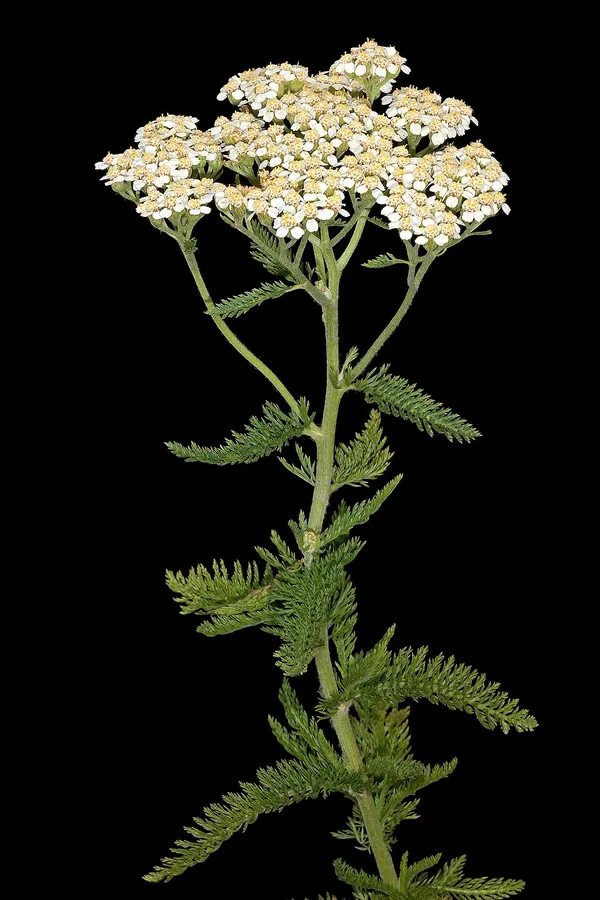
Yarrow is a plant built of fine detail. Slender stems lift flat-topped clusters of tiny flowers above soft, feathery leaves so finely cut they look almost fern-like, and crushing a leaf releases a sharp, resinous scent. Those flat heads make broad landing pads for butterflies and other pollinators from early summer into fall, and the whole plant stays wiry and tough through heat and drought.
It is a hardy perennial across zones 3 to 9, dying back to a low rosette of lacy foliage each winter and pushing up fresh growth every spring. The wild species opens cream to white, while named cultivars deepen into red, rose, gold, and salmon. Most build a mound 1 to 3 feet (30 to 91 cm) tall and spread about as wide.
The telling detail sits below the soil line. Pale, creeping rhizomes push outward while the dry seed heads scatter their catch, so a single feathery rosette can widen into a broad mat within a season or two. Give it room and lift it now and then, and that spreading habit fills ground quickly.
Care
The short version: full sun and lean, dry, well-drained soil. Water it sparingly, skip the fertilizer, and divide the clump every few years to keep it vigorous and in bounds.
Light
Give yarrow full sun, six hours a day or more, and it grows wiry and short-jointed with dense flat heads. It will take light afternoon shade, but the stems stretch pale and floppy in anything dimmer and the flowering thins.
Water
This is a drought-tough plant that wants the soil to dry between drinks. Water young rosettes until they root, then hold off, because soggy ground turns the crown dark and soft with rot. Once settled, it lives on rainfall alone.
Soil
Lean, well-drained ground is the whole secret to firm stems. Loam, sand, even poor or alkaline soil all suit it, across a pH of 6.0 to 8.0. Rich soil only grows soft, leggy stems, so leave it unimproved.
Humidity
Outdoor humidity is nothing to track, so there is no level to manage. What matters is air threading through the fine foliage, since still, damp air is what coats the leaves in powdery mildew and rust.
Feeding
Feed it almost nothing. Yarrow throws its best flat heads and lives longest in nutrient-poor soil, and fertilizer only pushes soft, weak growth that lodges. Skip it unless the ground is truly bare.
Pruning
Snip off the spent flat heads through the season to stretch the bloom and cut the self-seeding. Trim sprawling stems as they appear, then shear the whole feathery mound once flowering fades to tidy it.
Size & spacing
The mound reaches 1 to 3 feet (30 to 91 cm) tall and spreads about as wide. Set plants 12 to 18 inches (30 to 45 cm) apart so air moves through the fine leaves and the rosettes do not crowd each other.
When to plant
Yarrow moves with the season. Sow the fine seed indoors in late winter or scatter it outside in spring, set young rosettes out once frost has passed, and the flat flower heads open in wave after wave from June into September.
Northern hemisphere
Southern hemisphere
Typical months for a temperate climate: start earlier in warm zones, later where spring frosts linger.
- Sow: Start seed indoors 6 to 8 weeks before the last spring frost.
- Plant: Transplant after danger of frost has passed in spring, spacing plants 12 to 18 in apart.
- Harvest: Blooms June to September, with flat-topped flower clusters from early summer into fall.
Hardiness
USDA hardiness zones: 3–9
Temperature: down to -40°C
Troubleshooting
Almost every mark against yarrow starts with one habit: treating a lean, dry-country plant as though it were thirsty and hungry. Too much water, too much shade, or soil too rich shows up as the rot, the pale mildew film, and the flopping stems below. Read the signs on the leaves and stems early and the answer is usually less, not more.
Base turning dark and soft in wet ground
When the crown darkens and the base turns soft and mushy under your fingers, that is root and crown rot, brought on by soil that holds water rather than a disease you can spray. The lacy, dry-country foliage cannot hold up where moisture sits around the roots. Lift it into a sunny, sharp-draining spot, stop the extra watering once it roots, and pare away the blackened crowns before splitting off the pale, firm outer growth.
Fix:
- Move or replant in a well-drained, full-sun site
- Stop supplemental watering once established
- Remove rotted crowns and divide healthy outer growth
A powdery white bloom coating the leaves
A chalky, dust-like film settling over the green is powdery mildew, a fungus that arrives in damp, still air and tight plantings. It seldom kills yarrow, but it mutes the fine, feathery leaves and can leave them yellowed and puckered. Thin the clump so air threads through the foliage, wet the roots and not the leaves, and keep the plant in full sun on quick-draining ground.
Fix:
- Improve air circulation by thinning and proper spacing
- Avoid overhead watering
- Site in full sun with good drainage
Slim stems buckling into a tangled mat
Slim stems that bow under the weight of their flat flower heads and sink into a tangle are lodging, usually the mark of soil that is too rich or a corner too shady and wet. Grown lean, in full sun on dry ground, the stems come up wiry and short-jointed and hold their heads up. Shear the plant back after the flowers fade and split any dense clump so the new stems rise firmer.
Fix:
- Grow in full sun and lean, dry soil for sturdier, more compact growth
- Cut back or shear after flowering
- Divide crowded clumps
Raised orange pustules studding leaves and stems
Raised specks in orange to rusty brown, scattered over the fine leaves and stems, are the pustules of rust, a fungus that infects foliage kept wet for long stretches. Pick off every marked leaf and bag it so the powdery spores do not drift onto clean growth. Thin the plant for air, keep the feathery leaves dry, and hold it in full sun with quick drainage.
Fix:
- Remove and dispose of infected foliage
- Improve air circulation and avoid wetting foliage
- Maintain full sun and good drainage
Toxicity
Yarrow is a mild caution around animals rather than a serious poison. The feathery leaves and flat flower heads hold bitter alkaloids and pungent volatile oils that can upset a stomach and redden skin, so keep grazing pets and curious nibblers away from the plant. People have long steeped it as a folk remedy, but it is not food, and the resinous sap leaves some hands red and itchy.
Toxic to
Cats · Dogs · Horses · Rabbits · Livestock · Birds · People
Cats Mild
A cat that bites into the feathery leaves usually drools and turns queasy, sometimes with vomiting or loose stools. It stays a mild caution rather than a real danger, and the sap can leave a red patch where it meets the skin.
Dogs Mild
Dogs that mouth the soft foliage tend to drool, vomit, and run loose, and a few go off their food and turn dull-eyed. Keep it a mild caution, since most shake it off on their own.
Horses Mild
A horse cropping yarrow may drool, scour, or show a hint of colic, more so after a big mouthful of the aromatic leaves. The effect stays mild, though the volatile oils can leave bare skin tender and pink.
Rabbits Caution
The bitter alkaloids and pungent oils packed into the lacy foliage make yarrow a poor choice for rabbits and their delicate guts. Treat it as a caution and keep it clear of the hutch.
Livestock Caution
Cattle, sheep, and goats mostly turn their noses from yarrow's sharp, bitter leaves, but a hungry animal that eats a mouthful in quantity can pick up the same upset. Worth a caution where the grazing is thin.
Birds Caution
There is little reason to offer the seed heads or foliage to pet or backyard birds, and the achilleine in the plant makes it a caution rather than a treat. Keep cut stems and dry seed heads out of reach.
People Caution
People have long steeped yarrow as a folk remedy, but it is no salad leaf, and brushing and cutting the resinous foliage can leave sensitive skin red and itchy. Wear gloves to cut it, and treat any eating of the plant as a caution.
Sesquiterpene lactones and volatile oils can cause contact dermatitis in sensitive people; consider gloves when handling or cutting plants.
Helpline numbers

United States
ASPCA Animal Poison Control: (888) 426-4435 (fee applies)
Poison Control: (800) 222-1222



Canada
Poison Centres: 1-844-764-7669
Varieties
The wild species spreads hard and opens only cream to white, so most gardeners reach for a named cultivar with deeper color in its flat heads or a tighter, more upright frame. A few stand out.
Paprika
A low, mat-forming yarrow whose dusty-red petals ringing yellow eyes bleach to pink and creamy yellow as the flat heads age, on stems that sprawl and lodge more than most.
New Vintage Rose
A short, compact selection carrying rose-pink heads on stiffer, more upright stems than the loose-limbed wild species.
Strawberry Seduction
A selection whose deep strawberry-red florets circle small yellow centers, then fade toward softer, dustier tones as the season wears on.
How to propagate
Yarrow multiplies readily, whether you tease apart a rosette-studded clump or raise it from its fine seed.
DivisionEasy
Divide established clumps in spring or fall, every 2 to 3 years. · Divisions root and re-establish within one growing season.
Division is the surest way to multiply yarrow, and the clump comes apart with almost no effort. Lift a settled clump in spring or fall every 2 to 3 years, pull away the pale, firm outer rosettes with their trailing rhizomes, and set the pieces 12 to 18 inches (30 to 45 cm) apart. They root and knit in within a single growing season.
SeedEasy
Sow indoors 6 to 8 weeks before last frost or direct sow in spring. · Germinates readily; flowers the first or second season.
The fine, dust-like seed grows readily. Start it indoors 6 to 8 weeks before the last frost, or scatter it straight onto spring soil, and it sprouts fast into feathery seedlings that flower in their first or second year. The dry heads shed seed with abandon, so deadhead them to keep stray rosettes from cropping up.
Myths
Yarrow needs rich soil and frequent watering and feeding to thrive.
The plant tells you otherwise. Yarrow builds its wiriest stems and densest flat heads in lean, dry, well-drained ground under full sun, while rich living leaves it soft, leggy, and short-lived. Comfort turns it floppy, since wet, fertile soil rots the crown at the base.
Yarrow is a tidy clump that stays where you plant it.
Look under the soil and you find a creeper. Pale rhizomes push outward through the ground while the dry seed heads scatter their catch, so one rosette of feathery leaves can widen into a broad mat within a season or two. Divide and deadhead to hold the shape, or set a sterile named cultivar that cannot seed itself around.