Ornamental · Asteraceae
Blanket Flower
Gaillardia × grandiflora
Set it in full sun and lean, dry soil, and the banded red and gold blooms keep coming from June to frost.
Full sun
USDA 3–10
1–3 ft · 0.3–0.9 m
Overview
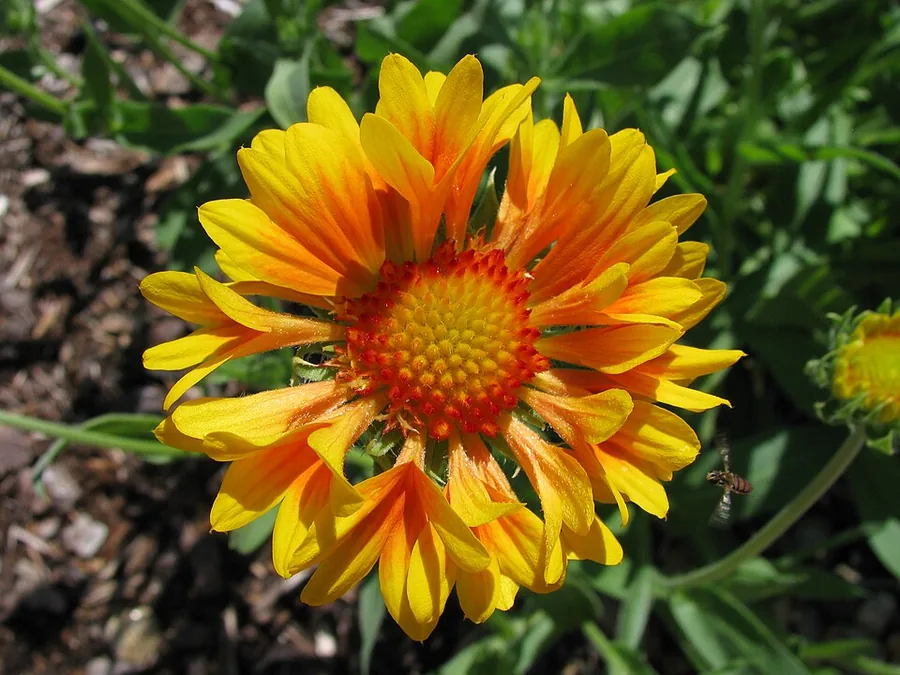
Blanket flower is a sun-loving member of the daisy family, and its name comes straight from the look of the bloom: concentric bands of warm red, orange, and yellow ring each flower head like the woven pattern of a blanket. The petals fan out as flat, strap-shaped rays around a raised central disk, and a planting set in a hot, dry spot keeps throwing these wheels of color from early summer into fall.
Up close the whole plant reads as built for hard places. Its leaves and stems carry a coat of fine fuzzy hairs that gives the green a soft, grayed cast, and on that frame it takes drought, heat, and poor soil without flagging while fussier perennials wilt. The trade for that durability is simple: rich soil and standing water rot it from the roots up.
It grows as a short-lived perennial, so a clump loosens and thins after a few years rather than thickening on and on. That is no mark against it. Split the crown every couple of seasons or let the seed heads scatter on their own, and fresh rosettes rise to carry the banded color forward.
Care
The short version: full sun, lean and well-drained soil, and a sparing hand with water. Snip off the spent flower heads through the season to keep new ones opening, and leave the fertilizer be.
Light
Blanket flower lives for full sun, and the more light it drinks the more wheels of color it sets. A hot, open spot draws out the heaviest bloom and the deepest petal color. Left in shade the stems stretch thin and floppy and the flowers grow scarce.
Water
A young plant wants steady moisture while its roots take hold, then much less. Once settled it is drought tolerant, the fuzzy gray-green leaves holding up far better dry than wet. Overwatering, or heavy clay that traps moisture around the crown, turns the roots brown and soft with rot.
Soil
Blanket flower roots best in well-drained loam or sandy soil loosened with a little organic matter. It takes a wide pH band from 6.0 to 8.0, so most ground will hold it. Cold, sodden clay sitting over winter is the one footing it cannot survive.
Humidity
Plain outdoor air suits the foliage, so there is no level to chase. Air moving through the leaves matters more, since damp, crowded growth lets a chalky powdery mildew film settle over them.
Feeding
This plant runs best a little starved. A light feeding through the growing season is the most it wants, since lean soil builds stiffer stems and more flowers. Too much fertilizer leaves the stems soft and floppy and the blooms fewer.
Pruning
Snip off the faded flower heads through the season to keep fresh rays opening and the plant trim. When the growth turns ragged, a cut-back coaxes out a clean new flush of color.
Size & spacing
The plant stands 1 to 3 feet (30 to 91 cm) tall on its slim hairy stems and spreads into a clump 12 to 24 inches (30 to 61 cm) across. Set the plants 12 to 18 inches apart so air threads between the leaves and mildew stays off.
When to plant
Blanket flower runs on warmth and turns sullen in cold, wet ground. Sow the seed indoors in late winter or scatter it outside once frost has passed, and the banded flowers open from early summer through fall, the run stretching longer with steady deadheading.
Northern hemisphere
Southern hemisphere
Typical months for a temperate climate: start earlier in warm zones, later where spring frosts linger.
- Sow: Start seeds indoors about 4 to 6 weeks before the last frost.
- Plant: Transplant or direct sow after the last spring frost; space plants 12 to 18 inches apart.
- Harvest: Blooms from early summer (June) through fall (September); deadheading extends the season.
Hardiness
USDA hardiness zones: 3–10
Temperature: down to -40°C
Troubleshooting
Nearly every trouble that marks a blanket flower comes back to soil held too wet or air left too still around the leaves. Set it in sharp-draining ground with room to breathe and most of the marks below never show. Match what you see on the plant, then act before it spreads.
Limp, sagging stems blackened at soil level over a soft, rotted crown
When the foliage sags and the stem bases darken to near black at the crown, the cause is root and crown rot, the disorder most apt to kill a blanket flower, and it springs from soil left too wet. Scrape the soil away and the roots show it: brown and slack and mushy to the touch where sound roots feel firm and white. Work grit or organic matter into the bed, lift the crown onto a drier rise, and let the watering fall off so the roots can recover.
Fix:
- Improve drainage by amending soil with organic matter or planting in a raised or sandier site
- Reduce watering and remove severely affected plants
Shoots bleached yellow and twisting, with blooms opening misshapen
Sickly yellow foliage and twisted, malformed blooms signal aster yellows, a phytoplasma that leafhoppers carry from plant to plant, with no cure once it takes hold. The flowers green over and warp out of shape while the shoots clump into stunted, broom-like tufts that never straighten or recover. Pull and destroy the stricken plant at once, then thin out the leafhoppers and weedy hosts that keep passing it along.
Fix:
- Remove and destroy infected plants promptly
- Control leafhoppers that spread the disease
A chalky white film clouding the green of leaves and stems
A chalky white bloom dusting the green leaves and stems is powdery mildew, which creeps over the surface where crowded plants stand in humid, motionless air. A fingertip drags it clean off the leaf, yet it powders over again unless something shifts. Spread the plants apart or split a packed clump to let air slip between them, strip away the most coated leaves, and keep the foliage dry.
Fix:
- Improve air circulation by spacing and dividing plants
- Remove affected foliage
Dark freckles sprinkled over the leaf blades
Small dark to brown blotches freckling the green leaves are fungal leaf spots, which read as far more damaging than they prove to be. The plant beneath them carries on unbothered. Pick off the freckled leaves, send the water down to the base so the foliage stays dry, and leave space for air to move among the leaves.
Fix:
- Remove affected leaves
- Avoid overhead watering and improve air flow
Toxicity
For households with pets, the verdict is easy: blanket flower is non-toxic and stays off the ASPCA toxic plant list. Cats, dogs, and grazing animals come to no harm from the leaves or the banded blooms. The one thing to watch is your own skin, since the fine fuzzy hairs on the foliage and flowers can leave sensitive hands itchy.
Safe for
People · Cats · Dogs · Horses · Rabbits · Livestock · Birds
Cats None
Cats are safe with it. The ASPCA does not list it as toxic, so a cat nosing at the petals and taking a bite comes to no harm.
Dogs None
Dogs are clear of any danger. Off the ASPCA toxic list, the plant lets a dog mouth the leaves or flowers without harm.
Horses Safe
Horses can crop the foliage and graze nearby without trouble, since no part of the plant holds a toxin.
Rabbits Safe
Rabbits meet no toxin in the leaves or the ray-fringed flowers, though the foliage still suits them only as an occasional bite.
Livestock Safe
Cattle, goats, and sheep are safe around it, as nothing in its stems, leaves, or blooms would upset them.
Birds Safe
Birds run no risk whether they work the dried seed heads or pick at the foliage.
People Safe
People are safe with it, save for one small thing: the fine fuzzy hairs cloaking the leaves and flowers can leave sensitive skin itchy, so gloves help through a long deadheading session.
Generally regarded as non-toxic and not listed on the ASPCA toxic plant list. Contact with the fuzzy foliage and flowers can cause mild skin irritation (contact dermatitis) in sensitive people; wearing protective gloves when handling is recommended.
Varieties
Blanket flower comes in named cultivars that part ways mostly in height and in how the color bands fall across the rays. A few stand out.
Goblin
A compact dwarf holding a low, dense mound, its red ray petals finished with a crisp yellow band at the very tips.
Burgundy
A taller form whose ray petals run a deep, uniform wine-red across the whole flower, without the usual two-toned edge.
Oranges and Lemons
A softer-hued form whose peachy-orange rays lighten toward the tips into a washed pale yellow.
How to propagate
Blanket flower is easy to multiply, a useful trait given how short each plant's life runs. The crown splits cleanly into new pieces, or fresh seed grows it from scratch.
DivisionEasy
Spring; divide clumps every 2 to 3 years to maintain vigor. · One growing season
Blanket flower is short-lived, so prying the clump apart in spring every 2 to 3 years keeps it strong and leaves you with fresh young plants. Lift the crown, tease the tangle of roots into separate pieces, and bed them back down. Each division knits in over a single growing season.
SeedEasy
Start indoors 4 to 6 weeks before last frost or direct sow after frost. · Blooms in the first or second season
Seed is just as simple. Sow the small seeds indoors 4 to 6 weeks before the last frost, or scatter them onto bare soil once frost has gone, and the first flowers open in the first or second season. The plant self-sows freely, but because these are hybrids the seedlings often surface in colors and forms quite unlike the parent.
Myths
Lush, rich ground and constant moisture are what give blanket flower its best show.
The reverse is the case. Blanket flower wants lean, sharp-draining ground and shrugs off dry spells once its roots take hold. Sink it into heavy, fertile, sodden soil and the plant weakens, the stems thin, and the blooms grow scarcer, so a lean, dry footing is what keeps it strong.
Blanket flower is poisonous to pets.
It is not. The plant counts as non-toxic and stays off the ASPCA toxic list for cats and dogs. The only catch sits with people, since the fine hairs furring the leaves can leave sensitive skin a little irritated.