Bulb · Ranunculaceae
Winter Aconite
Eranthis hyemalis
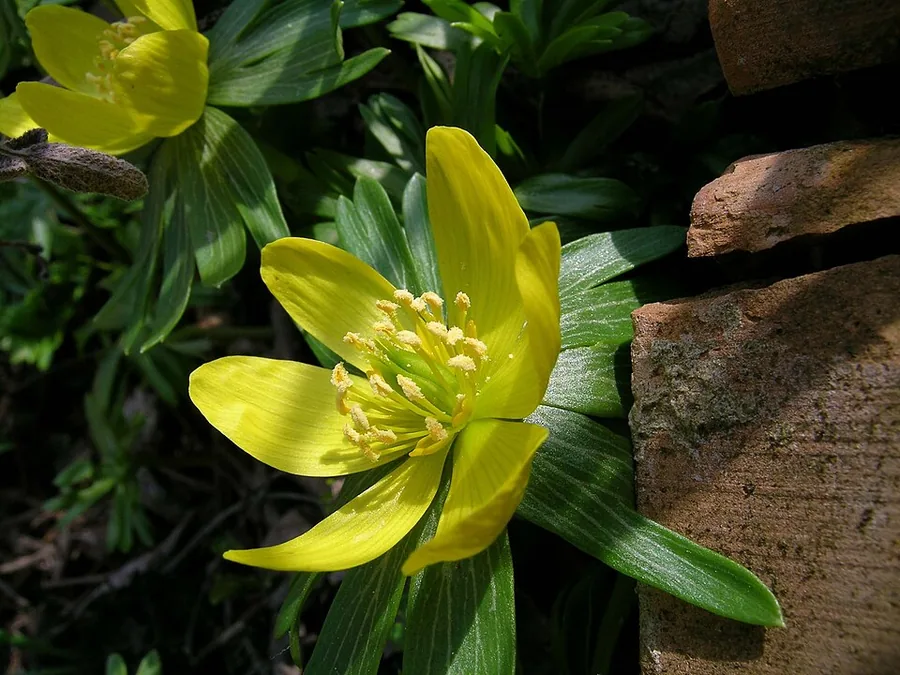
Winter aconite lifts glossy yellow cups on short stems through the cold, bare ground, ringed by a collar of green.
Full sun
Every 5–10 days
USDA 3–7
3–6 in · 8–15 cm
Overview
Winter aconite is a small tuberous perennial in the buttercup family, and up close it is all bright color and low, rounded form. Each stem carries a single bright yellow, cup-shaped flower in the buttercup mold, and just below the bloom sits a green ruff of leafy bracts that fans out like a collar. The whole plant rises only 3 to 6 inches from cold, bare soil in late winter, so the flowers sit close to the ground. It opens ahead of crocus and snowdrops, dotting the bare earth with points of gold.
Below ground, it grows from a small, knobby tuber, a hard little lump that rests through summer and stirs again in the cold. Set once into humus-rich, well-drained soil under deciduous trees, where the low winter sun reaches it before the leaves return, it needs little. Left alone, it self-sows and its yellow cups multiply into wide golden carpets across the ground.
There is a hard fact beneath the pretty face. Every part of winter aconite is poisonous, and the knobby tuber holds the most of all, so it is a plant to study with the eyes and not the hands. Keep it away from children and pets likely to bite into it.
Care
The short version: the knobby tubers go into rich, well-drained soil under deciduous trees in fall, the ground stays moist through the late-winter-to-spring growing season, and then the yellow-flowered plants fade to dormancy and spread on their own.
Light
Winter aconite needs full sun while its leaves and flowers are up, which it takes by blooming in late winter before the deciduous trees leaf out overhead. The dappled shade under those bare branches suits it, since the low sun reaches the yellow cups early, and the plant then fades before the summer canopy closes.
Water
Keep the soil evenly moist from late winter into spring while the green foliage and flowers are showing, watering about every 5 to 10 days when rain runs short. Once the leaves yellow and collapse into summer dormancy, the tubers want drier ground and need almost nothing.
Soil
Root it in rich, humus-rich, well-drained soil dark with leaf mold or compost. It leans alkaline and settles at a pH of 7.0 to 8.0, though the crumbly, free-draining texture matters more than the reading, since soggy ground rots the soft tubers.
Temperature
This is a cold-hardened plant, tough down to about -29°F (-34°C) and steady across zones 3 through 7. It draws on winter chill to open its flowers and wilts where summers turn hot, so it looks its best where the heat stops around 75°F (24°C).
Humidity
Plain outdoor air suits it, and there is no humidity figure to track. What shapes the plant is even soil moisture around the roots during its short growing weeks, not the air around the leaves.
Feeding
Winter aconite feeds lightly. A seasonal top-dressing of dark leaf mold or compost from fall to early spring is all it takes, releasing slowly to the tubers and keeping the soil crumbly and rich without any stronger fertilizer.
Pruning
There is no cutting to do. Let the green leaves yellow and slump on their own after the flowers close, since that fading foliage is feeding the tuber for next year, and stripping it early only leaves the plant weaker.
Repotting
The knobby tubers stay in the ground and rarely need lifting. The signs to act are a clump grown thick and flowering less, with tubers crowding up toward the surface, at which point you split them rather than repot.
Size & spacing
Winter aconite stays low and small, just 3 to 6 inches (8 to 15 cm) tall and wide, a tight rosette of leaf and bloom. Set the tubers about 3 inches apart so the yellow cups close ranks into a solid sheet of gold.
When to plant
Winter aconite keeps an upside-down schedule. The hard little tubers go into the ground in fall, from late summer through November, and the yellow cups open in the cold of late winter, often February through April, well before the rest of the garden shows any green.
Northern hemisphere
Southern hemisphere
Typical months for a temperate climate: start earlier in warm zones, later where spring frosts linger.
- Plant: Plant tubers in late summer to early fall (September to November), 2-3 inches deep and 3 inches apart.
- Harvest: Late winter to early spring (February to April), often before crocus and snowdrops.
Hardiness
USDA hardiness zones: 3–7
Temperature: down to -40°C
Troubleshooting
Winter aconite is an easy plant, and its few troubles trace back to planting and timing rather than pests or disease. The signs below, read off the leaves and flowers, tell a real problem from the plant's normal fade.
Tubers that never break the ground after fall planting
The usual reason is a dried-out tuber, a hard, shrunken knot that went in already shriveled, since winter aconite tubers wither to that state in storage and struggle to swell back. Soggy or shallow soil deepens the trouble. Soak shriveled tubers overnight in damp sand or peat until they plump, then set them 2 to 3 inches deep in rich, well-drained ground.
Fix:
- Soak shriveled tubers overnight (or in moist sand or peat moss) before planting
- Replant 2-3 inches deep in organically rich, well-drained soil
Leaves that yellow and vanish as summer nears
In most cases this is plain summer dormancy. Winter aconite finishes its year by late spring, the green leaves turn yellow and melt into the soil, and the hard tubers rest underground until the next thaw. Clumps that never resurface year after year point to soil that baked dry during active growth, so keep the ground moist from late winter through spring and leave the dormant tubers in place.
Fix:
- Allow foliage to die back naturally and do not disturb dormant tubers
- Keep soil moist during the late-winter-to-spring growing season
Toxicity
Behind the cheerful yellow is a genuinely poisonous plant. Every part holds cardiac glycosides along with the ranunculin common to the buttercup family, and the knobby tuber holds the most. Eating it brings drooling, mouth irritation, and vomiting, and a large amount can disturb the heartbeat and breathing, so keep it well away from pets, livestock, and children, and wear gloves for the tubers.
Toxic to
Cats · Dogs · Horses · Rabbits · Livestock · Birds · People
Cats Severe
A cat that bites a leaf or claws up a tuber soon drools and vomits, with a tender belly and loose stool close behind. The deeper danger is the heart, where the cardiac glycosides can cloud its vision and pull the pulse into a slow, uneven beat.
Dogs Severe
The tuber is the most concentrated part, and a dog that chews one tends to vomit hard and break into diarrhea and colicky cramps. A slowed, irregular heartbeat can trail a large dose, so any real mouthful is an emergency.
Horses Severe
A horse that grazes the foliage picks up stomach pain, nausea, and diarrhea. Once enough goes down, the same heart toxins drag the pulse low and unsettle its rhythm.
Rabbits Toxic
This is no safe forage. The ranunculin in the leaves raises blisters in the mouth and gut, and the cardiac glycosides land hard on so small a body, so keep rabbits well away from any patch.
Livestock Toxic
Cattle, sheep, and goats drool and suffer mouth irritation and digestive upset from the foliage, with the heart effects sharpening the danger in quantity. The bitter, acrid taste usually drives animals off before they eat much.
Birds Toxic
The whole plant holds enough cardiac glycoside to injure a bird, and a small body means a small mouthful counts. Keep poultry and pet birds clear of the tubers and foliage entirely.
People Caution
No part of winter aconite is edible, so it is a plant to look at, never to bite. Swallowing it brings mouth irritation, drooling, vomiting, and stomach pain, and a large amount can disturb the heartbeat and breathing, so wear gloves for the tubers and keep children away.
Wear gloves and protective clothing when handling; keep tubers and plants away from children and pets.
Helpline numbers

United States
ASPCA Animal Poison Control: (888) 426-4435 (fee applies)
Poison Control: (800) 222-1222



Canada
Poison Centres: 1-844-764-7669
Varieties
Winter aconite shows up in only a few forms, and most gardens grow the plain wild species. Two are worth a close look.
Cilicica Group
The Cilicica Group wears more finely cut, bronze-tinted bracts and slightly larger flowers than the plain species, giving its green collar a darker, more dissected edge.
Eranthis hyemalis (species)
The species opens a bright yellow, cup-shaped buttercup flower above a green ruff of bracts, on a plant that reaches just 3 to 6 inches tall.
How to propagate
Winter aconite multiplies on its own once settled, and you can add to the yellow drifts by dividing clumps, sowing fresh seed, or planting more of the knobby tubers.
DivisionEasy
Right after flowering while plants are still in leaf ('in the green'), in early to mid-spring · 1 to 2 seasons
The surest increase comes from lifting and splitting crowded clumps right after bloom, while the foliage is still green and the roots active. Replant the divided pieces at once at the same depth, and they knit back in over the next 1 to 2 seasons.
SeedModerate
Collect and sow fresh seed in fall · 2 to 4 years to flowering
Left alone, winter aconite self-sows freely and its seedlings drift into broad colonies. To steer them, collect the ripe seed and sow it fresh in fall, since fresh seed germinates best, then wait the 2 to 4 years it takes a seedling to reach its first yellow flower.
Bulbs & cormsModerate
Plant dormant tubers in late summer to early fall · 1 season
The knobby dormant tubers go into the ground in late summer to early fall, 2 to 3 inches deep and 3 inches apart. Soak any that arrive shrunken and dry overnight first, and a planting usually breaks ground and flowers within a single season.
Myths
Winter aconite is monkshood, and its foliage burns the skin on contact.
The two only look related. Winter aconite belongs to the genus Eranthis and shares just the buttercup family with monkshood, or Aconitum. Old herbalists ran them together on the shape of the leaves, but they are separate plants. Winter aconite poisons through eating, not through the skin, and its harsh, bitter taste tends to turn pets away before they swallow a dangerous amount.