Bulb · Ranunculaceae
Persian Buttercup
Ranunculus asiaticus
From small, clawed roots ranunculus lifts tightly stacked, tissue-thin petals on long straight stems.
Full sun
Every 3–7 days
90–120 days
USDA 8–10
Overview
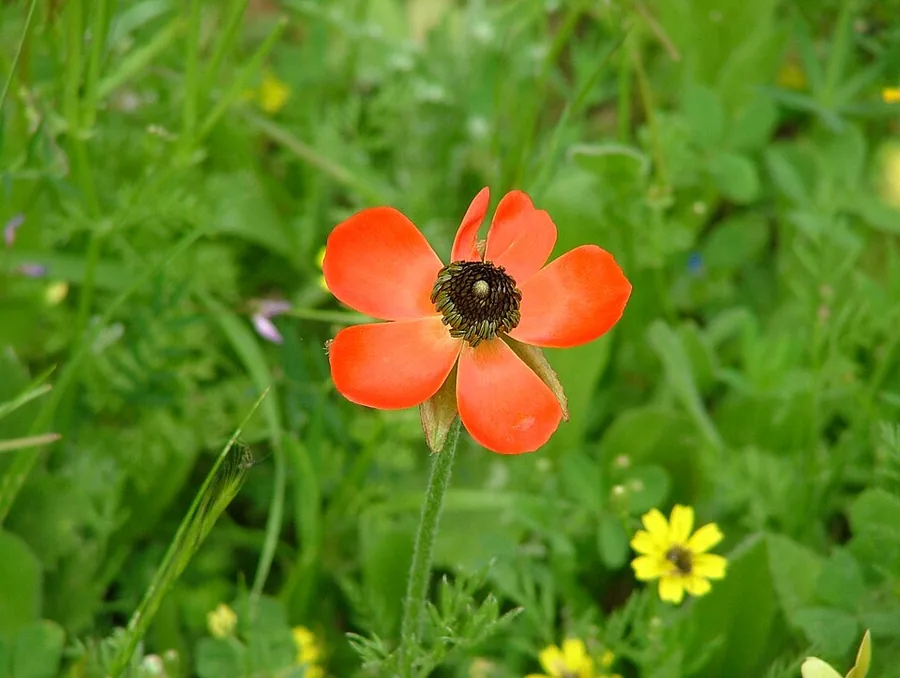
Up close, Persian buttercup is all about its petals: dozens of thin, papery layers packed so tightly the bloom looks almost too perfect to be living tissue. The flowers rise on long, straight stems from small, claw-shaped tuberous roots, the knobby storage organs that mark it out from a true bulb. Like the wild buttercups it is related to, it appears across a wide range of colors.
The papery flowers arrive in a short, dense flush. Opening in cool spring weather, the tightly petaled blooms crowd the stems from late spring into early summer, then the color drains away and the plant slips into dormancy as the heat builds. In mild-winter regions the clawed roots stay alive underground and push up fresh growth each year; in colder ground they are grown for a single season or lifted and stored.
Beneath the show, the small, claw-shaped roots do the work, and they are also the plant's weak point. Left in wet, heavy soil they turn from firm to brown and soft, and the stems and petals collapse soon after. Firm roots in freely draining soil are what hold the whole plant upright.
Care
The short version: full sun and cool spring air bring the tightly layered papery blooms, rich fast-draining soil keeps the claw-shaped roots firm, even moisture that never sits wet protects them, and the plant fades into dormancy as summer heat arrives.
Light
Ranunculus wants full sun, 6 or more hours of direct light a day, and the light drives those densely petaled blooms. In shade the plant survives but throws far fewer flowers, especially through the cool spring weather it colors up in.
Water
The soil stays evenly moist and never soggy, because the firm, claw-shaped roots go brown and soft in wet ground. A drink every 3 to 7 days suits most weather, tapering off as the leaves and stems fade into summer dormancy.
Soil
Ranunculus roots hold firm in rich, fast-draining soil worked with organic matter, a loam or sandy loam. A pH between 6.0 and 7.0 suits it, while dense, heavy clay traps the water that turns the roots to mush.
Temperature
The papery blooms hold up best in cool air, between 28°F and 75°F (-2°C to 24°C). A light frost leaves them intact, but summer heat browns and shrivels the flowers, closing the season.
Humidity
Plain outdoor air suits it, so there is no level to track. Moving air around the foliage counts for more, since still, damp leaves start to rot.
Feeding
Through the active spring growth, a balanced liquid or slow-release fertilizer about once a month feeds the developing buds. Once the foliage slows and browns toward dormancy, the feeding stops.
Pruning
Deadheading the spent, browning flowers pulls fresh buds up the stems. When the leaves yellow and the plant goes dormant, the top is cut away and the claw-shaped roots rest below.
Repotting
Where winter is too cold for the roots to survive in place, the claw-shaped tubers are lifted and divided each year and replanted in fall or spring. Tight, crowded clumps, fewer flowers, and shrinking blooms show they have run out of room.
Size & spacing
A plant stands about 12 to 24 inches (30 to 61 cm) tall, the flowered stems spreading to a similar width. Setting them 12 to 24 inches (30 to 61 cm) apart leaves air between the leaves and keeps them dry.
When to plant
Ranunculus builds its papery flowers in cool weather and cannot hold them through summer heat. The claw-shaped tuberous roots presprout indoors in late winter and go into the ground in spring a few weeks before the last frost, and the tightly petaled blooms crowd the stems from late spring into early summer before the heat browns them off.
Northern hemisphere
Southern hemisphere
Typical months for a temperate climate: start earlier in warm zones, later where spring frosts linger.
- Sow: Presprout tuberous roots indoors in late winter, several weeks before last frost
- Plant: Plant tuberous roots outdoors in spring several weeks before the last frost date (mild-winter areas may plant in fall)
- Harvest: Late spring to early summer (May to June)
Hardiness
USDA hardiness zones: 8–10
Temperature: down to -12°C
Troubleshooting
The first signs of trouble in ranunculus show up in the roots below or in the petals above as the weather warms. A close look tells you which. Match what you see on the plant to the cases below and act before more of it goes.
Browned, softened roots under a sagging plant
The damage is root rot, and it starts in soil that will not drain. The firm, claw-shaped roots discolor to brown and turn soft and foul in heavy clay or standing water, and the stems and petals sag as they lose their support. The spoiled roots are pulled and binned, the drainage opened up, and only the still-firm roots go back into improved soil.
Fix:
- Stop overwatering and improve drainage
- Remove and discard affected plants and rotted roots
- Replant healthy tuberous roots in amended, well-drained soil
Blackened, sunken streaks along the roots
The damage is black root rot, a fungal disease that turns stretches of root black and sunken while the top growth stalls. The infected plant will not recover, so it is dug out and destroyed rather than followed by more vulnerable flowers in the same soil. Firm, clean stock and freely draining soil keep the blackening away.
Fix:
- Remove and destroy infected plants
- Avoid replanting susceptible plants in the same soil
- Improve soil drainage and sanitation
Petals browning and dropping as the heat builds
The damage is heat stress, not a disease. Ranunculus forms its petals in cool spring air, so the blooms brown and drop fast once the May and June heat arrives. Full sun, the removal of spent flowers, and a natural fade into dormancy as summer sets in are the plant's own rhythm.
Fix:
- Plant in full sun in cool spring weather
- Deadhead spent flowers to prolong blooming
- Allow plants to go dormant naturally as summer heat arrives
Toxicity
Every part of that papery-petaled plant is built to be looked at, not eaten. The tissue holds ranunculin, which becomes the irritant protoanemonin the moment a leaf or stem is chewed or crushed, and the released sap burns the mouth and gut. Keep the flowers and cut stems away from cats, dogs, horses, rabbits, livestock, birds, and children, and wear gloves when the sap is on your hands.
Toxic to
Cats · Dogs · Horses · Rabbits · Livestock · Birds · People
Cats Mild
A cat that bites into a leaf soon drools, and may bring up its food or pass loose stool, with the mouth left sore and ulcerated, the body low on energy, and the appetite gone. The bitter, stinging sap usually turns most cats away after a mouthful or two.
Dogs Mild
A dog that chews the plant drools heavily, vomits, and passes loose stool, its mouth often marked with ulcers and its energy and appetite low. As with cats, the sharp taste holds the amount taken down.
Horses Moderate
Horses come off worse, the mouth blistered and sore, saliva running, with colic and diarrhea to follow. A large mouthful can leave a horse unsteady, wobbling on its feet.
Rabbits Toxic
The same protoanemonin that stings other animals burns a rabbit's mouth and gut, so every plant and cut stem stays out of their reach. None of it belongs in front of a rabbit as forage.
Livestock Toxic
Cattle, sheep, and goats that crop the fresh plant can blister around the mouth, drool, and suffer a churning gut. The sharp taste turns most of them off, leaving hungry animals on thin pasture as the ones that eat enough to be hurt.
Birds Toxic
The irritant sap gives birds no free pass, so pet and backyard birds stay clear of the leaves and flowers. Every part of the plant is unsafe for them.
People Caution
The plant is no food, and a chewed piece stings the mouth and can bring up blisters along the lips and tongue. The sap on crushed stems can redden and irritate bare skin, so gloves go on and it stays away from children.
Wear gloves when handling crushed foliage or sap, which can cause skin and mucous-membrane irritation.
Helpline numbers

United States
ASPCA Animal Poison Control: (888) 426-4435 (fee applies)
Poison Control: (800) 222-1222



Canada
Poison Centres: 1-844-764-7669
Varieties
The differences between ranunculus types show in the flower itself, from the size and fullness of the petals to a contrasting edge. These are the ones to look for.
Tecolote (Giant Tecolote)
Its flowers are the largest here, fully double and stacked with petals across a wide color range, which is why it leads as a cut flower.
Bloomingdale
This one carries the same layered blooms on a compact, short-statured plant that fits containers and low bedding.
Picotee types
Each petal is finished with a fine line of contrasting color around the rim, the detail that sets these apart in cut arrangements.
How to propagate
New ranunculus comes most easily from the claw-shaped tuberous roots, with division of an old clump or a slow start from seed as the other routes.
Bulbs & cormsEasy
Plant tuberous roots in spring several weeks before last frost (or fall in mild-winter areas) · 2 to 3 weeks to sprout; blooms in spring
The straightforward route is the claw-shaped roots themselves. Each claw goes into the ground 2 inches deep, set 6 to 8 inches apart and turned point-down, and soaking it first plumps the dry tissue. The first shoots break the surface in 2 to 3 weeks, and flowers follow that spring.
DivisionModerate
When dormant, after foliage dies back · One growing season
After the leaves brown and die back and the plant rests, the clustered claw-shaped roots are lifted and pulled into separate pieces. Each piece needs at least one growing point on it, and it takes a full growing season to fill out and flower.
SeedModerate
Sow in late summer to fall for bloom the following spring · One to two seasons to flowering size
Seed is the long way around. Sown from late summer into fall, it flowers the following spring, and the seedlings spend one to two seasons reaching flowering size, far more than the clawed roots need.
Myths
Ranunculus grows from a hardy true bulb that lives through winter anywhere.
What sits underground is a cluster of claw-shaped tuberous roots, not a true bulb, and they survive winter reliably only in about USDA Zones 8 to 10. In colder ground the plant is grown for one season, or the roots are lifted and stored.
Buttercups show up in gardens everywhere, so they must be safe around pets.
The look is harmless; the sap is not. The ASPCA lists buttercup and ranunculus as toxic to cats, dogs, and horses because of protoanemonin, which irritates the mouth and gut.