Ornamental · Alismataceae
Water Poppy
Hydrocleys nymphoides
In full sun and warm, still water, water poppy spreads glossy heart-shaped leaves and cupped yellow blooms across the surface.
Full sun
50–90°F · 10–32°C
USDA 9–11
6–12 in · 15–30 cm
Overview
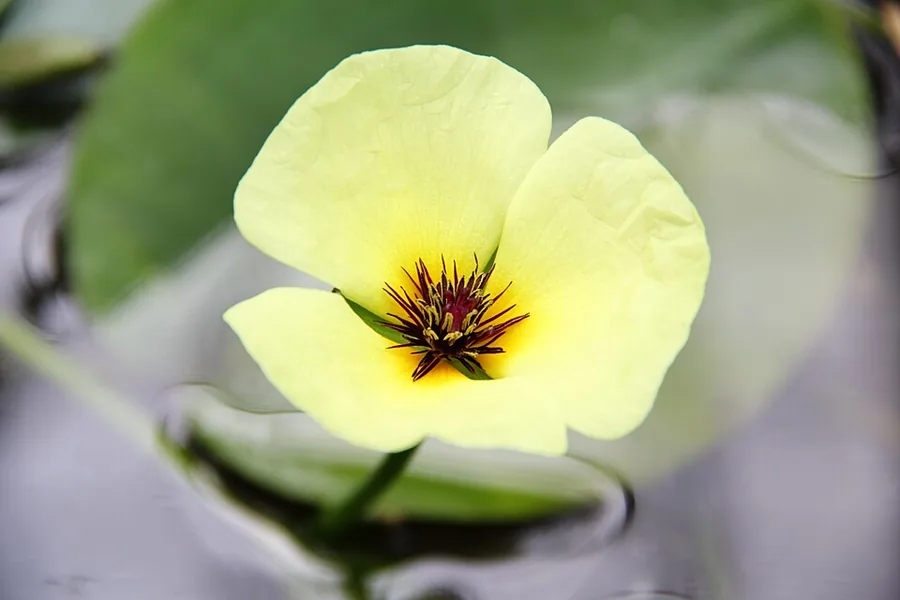
Water poppy shows two features up close: its leaves and its flowers. The glossy heart-shaped leaves lie flat on the water, their surface bright and smooth, each blade notched at the base where the stalk meets it. Rising just above them, the cupped yellow flowers open three broad petals apiece, and every bloom lasts a single day before another unfurls in its place. The plant sits in the water-plantain family and comes from the warm waters of Central and South America.
Below the surface the structure is all runners. Slender trailing stolons stretch across the water, rooting at their nodes and budding small plantlets that repeat the parent leaf by leaf. Anchored in a pot of heavy aquatic soil under a few inches up to about a foot of still water, the crown stays submerged while the foliage floats free. In warmth and sun it thickens fast, and in frost-free water it can grow weedy and invasive, so it stays potted and out of any wild waterway.
The plant itself is small and undemanding. Its leaves ask only for sun and warm, still water, with the odd thinning of the runners. Aphids sometimes stipple the emergent growth, but little else marks it. Cold is the one thing the soft tissue cannot take, and the first frost turns the leaves to slime.
Care
The short version: full sun and warm, still water a few inches up to about a foot deep, the crown submerged in heavy aquatic soil, a monthly feed through the growing season, and the pot moved indoors before frost.
Light
Water poppy wants full sun, six or more hours of direct light a day. It hangs on in part shade, but there the yellow flowers grow few and far between, so the brighter the water, the thicker the bloom on the surface.
Water
This is an aquatic plant, its roots and crown living down in standing water. Sink the pot under a few inches up to about 12 inches of warm, still water and keep the crown below the surface at all times while the leaves float above. Calm water holds it steady; moving water does not.
Soil
Its roots grip heavy aquatic loam or clay in a pond container. Texture troubles it little, and it takes clay, loam, or sand, so long as the pH stays within 6.0 to 7.5.
Temperature
Its soft tissue runs best in warm water, roughly 50°F to 90°F (10°C to 32°C). In the cold the leaves slow and stiffen, and a frost dissolves them, so warmth is the thing to watch.
Humidity
Floating on open water, the leaves never dry out, so there is no humidity figure to chase. The water around them supplies it all.
Feeding
Through spring and summer, push an aquatic fertilizer tablet down into the soil container about once a month. Feeding the soil at the roots rather than the open water keeps the leaves fed and the pond clear.
Pruning
Little is needed beyond thinning the runners and lifting yellowed leaves. Trim back the trailing stolons and pull the fading blades so the glossy canopy stays open rather than closing over the whole surface.
Repotting
Repot each spring, or once the container fills with roots. A tangle of matted roots, thinner flowering, and stolons spilling over the rim show that the plant has outgrown its pot and needs dividing into fresh soil.
Size & spacing
The foliage rises only 6 to 12 inches (15 to 30 cm) above the water, yet the runners carry the plant 1 to 5 feet (30 to 150 cm) across the surface. Leave room for that spreading mat and keep it potted so it stays in check.
When to plant
Water poppy lives by warmth and dies back at the first frost. Sheltered indoors or begun again in late winter, then set out once the cold has passed and the water has warmed, it opens its yellow flowers across the whole of summer.
Northern hemisphere
Southern hemisphere
Typical months for a temperate climate: start earlier in warm zones, later where spring frosts linger.
- Sow: Late winter to early spring (seed propagation is difficult; division is preferred)
- Plant: After all danger of frost has passed and water has warmed, late spring to early summer
- Harvest: Summer (June to August), beginning when water reaches about 70 degrees F
Hardiness
USDA hardiness zones: 9–11
Temperature: down to -7°C
Troubleshooting
Most trouble shows on the plant itself: leaves gone slack in the cold, runners knitting shut over the water, or bloom held back in shade. Read those signs on the foliage early and you can act before the change spreads. Match what the plant shows below, then correct it while it helps.
Leaves turn translucent and black after cold
Water poppy is tender, and its soft leaves cannot hold up to frost. Below zone 9, or as the water chills, growth stops and the blades go translucent, slack, and slimy before blackening. Lift the pot indoors to a bright, warm tub before the first frost, or let it finish as an annual and start fresh in spring.
Fix:
- Before first frost, lift the container and move it indoors to a shallow tub or aquarium with bright light and warm water
- Overwinter as a houseplant or treat as an annual and replant in spring
Runners and plantlets knit over the water
In warm, frost-free water the stolons run hard, rooting at each node and budding plantlets that close their glossy leaves over the surface fast. This is plain vigor rather than disease, but left alone the mat smothers everything around it. Keep it in a sunken pot instead of open pond mud, thin the runners often, and never tip spares into a wild waterway.
Fix:
- Grow in a contained pot rather than planting directly in pond mud
- Regularly thin and remove excess stolons and plantlets
- Do not release into natural waterways
A carpet of leaves but few yellow flowers
Thick foliage with scarce blooms points to too little sun or water still too cold for flowering. The yellow cups begin only once the water warms to about 70°F (21°C), so move the pot into six or more hours of direct light and wait. A monthly aquatic fertilizer tablet worked into the soil feeds the flowering once the warmth arrives.
Fix:
- Move the container to full sun (6 or more hours of direct light)
- Wait for water to warm to about 70 degrees F
- Fertilize with aquatic fertilizer tablets
Sticky, glossy leaves dotted with tiny insects
The small soft-bodied insects speckling the emergent leaves are aphids, and the sticky sheen over the glossy surface is their honeydew. Wash them off with a strong jet of water or wipe the clusters away by hand. Keep chemical sprays off the water, since they kill fish and other pond life, and let natural predators clear the rest.
Fix:
- Spray aphids off foliage with a strong stream of water
- Wipe or hand-remove colonies
- Avoid chemical pesticides that can harm pond wildlife and fish
Toxicity
For animals in the home, water poppy is non-toxic and counted safe around pets, livestock, and children. Its leaves sit out on deep water, rarely within reach, and a bite of the wet, glossy tissue brings nothing worse than a passing stomach upset.
Safe for
People · Cats · Dogs · Horses · Rabbits · Livestock · Birds
Cats None
No toxin runs in the plant, so a curious cat stays safe. A mouthful of the wet, glossy leaf may draw a little drool or a queasy stomach, and that passes on its own.
Dogs None
Dogs come to no harm from it, since nothing in the tissue poisons them. A determined chewer meets nothing worse than mild, short-lived stomach upset from the soggy leaves.
Horses Safe
Horses can crop the foliage without harm. The plant holds no known toxin, and its leaves rarely float within reach of a paddock in the first place.
Rabbits Safe
A bite of the leaves will not poison a rabbit. Offer any unfamiliar green in small amounts, though, since a sudden change of diet can loosen a rabbit's gut.
Livestock Safe
Cattle, goats, and sheep can browse the leaves safely. The plant carries no toxin, and its place out on deep water keeps it well clear of most grazing mouths anyway.
Birds Safe
Garden and pond birds take no harm from the leaves or the flowers. Waterfowl often pick at the soft floating growth without any trouble at all.
People Safe
The plant poses no poisoning risk to people. It is not grown to be eaten, so there is no call to taste it, but a child who bites a leaf will be fine.
As an aquatic pond plant it is rarely accessible to pets; pets that nibble aquatic foliage may experience mild, self-limiting gastrointestinal upset.
Varieties
One water poppy is all there is to look at. The plain species, with its glossy floating leaves and yellow flowers, is what fills ponds everywhere, and no named cultivars branch off from it.
Hydrocleys nymphoides (species)
This is the plain species seen in nearly every pond, its glossy heart-shaped leaves lying flat on the water and its yellow three-petaled flowers giving it the poppy name, and no named cultivars split off from it.
How to propagate
Water poppy all but copies itself along its runners, and lifting those rooted plantlets fills a new pot far faster than teasing the plant from seed.
DivisionEasy
Spring to summer during active growth · A few weeks
Division is the easiest way to make more water poppy, and the runners do half the work. Through spring and summer, cut free the little rooted plantlets strung along the trailing stolons and press each into aquatic soil, where it takes hold within a few weeks.
SeedDemanding
Spring · Several weeks to months
Raising it from seed in spring is possible but slow and fiddly, taking anywhere from several weeks to a few months to get moving. Most growers pass over the seed and lift a division instead.
Myths
Water poppy is a true water lily or a kind of poppy.
The leaves and flowers only mimic both. Hydrocleys nymphoides belongs to the water-plantain family, floating its round glossy blades like a small lily and opening yellow petals shaped like a poppy's. The likeness is skin deep, with no real kinship to true water lilies or to garden poppies.