Ornamental · Nymphaeaceae
Water Lily
Nymphaea
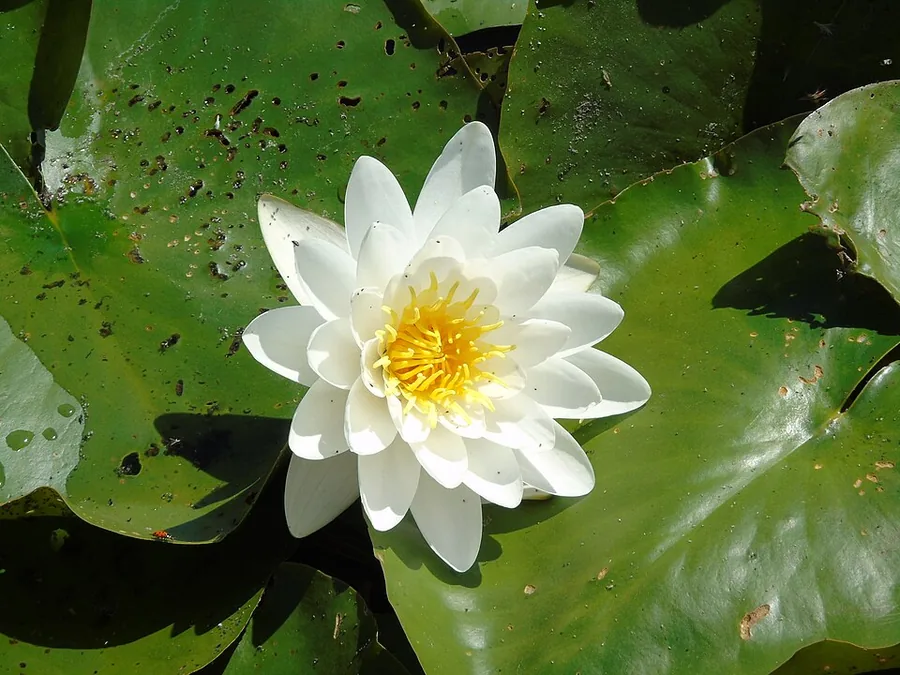
Round pads and cupped flowers float across the water, and the water lily blooms from late spring to fall.
Full sun
USDA 3–11
3–10 in · 8–25 cm
Overview
The water lily spreads flat across the water as round green pads and open, cupped flowers, all of it floating on the surface while the crown roots out of sight in a submerged pot of heavy soil. The pads lie almost level with the water, and the flowers sit among them like shallow bowls. For all the name says, it is no true lily, a point that carries weight for cat owners.
The flowers are where the plant shows its range. The hardy lilies, hardy through zones 3 to 11, hold to reds, yellows, and softer shades and float their blooms right at the surface. The tropical lilies deepen into vivid blues and purples, lift some flowers just clear of the water, and open a few of them at night, though their tender crowns give out where the water freezes.
Set in sun on still water, the plant fans its pads into a broad, flat sheet and studs it with wide-open flowers for months. Starve it of light or stir the water, and the pads keep coming while the flowers thin to almost nothing, leaving a raft of bare green leaves.
Care
The short version: the round pads and cupped flowers want full sun and still water, with the crown set in a pot of heavy soil under about 6 to 18 inches of water. Feed it monthly through the growing season and divide the rhizome every few years to keep the flowers opening.
Light
The flowers open widest in strong light, so the plant wants at least 6 hours of direct sun a day, with full sun filling the water with the most blooms. In partial shade the round pads keep spreading while the flowers dwindle.
Water
The plant floats on standing water, its pads lying flat on the surface while the crown roots in a submerged pot below. Hold about 6 to 18 inches (15 to 46 cm) of water over the crown to match the cultivar, and keep the surface glassy and still. Fountains and pumps ripple the water the pads rest on, which the plant dislikes.
Soil
The crown roots down into heavy clay loam or aquatic media in a submerged container, weighed under a layer of gravel that keeps the mix from clouding the water. A pH from 6.0 to 8.0 suits it, so the dense mix matters more than the acidity.
Temperature
The hardy crowns endure a wide swing, from about -40°F to 100°F (-40°C to 38°C), as long as they overwinter below the ice. Sunk deep enough, the crown never freezes solid and pushes new pads up again in spring.
Humidity
Floating on open water, the pads sit in high humidity by nature, so there is nothing to adjust. The pond keeps them moist.
Feeding
The plant draws heavily on its roots. An aquatic fertilizer tablet pressed into the soil below the gravel about once a month through spring and summer keeps the pads green and fresh flowers rising.
Pruning
Old growth is lifted away as it fades. Pinching off spent flowers and yellowing pads clears the browning tissue from the surface and pushes new buds up in their place.
Repotting
The rhizome is divided rather than the plant repotted, every few years. When the flowers thin, the pads crowd up and stand out of the water, or rhizomes pack the container, the clump is lifted and cut apart.
Size & spacing
The plant rises only 3 to 10 inches (8 to 25 cm) above the water, so it reads as a flat sheet, while the pads spread 2 to 12 feet (61 cm to 3.7 m) across depending on the cultivar. A spread matched to the pond leaves open water between the leaves rather than a solid green cover.
When to plant
The pads and flowers surface as the water warms rather than by any date. Lowered into submerged pots in spring, once the cold lifts and the water warms, the rhizomes send up leaves and then flowers that ride the surface from late spring through fall.
Northern hemisphere
Southern hemisphere
Typical months for a temperate climate: start earlier in warm zones, later where spring frosts linger.
- Plant: Set rhizomes or tubers in submerged containers in spring once water has warmed and frost danger has passed.
- Harvest: Late spring through fall (flowers rest on or just above the water).
Hardiness
USDA hardiness zones: 3–11
Temperature: down to -40°C
Troubleshooting
The look of the plant tells you most of what is wrong: pads with no flowers among them, soft clusters massed on the leaves, or pads gone yellow and chewed. Each points to a cause, from too little sun to the few pests that work the pads. Read what you see on the leaves and flowers, then act.
A sheet of round pads with no flowers among them
Bare green pads and no flowers usually mean too much shade, less than the 6 hours of direct sun the plant needs to set buds. A crown sunk too deep, pads crowded from an overgrown clump, or a fountain rippling the surface can also keep the buds down. Move it into full sun and still water, raise the crown to the right depth, cut the crowded rhizome apart, and feed it through the season to bring the flowers back onto the surface.
Fix:
- Move the container so the plant gets at least 6 hours of direct sun
- Raise the container so the crown sits at the recommended depth for the cultivar
- Lift and divide the rhizome every few years
- Relocate away from fountains or pump outflow so the plant sits in still water
- Fertilize with aquatic plant tablets during the growing season
Soft green clusters massed over the pads and buds
The clusters are waterlily aphids, tiny soft-bodied insects packed across the tops of the pads and over the flower buds. A spray or a brush drops them into the water, where they cannot climb back onto the leaves and the fish often eat them. A pad crusted with them is best pulled.
Fix:
- Hose or brush the aphids off the pads into the water, where they cannot climb back and fish may eat them
- Remove and discard heavily infested pads
Pads gone yellow or riddled with chewed holes
Old pads turning an even yellow are simply aging. Ragged holes and gnawed edges mark waterlily beetle, leaf-mining midges, or china-mark moth at the leaf, while dark spots or soft brown patches signal leaf spot or crown rot in the tissue. Cut away the marked pads, lift off the beetles and larvae or knock them into the water, and press in a fertilizer tablet where the pads look starved and pale.
Fix:
- Remove and discard yellow, spotted, or chewed pads
- Pick off beetles and larvae or knock them into the water
- Fertilize with aquatic plant tablets if a deficiency is suspected
Toxicity
Behind the round pads and open flowers there is no hidden hazard for pets. The water lily is not a true lily, so it carries none of the kidney danger that real lilies and daylilies pose to cats. It stays off the ASPCA toxic list, and cats, dogs, and the rest of the household are safe around it.
Safe for
People · Cats · Dogs · Horses · Rabbits · Livestock · Birds
Cats None
Safe around cats. This flat-floating plant is no true lily, and it holds none of the kidney toxicity that makes upright Lilium and daylilies so dangerous to them.
Dogs None
No hazard to dogs. A dog that wades in and mouths a round floating pad swallows nothing harmful.
Horses Safe
Not listed as a danger to horses, and its pads float out of a horse's ordinary reach in any case.
Rabbits Safe
Safe for rabbits, with no toxic compounds in the pads or flowers to trouble them.
Livestock Safe
Cattle, goats, and sheep can graze at the water's edge with nothing to fear from the leaves or flowers.
Birds Safe
Harmless to birds and waterfowl, which pick at the floating pads and the seeds in the wild.
People Safe
No danger to people, children included, even as small hands close over the cupped flowers on the surface.
Grown in an outdoor pond, so casual contact by pets or children is uncommon; no special handling required.
Varieties
The hundreds of water lilies part into the hardy kinds that surface again each year and the tender tropicals with the deeper colors. The ones below stand out by the color and form of their pads and flowers.
'Attraction'
A hardy lily for zones 3 to 8 whose fragrant red flowers open flat among the pads, and one of the most widely planted of all.
'Marliacea Chromatella'
Hardy across zones 4 to 10, it cups canary-yellow flowers above pads mottled with copper, and keeps them coming from May until frost.
'Director George T. Moore'
A tropical day-bloomer that raises violet-blue flowers on stalks just clear of the water, grown as an annual where winters turn cold.
Tropical day- and night-blooming water lilies
Tender Nymphaea for zones 9 to 11, or a single season as annuals, carrying deep blue and purple flowers and forms that open in the dark, unlike any hardy lily.
Lotus (Nelumbo)
Not a water lily at all but a separate genus in its own family, whose round leaves and flowers stand tall on stems well above the water instead of lying flat on it.
How to propagate
More plants come from the rhizome itself, cut and replanted, far more often than from seed, and the split pieces regrow their own pads and flowers within a season.
DivisionEasy
Spring · One growing season
New plants come from cutting the rhizome apart in spring, the simplest route by far. The rhizome is lifted, sliced into sections that each keep a growing point, and laid flat with the bud end pointing up in a submerged pot of heavy soil. Each section grows its own pads and roots across one growing season, so the clump is split every few years once it packs the pot and the flowers thin.
SeedModerate
Spring to summer · One or more seasons
Seed grows only the wild species and drifts along for a season or more, sown in spring or summer. It seldom pays off in the garden, since most named cultivars are sterile hybrids whose seed will not come true, and the rhizome divides far more readily.
Myths
The water lily is a true lily, so it is as deadly to cats as the lilies that cause kidney failure.
The floating water lily (Nymphaea) is not a true lily and has no place in the dangerous group. The plants that bring on sudden, often fatal kidney failure in cats are the upright true lilies (Lilium) and daylilies (Hemerocallis), which are unrelated. A water lily on the water carries no such risk, and it is absent from the ASPCA toxic list. Keep the real lilies and daylilies away from cats, but do not mistake them for this flat-floating aquatic plant.