Ornamental · Linderniaceae
Wishbone Flower
Torenia fournieri
Look inside each bloom for the pair of stamens that arch into a tiny wishbone.
Partial shade
Every 2–4 days
64–86°F · 18–30°C
USDA 2–11
Overview
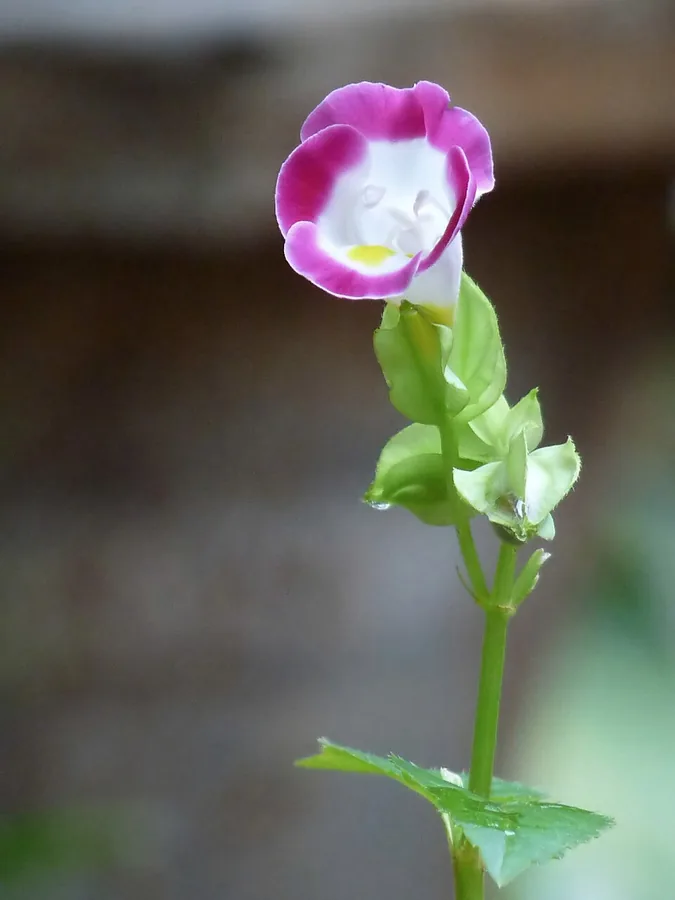
Each flower opens in cool blue, purple, pink, or white, and the detail behind the name sits inside: two slender stamens that curve up and meet, forming a slim wishbone within the open bloom. The color reads clear and soft rather than brassy. New flowers keep opening from early summer to frost.
The plant itself is low and rounded, a compact mound that rises only 6 to 18 inches (15 to 46 cm) tall and spreads 6 to 9 inches (15 to 23 cm) across. The stems carry small leaves closely, and the blooms sit among the foliage rather than towering above it. Up close it reads as a tight, leafy cushion studded with color.
The flowers tidy themselves as they age. Spent blooms drop cleanly on their own, so the plant stays fresh-faced and free of the browning, shriveled flowers that spot many annuals. What lingers instead is a steady, close-set scatter of open color across a mound of green.
Care
The short version: this shade annual keeps its cool blue to white blooms coming in part to full shade, out of hot afternoon sun, on soil held evenly moist at about 1 to 1.5 inches of water a week. It grows in rich, well-drained ground, and a pinch now and then keeps the mound dense.
Light
This is a shade plant, at its best in part to full shade or dappled light, with morning sun and afternoon shade in hot climates. Under too much direct sun the change is visible: the stems stretch long and thin, and the blooms grow sparse across them.
Water
Keep the soil evenly moist so it never dries between waterings, which comes to about 1 to 1.5 inches of water a week. A layer of mulch over the soil keeps the roots cool once the heat sets in.
Soil
Give it rich, dark organic soil that holds moisture yet drains freely. The pH runs slightly acidic, 6.0 to 6.5. Free drainage is the one thing it cannot go without.
Temperature
It sits comfortable from about 64°F to 86°F (18°C to 30°C). Frost is fatal to its tender growth, and in peak summer heat a little shade and steady moisture keep the foliage from flagging.
Humidity
Plain outdoor humidity suits it, so no number applies. Moving air matters more, since still, damp air in the shade is where a dusty coat of powdery mildew begins to form on the leaves.
Feeding
A complete slow-release fertilizer mixed into the bed at planting feeds it for a long stretch. A second round at about 6-week intervals through the growing season keeps the growth full if the plant looks like it wants more.
Pruning
Pinching the soft new tips keeps the plant dense and rounded instead of open and leggy. Deadheading is unnecessary, since each spent flower drops away on its own and leaves the mound looking clean.
Size & spacing
It stays small and close, 6 to 18 inches (15 to 46 cm) tall and 6 to 9 inches (15 to 23 cm) wide, a tight low mound. That size sets it right at the very front of a bed, in a container, or along an edging where the flowers show at close range.
When to plant
Wishbone flower is tender, and frost ends it at both edges of the season. Started from seed indoors in late winter and set out once the cold lifts, it opens its first blooms in early summer and keeps producing them until frost finally halts the flowers.
Northern hemisphere
Southern hemisphere
Typical months for a temperate climate: start earlier in warm zones, later where spring frosts linger.
- Sow: Start seeds indoors 6 to 8 weeks before the average last frost date.
- Plant: Transplant outdoors after danger of frost has passed, around mid to late April in many regions.
- Harvest: Blooms from early summer (about June) until first frost.
Hardiness
USDA hardiness zones: 2–11
Temperature: down to -46°C
Troubleshooting
Wishbone flower runs into few troubles, and each one shows on the plant in a way you can see. Wet soil and harsh sun are the usual causes, and the notes below describe what the damage looks like up close. Match the appearance to a plant, then step in early.
Wilting stems above brown, mush-soft roots
A plant sunk by root rot wilts and yellows, then folds over as the roots below give way. Lift it and the roots are brown, soft, and sour-smelling, a mush where firm, pale root should be. The trigger is soil kept too wet or draining too slowly, so cut back the water, open up the drainage, and clear out any plant already collapsed.
Fix:
- Improve drainage and reduce watering frequency
- Remove and discard severely affected plants
Bare, stretched stems carrying few flowers
Too much hot afternoon sun draws the stems out long and bare, and the flowers grow scattered and few, an effect worsened when the plant goes unpinched. Move it into morning sun with afternoon shade, then pinch back the new growth to rebuild the tight, bloom-covered mound.
Fix:
- Provide morning sun with afternoon shade
- Pinch back new growth to encourage bushiness
A dusty white bloom across the upper leaves
The pale, powdery dust that spreads over the top of the leaves is powdery mildew, a fungus that takes hold where shade traps still, damp air. It coats the green surface in a chalky film. Widen the spacing, move air through the plants, and water at the base so the leaves stay dry.
Fix:
- Improve air circulation and spacing
- Avoid wetting foliage when watering
Toxicity
Wishbone flower is non-toxic and safe around pets, livestock, and children. Nothing in its leaves, stems, or flowers holds a toxin, and it is absent from the ASPCA's list of plants harmful to cats or dogs. It can be planted wherever animals and children roam.
Safe for
People · Cats · Dogs · Horses · Rabbits · Livestock · Birds
Cats None
Safe for cats. Chewing a leaf or petal will not poison one, though almost any plant can leave a sensitive cat with a brief, mild stomach upset.
Dogs None
No part of the plant is toxic to dogs. One that bites into the leaves or blooms takes no harm from them.
Horses Safe
Horses are safe around it, since nothing in its leaves, stems, or flowers can harm them.
Rabbits Safe
Rabbits can chew the foliage without being poisoned, and a low mound of it may end up nibbled to the stems.
Livestock Safe
Cattle, goats, and sheep graze near it with no toxic risk from any part of the plant.
Birds Safe
Wild and pet birds stay safe around it, as none of its parts hold anything harmful.
People Safe
The plant is non-toxic to people, and children are safe among the flowers, though it is a plant to look at rather than to eat.
Varieties
Many named series exist, and a few appear most often at the garden center. Each looks a little different up close, and these are the ones worth knowing.
Kauai
A compact series packed with dense, heavy bloom in part shade.
Duchess
A compact series that flowers early and carries visibly larger blooms than most.
Little Kiss
A small, mounding form whose low cushion fits containers and the front of a bed.
How to propagate
Wishbone flower grows readily from seed, the route most gardeners take to raise a fresh mound of it each spring.
SeedEasy
Start indoors 6 to 8 weeks before last frost, or direct sow after frost danger passes. · Several weeks to transplant size after germination.
Seed is the usual start for a spring mound of wishbone flower. Sow it indoors 6 to 8 weeks before the last frost, or drop it into the ground once the cold has gone, and the seedlings spend several weeks filling out to transplant size.
Myths
Wishbone flower must be deadheaded to keep flowering.
The faded blooms never need pulling. The plant is self-cleaning, dropping each spent flower on its own and flowering from spring until frost.
Torenia only blooms well in full sun.
It flowers heavily in part to full shade, rare among annuals. In hot climates it even prefers afternoon shade, where full sun would only stress it.