Houseplant · Asparagaceae
Ti Plant
Cordyline fruticosa
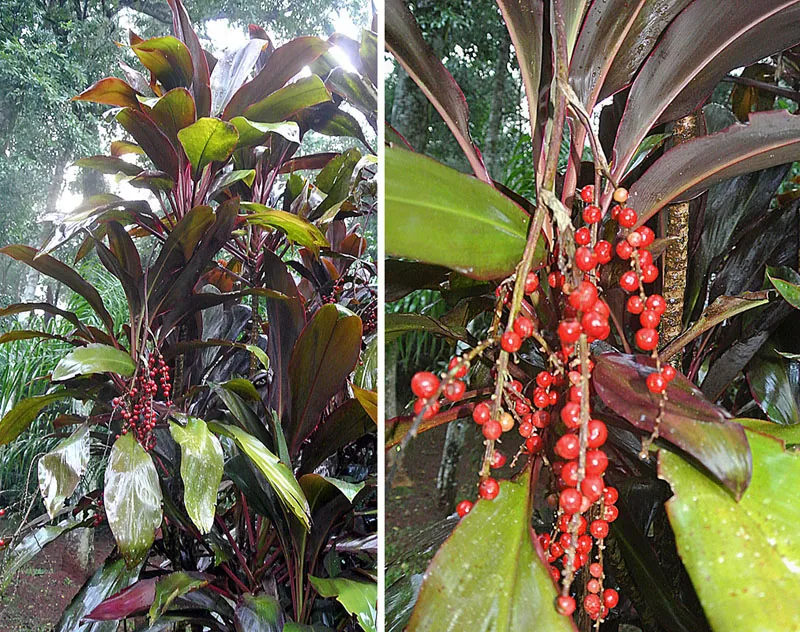
Long, strap shaped leaves in pink, red, and burgundy arch from the ti plant's upright canes, deepest of all in bright indirect light.
Bright indirect
50–95°F · 10–35°C
USDA 10–12
3–15 ft · 0.9–4.6 m
Overview
The ti plant carries long, strap shaped leaves in pink, red, purple, and green, each blade arching from a slim upright cane. It is a tender evergreen from the tropical Pacific and Southeast Asia, long known as a good luck plant, and the foliage holds its color the year round. The overall shape is upright and open, with the colored blades spilling outward near the top of the canes.
That leaf color is not fixed; it answers to light. Under bright indirect light the pinks and reds run deep and saturated across the blade. In low light the same leaves lose their warm tones and drift back to a plain green, the color thinning out first before it disappears.
Look at the leaf tips and you can read the plant's health. Clean, whole tips mean the water and air suit it; browned, dried tips mean fluoride in the tap water or dry air has burned the ends. The rest of each blade stays healthy and colored while only the tip turns crisp.
Care
The short version: bright indirect light deepens the pink and red, high humidity and clean, fluoride free water keep the leaf tips whole. Keep the soil evenly moist in the growing season, drier in winter, and feed a few times a year to hold the color in the blades.
Light
Bright indirect light draws out the deepest pink and red in the blades. In partial or full shade the leaves live on, but the warm tones bleed away toward green. Harsh afternoon sun burns brown patches into the leaf surface.
Water
Through spring and fall the soil stays evenly moist, the surface drying a little between waterings, then drier in winter. Tap water is the risk: its fluoride and salts settle into the blade and brown the tips, so distilled water or rainwater keeps the leaf edges clean.
Soil
The roots sit in a well drained, peaty mix, either a fertile peaty loam or a peat based potting soil. A pH of 5.5 to 7.0 suits them, and free draining soil keeps them from standing in water.
Temperature
Warmth keeps the blades firm and colored, best held between 50°F to 95°F (10°C to 35°C). Cold is its undoing, so a chilly draft or an icy winter pane can damage the leaves.
Humidity
The ti plant wants high humidity, more than dry indoor air holds. A humidifier or a pebble tray lifts the moisture, and without it the slender leaf tips are the first to brown and crisp.
Feeding
A balanced houseplant fertilizer across the spring to fall season keeps the color strong in the blades. A few feedings through the year are enough. They show up in richer, better held leaf color.
Pruning
A leggy cane cut back sends out fresh, fuller growth from lower on the stem. The oldest lower leaves fade, dry, and drop on their own as the cane ages, leaving the color gathered toward the top.
Repotting
The plant moves to a fresh pot every 2 to 3 years, or once rootbound, in spring. By then the roots circle the pot or push out the drainage holes, water runs straight through, and new growth slows.
Size & spacing
Grown on, the ti plant stands 3 to 15 feet (90 cm to 4.6 m) tall and reaches 3 to 8 feet (90 to 240 cm) across, though a pot indoors keeps it far shorter. The long arching blades need room to spread from the cane.
Troubleshooting
The leaves read like a record of the ti plant's condition, so trouble shows there first: brown tips, thinning color, or the fine marks a pest leaves behind. Each sign has a clear look to it. Match what the foliage shows below and trace it to its cause.
Sticky, speckled, or bump marked leaves
A sticky sheen and fine pale speckling across the blade come from sap sucking pests, among them aphids, scale, mealybugs, or spider mites feeding on the leaf. On the undersides they show as hard scale bumps, cottony mealybug tufts, thin webbing, or clustered aphids. Wiping or rinsing the foliage and treating with insecticidal soap or horticultural oil clears them, and steadier airflow keeps them off.
Fix:
- Wipe down or rinse foliage
- Treat with insecticidal soap or horticultural oil
- Improve air circulation
Brown, crisp ends on the blades
When the tips dry to brown while the middle of each blade stays colored, the cause is fluoride and salts in tap water settling into the leaf tissue and burning the ends, with dry air sharpening the damage. Distilled water or rainwater, an occasional flush of the pot to wash out the salts, and higher humidity around the plant bring the new tips in clean.
Fix:
- Water with distilled water or rainwater instead of fluoridated tap water
- Flush the pot periodically to leach out accumulated salts
- Raise humidity with a humidifier or pebble tray
- Trim damaged tips for appearance
Color thinning out to green
Pink, red, and purple that pale and slide toward plain green mark too little light, the warm pigment fading from the blade in a dim spot. Brighter indirect light rebuilds the color across the leaf, while harsh afternoon sun does the opposite and scorches brown into the surface.
Fix:
- Move to a spot with bright indirect light
- Avoid harsh direct afternoon sun, which can scorch leaves
Toxicity
Every part of the ti plant, blade, cane, and sap alike, holds saponins. A cat or dog that bites through a leaf can vomit, sometimes with blood, drool, and turn dull and off its food. People come to no harm from the foliage since none of it is eaten, though the sap that beads from a cut leaf can leave an itchy rash, so wear gloves when the blade is cut.
Toxic to
Cats · Dogs · Horses · Rabbits · Livestock · Birds · People
Cats Moderate
A cat that bites through a leaf can vomit, at times flecked with blood, and drool in strings. A flat, listless look, an untouched bowl, and pupils held wide round out the picture.
Dogs Moderate
The same saponins turn a dog's stomach, bringing vomiting streaked now and then with blood, ropey drool, a poor appetite, and a dull, sunken mood.
Horses Moderate
Horses are counted among the vulnerable, the green blades and stems settling into a sour stomach and general discomfort.
Rabbits Caution
Saponins sit hard on small grazers, so the colored foliage stays off limits and a rabbit is kept from nibbling the leaves.
Livestock Caution
Cattle, goats, and sheep seldom reach a potted ti plant, yet the saponins packed in the blades make them an unsafe browse for any that do.
Birds Caution
Nothing here clears the leaves for pet birds, so a curious bird is kept clear of the foliage rather than left to test it.
People Caution
The leaves are not food, and the sap weeping from a cut blade can raise an itchy rash on some skin. Gloves go on for pruning, and small children are kept from mouthing the leaves.
Sap can cause contact dermatitis; wear gloves when handling or cutting the plant.
Helpline numbers

United States
ASPCA Animal Poison Control: (888) 426-4435 (fee applies)
Poison Control: (800) 222-1222



Canada
Poison Centres: 1-844-764-7669
Varieties
Dozens of named ti plants exist, told apart by the color and size of the leaves. Three show the range clearly, from small strappy blades to whole leaves washed in red.
'Baby Doll'
Small, low, and compact, its short pink and green strappy blades stay neat, the smallest leaved of the three.
'Kiwi'
Green blades run through with yellow stripes, each edged by a fine band of red and pink.
'Red Sister'
The newest leaves emerge a deep pink that darkens toward burgundy, the boldest colored of the group.
How to propagate
The thick canes make the ti plant easy to multiply, whether a cut section of cane or a rooted offset split from the base.
Stem cuttingsEasy
Spring to summer during active growth · Roots typically appear within a few weeks on moist media
A thick section of cane, the same ti log sold in shops, roots readily. Cut in spring or summer while the plant grows, laid on its side on moist gravel or moist media, the log pushes out roots and green shoots within a few weeks.
DivisionEasy
Spring, at repotting · Several weeks to establish in fresh soil
An established clump splits at the spring repotting. The rooted offsets pull free from the base, each with its own roots, and set into fresh soil they take several weeks to knit in and stand on their own.
Myths
Such colorful, harmless looking leaves must make the ti plant safe around cats and dogs.
The color of the leaf says nothing about what is inside it. The ASPCA lists the ti plant as toxic to cats and dogs, and the saponins held in the tissue can bring on vomiting, sometimes with blood, drooling, a poor appetite, and a dull, low mood. Keep it out of reach of pets.