Houseplant · Asparagaceae
Asparagus Fern
Asparagus aethiopicus
Soft, feathery, and fine as green lace as long as you never drown it.
Bright indirect
Every 7–10 days
50–77°F · 10–25°C
USDA 9–11
Overview
Up close the asparagus fern looks spun from green thread, its arching stems lined with countless fine, needle-like sprays that fan out soft and lacy and bend under their own weight over the rim of a pot. For all that fern-like texture, it is no fern. It belongs to the asparagus family, and those soft green needles are really flattened stems called cladodes standing in for true leaves.
Behind the delicate foliage sits a tougher frame. The plant grows fast, takes bright indirect light, and runs back to a knot of pale, swollen tuberous roots that hold water and let it shrug off a missed drink far better than a true fern. The stems push out in waves, each tip a fresh feathery plume of bright green.
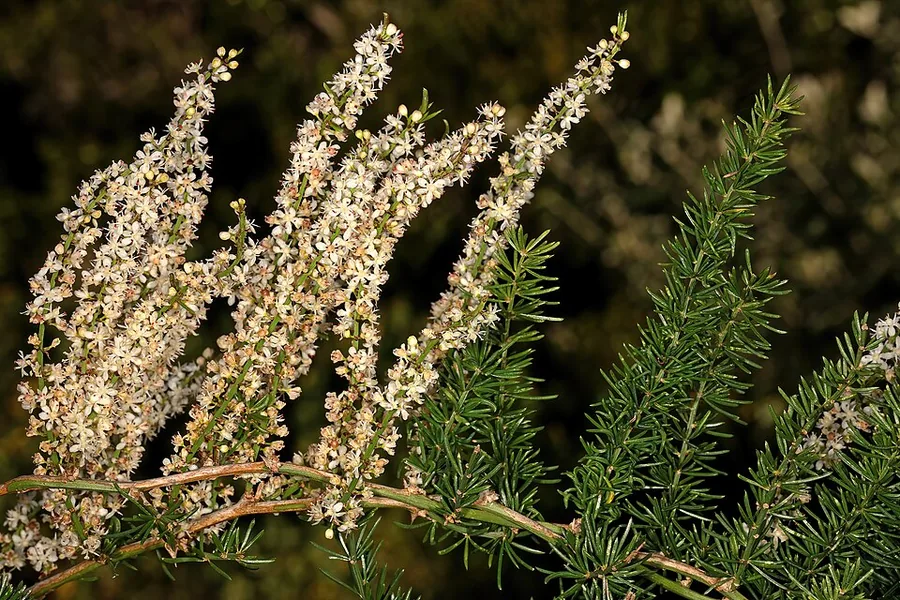
In summer the texture shifts. Tiny white flowers open among the needles, then set into hard green berries that ripen to a glossy bright red, and those red berries are the main reason to keep it away from pets and small children. The sap inside the stems can redden skin too, so gloves help whenever you prune.
Care
The short version: bright indirect light, water once the top few centimeters dry out, feed monthly through spring and summer, and keep the red berries away from pets and kids.
Light
Set it in bright indirect light for the densest, deepest-green needles. It will hold on in partial shade or a little direct sun, but too little light stretches the stems thin and pale, while harsh midday sun scorches the finest tips first.
Water
Keep the soil lightly moist while it is growing, then let the top few centimeters dry out before the next watering. The pale tuberous roots already store water, so they rot in a pot that stays soggy. Ease off in winter as growth slows.
Soil
Plant it in a well-draining, fertile mix rich in organic matter. A slightly acidic pH of 6.0 to 6.8 suits it, and good drainage is what keeps the swollen tubers from sitting wet.
Temperature
It holds its color best between 50°F and 77°F (10°C to 25°C). It has no tolerance for frost, so keep it indoors or bring it in well before the first cold nights.
Humidity
Average room humidity, around 40% to 60%, keeps the needles soft and green. In very dry air the fine tips brown first, so group it with other plants or set it near a tray of water in an arid room.
Feeding
Feed once a month from spring through summer with a balanced water-soluble fertilizer cut to half strength. Stop feeding in fall and winter while the plant rests.
Pruning
Cut yellowed or dead stems off at the base to keep the clump clean, and trim back leggy growth to draw out denser, fresher plumes. Wear gloves, since the foliage and the sap inside the stems can irritate skin.
Repotting
Move it up a pot size every 1 to 2 years, ideally in spring. The pale tubers tell you when, heaving up above the soil, pushing through the drainage holes, or pressing hard enough to crack the pot.
Size & spacing
Indoors it reaches about 12 to 24 inches (30 to 60 cm) tall and spreads 24 to 35 inches (60 to 90 cm) wide, so give it room for the arching stems to fan out without crowding its neighbors.
Troubleshooting
Almost every flaw you will see on this plant points back to water or light. Brown and brittle needles mean it ran too dry, yellow needles shedding off the stem mean the roots stayed too wet, and thin, pale stems mean it wants more light. Match the look below and the cause is usually plain.
Fine green needles going yellow and shedding
When the fine green needles fade to yellow and start raining off the stem, the cause is usually root rot under soil held too wet, since the fat tuberous roots already carry their own water and turn soft and sour when waterlogged. Thin light or the slow browning of old stems can color the foliage the same way. Let the top few centimeters dry before the next watering, draw the plant into brighter indirect light, and cut the wholly yellow stems away at the base.
Fix:
- Allow the top few centimeters of soil to dry before rewatering
- Improve drainage and ensure the pot has open holes
- Move to a brighter spot with bright indirect light
- Remove fully yellowed stems at the base
Needles browning, going brittle, crumbling off
Needles that turn brown, go brittle, and crumble at a touch are showing drought stress, the look that arrives once the tubers have run dry, with hot dry air or hard midday sun crisping the finest tips first. Lift the pot to be sure: a feather-light heft over bone-dry soil tells the story. Soak the pot from below until it grows heavy again, draw it back from direct sun into bright indirect light, and trim the scorched, brittle stems.
Fix:
- Rehydrate by deep watering or bottom-soaking the pot
- Move out of harsh direct sun into bright indirect light
- Raise ambient humidity to around 40-60 percent
- Trim off browned stems
Long, thin stems drained of green
Stems that stretch long and thin, their green washed out to a weak pale shade, mark leggy growth as the plant reaches for light it cannot find, and a missed growing-season feed thins them further. The clue is on the bright side: stems leaning toward the window confirm low light. Move it brighter, feed monthly with diluted balanced fertilizer in spring and summer, and prune the stretched stems so dense, deep-green fronds crowd back in.
Fix:
- Relocate to brighter indirect light
- Feed monthly with diluted balanced fertilizer in spring and summer
- Prune leggy stems to stimulate bushier regrowth
Toxicity
This is a toxic plant, and the glossy bright red berries are the real hazard. They hold steroidal compounds called sapogenins that bring on vomiting and stomach upset if eaten, and the sap inside the stems can leave skin red and itchy after repeated contact. Keep it up out of reach of pets and children, and clear away any fallen berries.
Toxic to
Cats · Dogs · Horses · Rabbits · Livestock · Birds · People
Cats Moderate
The ASPCA flags this plant for cats. The glossy bright red berries bring on vomiting, belly pain, and diarrhea once eaten, and steady brushing against the wiry foliage can leave a cat's skin red and irritated.
Dogs Moderate
Dogs react much the same. A mouthful of the red berries leads to vomiting and a sore stomach, while repeated contact with the sap from broken stems can flare into an itchy rash.
Horses Caution
The steroidal saponins that trouble cats and dogs would unsettle a horse too, so keep grazing animals away from the berries and the needle-fine foliage, even though horses rarely seek the plant out.
Rabbits Caution
No part of this plant suits a rabbit. The saponins packed into the red berries and the green stems are unsafe for such a small grazer, and nothing here is worth the risk.
Livestock Caution
Cattle, goats, and sheep can take the same stomach upset from the saponin-laden berries and foliage, so fence the plant off from any pasture where they might browse it.
Birds Caution
Wild birds eat and scatter the bright red berries, which is how the plant turns invasive, yet the fruit can still irritate a pet bird's gut. Keep cage birds away from it to be safe.
People Caution
No part of this plant is meant to be eaten, and the red berries can cause stomach pain and diarrhea if a child swallows them. The sap stings bare skin as well, so wear gloves whenever you prune or repot.
Wear gloves when pruning or repotting, as the sap and foliage can trigger allergic dermatitis with repeated skin exposure.
Helpline numbers

United States
ASPCA Animal Poison Control: (888) 426-4435 (fee applies)
Poison Control: (800) 222-1222



Canada
Poison Centres: 1-844-764-7669
Varieties
A few named forms reach garden centers, and they differ most in how the needled fronds are carried. These are the ones worth knowing.
'Sprengeri'
The classic Sprenger's form sends out loose, arching, feathery stems set with fine needle-like cladodes that spill in soft green ropes over the edge of a pot.
'Myersii' (foxtail fern)
The foxtail fern packs its needles into dense, upright, plume-like fronds that taper to a point and bristle like a row of standing fox tails.
'Cwebe'
Its arching stems unfurl coppery-bronze at the tips and deepen to green as the new growth matures along the stem.
How to propagate
Making more asparagus ferns is easy, and the simplest way is to split the dense root clump of a plant you already have when you repot it in spring.
DivisionEasy
Spring, ideally at repotting time · 2 to 4 weeks
Division is the easy way, best done in spring as you repot. Lift the whole plant and you will find a dense, pale knot of tuberous roots; cut or pull that clump into sections, each carrying its own tubers and a few green stems, and pot them up separately. Each piece roots in and pushes fresh growth within 2 to 4 weeks.
SeedModerate
Spring · Several weeks to germinate, months to fill out
Seed is the slower way, best begun in spring. With gloves on, since the soft red fruit irritates skin, squeeze the hard seed out of the ripe berries and press it into a warm, moist mix. The first shoots take several weeks to germinate, the fine seedlings need a good few months to fill out, and the stand comes up patchier than division.
Myths
With that lacy look, it passes for a real fern that seeds itself by spores.
The lacy, feathery foliage and the name fool the eye, but this is not a fern at all. It is a flowering plant in the family Asparagaceae that bears flowers, berries, and seeds, and the soft green 'leaves' are really flattened stems called cladodes.
Like a genuine fern, its soil should stay wet through and its spot stay deep in shade.
The pale, swollen tuberous roots store their own water, so the plant rides out a dry spell far better than a true fern. It wants bright indirect light, not deep shade, and soil left soggy turns those tubers soft with rot.