Houseplant · Asparagaceae
Ponytail Palm
Beaucarnea recurvata
A fat, flask-shaped base beneath a fountain of long, curling leaves gives the ponytail palm its unmistakable shape.
Full sun
50–86°F · 10–30°C
USDA 10–11
6–8 ft · 1.8–2.4 m
Overview
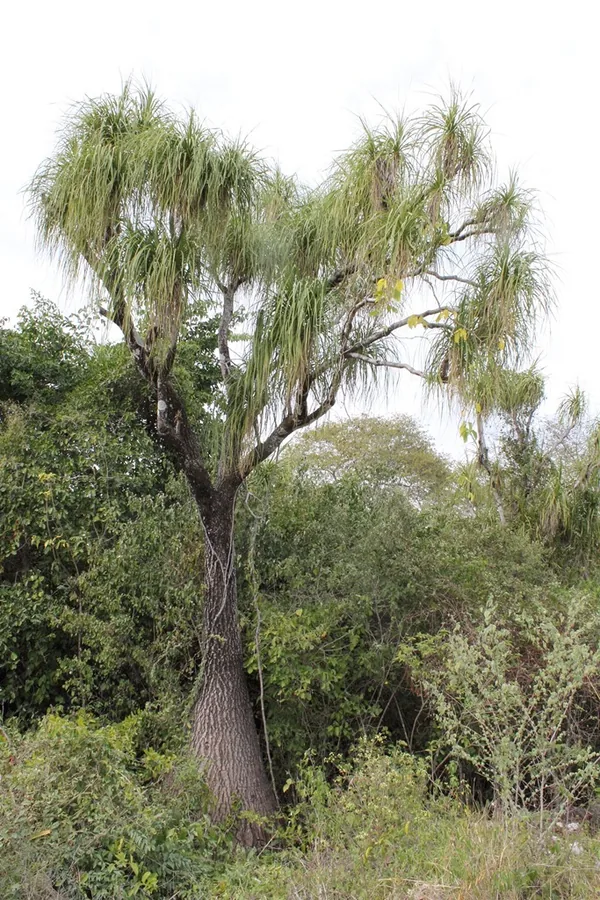
Up close, the ponytail palm is all about its base: a swollen, flask-shaped trunk that bulges out low and tapers upward, storing water inside. It is not a true palm but a slow-growing succulent from the dry parts of eastern Mexico. From the top of that base spills a loose fountain of leaves, each one long, thin, and strappy, curling and arching as it falls. That bulging base, the caudex, flares out so much at the bottom that it earned the names elephant foot and bottle palm.
Run a hand over the plant and the contrast stands out. The base is firm, fat, and rounded, a solid reservoir of water, while the leaves above are tough, fibrous, and stringy, thin straps that bend and sway. The whole crown grows slowly, adding length to those arching leaves over years rather than months. In good light the foliage stays deep green and full, tumbling out in every direction from the single swollen stem.
The clearest sign of trouble shows on the plant itself. When the base goes soft and spongy instead of firm, rot has set in, and stressed leaves dry to brown, crisp tips at their ends. Left alone in the right conditions, though, it holds a firm base and a green, cascading head of foliage that looks like a burst of narrow ribbons.
Care
The short version: the plant wants bright light on its green fountain of leaves, a gritty fast-draining mix around its swollen base, and a deep drink only once the soil has dried fully, with much less in winter.
Light
The plant drinks in full sun, and a bright window keeps its fountain of leaves at its densest. It will hold in bright indirect light, but strong sun is what fills out the crown, so the arching green straps stay thick and healthy rather than thin and sparse.
Water
Beneath the leaves, the fat base is a built-in water tank, so soak the soil and then leave it until it has dried out completely. That swollen reservoir means the plant would rather sit dry than damp, its firm base staying plump on its own reserve. Through winter the watering drops to a trickle.
Soil
Pack a gritty, fast-draining mix for cactus or succulents around the base, or coarsen a sandy blend with extra grit. The loose, sharp texture lets water rush past the swollen stem so it never sits in wet soil.
Temperature
The plant holds its firm base and green leaves across ordinary room warmth, from 50°F to 86°F (10°C to 30°C). Cold drafts and frost damage it, so it stays away from icy glass.
Humidity
The strappy leaves ask nothing of the air around them and take low humidity in stride. Dry indoor air suits them, with no misting and no target to chase.
Feeding
Feeding is light and seasonal, given only in spring and summer as the leaves lengthen. A diluted balanced or cactus feed once or twice a season keeps the crown green, while too much scorches the slender tips to brown.
Pruning
The plant needs almost no cutting. Snip the dried, browned tips off the strappy leaves and pull away any dead lower leaves that hang beneath the crown, and the fountain shape looks after itself.
Repotting
The swollen base likes to sit tight in its pot, filling it slowly over many years. A small container with sharp drainage suits it, and it only moves up once the fat base and roots have crowded the space they have.
Size & spacing
Indoors the plant climbs to about 6 to 8 feet (183 to 244 cm) tall, its crown of curling leaves spreading 3 to 5 feet (91 to 152 cm) wide. Growing this slowly, it takes many years for those leaves to fan out to full width.
Troubleshooting
For all its striking looks, a healthy ponytail palm rarely runs into trouble, and what does go wrong shows on the plant plainly. Watch the swollen base for any loss of firmness and the tips of the strappy leaves for browning. A base caught while it is only starting to soften can still be saved.
A swollen base gone soft and spongy
When the plump base turns soft and spongy under a press of the finger, root and stem rot has taken hold, nearly always from overwatering. Stop the water, let the mix dry, then cut back to firm tissue and repot the base into dry, gritty soil. Set it in a warm, bright spot and water only lightly until the base firms up again.
Fix:
- Stop watering and allow the soil to dry out completely
- Cut away soft, rotted tissue and repot into dry, gritty fast-draining mix
- Move to a warm spot with bright light and water only sparingly once recovered
Brown, crisp ends on the strappy leaves
Dry, brown tips creeping along the ends of the leaves point to watering extremes, overfeeding, or salt buildup in the pot. Steady the watering to deep but occasional, feed less, and flush the soil now and then to carry the salts off. The browned ends stay brown, so trim them from the leaf tips to clean up the look.
Fix:
- Adjust to deep but infrequent watering, letting soil dry between waterings
- Flush the soil periodically to leach out accumulated salts
- Reduce fertilizer frequency and strength
- Trim browned tips for appearance
Toxicity
Behind the tough, ribbon-like leaves there is nothing harmful in this plant. The ASPCA lists the ponytail palm as non-toxic to cats, dogs, and horses, and it carries no compounds that would hurt other animals or people. A curious nibble at the strappy foliage does no harm.
Safe for
People · Cats · Dogs · Horses · Rabbits · Livestock · Birds
Cats None
The strappy leaves hold no toxin for cats. The ASPCA lists the ponytail palm as non-toxic to them, so a nibble on the curling foliage will not poison a cat.
Dogs None
Dogs are safe too. The ASPCA rates the plant non-toxic to dogs, though a big mouthful of those tough, fibrous leaves could still upset any pet's stomach.
Horses None
Horses can crop the leaves without harm, since the ASPCA lists the plant as non-toxic to them as well.
Rabbits None
Rabbits meet no toxin in the plant. The tough, stringy straps are not a natural rabbit food, but a chewed leaf carries no poisoning risk.
Livestock None
Goats, sheep, and cattle can browse near it safely, as the fibrous leaves hold none of the compounds that make other ornamentals dangerous to grazing animals.
Birds None
A bird pecking at the narrow leaves is in no danger, since the plant contains nothing harmful.
People None
The plant is safe around children, with no toxic tissue anywhere on it. It is not grown to be eaten, so there is no fleshy part to seek out, and brushing the leaves or a stray bite does no harm.
Varieties
There is little variation to look at here. A single species carries the familiar form, and it is the one to know.
Beaucarnea recurvata
This is the familiar houseplant form, known at a glance by its lone swollen, flask-shaped base and the fountain of strappy, curling leaves spilling from its top, and it is one of about seven species in the genus.
How to propagate
Multiplying the plant is slow work, with two paths: rooting the small pups that swell up around the base, or raising seedlings from seed.
Offsets & pupsModerate
Spring · Several months to a year or more to root and grow on
Small offsets, or pups, swell up around the base of the caudex, and in spring they can be lifted away and potted to root on their own. They are slow to take, needing several months to a year or more to root and grow on, and some of these basal pups never strike roots at all.
SeedModerate
Spring · Germinates readily at about 18-21°C (64-70°F); seedlings grow slowly over years
Seed sown in spring and held warm at about 64°F to 70°F (18°C to 21°C) sprouts on its own with no special treatment. The seedlings then inch along, taking years to build the swollen base and strappy crown that mark a grown plant.
Myths
The ponytail palm is a true palm.
Those arching, strap-like leaves fool the eye, but this is no palm. Beaucarnea recurvata is a caudex-forming succulent in the family Asparagaceae, close kin to Dracaena and Agave, and only from a distance does its leafy crown pass for a palm.