Houseplant · Asparagaceae
Corn Plant
Dracaena fragrans
Long, glossy leaves arching from a bare woody cane, the corn plant stays handsome on just clean water and warmth.
Bright indirect
50–81°F · 10–27°C
USDA 10–12
3–14 ft · 0.9–4.4 m
Overview
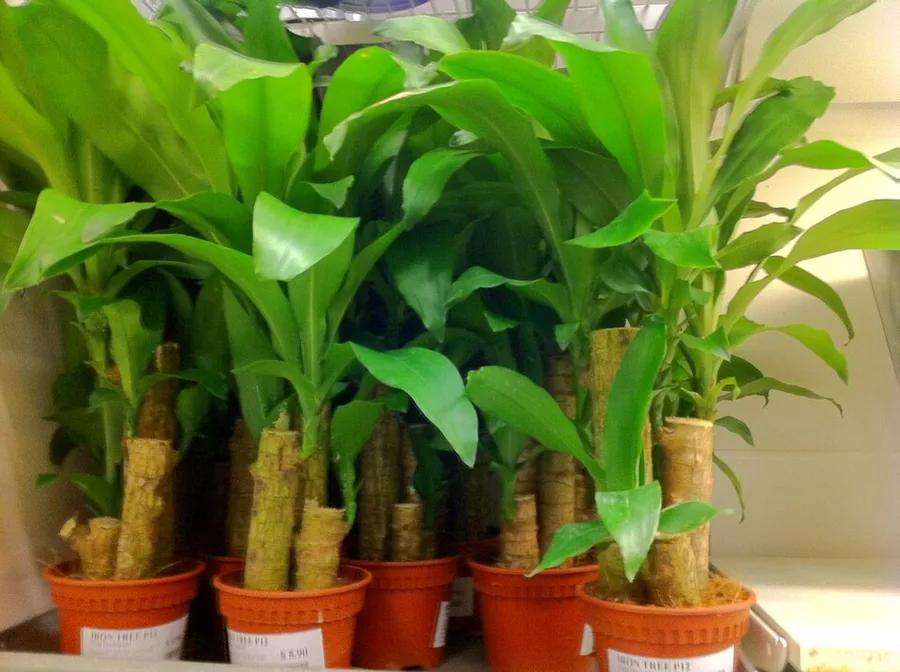
The corn plant rises on a thick, woody cane the color of dry bark, ringed with the old leaf scars left as it grows. From its crown spill long, strappy leaves that arch outward and then dip at the tips, and on the common 'Massangeana' each blade runs deep green at the edges with a broad yellow stripe down its center. The species comes from tropical Africa, and indoors it keeps that tufted, upright silhouette for years.
It is a slow grower, adding leaf and length without hurry. A young cane reaches around 3 feet tall, its crown a loose fountain of foliage, and over time it lifts well past head height as the bare cane stretches and a fresh tuft crowns the top. The lowest leaves yellow and drop as it climbs, baring more of the woody stem beneath.
Its strappy leaves carry one clear weakness. The corn plant is very sensitive to fluoride and salts, and tap water etches scorched brown into the leaf tips and edges. Give it filtered water or rainwater, hold it warm and out of cold drafts, and the foliage stays smooth, glossy, and green.
Care
The short version: bright indirect light brings out the corn plant's color, though it endures low light, and fluoride-free water given once the soil surface dries keeps the blades clean and green. Hold it above 50°F (10°C), feed it monthly across spring and summer, and the long striped leaves look after themselves.
Light
Color comes through richest under bright indirect light, a little away from the glare of a hot window. The plant carries on in medium light and even low light, though shade slows it and the long blades grow narrower. Under direct sun the foliage scorches, bleaching into dry, crisped patches.
Water
Wait until the soil's top layer feels dry, then water; keep the mix evenly damp through spring and summer and taper off from fall to late winter, though it should never dry out fully. The water itself matters most, because fluoride and salts scorch brown into the leaf tips, so reach for distilled, filtered, or rainwater and flush the pot occasionally. Leave cold tap water aside.
Soil
Root it in a loamy, peaty, freely draining mix, potted where drainage holes let water escape. Hold a faintly acidic pH between 6.0 and 6.5, and skip perlite and superphosphate, whose fluoride is what browns the leaf edges.
Temperature
Warmth between 50°F and 81°F (10°C to 27°C) suits it, with 50°F the floor it must not cross. A cold draft or a pane of chilly glass leaves the blades discolored and drooping, so move it indoors ahead of the first cold fall nights.
Humidity
Everyday room humidity in the 30% to 40% range keeps the blades supple. When the air dries out, winter most of all, a bit of added moisture stops the long leaf tips from turning brown and crisp.
Feeding
While the leaves are pushing out through spring and summer, feed once a month with a liquid fertilizer meant for foliage houseplants, then stop as the colder season slows growth. Steer clear of any feed rich in fluoride or superphosphate, which sears the leaf tips.
Pruning
Shorten a bare, leggy cane to the height you have in mind, and a fresh rosette of leaves breaks from the cut, splitting the single stem into a fuller, branched crown. Peel away the lower leaves as they yellow with age and expose the cane, saving those leafy tips and cane lengths to root into new plants.
Repotting
Being a slow grower, it wants a fresh pot only every 1 to 2 years, or once it fills the one it has. Look for pale roots coiling around the pot or nosing through the drainage holes, water sliding straight past, or growth that stalls despite steady care.
Size & spacing
Given years indoors, the cane climbs from roughly 3 to 14 feet (91 cm to 4.5 m) tall, while its leafy head stays slender at only 1 to 3 feet (30 to 91 cm) across. That is a tall, narrow column of woody stem and arching foliage, an emphatically upright outline.
Troubleshooting
Most signs of trouble write themselves across the leaves or hide in the roots, and water is nearly always behind them. Look closely at the early marks below, match what you see on the foliage to your plant, and correct the cause before it spreads.
A mushy stem base, browned roots, and a rank smell
What you are seeing is root or soft rot, the toll of overwatering or a mix that will not drain. The roots go soft and brown, the lowest blades slump limp against the cane, and no water reaches the plant though the soil stays wet. Halt watering, ease it from the pot, and pare off each soft brown root, then replant into fresh quick-draining mix in a pot whose base drains. Once rot runs deep the plant is beyond saving, so root a healthy leafy tip and begin anew.
Fix:
- Stop watering and let the soil dry
- Unpot, cut away soft brown roots, and repot in fresh fast-draining mix
- Discard severely affected plants (soft rot has no effective treatment) and start fresh from a healthy tip cutting
- Always use pots with drainage holes
Long blades drooping and discoloring after cold
This is cold injury, arriving the moment the plant falls under 50°F (10°C) or meets a draft. The long blades sag and lose their color following an open window, a frosty night, or a pot left outdoors as the temperature drops. Set it somewhere warm and clear of cold glass, carry outdoor pots inside by early fall, and leave the spoiled blades in place until new growth shows.
Fix:
- Move the plant to a warm spot away from drafts and cold windows
- Bring containers indoors in early fall before temperatures dip below 50°F
- Remove damaged foliage once new growth resumes
Sticky, glossy film and cottony tufts with tiny bumps
These are the familiar indoor pests, above all mealybugs and scale, with spider mites and thrips alongside. Scan the blades and leaf joints for white cottony tufts, hard little bumps, thin webbing over speckled leaves, or a silvery flecking, usually laid over a sticky honeydew sheen. Rub the pests away and touch mealybugs or scale with an alcohol-dipped swab, then apply insecticidal soap or horticultural oil, repeating when needed. Keep the plant off on its own until the blades come clean.
Fix:
- Wipe off pests and honeydew; dab mealybugs/scale with alcohol on a cotton swab
- Treat with insecticidal soap or horticultural oil, repeating as needed
- Isolate the plant to prevent spread
- Increase humidity to discourage spider mites
Dry tan-brown scorch along the leaf tips
This is nearly always fluoride and salt damage, the most frequent corn plant complaint, and it etches itself right along the leaf margins. The fluoride arrives in tap water, perlite, and superphosphate, and with no way to shed it, the plant lets its tips and edges burn to a dry, scorched brown. Change over to distilled, filtered, or rainwater, pour water through the pot now and then to clear salts, and keep the pH between 6.0 and 6.5. On 'Massangeana' the sign is a tan dead patch fringed with bright yellow down the edge of the blade.
Fix:
- Switch to distilled, filtered, or rainwater (fluoride below 1 ppm)
- Flush the pot periodically to leach out accumulated salts
- Maintain soil pH between 6.0 and 6.5 and avoid superphosphate and perlite amendments
- Raise humidity if household humidity is below 30-40%
- Trim damaged tips for appearance
Lower blades yellowing and dropping
A good part of this is only natural aging, the oldest and lowest blades of a caned dracaena yellowing and falling as a fresh tuft crowns the top. If a whole batch yellows at once or the soil stays wet, the likelier cause is overwatering or a mix that drains poorly. Strip the spent blades to leave the cane clean, let the surface dry between waterings, and give it brighter light if new leaves arrive thin and narrow.
Fix:
- Remove spent lower leaves
- Check drainage and let the soil surface dry before rewatering
- Move to brighter indirect light if leaves are narrowing
Toxicity
The corn plant poisons cats and dogs. Saponins sit in the long blades and the sap they carry, turning an animal's stomach, so the foliage should stay clear of pets and grazing animals. People come away essentially unharmed, though the sap may nettle sensitive skin.
Toxic to
Cats · Dogs · Horses · Rabbits · Livestock · Birds
Safe for
People
Cats Moderate
Cats take the worst of the saponins. Look for a runny mouth, no interest in food, and vomiting that may hold specks of blood, often with a dull, downcast air. Widened pupils turn up in cats, not in dogs.
Dogs Moderate
Let a dog gnaw the long blades and it will likely slobber, refuse meals, and bring food back up, now and then tinged with blood. A fair number go still and subdued for a spell until the bout clears.
Horses Moderate
By the ASPCA's listing the plant is toxic to horses through those same saponins. A horse that reaches the leaves will likely slobber, pick at its feed, and take on a sour stomach.
Rabbits Caution
A rabbit's stomach handles saponins badly, so the blades belong out of its reach. Not one bite is safe, and any nibble warrants a call to the vet.
Livestock Caution
Grazers such as goats and sheep can ingest those same saponins and wind up with a churned-up gut. This is a houseplant that ought never to be within their reach.
Birds Caution
A bird that picks at the strappy blades can take in the saponins they hold, so keep the plant out of its range. Any nibbling is reason enough for a trip to an avian vet.
People Minimal
Around people the plant is essentially harmless. Its sap may redden a patch of tender skin, and a child biting a blade could feel a short-lived stomachache, but nothing rises to real poisoning.
Sap may cause skin irritation in people; the plant is toxic to humans if ingested per NC State Extension
Helpline numbers

United States
ASPCA Animal Poison Control: (888) 426-4435 (fee applies)

United Kingdom
Animal PoisonLine: 01202 509000 (fee applies)

Australia
Animal Poisons Helpline: 1300 869 738
Varieties
A number of cultivars go by the corn plant name, set apart mainly by the coloring and pattern of their striped blades. Here are the ones that turn up most often.
'Massangeana' (corn plant / mass cane)
The most familiar form, its broad evergreen blades run through the middle with a wide yellow band, and it is the cultivar on which fluoride shows as tan dead zones outlined in vivid yellow at the blade's edge.
'Lemon Lime'
Its sword-like blades stretch to about 2 feet long, laid with bands of cream, greenish-yellow, and lime, and it sits within the Deremensis Group of D. fragrans.
'Janet Craig'
A cultivar of uniform deep green in the Deremensis Group, its fluoride damage surfaces as yellowed or dead leaf tips instead of scorching along the edges.
'Warneckii'
This Deremensis Group form wears white stripes, and its fluoride damage draws long tan to dark brown streaks tracing down the pale banding of each blade.
How to propagate
Multiplying corn plants is straightforward, and those bare, leggy canes you cut off are the very stems, wood and all, that root into fresh plants.
Stem cuttingsEasy
Spring or late summer · Several weeks to root
New corn plants come most readily from cuttings struck in spring or late summer. A leafy tip or a length of the bare cane will each take, and the basal shoots root too. Sink the cutting into fresh mix and let it spend several weeks growing roots before it takes hold.
Air layeringModerate
Spring or summer · Several weeks
Air layering rewards patience and fits a tall, bare cane you would rather not cut on faith. Nick the stem, bind the wound, and pale roots push straight from the cane over several weeks of spring or summer, after which you cut below and pot the rooted head.
Myths
Those leafy corn plants filter VOCs out of the air around them.
In a 2020 review of chamber studies, Cummings and Waring concluded that potted plants do nothing measurable for indoor air at any density a room could realistically hold. The clean air delivery rate of one plant is so slight that you would need between 10 and 1,000 plants per square meter to equal what ordinary building ventilation already provides. Grow it for those striped, arching blades, not to scrub the air.
The browned tips along a dracaena blade are the calcium-oxalate burn aroids leave behind.
Dracaena fragrans falls under the Asparagaceae, and saponins are its toxin, not the calcium oxalate aroids carry. The brown creeping over these tips comes of fluoride and salt sensitivity, or of dry air, never oxalate, so it is cleaner water that clears it, not any oxalate remedy.