Houseplant · Asparagaceae
Cast Iron Plant
Aspidistra elatior
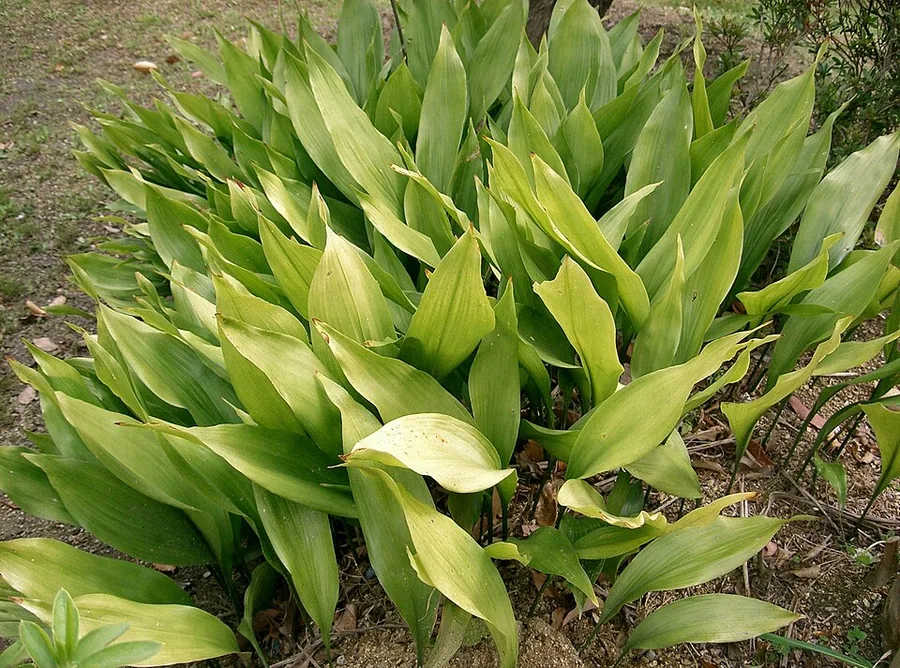
Stiff, glossy, and leathery to the touch, the cast iron plant's blades rise straight from the soil.
Low light
50–68°F · 10–20°C
USDA 7–11
1–3 ft · 0.3–0.9 m
Overview
Run a finger along a cast iron plant leaf and you feel why it earns its name: the blade is thick and stiff, with the firm, slightly waxy give of leather rather than the thin softness of most houseplant foliage. It belongs to the lily-of-the-valley side of the asparagus family and grows slow and evergreen, the way it does on the shaded woodland floor of southern Japan where it comes from.
Up close the plant is a tight clump of leathery dark green leaves, each one tall, long, and upright, lifting almost vertically straight out of the soil with no visible stem to speak of. The surface catches the light in a low gloss across that deep green. There is no raised flower spike to find. The plant does bloom, but the small, cup-shaped flowers sit right down at soil level, half-hidden where the blades meet the earth and easy to walk past without noticing.
Among the cultivars the foliage breaks from solid green into pattern: some blades carry creamy white stripes running the length of the leaf, others wear small white spots flecked across the surface. The plain green form is glossy and uniform, while the variegated kinds trade a little of that even color for those pale streaks and dots.
Care
The short version: keep it in low to medium indirect light, set it in well drained soil, and let the top few inches go dry before the next drink, then largely leave the leathery clump to its own devices.
Light
Low light is where the leathery green blades hold up best, and the plant takes everything from deep shade to bright indirect light without complaint. What it cannot face is direct sun, which bleaches the color out and scorches the surface. A north-facing window or a shaded corner is the right home.
Water
Wait until the soil has dried down 2 to 3 inches (about 5 to 8 cm), then water until it runs freely from the base and never let the pot stand in a filled saucer. Pull back further through winter while the clump rests. Wet, airless soil is the leading cause of root rot, so leaning toward dry is the safer mistake.
Soil
Set it in a rich, well drained potting mix with a little peat worked through. Sandy, loamy, and clay soils are all tolerated, but soil that stays soggy is not, so free drainage is the thing that counts most.
Temperature
Plain room warmth suits it, with a comfortable band of 50°F to 68°F (10°C to 20°C). It rides out cooler patches better than most houseplants, though it should stay clear of hard frost.
Humidity
The plant is content in low humidity and asks for nothing extra, one reason those tough blades last so well indoors. The dry household air that crisps other foliage leaves it unbothered.
Feeding
Feed lightly with a general houseplant fertilizer roughly once a month from spring to late summer, then stop for the rest of the year. Variegated forms want even less, since rich soil bleeds the pale markings out of their leaves.
Pruning
There is almost no pruning to do. Simply cut away any damaged, yellowed, or scorched blades at the base as they show up, keeping the clump clean and green.
Repotting
Slow to grow, it will sit in the same pot for several years and needs moving up just one size when roots begin to push out through the drainage holes. It is content, even, to grow a little snug.
Size & spacing
A full-grown clump stands roughly 1 to 3 feet (30 to 91 cm) tall and fans out 12 to 24 inches (30 to 61 cm) across, growing slowly enough that the shape stays put for years.
Troubleshooting
Harm comes to this plant rarely, and when it does the leaves usually tell you, with too much sun or too much water behind almost every case. Watch the blades for the first signs and you can step in before the damage spreads. Find the symptom that matches yours below, then act.
Yellowing leaves and a **soft, mushy base**
Leaves yellowing while the firm base of the clump turns soft and mushy is the signature of root rot, the one quiet way this hardy plant gets killed. Below the line the roots darken to brown and go to slime, and it traces straight back to water pooling in the saucer. Halt the watering and let the mix dry, then lift the plant, slice off the rotted roots, and settle it into fresh, free draining mix.
Fix:
- Stop watering and let the soil dry out
- Unpot, cut away rotten roots, and repot in fresh well-drained mix
- Discard standing water from the saucer
**Stippled leaves**, fine webbing, or sticky bumps
A fine speckling across the blade with threads of webbing in the leaf joints means spider mites, which take hold in warm, dry air; flat tan bumps clinging to the surface are scale, and tufts of white cotton are mealybugs. Wipe each leaf clean and pick off every pest you can see, then treat with insecticidal soap or horticultural oil. Keep the plant apart from your others until the trouble has passed.
Fix:
- Wipe leaves and remove visible pests
- Treat with an appropriate insecticidal soap or horticultural oil
- Isolate the plant until the infestation is controlled
Pale, **bleached patches** or scorched brown leaves
When the deep green drains out of a leaf into pale, bleached patches or crisp brown burns, the cause is direct sun, the one stress this plant cannot absorb. The damage shows on the leaves most exposed to the light, often right after a move to a brighter spot. Set it back into filtered light or shade and trim the worst leaves away at the base.
Fix:
- Move the plant out of direct sun to a low-light, filtered, or shaded position
- Remove badly scorched leaves at the base
**Brown tips and edges** on otherwise green leaves
When the slender tips and margins of an otherwise glossy green leaf turn dry and brown, the usual culprit is a crust of fertilizer salts built up in the soil, though long stretches of bone dry mix can scorch them the same way. Hold off on feeding and pour plenty of plain water through the pot to rinse the salts out. Snip the brown tips to tidy the blade, then return to a light, once-a-month feed during the growing season.
Fix:
- Stop fertilizing and flush the pot with plenty of plain water to leach out salts
- Trim browned tips for appearance
- Resume only light, monthly feeding in the growing season
**Variegated leaves** fading back to plain green
The creamy stripes and white flecks wash out of a variegated plant when it sits in rich soil or shade that is too deep, and the fresh blades push up solid green. These cultivars keep their pale markings only in lean, hungry soil, so ease off the feeding. Give them steady, indirect light instead of the darkest corner.
Fix:
- Grow variegated cultivars in lean, nutrient-poor soil and avoid heavy feeding
- Provide adequate (but not direct) light rather than very deep shade
Toxicity
Good news for households with pets and children: the cast iron plant is non-toxic from top to bottom. The ASPCA lists it as safe for cats, dogs, and horses, and nothing in those tough leaves poses a threat to other animals or to people. Set it wherever a curious mouth might reach without a second thought.
Safe for
People · Cats · Dogs · Horses · Rabbits · Livestock · Birds
Cats None
The ASPCA records the cast iron plant as non-toxic to cats, so a curious nibble carries no poison. A stomach already prone to upset might protest a mouthful of any leathery leaf, but there is nothing dangerous in this one.
Dogs None
Dogs are clear as well; the ASPCA rates the plant non-toxic to dogs. Those stiff, leathery leaves make for a poor chew anyway, and no harmful compounds sit inside them.
Horses None
Horses are covered too, with no toxicity expected. A grazing mouth meets nothing harmful in the foliage.
Rabbits None
Rabbits run no risk of poisoning here, since the plant holds no known toxins. The thick, tough blades rarely tempt much nibbling in the first place.
Livestock None
Goats, sheep, and cattle are safe around it. Nothing in the leaves brings on the stomach or nerve trouble that toxic plants cause.
Birds None
Pet birds can share the room without harm, as the plant contains no compounds that hurt them. A pecked leaf does no damage.
People None
The cast iron plant is safe around children, with no poisonous parts to it. It is not a plant to eat, but an accidental taste passes without harm.
Varieties
Most cast iron plants show plain, glossy green blades, but a few cultivars swap some of that even color for leaves striped or spotted in cream and white. These are the ones you are most likely to come across.
'Variegata'
Across its leathery dark green blades run irregular creamy white stripes, though those streaks hold their crispness only when the plant is kept in lean, nutrient-poor soil.
'Milky Way'
Its broad, lance-shaped dark green leaves are dusted with small white spots, scattered across the blade like flecks of starlight.
'Big Spotty'
A bolder spotted form noted by Clemson, wearing larger markings strewn across the foliage.
'Goldfeather'
A variegated cultivar documented by UF/IFAS for its patterned leaves.
'Snow Cap'
Another variegated selection recorded by UF/IFAS, prized for its pale markings.
How to propagate
There is one dependable way to turn one cast iron plant into several, and it asks for nothing but a little patience.
DivisionEasy
Spring and early summer, while actively growing · Several weeks to a few months (slow)
The cast iron plant multiplies best by splitting the clump in spring or early summer while it is in active growth. Lift the whole plant, work the dense mat of rhizomes apart with your fingers, and leave two or more leaves on every new piece. Expect a slow start, because the divisions are unhurried about settling and take anywhere from several weeks to a few months to root in.
Myths
A plant this tough can take direct sun.
The name is earned by shrugging off shade, neglect, and a wide swing in temperature, yet direct sun is exactly where it fails. Harsh light drains the green to pale, browns the blade, and scorches it through. Keep it in bright indirect light through to deep shade.
It is impossible to kill, so you can water it as much as you like.
Drought and on-and-off watering it takes in stride, which is where the legend grows from. The danger runs the opposite way. Overwatering and soggy soil cause root rot, and that is the main way the plant actually dies.