Ornamental · Rubiaceae
Sweet Woodruff
Galium odoratum
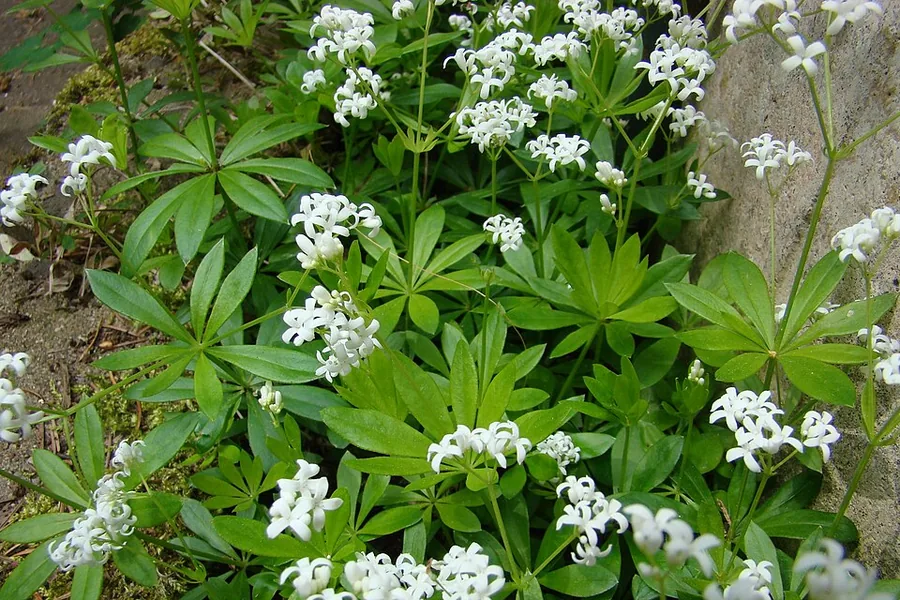
Slim green whorls on square stems, crowned with tiny white stars and a scent of dried hay.
Full shade
Every 3–7 days
USDA 4–8
6–12 in · 15–30 cm
Overview
Sweet woodruff grows as a low, spreading mat of fresh green foliage, its narrow leaves set in tidy rings around slim, square stems. It sits in the Rubiaceae family, and in late spring the flat green weave sends up loose sprays of small white flowers, each one a delicate star held just above the leaves. Bruise the foliage between your fingers or let it dry, and it gives off a sweet scent of fresh-cut hay, the trait that carried it into old herb gardens.
Given cool shade, the plant lays down a dense, even carpet close to the ground, the whorled leaves overlapping into an unbroken green surface within a season. Beneath it run slender creeping rhizomes that push the mat outward, while the plant scatters seed to start new clumps nearby, so the green sheet keeps widening. In hot, dry sun the leaves lose their color and crisp at the edges, and the plant may draw back into a summer rest.
Handled up close, the foliage stays clean and unblemished, since sweet woodruff carries no serious pests or diseases once it roots into the cool, moist, humus-rich soil it favors. The one thing hidden in those fragrant leaves is coumarin, the very compound that scents them. A trace of it flavors traditional German May wine, but the same leaf chemistry makes large quantities unsafe to eat.
Care
The short version: this slender-leaved, star-flowered groundcover wants cool, moist, humus-rich shade and a slightly acidic soil. Water it through dry spells, feed it rarely, and edge it to keep the creeping mat from crawling wider.
Light
Set it in full to partial shade, the broken light beneath a tree, and the leaves hold a deep, even green. A little morning sun does no harm, but hot, dry, full sun bleaches and scorches the foliage and tips the plant into an early rest.
Water
Keep the soil cool and evenly moist, watering about every 3 to 7 days in dry weather, and the mat stays plump and green. Once established the plant endures dry shade, though the leaves look their freshest where the ground never dries to the bone.
Soil
It roots best in humus-rich, well-drained loam on the acidic side, around a pH of 5.0 to 6.5, the crumbly dark earth of a leaf-strewn floor. Work in leaf mold or compost and the rhizomes travel through it with ease.
Temperature
The foliage is tougher than it looks, surviving cold to about -29°F (-34°C) and holding its green up to roughly 84°F (29°C). Past that, in dry heat, the leaf edges brown and the plant waits out the worst until cooler air returns.
Humidity
Ordinary outdoor moisture in the air is enough, so there is no figure to track. Where the whorled leaves pack together in still air, movement around the foliage matters most, since damp, stagnant pockets can freckle the leaves with spots.
Feeding
The plant feeds lightly and shows it in modest, steady growth. A thin spring topdressing of compost or leaf mold over the mat is all it draws on, and heavier feeding only pushes the creeping stems wider.
Pruning
Pruning amounts to a single tidy-up. After the white flowers fade, shear or mow the mat back to strip away any ragged or scorched leaves, and a flush of fresh green whorls follows while the spread is held in check.
Repotting
In a pot, the tangle of rhizomes fills the space and calls for dividing and repotting every 1 to 2 years. Roots pressing the walls, a bald, thinning center in the mat, or rhizomes cresting the rim all show the plant is packed tight.
Size & spacing
The green mat rises only 6 to 12 inches (15 to 30 cm) off the soil, a low horizontal sheet rather than a clump. Each plant spreads its whorls across 12 to 24 inches (30 to 60 cm), so set them about that far apart and let the leaves close into one surface.
When to plant
The plant marks the cool seasons on its own foliage and flowers. Sow seed in late winter to early spring after a cold spell, set divisions of the leafy clumps out in spring or early fall in moist soil, and watch the white stars open across the mat in late spring.
Northern hemisphere
Southern hemisphere
Typical months for a temperate climate: start earlier in warm zones, later where spring frosts linger.
- Sow: Late winter to early spring; seed germinates slowly and benefits from cold stratification
- Plant: Spring or early fall in shade
- Harvest: White star-shaped flowers in late spring (April to May)
Hardiness
USDA hardiness zones: 4–8
Temperature: down to -34°C
Troubleshooting
Look closely and sweet woodruff tells you what it needs. Runners creeping past the mat and green leaves crisping to brown are the two changes to catch on the plant itself. Match what the foliage and stems show below and adjust before the damage spreads.
Runners creeping out beyond the leafy mat
The green sheet widens because slender creeping rhizomes snake outward under the soil while the plant seeds itself, and in cool, moist shade that reach runs straight into the beds alongside. Sink edging or a root barrier before the mat sets, and lift stray runners by loosening the soil and drawing the rhizomes out whole, since the thin, brittle stems snap at a tug. Shearing off the spent flowers stops fresh seed from scattering.
Fix:
- Install a physical root barrier or plant in a contained bed or sunken edging
- Dig out unwanted rhizomes by loosening the soil and lifting them whole rather than pulling stems, which break easily
- Deadhead or shear after flowering to limit self-seeding
Green leaves crisping to brown across a thinning mat
When the leaves pale, brown, and curl at the edges, the cause is leaf scorch from hot, dry sun where cool shade was needed, and in a harsh spell whole patches thin as the plant slips into summer dormancy. Move it into part or full shade, mulch to keep the soil cool underfoot, and water through dry stretches. Clip away the browned foliage and new green whorls push up once the heat breaks.
Fix:
- Move or establish plants in part to full shade
- Keep soil cool and evenly moist with mulch and supplemental water in dry spells
- Cut back scorched foliage to encourage fresh regrowth once conditions cool
Dark spots freckling the leaves in a close, still patch
Here and there a fungal leaf spot stipples the foliage where the whorls sit crowded and the leaves stay wet in stagnant air. Thin the growth so air slips between the leaves, water low at the base rather than over the top, and pick off the marked foliage. Given room, sweet woodruff shows no serious pests or diseases on its leaves or stems.
Fix:
- Improve air circulation by thinning crowded growth
- Avoid overhead watering and water at soil level
- Remove and discard affected foliage
Toxicity
The same slender leaves that scent the air hold coumarin, the compound that gives sweet woodruff its dried-hay perfume. In the trace amounts that flavor May wine it is harmless. Chewed and swallowed in quantity, though, that leaf chemistry turns against the body, thinning the blood, straining the liver, and bringing on dizziness, so large helpings belong nowhere near pets, livestock, or people.
Toxic to
Cats · Dogs · Horses · Rabbits · Livestock · Birds · People
Cats Caution
A single slender leaf chewed and swallowed rarely troubles a cat, but the coumarin packed in the foliage makes a big mouthful risky. A queasy stomach or a limp, sleepy cat is the tell if more than a leaf or two goes down.
Dogs Caution
One small green mouthful usually passes clean, yet a bellyful of the same coumarin-laced leaves can thin the blood and press on the liver. Keep a dog off a whole spreading patch, and reach the vet if a large amount is gone.
Horses Caution
A wisp caught up in pasture grass is minor, but a heavy feed of the coumarin-rich leaves can set off bleeding and leave a horse dull-coated and off-color.
Rabbits Caution
A nibble of the soft foliage sits fine, though the coumarin means it should stay an occasional bite, never a steady graze. Hand over one sprig at a time rather than a whole clump.
Livestock Caution
Cattle, goats, and sheep can crop a little of the mat without harm, but a large load of the fresh or dried leaves stacks up the risk of internal bleeding and liver strain from the coumarin.
Birds Caution
Birds seldom peck at the whorled leaves, and a taste here and there does nothing. The habit to prevent is steady feeding on the coumarin-bearing foliage.
People Caution
A few leaves lend their sweet scent to May wine and teas, the plant's old kitchen use. Eaten by the handful, though, the coumarin in them can cause liver damage, bleeding, and dizziness, so keep every portion small.
Foliage contains coumarin, the compound behind its sweet, fresh-cut-hay scent (which intensifies as it dries). In large quantities coumarin can have blood-thinning (anticoagulant) effects and cause liver issues, and the FDA prohibits coumarin as a food additive, so only small culinary amounts are traditionally used and large quantities should not be eaten.
Helpline numbers

United States
ASPCA Animal Poison Control: (888) 426-4435 (fee applies)
Poison Control: (800) 222-1222



Canada
Poison Centres: 1-844-764-7669
Varieties
There is only one form to picture here. Sweet woodruff is grown almost entirely as the plain species, the slim-leaved, white-flowered plant described throughout this page.
Galium odoratum (straight species)
Almost every plant you will meet is the plain species, its slim whorled leaves and white stars unchanged, and it once carried the older name Asperula odorata.
How to propagate
The same creeping habit that fills a mat makes new plants simple to raise. Pull apart an established clump of rhizomes, or gather the seed it drops on its own, and fresh whorls of foliage follow.
DivisionEasy
Spring (or any time in the growing season if kept moist until established) · A few weeks to a season
Dividing the leafy clumps is the surest route to more. In spring, lift a mat of rhizomes, break it into rooted pieces by hand, and press them into moist shade, where each knot of stems takes hold and fills back in within a few weeks to a season.
SeedModerate
Late winter to early spring; benefits from cold stratification · One or more seasons; germination is slow
Left alone, the plant drops seed and raises its own seedlings freely, but sowing by hand is a slow watch. Sow in late winter to early spring after a cold stratification, and expect the tiny seedlings to appear unevenly over a season or more before the leaves knit together.
Myths
Since it flavors May wine, every part of sweet woodruff must be safe to eat in any amount.
Only small culinary amounts are safe. Those fragrant leaves are steeped in coumarin, which in quantity thins the blood and harms the liver, and the FDA bars coumarin as a food additive. A few leaves flavor a drink; a bowlful of them does real harm.