Houseplant · Asparagaceae
Snake Plant
Dracaena trifasciata
Tough to lose and content when overlooked, the snake plant wants soft light, parched soil, and little more.
Bright indirect
Every 14–42 days
55–84°F · 13–29°C
USDA 10–12
Overview
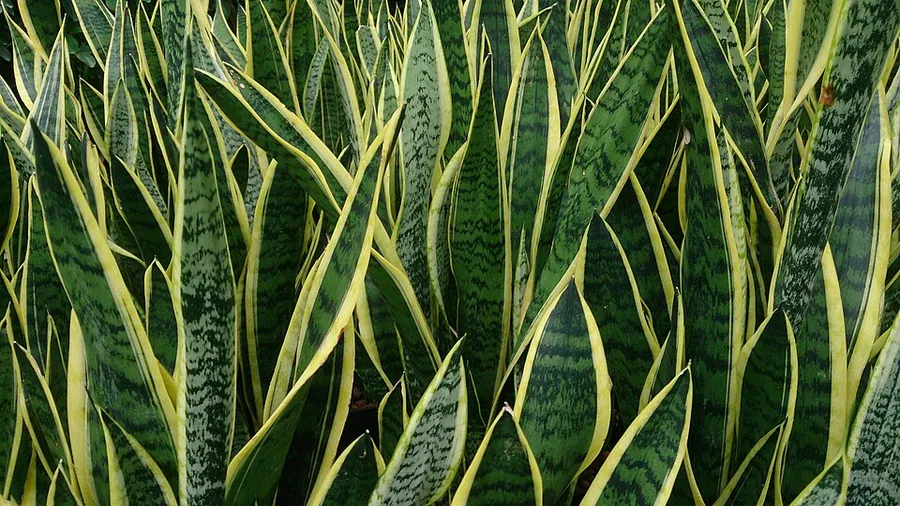
Picture stiff, sword-shaped blades climbing straight out of the pot in painted green crossbands, and you have the snake plant, the green companion for anyone who keeps forgetting the watering can. It brushes off the rough handling that flattens needier foliage. A few years ago botanists shifted it out of Sansevieria and into Dracaena, yet most growers still call it by the older label.
Its easygoing nature comes down to the way those blades treat light and water. Plump and firm, they bank moisture inside like a succulent, so the plant sails through weeks of drought and accepts anything from a sun-washed sill to a shaded nook. Because it grows slowly, the silhouette stays put for ages and asks for next to no attention.
Two facts deserve a look before one comes through the door. The blades carry saponins that sicken cats and dogs, which makes it a doubtful pick for a household of nosy pets. And though it keeps neat in a pot indoors, set loose in a warm-climate garden it can march outward on creeping underground rhizomes.
Care
The short version: soft indirect light, a coarse fast-draining mix, and a drink only after the soil has gone bone dry all the way through. Hold it above 55°F (13°C) and feed it sparingly while it grows.
Light
Soft, bright indirect light brings out the best in a snake plant, yet it shrugs off low light, partial shade, and partial sun more gamely than nearly any houseplant around. Speed is what you trade away: the darker the spot, the lazier the growth. Spare it the searing glare of direct afternoon sun, which sears the blades.
Water
Here is where snake plants meet their end, so lean toward thirst over excess. Wait for the soil to go bone dry before the next drink, which tends to mean a pour every 2 to 4 weeks while it grows and just every 4 to 6 weeks across winter. Unsure? Hold off.
Soil
Root it in a gritty sandy blend or cactus mix that ushers water straight through instead of holding it. The plant takes pH casually, content anywhere from 6.0 to 8.0. What counts far more than the precise recipe is a pot with a hole for drainage.
Temperature
Everyday indoor warmth suits it well, somewhere between 55°F to 84°F (13°C to 29°C). Tropical by nature, it wants to stay above 55°F and clear of chilly drafts and frost-cold panes through the winter.
Humidity
The ordinary air of a home does the job, and a parched room leaves it unbothered entirely. Skip the misting and the humidifier. With moisture stored inside the blades themselves, they ride out dry winter air without a murmur.
Feeding
Feeding hardly registers on a snake plant's list of needs. Offer a balanced all-purpose feed diluted to half strength, once a month from spring through summer, then quit the moment growth winds down for winter. Overfeeding wounds it more than skipping the feed altogether.
Pruning
Pruning amounts to almost nothing. Simply slice off damaged or dead blades flush at the soil line with a clean blade and the plant keeps itself trim. A blade cut this way puts up no regrowth from the wound, so lift whole blades rather than nipping their tips.
Repotting
A bit of crowding suits a snake plant, so repot only once every 3 to 5 years or when the pot is fit to burst. Watch for roots threading out the drainage holes, a pot gone cracked or swollen, or rhizomes and pups jostling at the surface. Step up a single pot size into fresh, gritty mix.
Size & spacing
Inside it climbs to 2 to 4 feet (60 to 120 cm) tall and fans out roughly 12 to 24 inches (30 to 60 cm) across. Leave a clump space to broaden, since it gradually packs its pot with fresh upright blades.
Troubleshooting
Trace nearly any snake plant complaint backward and you arrive at the same root cause: water given too freely. Get fluent in what the blades and the base are telling you and you head trouble off early. Find your symptom below, then settle the cause before the rot reaches down into the roots.
Limp, waterlogged leaf bases slumping into wet soil
Squishy bases like this mean root rot, and a saturated pot is nearly always the culprit. Roots starved of air below the surface blacken into a slimy, sour-smelling mush. Slide the whole plant from its pot, snip off every spongy root, settle the rhizomes into a dry, grainy mix, and ease off sharply on the watering can.
Fix:
- Unpot and inspect roots
- Cut away rotted tissue
- Repot in dry, gritty mix
- Reduce watering
Blades fanning outward rather than spearing upward
Those tall blades peel apart and lean when a softened base lets go, usually after too many drinks or a long stretch in a shadowy room. Press a finger to the soil and the base before deciding anything. A firm base wants brighter quarters, while a spongy one means rot has reached the roots and that comes first.
Fix:
- Correct watering and check roots
- Move to brighter indirect light
Powdery white wool packed where blades meet the pot
Each cottony puff wedged into the crevices is a colony of mealybugs, soft insects that sip sap where leaf joins soil. Touch every cluster with a swab soaked in alcohol, then drench the foliage in insecticidal soap. Park the pot apart from your other plants until not a single tuft remains.
Fix:
- Wipe with alcohol-dipped swab
- Treat with insecticidal soap
- Isolate plant
Gritty, faded blades veiled in gossamer threads
A dusty, pinpricked surface draped with thin silk threads gives away spider mites, tiny pests that flourish when the air turns parched. Hose the blades down to scatter them, then coat the foliage in insecticidal soap or horticultural oil. A quick wipe of the leaves every so often stops a fresh colony from taking hold.
Fix:
- Rinse foliage
- Apply insecticidal soap or horticultural oil
Glassy, softened spots in the wake of a cold snap
Born in the tropics, this plant cannot stomach the cold, and watery see-through scars appear once it dips below 55°F (13°C) or leans against an icy pane. Carry it into a warm room, cut away the blades the chill ruined, and shield it from drafty windows for the rest of the winter.
Fix:
- Move to warm spot above 13°C / 55°F
- Remove damaged leaves
Washed-out blotches along the window-facing blades
Pale, papery blotches turned toward the glass are sun scorch, the mark of fierce direct rays. Glowing indirect light keeps a snake plant content, yet a blast of hot afternoon sun bleaches the surface. Pull the pot back from the pane into soft, even light, and the blades that follow emerge unmarked.
Fix:
- Move out of hot direct sun to bright indirect light
Stalled blades and a thin, stretched silhouette
When a snake plant stops pushing fresh blades, thin light is the usual reason, although it also pauses over the winter months. Set it where soft light pours in and new spears appear once daylight stretches longer. Tucked in a gloomy corner it lingers on, yet adds almost nothing to its height.
Fix:
- Move to bright indirect light
Wide blades muted beneath a gray coat of dust
The smooth, sword-like surfaces gather a layer of dust that flattens their color and shades out a sliver of light. Nothing is wrong with the plant, and the cure takes a minute. Run a damp cloth along each blade now and then and the rich green luster returns at once.
Fix:
- Wipe leaves with a damp cloth
Toxicity
A snake plant and curious pets make an uneasy pair. Tucked inside the blades are natural compounds known as saponins, which set off drooling, vomiting, and diarrhea in cats and dogs. People come away unbothered, but the leaves taste bitter and were never meant for eating, so station the pot beyond the reach of animals and young children.
Toxic to
Cats · Dogs · Horses · Rabbits · Livestock · Birds
Safe for
People
Cats Moderate
Once a cat gnaws a blade, drool tends to flow first, vomiting follows, and loose stools may trail along after. A sharp, bitter taste from the saponins usually halts the chewing at one small bite.
Dogs Moderate
A dog that swallows a bite of leaf shows the same picture: drooling, vomiting, and a runny gut. Serious cases are rare, yet a hearty mouthful is worth phoning the vet over.
Horses Caution
Those same saponins churn a horse's belly, even though a pot perched on a sill sits far beyond any horse's reach.
Rabbits Caution
The harsh bitterness of the saponins turns each blade into a hazardous nibble for a rabbit, so stand the pot somewhere paws and teeth cannot find it.
Livestock Caution
Browsing goats, sheep, or cattle can wind up with a sour stomach from the saponins, though indoors the foliage rarely lands within their grazing.
Birds Caution
An inquisitive cage bird might nip a blade and end up with the same belly upset, so position the pot beyond any perch or flight path.
People Caution
Saponins barely trouble people, yet the blades taste sour and are no kind of food, and the sap can leave tender skin faintly itchy. Steer young children away from putting them in their mouths.
Sap/saponins may irritate skin; keep leaves out of reach
Helpline numbers

United States
ASPCA Animal Poison Control: (888) 426-4435 (fee applies)

United Kingdom
Animal PoisonLine: 01202 509000 (fee applies)

Australia
Animal Poisons Helpline: 1300 869 738
Varieties
Snake plants turn up in a wider spread of forms and hues than you might guess, from towering striped spears to squat cupped rosettes. Below are the ones most likely to cross your path.
'Moonshine'
Catches the eye with wide blades washed in a silvery, pale gray-green that shows scarcely any of the usual crossbanding.
'Laurentii'
The well-known type rimmed in vivid yellow margins, which fade away into plain green whenever it is raised from leaf cuttings.
'Hahnii' (Bird's Nest)
A compact selection that clusters 6 to 12 short blades into a low, cupped rosette in place of towering spears.
'Black Gold'
Sets blades of dark, almost inky green against a sharp rim of golden yellow.
'Bantel's Sensation'
Bears slim, sharply vertical blades brushed with lengthwise stripes of clean white.
How to propagate
Multiplying a snake plant is simple, and two paths lie open: divide a mature clump at the roots, or set sections of a lone blade to root. One holds the leaf color steady, while the other lets it slip.
DivisionEasy
Anytime; best at spring repotting · A few weeks
Splitting a grown clump is the quickest path to more snake plants. Any season works, though the moment you lift one for spring repotting is the natural opening. Tease the mass apart so every chunk of rhizome and each young pup keeps its own roots, pot each one, and they take hold within a few weeks. Since you are parting the clump rather than rooting a blade, the striped sorts return faithfully patterned.
Leaf cuttingsModerate
Spring to summer · Roots in about 2-3 months
A whole new plant can also rise from one blade. Slice a sound leaf into pieces, stand each upright in damp mix across spring or summer, and roots creep out over roughly 2 to 3 months. Color is the snag: striped selections like 'Laurentii' shed their markings along this route and emerge solid green, so reach for division when the pattern matters to you.
Myths
A snake plant purifies your indoor air and pulls out toxins.
The notion traces to a vintage NASA sealed-box study that bears little resemblance to a lived-in room. Reviewed research that followed found a handful of pots barely touch the pollutants floating around a home. Cracking a window scrubs the air far more than any leaf ever could.
Snake plants are basically unkillable.
Sturdy as they are, one chink runs through the armor. Soggy soil rots the roots and ends a snake plant quicker than anything, and a deep chill will scar the blades as well. Go stingy with the water and one can thrive for years on end.
They can go months on end without any water.
Few houseplants ride out a dry spell as calmly as this one, yet it falls short of a true cactus. A month between drinks is its limit, not eternity, and sooner or later it craves a real soaking to stay in good shape.
They thrive in a pitch-dark room.
A dim nook and pure blackness are not the same thing at all. The plant puts up with a shadowy corner, but light is still what fuels its growth, and shut away from every ray it merely idles and slowly wanes.
Leaf cuttings from a variegated snake plant come back variegated.
The striping in selections such as 'Laurentii' springs from a chimera that no lone blade can hand down. Set a leaf cutting to root and what grows back wears plain, unmarked green. Splitting the plant at the rhizomes is the way to carry the stripes forward.
Because they release oxygen at night, they freshen bedroom air and help you sleep.
That nighttime oxygen story rests on the plant's CAM photosynthesis, yet the quantities involved are minuscule. One or two pots will not budge the air beside your bed, and nothing on record links them to better rest.
Sources
- ASPCA Animal Poison Control
- NC State Extension Plant Toolbox
- Missouri Botanical Garden Plant Finder
- Penn State Extension
- Iowa State University Extension
- Clemson Cooperative Extension HGIC
- Cummings & Waring, J Expo Sci Environ Epidemiol (2020)
- UF/IFAS Extension Sarasota County
- University of Connecticut Home & Garden Education
- University of Arkansas Cooperative Extension (UADA)