Ornamental · Apiaceae
Sea Holly
Eryngium planum
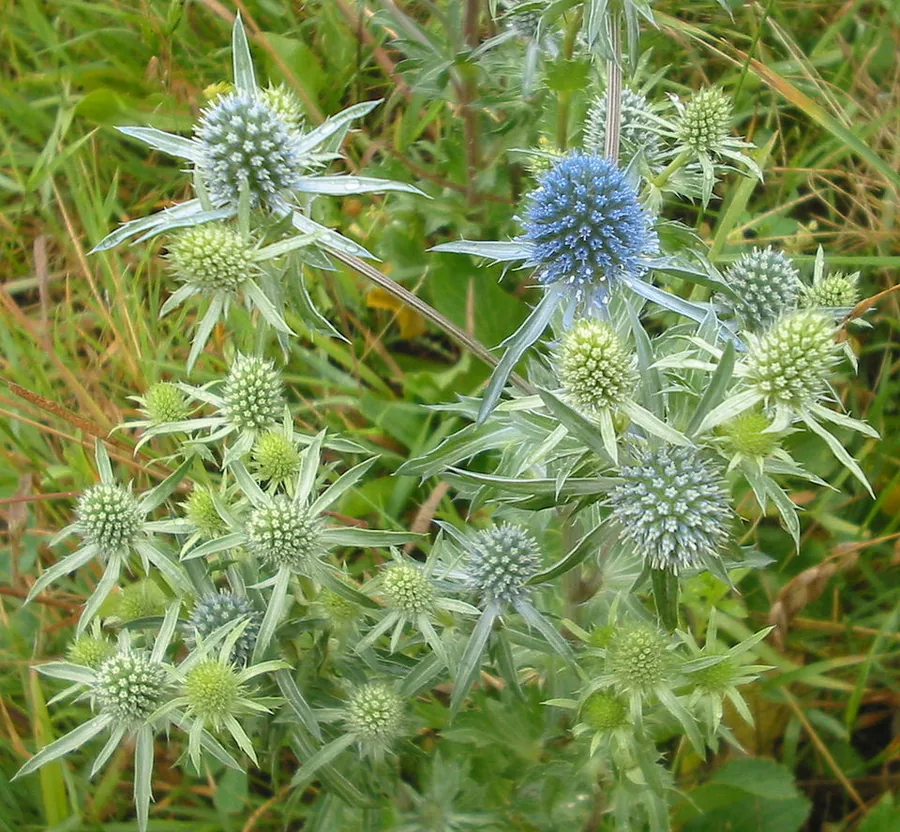
Each stem lifts a steel-blue, cone-shaped head ringed by stiff, spiny bracts, thistle-like and sharp to the touch.
Full sun
Every 10–21 days
USDA 5–9
2–3 ft · 0.6–0.9 m
Overview
Up close, sea holly reads as a thistle in miniature armor, its flower heads a cool steel-blue that runs from the central cone down into the bracts around it. Each bloom is cone-shaped and sits in a collar of stiff, silvery bracts that flare out in a spiky ruff. It is no true holly, though, but a member of the carrot family, and the color holds from June into September.
The whole plant is built to be touched with caution. The leaf margins are spiny, the bracts stiff and sharp-tipped, and the stems rigid enough to stand straight without support. That firmness is a sign of good growing conditions, since lean, dry soil and full sun keep the tissue hard, while rich ground or too much water leave the stems soft and leaning.
Its color is unusually durable. Cut and dried, the stems hold their steel-blue rather than fading, keeping the same metallic sheen for months. Below the soil runs a deep taproot, and above it the plant returns year after year as a hardy perennial across USDA zones 5 to 9, drawing bees to its flower heads all summer.
Care
The short version: full sun, poor and fast-draining soil, and little water or feeding hold the stems stiff and the steel-blue color true. Leave the deep taproot undisturbed and the plant returns for years.
Light
Sea holly holds its stiff, upright form only in full sun. Strong light keeps the stems rigid and the spiny heads standing proud. A little partial sun is fine, but in shade the stems stretch thin, lean, and lose that sharp, erect line.
Water
Once established, sea holly is drought tolerant and prefers to dry out fully between waterings, roughly every 10 to 21 days and only in a long dry spell. Its firm stems and hard, spiny texture come from that lean regimen, while overwatering softens the plant and rots it from the roots.
Soil
Give it dry, sandy or loamy soil that drains fast, the gritty kind that keeps the stems hard and the color clean. It takes a broad pH from 5.5 to 8.5 and shrugs off poor, stony ground. Rich, wet soil turns the crisp, spiky plant soft and floppy and invites rot.
Temperature
The plant is hard in more than looks. It endures winter lows near -20°F (-29°C) and summer heat to about 90°F (32°C), standing through zones 5 to 9 without protection while keeping its steel-blue color into fall.
Humidity
Dry air keeps the foliage crisp, and low humidity suits it with no level to target. Damp, still air lingering around the spiny leaves does the most harm, so moving air keeps the plant clean and firm.
Feeding
A lean diet keeps the plant sharp and compact. It needs little to no fertilizer, and one light feed in spring is plenty. Rich feeding swells the stems into soft, leggy growth that loses its stiff, sculpted shape and flops.
Pruning
Deadhead the spent, browning heads to keep the plant looking crisp, and cut the stems back once the steel-blue has faded. In late fall or early spring the whole clump of foliage can be cut to the ground, clearing the old spiny growth for the new.
Repotting
Sea holly rarely needs lifting, and its form shows why it should be left alone. The deep taproot resents disturbance, plunging straight down to anchor the rigid stems, so an established plant stays put. Dig only when an old clump grows crowded or its blue heads thin out.
Size & spacing
In flower the stems rise 2 to 3 feet (61 to 91 cm), spreading into a clump 12 to 24 inches (30 to 61 cm) wide. Space each plant about that far apart so the spiny heads have room and air passes between the stiff stems.
When to plant
Sea holly moves through the season like a cold-winter perennial. Seed sown indoors in late winter, after a cold, moist chill, gives young plants for spring, and by summer the stems carry their steel-blue heads from June through September.
Northern hemisphere
Southern hemisphere
Typical months for a temperate climate: start earlier in warm zones, later where spring frosts linger.
- Sow: Late winter, 8-10 weeks before last frost; seed germinates best after cold-moist stratification
- Plant: Spring after last frost, while young so the taproot is undisturbed
- Harvest: June to September
Hardiness
USDA hardiness zones: 5–9
Temperature: down to -29°C
Troubleshooting
Most of what goes wrong with sea holly shows in the look of the plant, from soft, sagging stems to a rotting base. The causes are almost always too much water, rich soil, or shade rather than drought. Match the appearance below to find the cause.
A wilting plant with a soft, browning crown
A wilting plant whose base has gone soft and brown is showing root rot, driven by soil that stays wet rather than any disease on the leaves. The roots turn dark and mushy and the firm crown collapses inward. Work sand or grit into the soil to sharpen drainage, stop watering so it can dry, and lift any plant rotted past saving.
Fix:
- Improve drainage by amending with sand or grit
- Stop supplemental watering and allow soil to dry
- Remove and discard severely rotted plants
Soft stems that lean instead of standing stiff
When the normally rigid stems soften and lean, the cause is usually rich soil or too little sun. Sea holly builds its hard, upright stems only in lean, dry ground and full sun. Stop feeding it, move it into stronger light where you can, and cut the sagging stems back after the steel-blue heads fade.
Fix:
- Grow in lean, dry, well-drained soil and avoid fertilizing
- Site in full sun for stiff, self-supporting stems
- Cut back floppy stems after flowering
Puckered new shoots and holes torn in the leaves
Two pests mar the crisp foliage. Aphids gather in soft clusters on the tender new shoots and pucker them, while slugs and snails rasp ragged holes and leave glistening slime trails on the leaves. Wash the aphids off with a jet of water or treat with insecticidal soap, lift the slugs by hand or set bait, and clear the damp debris where they hide.
Fix:
- Spray aphids off with a strong jet of water or use insecticidal soap
- Hand-pick slugs and snails or use bait
- Keep area free of debris that shelters slugs
Toxicity
For all its armored, thistle-like look, sea holly carries no toxin and is safe around pets and people. It only resembles holly and belongs instead to the carrot family, with nothing poisonous in leaf, stem, or root. The real hazard is physical: the spiny bracts and stiff leaf edges can prick or scratch bare skin, so gloves are wise when cutting stems.
Safe for
People · Cats · Dogs · Horses · Rabbits · Livestock · Birds
Cats None
Sea holly is not poisonous to cats, so a curious nibble does no harm. The only real risk is physical: the stiff, prickly bracts end in sharp points that can scratch a probing nose.
Dogs None
A dog can chew the foliage with no risk of poisoning. In practice the spiny flower heads, bristling with hard points, put a dog off well before any harm is done.
Horses Safe
Sea holly carries no toxin for horses. Its rigid, thistle-like bracts, stiff and sharp-edged, steer grazing toward softer plants instead.
Rabbits Safe
Rabbits face no poisoning from sea holly. The prickly leaves and stems, spined along their margins, usually keep them from feeding on it at all.
Livestock Safe
Cattle, goats, and sheep graze near sea holly unharmed, since it holds no toxin. Its sharp, spiny growth, hard to the tongue, simply makes it unappetizing.
Birds Safe
Sea holly is not toxic to birds, which often work the flower heads for seed. The stiff bracts ringing each cone are the only physical obstacle they meet.
People Safe
The plant is safe around children and adults, with no poisonous parts. The hazard is purely physical: the spiny bracts and stiff leaf edges can prick or scratch bare skin, so wear gloves when cutting or arranging stems.
The spiny, stiff bracts and leaf margins can prick or scratch skin; wear gloves when handling or cutting stems.
Varieties
The cultivars differ most in size and in the exact cast of their blue, from compact mounds to heavy-flowering and variegated forms. These are the ones to look for.
Blue Hobbit
Blue Hobbit is a dwarf that gathers into a tight, globe-shaped mound only 8 to 12 inches tall in bloom, its small blue heads packed close.
Blue Glitter
Blue Glitter carries a heavy crop of glittering steel-blue heads, each catching the light, on freely branching stems.
Jade Frost
Jade Frost stands out for its variegated blue-green leaves rimmed in creamy white, set below violet-blue flower heads.
Tiny Jackpot
Tiny Jackpot is compact and rigid, its strong stems holding the spiny heads to about 14 inches tall.
Companions
Sea holly looks its best next to other plants that share its taste for sun and dry, lean ground, where their colors and textures play off its steel-blue spikes.
Plant near
Black-eyed Susan: Shares full-sun, dry, well-drained conditions and contrasts with the steel-blue flower heads.
Ornamental grasses: Thrive in the same lean, sunny, drought-tolerant settings and complement the spiky texture.
Yarrow: Drought-tolerant, full-sun perennial that pairs well in dry borders and pollinator plantings.
How to propagate
New sea holly comes most reliably from seed, since the deep taproot below each plant makes any root disturbance a poor bet.
SeedModerate
Sow in late winter to spring; cold-moist stratification improves germination · Blooms typically in the second year from seed
Seed is the surest way to raise more sea holly. Sow from late winter into spring, first giving the seed a spell of cold, moist chilling to break dormancy. Set the seedlings out young, before the taproot drives deep, and most send up their first steel-blue heads in the second year.
DivisionDemanding
Spring, only if necessary · Slow and unreliable to recover
Division is a last resort here. The deep taproot, thick and downward-driving, is cut and damaged in the lifting, so a divided clump transplants poorly and is slow and unreliable to recover. Attempt it only in spring, and only when there is no other choice, since an undisturbed plant fares far better.
Myths
Sea holly is a true holly and is poisonous like holly berries.
The spiny, holly-like look is deceiving. Sea holly belongs to the carrot family, not the true hollies, and no source lists it as toxic to pets or people. The only hazard is the spiny bracts, a matter of sharp points rather than poison.
Sea holly clumps need regular dividing to stay vigorous.
Its root tells a different story. Below the stiff stems runs a deep taproot that resents being moved, so dividing an established clump sets it back rather than reviving it. Leave the clump in place, and start new plants from seed or root cuttings.