Herb · Apiaceae
Chervil
Anthriscus cerefolium
Cool weather, shade, and steady water give the fine, lacy leaves.
Partial shade
Every 2–4 days
39–75°F · 4–24°C
40–60 days
Overview
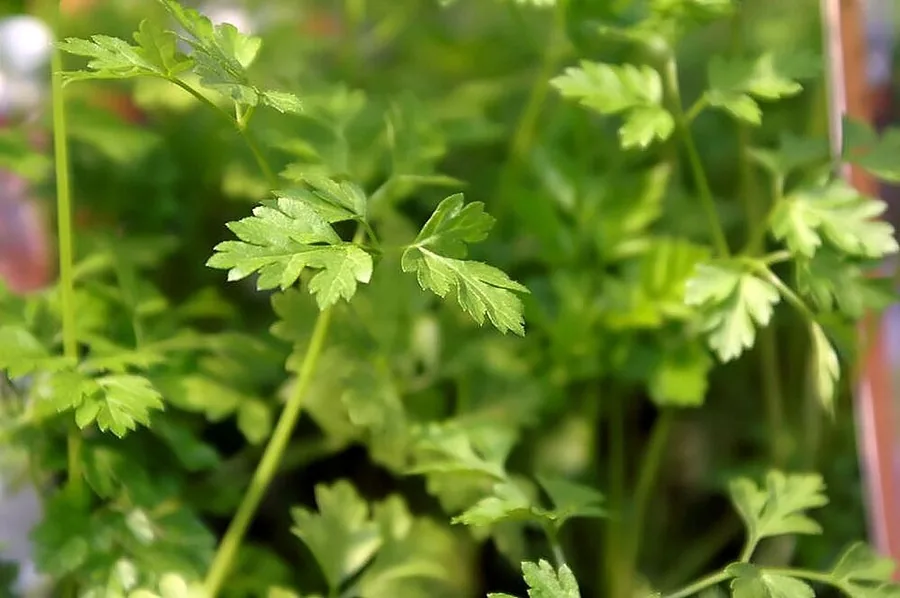
Chervil is a delicate herb in the carrot and parsley clan, dressed in thin, much-divided foliage that breaks into lacy, fern-like fronds. Up close the leaf segments are slender and soft, and a leaf crushed between the fingers gives off a gentle scent that hints at parsley and anise.
Left to flower, the plant lifts small white five-petaled blooms gathered into flat little umbels, each tiny cluster held above the soft green foliage and later giving way to seed. Beneath the surface it anchors itself with a slender taproot.
This is a fast-growing cool-season annual that lives a single season, central to French cooking and the classic fines herbes blend. The tender young leaves carry the most flavor, which fades under hard heat, so they go into the dish at the very end. Once warmth arrives the central stem stretches up and the once-sweet leaves go bitter.
Care
The short version: chervil grows low and feathery, its lacy leaves splitting into thin segments like tiny ferns. Keep it cool and shaded, the soil evenly damp, and snip the rising flower stalks before the foliage turns bitter. Direct-sow in spring and fall, scatter fresh seed every 3 to 4 weeks, and harvest the outer leaves to pull new growth from the heart of the plant.
Light
Chervil leans toward partial shade, and that dimmer light is what keeps the thin leaf segments tender and slows the dash to flower. It will take partial sun and even full sun while the air stays cool, but a stretch of afternoon shade in spring suits it best and keeps the lacy growth soft.
Water
Keep the soil evenly moist and never let it dry out, since thirst drives the plant to bolt and set seed. Water every 2 to 4 days, more often through warm or dry spells. Consistent moisture is what holds the slim, feathery leaves sweet and tender rather than coarse.
Soil
Give it moist, well-drained loam, though chervil is easygoing about fertility and even copes with poor ground. Aim for a pH 6.0 to 8.0. Most garden soil works as long as it stays damp without turning soggy around the taproot.
Temperature
This is a cool-weather herb, happiest between 39°F and 75°F (4°C to 24°C). It shrugs off light frost without harm, but once real heat settles in the plant bolts and the foliage loses its delicacy. Think spring and fall, never the peak of summer.
Humidity
Ordinary household air in the 40% to 60% range suits it fine. Damp soil paired with gently moving air keeps the fine, divided foliage clean and free of trouble.
Feeding
Chervil asks for very little. A single light, balanced organic feed at planting time in spring is plenty, and it does perfectly well in lean soil. Heavy feeding actually harms it and draws aphids to the soft new growth.
Pruning
Pinch off the flower stalks the moment they begin to rise, which holds back bolting and keeps the tender leaves coming. Harvest the outer leaves regularly to push fresh growth out from the center of the plant.
Repotting
not_applicable
Size & spacing
Chervil stays modest, reaching 12 to 24 inches (30 to 60 cm) tall with a spread of about 12 to 18 inches (30 to 45 cm). Leave enough gap for air to drift through the feathery foliage so each fine leaf stays dry.
When to plant
Chervil takes its cue from cool weather rather than warmth, sprouting in spring and again when the heat backs off in fall, which is why the seed goes straight into the ground in successive small rounds.
Northern hemisphere
Southern hemisphere
Typical months for a temperate climate: start earlier in warm zones, later where spring frosts linger.
- Plant: Direct-sow in early spring and again in fall; cool-season herb that bolts in summer heat, so provide shade and succession-sow every 3-4 weeks.
- Harvest: Cut tender young leaves before flowering; small white five-petaled flowers form in umbels 1-2 inches across, followed by seed.
Hardiness
USDA hardiness zones: 3–10
Temperature: down to -40°C
Troubleshooting
Most chervil trouble traces back to heat or moisture, and the first hint shows up in the fine leaves themselves; catching those early changes lets you settle the plant before it runs to seed.
Bolting
When the plant bolts, the central stem shoots straight upward and leaf production grinds to a halt. Heat and lengthening days flip it from leaf to seed, and dry soil only speeds the change; as the stalks rise the foliage turns bitter. Pinch off the flower stalks, shift the plant somewhere cooler and shadier, keep the soil moist, and sow fresh seed every 3 to 4 weeks.
Fix:
- Pinch off emerging flower stalks
- Move to a cooler, shadier location
- Maintain consistently moist soil
- Succession-sow fresh seed every 3-4 weeks for a continuous supply
Aphids On New Growth
Tiny soft-bodied aphids gather on the undersides of the lacy leaves, and the fresh growth turns sticky and twisted, glazed with honeydew. A firm spray of water knocks them loose, repeated every few days. Ease back on nitrogen, since the lush flush it triggers is exactly what pulls them in.
Fix:
- Rinse aphids off with a strong spray of water
- Repeat as needed
Slugs And Snails
Ragged holes chewed through the soft leaves are the work of slugs and snails, and tender seedlings take the worst of it. Silvery slime trails mark where they have traveled, and the damage runs heaviest after rain or through the night. Pick them off by hand and clear away the damp debris and shady hiding spots close by.
Fix:
- Remove slugs and snails by hand
- Reduce moist hiding spots near plants
Toxicity
The cultivated kitchen herb is completely safe to eat, with no risk to pets, livestock, or people. The hazard lies in mistaken identity outdoors, where chervil's feathery silhouette looks unsettlingly like its deadly relatives.
Safe for
People · Cats · Dogs · Horses · Rabbits · Livestock · Birds
Cats None
Not toxic to cats; a nibble of the soft foliage does no harm at all.
Dogs None
Safe for dogs, since a chewed leaf carries no poison.
Horses None
Horses can graze near it with no risk from the herb itself.
Rabbits Safe
Rabbits can eat the leaves, and the soft, lacy foliage makes a fine occasional green.
Livestock Safe
Cattle, goats, and sheep all handle cultivated chervil without trouble.
Birds Safe
Backyard birds and poultry can peck at it safely.
People Safe
This is a kitchen herb meant to be eaten, prized in French cooking for its delicate flavor; the lone caution belongs to the wild, where toxic lookalikes make sure identification essential.
Chervil closely resembles toxic Apiaceae lookalikes such as poison hemlock; foragers and gardeners must be absolutely certain of plant identity before harvesting wild plants.
Varieties
Only a handful of named chervil types make it into seed catalogs, and what sets them apart is the shape and cut of the leaf far more than any difference in taste.
Crispum
Crispum is a curled-leaf type carrying tightly ruffled foliage, its leaf edges crimped and bunched, paired with a subtle, mild flavor.
Vertissimo
Vertissimo is a compact, productive pick with dark green flat leaves, cropping heavily even in a small patch.
Plain chervil
Plain chervil is the standard flat-leaf form, the one most often grown for the kitchen.
Companions
Chervil grows well beside cool-season crops that share its taste for shade and steady moisture.
How to propagate
Chervil comes from seed alone, and that seed is fussy about exactly how it gets sown into the ground.
SeedModerate
Early spring and fall, in cool weather; succession-sow every 3-4 weeks · Seeds germinate in about 10 days at 60°F soil temperature; tender leaves ready to harvest in roughly 6-8 weeks
Sow by seed only, a moderate task, and always direct-sow right where the plant will grow, because its taproot resents being lifted and moved. Scatter the seed in cool weather, early spring and again in fall, with a fresh batch every 3 to 4 weeks. The seeds need light to wake, so barely cover them or leave them sitting on the surface, and hold the soil evenly moist. Sprouts appear in about 10 days at 60°F (16°C), with tender leaves ready in roughly 6 to 8 weeks.
Myths
Any lacy, fern-leaved wild plant is safe to use just like chervil.
The family is crowded with dangerous lookalikes, and poison hemlock can pass for chervil's fine foliage at a casual glance, with a wrong guess turning fatal. Only ever use plants whose identity is certain, and raising your own from known seed is the safest path of all.