Herb · Apiaceae
Cumin
Cuminum cyminum
Give it full sun and a long, hot summer, and cumin ripens its own small, fragrant seed.
Full sun
Every 3–7 days
50–95°F · 10–35°C
100–120 days
Overview
Cumin is a warm-loving spice plant whose every part is finely made. It belongs to the carrot and parsley family, and it shows that kinship in its thread-like leaves, divided so narrowly they look almost feathery, on slender upright stems. In summer it lifts small compound umbels of tiny flowers that range from white to soft pink, each head a flat spray held above the lacy foliage.
The plant stays low and slight, knee-high at most, a wiry little frame rather than a leafy bush. It grows as an annual, running its whole life in one season, and it asks for a long, hot stretch of 100 to 120 days to do it, so the heat shows in how fully the heads color and fill. As summer wears on, the green umbels dry and shift toward brown, the visible sign that the seed inside is hardening.
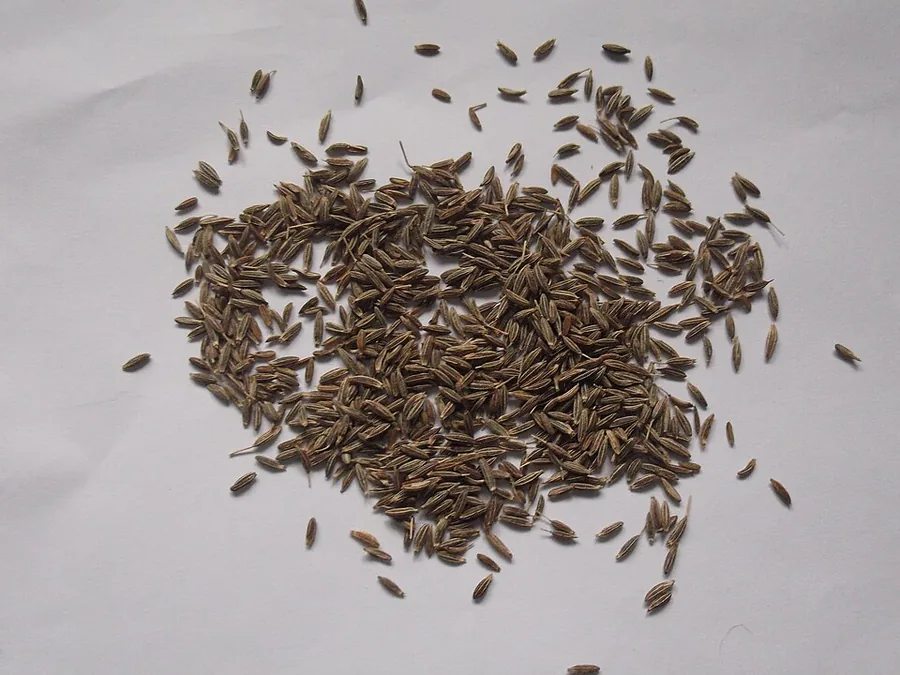
What the gardener gathers is the seed itself, small and ridged and fragrant, packed in those dried umbels. A well-ripened head crumbles to release seed that toasts and grinds for the kitchen. Reach that point and the seed is firm and brown, but rush the season and the umbels stay green and the seed never dries.
Care
The short version: full sun, warm well-drained soil, and even moisture early on, then less water as the small umbels harden and brown, with a long, hot season filling out the ridged seed.
Light
Cumin wants full sun full on, with no shade tolerance in reserve. The more direct light pours over its fine foliage, the better the small umbels color and the seed ripens before the season closes.
Water
Keep the soil evenly moist through germination and early growth, while the thread-fine seedlings are at their most fragile. As the umbels form and harden, ease back the water so the drying heads brown cleanly and disease finds no damp foothold.
Soil
Set cumin in well-drained sandy loam, since its slender roots rot in wet ground. It takes a wide pH range from 6.8 to 8.3, at home in soil from neutral to fairly alkaline.
Temperature
Cumin runs on heat, roughly 50°F to 95°F (10°C to 35°C), and has no tolerance for cold. Frost blackens and ends it, and a cool summer leaves the umbels green and the seed unripe.
Humidity
It prefers the air on the dry side, around 40%, matching its hot, arid homeland. Damp, muggy air settles on the lacy foliage and raises disease risk, most of all as the seed heads dry.
Feeding
Give it one light feeding of balanced, low-nitrogen fertilizer at planting and no more. Heavy nitrogen pushes soft, leafy growth that draws aphids and does nothing to fill the seed.
Pruning
Cumin needs no real pruning of its wiry frame. Just thin the seedlings so the fine stems are not crowded and pull weeds early, since this slight plant is quickly overtopped.
Repotting
not applicable (annual, direct-sown or transplanted once)
Size & spacing
Cumin stays small and slender, reaching only 8 to 20 inches (20 to 50 cm) tall with a spread of 6 to 12 inches (15 to 30 cm). Leave each plant a little room so air slips through the fine foliage and the umbels dry cleanly.
When to plant
Cumin lives by warmth and shrivels at frost or a cool, short summer. Sow it after the last frost once the soil has warmed, or start it indoors a few weeks early where the season is short, then watch its umbels color from green to brown as the seed ripens from late summer into fall.
Northern hemisphere
Southern hemisphere
Typical months for a temperate climate: start earlier in warm zones, later where spring frosts linger.
- Sow: 4-6 weeks before last spring frost where the season is short
- Plant: After last frost when soil is warm (above 15°C/60°F); needs a long hot season of roughly 100-120 days
- Harvest: Small white to pink flowers in compound umbels in summer; harvest seed when umbels turn brown and seed is ripe in late summer to fall
Hardiness
USDA hardiness zones: 5–11
Temperature: down to -29°C
Troubleshooting
Most trouble with cumin shows on two parts of the plant: pests crowding the soft thread-fine leaves, and umbels that stay green when they should brown and dry. Watch the foliage early and the seed heads late, and the signs appear while there is still time to act.
Umbels that stay green instead of browning
Cumin needs roughly 100 to 120 days of heat to carry its seed to ripe, and without it the small umbels stay stubbornly green where they should be turning dry and brown. Set the plant in the hottest, brightest spot, where the seed heads bake toward a papery tan, and hold the sowing until the soil itself runs warm. Where the season cuts short, an indoor start buys the few weeks the heads need to color and dry.
Fix:
- Start seed indoors to extend the effective season
- Choose the hottest, sunniest site and plant after soil is fully warm
Yellowing stems slumping as roots darken
Foliage that fades to yellow, slumps, and finally folds over points to root rot or a soilborne wilt spreading through roots left sitting in sodden ground. Ease a plant up and the roots come away soft and browned, mushy where a healthy root would be firm and white. Nothing brings such a plant back, so lift it and destroy it, open up the drainage, and set the next cumin in fresh, untainted soil.
Fix:
- Remove and destroy affected plants
- Improve drainage and avoid overwatering
Thread-fine leaves curling under a sticky glaze
When the thread-fine new leaves twist and curl beneath a glossy, sticky glaze, aphids are at work, drawing sap from the tender growth and leaving honeydew across the surface. Tip a few of the lacy leaves and the undersides crawl with tight clusters of tiny, soft, pale bodies. A hard jet of water washes the soft insects right off the delicate foliage, and insecticidal soap follows only if the clusters reappear.
Fix:
- Spray plants with a strong jet of water to dislodge aphids
- Apply insecticidal soap to affected foliage if infestation persists
Toxicity
Cumin is a culinary spice and safe through and through. Its small seed is a kitchen staple, and neither the fine foliage nor the ridged seed holds a toxin that threatens pets, livestock, or people. No special handling is needed beyond ordinary garden and kitchen care.
Safe for
People · Cats · Dogs · Horses · Rabbits · Livestock · Birds
Cats None
Cumin is safe around cats. A cat that mouths the soft, feathery leaves takes no poison from them, though a large mouthful of any new plant can leave one briefly queasy.
Dogs None
Dogs come to no harm near cumin. The fine foliage and the small seed hold no toxin, and a pinch worked into food does nothing to them.
Horses Safe
Horses can graze beside cumin in safety. Nothing in the thread-like leaves, the slender stems, or the seed acts as a poison for them.
Rabbits Safe
Rabbits are unharmed by cumin. The lacy, finely cut foliage carries no toxin, so a stray bite means nothing.
Livestock Safe
Cattle, goats, and sheep are safe around cumin. The plant holds no compound that would trouble a grazing animal.
Birds Safe
Birds face no threat from cumin. The small ripe seed is a familiar food, safe for them to crack and eat.
People Safe
Cumin seed is an everyday kitchen spice and safe to eat. The fine leaves and the ridged seed carry no toxin, so harvesting and cooking ask for no special care.
No special handling precautions are required; the seed is a common food spice.
Varieties
Cumin is grown almost entirely as the plain species rather than a line of named cultivars. There is just the one form to know.
Common cumin (species type)
The cumin you see is almost always the plain species rather than a named cultivar, with its own fine foliage and small ridged seed that set it apart from the unrelated black cumin, nigella, and caraway it is often confused with.
How to propagate
Cumin grows only from seed, that same small ridged seed it sets, and its real test is heat rather than technique. Get the timing right and the rest follows.
SeedDemanding
After last frost in warm soil, or started indoors 4-6 weeks earlier where the season is short · Roughly 100-120 days from sowing to ripe seed
Cumin rises from seed alone, the same small ridged seed it later sets, and it stays dormant in the ground until the soil turns warm. Sow it once frost has cleared, or start it indoors 4 to 6 weeks early where summers are brief, since it needs a hot 100 to 120 days to swell its seed to ripe. Set once by direct sowing or a single transplant, it then runs out its full season undisturbed.
Myths
Cumin grows easily in any climate, just like other garden herbs.
Cumin asks far more heat than most herbs, needing roughly 100 to 120 days of warmth to fill and ripen its seed. In a short or cool summer the small umbels never lose their green for the dry brown of ripeness before frost, and the heads stay empty of usable seed, so the climate decides the harvest.