Vegetable · Apiaceae
Celery
Apium graveolens var. dulce
Feed it rich soil, cool air, and water that never quits, and those ribbed green stalks firm up crisp and tight.
Full sun
Every 2–4 days
55–64°F · 13–18°C
85–120 days
Overview
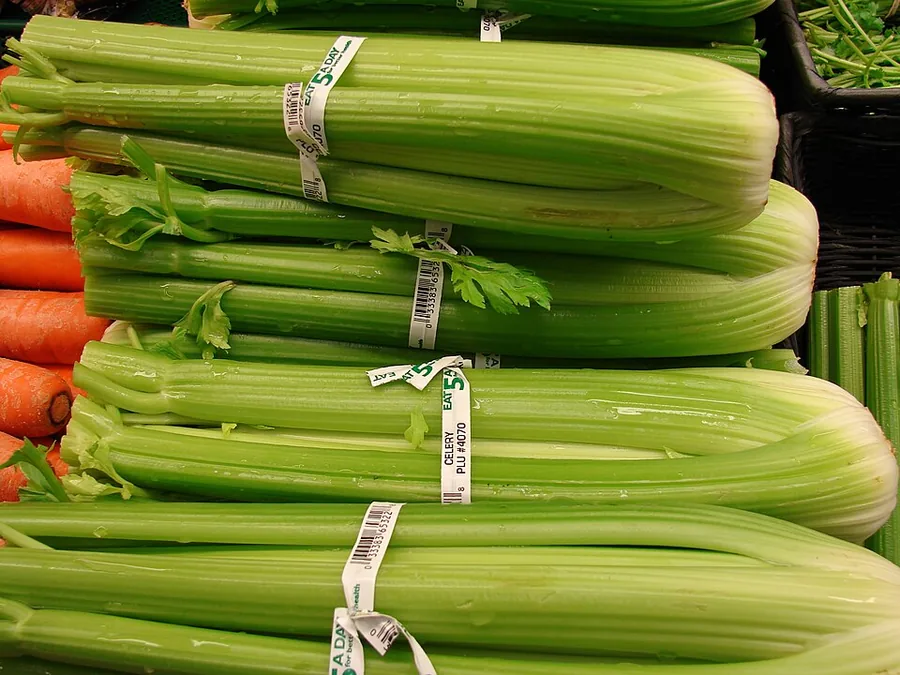
Picture a fan of deeply cut, glossy green leaves rising from a tight cluster of upright ribbed stalks, each one curved on the outside and grooved down its inner face. That fan is celery, a relative of carrot and parsley, and the ribs you eat are leaf stems packed shoulder to shoulder around a pale young heart. The plant wants cool air, rich ground, and water that never stops, since its shallow roots dry quickly.
Cut through the bunch and you find the heart at the very center, a knot of small tender stalks and folded leaves still flushed pale and soft. This is a biennial grown as an annual, and a long cool spell early on can fool a young plant into thinking a winter has passed. When that happens it sends a tall stiff seedstalk straight up from the heart instead of swelling its ribs.
Run a thumb along the back of a mature rib and you feel the raised lengthwise strings that carry water up the stalk. Treat celery as a thirsty, slow grower and those ribs stay full and snapping crisp rather than tough; starve it of water and the same fibers turn stringy. The reward arrives over a long season from late summer into fall.
Care
The short version: full sun with a touch of afternoon shade keeps the ribs full, soil dark with organic matter feeds them, and water that never runs short holds the stalks crisp within the cool 55°F to 64°F (13°C to 18°C) range it loves.
Light
Full sun deepens the green of the ribs and packs the bunch tight, though a little afternoon shade helps where summers run warm. Starve the plant of light and the stalks come up thin, pale, and weak instead of fat and firm, so give it the open spot if you can.
Water
This is the part you cannot skip. The roots sit shallow and thirsty near the surface, so the plant needs at least 1 to 2 inches of water a week and soil that never dries out. Let it go dry even briefly and the ribs lose their snap, going stringy, pithy, and bitter inside.
Soil
Plant in rich, moisture-holding loam dark with organic matter and dug deep, since the shallow roots lean on that damp ground to keep the stalks plumped up. A pH of 5.8 to 6.8 suits it, and compost worked in before planting feeds the bunch all season.
Temperature
Celery firms up best in cool air, happiest between 55°F and 64°F (13°C to 18°C). Heat turns the ribs bitter and stresses the plant, while a long cold snap early on can drive a stiff seedstalk up through the heart and stop the stalks from forming.
Humidity
Ordinary outdoor humidity is fine, so there's no number to hit. Airflow is what counts around the leafy tops, since a crowded, damp fan of foliage is where leaf blight first spots the leaves.
Feeding
Those tightly packed ribs are hungry to build, so feed them in soil already rich with organic matter. Give a balanced, nitrogen-rich fertilizer about every two weeks through the growing season, and keep calcium flowing so the inner heart never blackens.
Pruning
There's little to cut. Strip away diseased or yellowing outer leaves and any side suckers, but never touch the central growing point at the heart. To soften the bitterness and fade the deep green, blanch the outer stalks for 2 to 3 weeks before harvest by mounding soil or wrapping them, though self-blanching types pale on their own.
Repotting
The plant moves just once, lifted from the seed tray out to the garden, and after that it stays rooted in place. Celery isn't usually grown in containers, so there's no potting up to manage as the bunch fills out.
Size & spacing
A full plant stands 18 to 35 inches (45 to 90 cm) tall on a narrow upright footprint. Set the plants 12 to 18 inches (30 to 45 cm) apart, close enough that neighboring bunches shade and blanch each other yet open enough for air to move through the leaves.
When to plant
Celery takes a long road from a tiny seedling to a full bunch of cuttable ribs. Start the seeds indoors in late winter, set the young plants out only once the worst chill has passed so the heart never sends up a seedstalk, and cut the stalks from late summer into fall before a hard freeze.
Northern hemisphere
Southern hemisphere
Typical months for a temperate climate: start earlier in warm zones, later where spring frosts linger.
- Sow: 10 to 12 weeks before the last spring frost
- Plant: From about 2 weeks before to around the last spring frost, once soil has warmed and night temperatures stay above 50°F (10°C)
- Harvest: Late summer into fall; harvest stalks before a hard freeze
Hardiness
USDA hardiness zones: 3–10
Temperature: down to -40°C
Troubleshooting
Almost every celery problem reads on the stalks and leaves themselves, in the color of the heart, the firmness of the ribs, or spots on the leafy tops. Nearly all of it traces back to water or temperature. Match what you see below against the plant in front of you, then act before the trouble spreads through the bunch.
A tall stiff seedstalk rises from the heart and the ribs turn bitter
This is bolting: a single tall, stiff flower stalk shoots straight up from the center while the surrounding ribs go tough and bitter. It happens when young plants sit through a long cool spell that tricks this biennial into flowering a year early. Once that seedstalk elongates the plant quits swelling usable stalks, so cut what's still tender before it toughens and pull the bolted plant. The real defense is patience: harden off the transplants and set them out only after the danger of sustained chill has passed.
Fix:
- Harvest usable stalks promptly before they toughen
- Remove bolted plants
The pale heart at the center turns brown and dies back
What you're seeing is blackheart: the tender young leaves and stalks deep in the heart brown and rot while the outer ribs still look fine. It isn't a disease to spray off but a calcium shortage in the fast-growing inner stalks, set off when uneven watering and heat keep the plant from moving calcium to the center quickly enough. Hold the soil steadily moist, side-dress with calcium, then cut the healthy outer stalks and bin the rotted hearts.
Fix:
- Keep soil evenly and consistently moist
- Side-dress or foliar-feed with calcium
- Harvest unaffected outer stalks; discard rotted hearts
Small spots and yellow-brown blight creeping over the leafy tops
This is fungal leaf blight, which takes hold when the leafy fan stays wet and the soil drains poorly. It opens as tiny spots on the leaves that yellow, brown, then enlarge and run together across the blades and along the petioles, fastest in humid, soggy weather. Strip the affected foliage, open the planting up so air moves between the tops, and keep water off the leaves.
Fix:
- Remove affected foliage
- Improve air circulation and avoid overhead wetting of leaves
Ribs that crack along their length, string out, or go spongy inside
Split a rib open and you find it stringy, pithy, or hollow, the inside spongy and the lengthwise fibers coarse and tough. This almost always traces back to thirst, since celery hates any swing between wet and dry ground. A boron shortage or simply leaving the plant standing too long past maturity does the same. Restore even moisture, keep the soil fertile, and cut the bunch on time instead of letting the ribs coarsen in the row.
Fix:
- Restore and maintain consistent soil moisture
- Harvest at proper maturity rather than letting plants stand
Toxicity
Celery is safe all around, both to eat and to grow near pets and children. The one thing to watch is on the plant's leafy tops: the foliage carries a natural compound called furanocoumarin that can leave sensitive skin red after you handle the leaves in bright sun, so a quick rinse of the hands settles it.
Safe for
People · Cats · Dogs · Horses · Rabbits · Livestock · Birds
Cats None
Safe for a cat to be near and safe to nibble on the ribs or leaves. A cat that gorges on any greenery might get a brief upset stomach, but the celery itself is harmless.
Dogs None
Those crunchy ribs make a popular treat that does no harm. Some dogs urinate a little more after a serving, and a big helping may loosen the stomach, but neither is cause for worry.
Horses Safe
Horses take the ribbed stalks and the leafy tops without trouble. Cut the long ribs into manageable pieces so a greedy eater doesn't choke on a whole stalk.
Rabbits Safe
Rabbits enjoy the crisp ribs and the leafy tops in moderation. Chop the stalks small so the long stringy fibers running down each rib don't catch.
Livestock Safe
Goats, sheep, and cattle can graze the ribs, leafy tops, and trimmings with no ill effect.
Birds Safe
Chickens and other birds happily peck at chopped ribs and the green leafy tops, a fine bit of greenery for them.
People Safe
The crisp ribs are a kitchen staple, raw or cooked, with nothing to avoid in the eating. The one catch is handling: the leafy tops and their sap carry furanocoumarins that can leave sensitive skin red and itchy after working with the foliage in bright sun, so rinse your hands afterward.
Like other Apiaceae (parsnip, celeriac), celery foliage and sap contain furanocoumarins (psoralens) that can cause mild phytophotodermatitis in sensitive people who handle the tops in bright sunlight; this reaction is milder than with parsnip. Wash skin after handling the foliage and avoid prolonged sun exposure on contacted skin.
Varieties
Only a few celery varieties turn up in home gardens, and what sets them apart shows in the stalks themselves: how dark or pale the ribs run, how tight the bunch sits, and how much blanching the color needs. These are the ones worth knowing.
Tall Utah (Utah 52-70 / Pascal type)
The standard pascal type, its ribs a deep dark green and stacked into a tall, crisp, compact bunch. This is the classic celery most extension offices steer home gardeners toward.
Golden Self-Blanching
A compact, early bunch whose ribs fade to a soft pale yellow all on their own, so the trenching and wrapping that other types demand can be skipped.
Tango
A hybrid prized for ribs so tender they run nearly stringless, with almost none of the tough lengthwise fibers, and it shrugs off heat and uneven moisture better than the older varieties.
How to propagate
Celery starts one way, from a dust-fine seed, and that slow, finicky beginning is what earns the crop its demanding reputation long before the first rib ever forms.
SeedDemanding
Start indoors 10 to 12 weeks before the last spring frost · About 10 to 12 weeks to transplant size, then roughly 85 to 120 days from transplant to harvest
Celery grows only from seed, and the seeds are tiny specks that test your patience from day one. Sow indoors 10 to 12 weeks before your last frost, pressing the dust-fine seeds onto the surface or barely covering them since they need light to sprout, and keep them warm at around 70°F (21°C) and never dry. Germination is slow and uneven, so soaking the seed first helps. From transplant it's another 85 to 120 days before the ribs stand tall enough to cut.
Myths
Celery must be trenched and blanched or the stalks are inedible.
All blanching does is soften the bitterness and drain the deep green out of the ribs. Green and self-blanching varieties are perfectly good to eat unblanched, so the whole trenching ritual is a choice, not a requirement.
A cut celery base set in water will regrow a full new bunch of stalks.
The cut base does push out new growth, but only a tuft of small leaves handy for flavoring a pot, never a fresh ring of full ribs. A real crop of stalks comes from seed-started plants, not from a stump on the windowsill.