Herb · Rosaceae
Salad Burnet
Sanguisorba minor
Small toothed leaflets in a low green rosette, tender and cucumber-flavored when young: that is salad burnet up close.
Full sun
Every 5–10 days
50–77°F · 10–25°C
60–100 days
Overview
Up close, salad burnet is a low, ground-hugging rosette of small green leaflets. Each leaf splits into many little leaflets, and every one is edged with neat, rounded teeth, giving the plant a fine, ferny look. The rosette stays green through much of the year, and the tender young leaves are the ones that taste of cool cucumber.
The leaves change as they age. The young growth at the center is soft and pliable, while the older, outer leaves swell larger and turn leathery, coarse to the touch. That shift in texture is the plant telling you which leaves still hold the tender, mild character and which have hardened past their best.
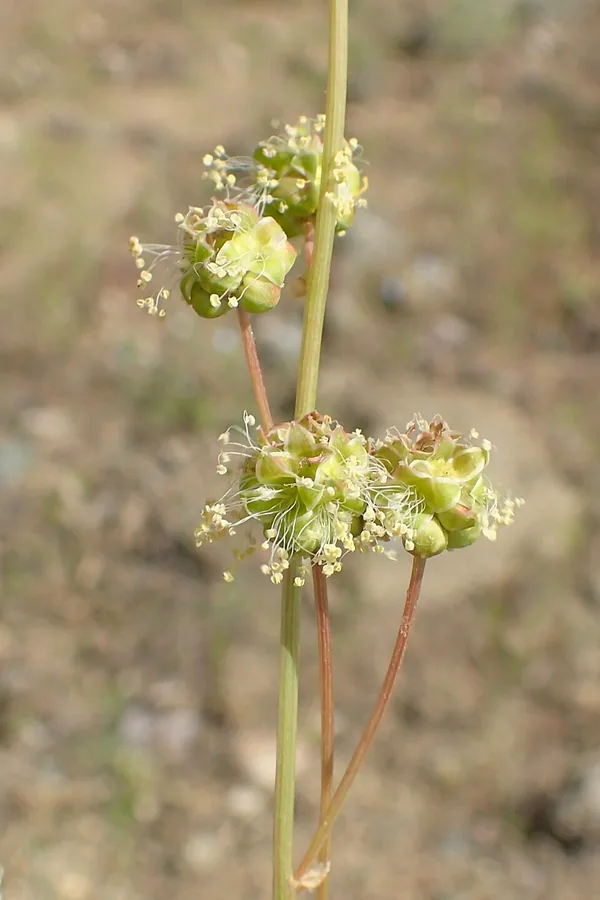
In its second act the plant sends up tall, slender stalks well above the leaves. Each one is topped with a rounded pinkish flower head, a small, tight cluster held high above the foliage. Once these rise, the low green rosette below begins to coarsen, its older leaflets losing their soft feel.
Care
The short version: full sun and lean, well-drained soil, with water only while the plant is young. Keep feeding light, cut away the tall flower stalks as they climb, and pick the small young leaflets often so they stay soft and cucumber-mild.
Light
In full sun the rosette grows dense and low, its leaflets small and firm; partial sun or light shade is tolerated but costs it that tight form. Starved of light, the plant stretches loose and open, the leggy growth also catching mildew more easily.
Water
While young, the plant drinks regularly as it builds its rosette; once established it is drought tolerant and asks for little. Its soil is best left to dry through the upper half before watering, and roots that sit in wet ground soon suffer.
Soil
It sinks its roots happily into lean, well-drained soil, even the dry, rocky, alkaline ground that starves other herbs, across a pH of 6.0 to 7.8. Rich, heavy earth works against it, softening the leaves and holding water the roots cannot abide.
Temperature
The plant is at ease in mild air of 50°F to 77°F (10°C to 25°C). Hardy to the cold, its low rosette often stays green and standing through the milder parts of winter.
Humidity
Middling humidity of 40% to 60% is plenty for the foliage. What the leaves want more is moving air across them, since still, damp air lets a powdery white film of mildew form on their surfaces.
Feeding
Little feeding is needed. A single light balanced or low-nitrogen feed in spring is enough, and often none at all, because rich soil swells the leaves and thins the flavor. Overfed growth turns soft and watery, pale in taste next to the sharp cucumber of lean-grown leaves.
Pruning
The tall flower stalks are cut away as they rise, which keeps the leaflets small, soft, and mild. The coarse old outer leaves are trimmed off too, and fresh, fine-toothed growth pushes up in their place.
Repotting
Grown in a pot, the plant is moved on every 1 to 2 years. Roots winding around the pot, a slowdown in new leaflets, and soil that dries almost at once all show the rosette has filled its container and needs fresh room.
Size & spacing
This is a small, low plant, its rosette rising 12 to 24 inches (30 to 60 cm) when in flower and spreading 12 to 18 inches (30 to 45 cm) across. Set that much space around it so air passes through the leaves.
When to plant
Hardy through zones 4 through 8, salad burnet starts early, before it has built more than a small green tuft. Seeds go in indoors 6 to 8 weeks before the last frost, or straight into the ground in early spring, and the little toothed leaves can be picked from spring into fall.
Northern hemisphere
Southern hemisphere
Typical months for a temperate climate: start earlier in warm zones, later where spring frosts linger.
- Sow: 6 to 8 weeks before last spring frost
- Plant: After last spring frost, or direct sow in early spring
- Harvest: Harvest young leaves spring through fall; pinkish flower heads appear late spring to midsummer (May to July)
Hardiness
USDA hardiness zones: 4–8
Temperature: down to -34°C
Troubleshooting
The plant wears its troubles on its leaves and roots, where they are easy to read. Most begin with too much water or too little moving air, and the color, texture, and firmness of the growth give the earliest clues. Match what you can see below and act while the change is still slight.
Yellowing, wilting leaves and a rosette slumping in wet ground
This is root rot, and it shows first as a rosette that yellows and flops while the ground stays wet. Below the soil the roots have gone soft, dark, and mushy, and once they turn to that the plant is lost. Ease off the water, sharpen the drainage, and lift any firm-rooted survivors into a raised bed or gritty mix.
Fix:
- Improve drainage
- Reduce watering
- Replant in well-drained or raised beds
A powdery white dust filming over the leaf surface
This is powdery mildew, seen as a pale, dusty bloom spreading across the leaflets where the air hangs still and plants crowd in humid shade. Space the plants so air moves between them, strip away the worst-filmed leaves, and set the plant in full sun, which the fungus cannot abide.
Fix:
- Improve spacing and air flow
- Remove affected foliage
- Site plant in full sun
The leaflets grow large, leathery, and bitter, the cucumber taste gone
This is bolting. As the flower stalks push up, the once-small leaflets swell into large, leathery blades, coarse on the tongue and stripped of their mild cucumber taste. Cut the flower stems as they form, take only the small young leaves at the center, and shear the plant low to bring up a fresh, tender flush.
Fix:
- Cut off developing flower stalks
- Harvest only young inner leaves
- Cut the plant back to force a flush of tender new growth
Toxicity
Every part of this plant is harmless. The soft young leaflets are eaten raw for their cucumber taste, and nothing in the leaves, stalks, or flower heads is toxic, so it is safe around cats, dogs, horses, rabbits, livestock, and birds.
Safe for
People · Cats · Dogs · Horses · Rabbits · Livestock · Birds
Cats None
A cat that chews the soft leaflets comes to no harm; they are tender and non-toxic.
Dogs None
For a dog, a mouthful of the leafy growth is harmless, carrying nothing poisonous.
Horses Safe
Horses can crop the low rosette freely, since no part of the plant is poisonous to them.
Rabbits Safe
Rabbits can nibble the tender young leaflets safely, taken in small amounts.
Livestock Safe
Cattle, goats, and sheep graze the foliage without harm, and its larger, coarser cousin was once grown for feed.
Birds Safe
Poultry and wild birds peck at the leaves and small seeds with no ill effect.
People Safe
People eat the youngest leaflets straight from the plant, raw, for their cool cucumber taste.
Leaves and young growth are commonly eaten by people in salads; no special handling precautions are required.
Varieties
The two forms worth knowing apart differ mostly in size and build rather than in any showy detail.
Sanguisorba minor subsp. muricata
Fodder burnet is the larger, coarser of the two, a heftier plant once sown across fields as forage and a cover crop.
Sanguisorba minor (species type)
The species type is the smaller one, a compact green rosette of fine, toothed leaflets carrying the mild cucumber taste.
Companions
Salad burnet sits happily beside herbs that share its taste for sun and lean soil, and does worst next to vigorous spreaders that swamp its low rosette.
How to propagate
New plants come easily from seed or a split rosette, each starting as a small tuft of toothed leaves.
SeedEasy
Early spring, indoors 6 to 8 weeks before last frost or direct sown · Germinates in about 1 to 2 weeks; harvestable within 8 to 10 weeks
Seed is the common start, each sprouting into a small toothed tuft. Sown indoors 6 to 8 weeks before the last frost or straight outside in early spring, the seedlings break the surface in about 1 to 2 weeks. The rosette fills out enough to pick within 8 to 10 weeks, and a few flower heads left to ripen scatter seed for new plants nearby.
DivisionEasy
Spring or early fall · A few weeks to re-root and resume growth
An older clump pulls apart into several small rosettes in spring or early fall. The whole plant is lifted, teased into sections that each keep a fist of roots, and set back in at once, where they take hold and green up again over a few weeks.
Myths
Salad burnet is just a small version of the medicinal great burnet.
They are two separate species, and they look it. Salad burnet (Sanguisorba minor) is the smaller herb with a low leafy rosette, while great burnet (Sanguisorba officinalis) stands taller and carries deep red flower heads instead of pinkish ones. The botanical name is the sure way to tell them apart.
The big older leaves are as good to eat as the small young ones.
They are not. The cucumber taste sits in the small, soft new leaflets, while the older leaves grow large, leathery, and bitter. Keep picking the young leaves and the flavor stays fine and mild.