Herb · Lamiaceae
Thyme
Thymus vulgaris
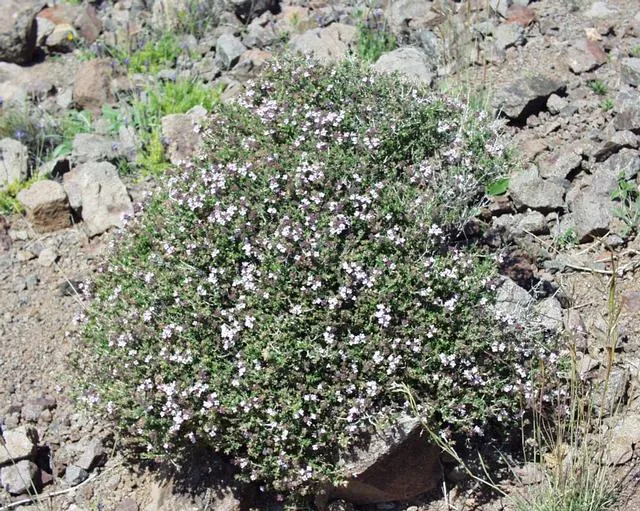
Thyme forms a low, cushiony mound of tiny aromatic leaves on thin, woody stems.
Full sun
Every 7–14 days
USDA 5–9
6–12 in · 15–30 cm
Overview
Thyme is a low, woody little herb, its thin stems branching close to the ground and crowding together into a dense, aromatic mound. The leaves are minute, packed tightly along each stem, and they carry a warm scent that lifts the moment they are brushed. It comes from the Mediterranean and belongs to the mint family, growing back as a hardy perennial each spring.
The whole plant stays small, no more than 6 to 12 inches (15 to 30 cm) tall, so it reads as a soft, rounded hummock of foliage rather than an upright shrub. In early summer the stem tips break into tiny flowers in shades of pink to lilac, small enough that the bees crawling over them nearly hide the blooms. The tiny leaves hold the plant's fragrance, and their scent runs strongest just before those flowers open.
Up close the stems tell the plant's age. Young growth is soft and green and thickly leaved, while the oldest wood at the base turns hard, bare, and brown. The contrast is easy to see: fresh leafy tips above, stiff woody stems below, with the small leaves thinning out toward the older growth.
Care
The short version: thyme wants full sun and lean, fast-draining soil, and water only after the top half of the soil dries. It is drought-tolerant, a light feeder, and one yearly trim keeps the little mound of leaves dense rather than woody.
Light
Thyme wants full sun, at least six hours of direct light a day, and that light packs the small leaves with the oils that scent and flavor them. In too much shade the stems stretch and thin, the leaves spacing out and losing their punch.
Water
Let the top half of the soil dry before watering again, about every 7 to 14 days. An established plant is drought-tolerant, its small leaves staying firm through dry spells, but soggy soil rots the roots and the stems collapse into black mush.
Soil
Thyme roots into well-draining sandy or gravelly loam, the leaner and grittier the better. It settles across a wide pH of 6.0 to 8.0, but sharp drainage under those fine roots matters far more than a rich soil.
Temperature
The plant holds up from 0°F to 95°F (-18°C to 35°C), its woody stems riding out winter cold and its leaves taking summer heat. In long hot, dry spells, watch the leaf undersides for spider mites and the fine webbing they leave.
Humidity
Thyme suits low humidity, around 30% to 50%, the dry air of its Mediterranean home. In damp, stagnant air the crowded little leaves trap moisture and disease sets in, so moving air keeps the foliage dry.
Feeding
Thyme is a light feeder, and too much food dulls the flavor of its leaves while pushing soft, floppy growth. A single spring feeding of balanced fertilizer or compost keeps the small leaves dense and aromatic.
Pruning
A light shear after flowering and again in early spring keeps the mound dense and leafy and slows the woodiness. Cut only into the soft green stems, never the old bare wood at the base, which is slow to leaf out again.
Repotting
Repot container thyme every 2 to 3 years, or sooner when roots wind around the pot, thread out the drainage holes, or the top growth stalls. A snug pot suits its shallow, fine roots, but a rootbound tangle starves them.
Size & spacing
Thyme stays low and compact, 6 to 12 inches (15 to 30 cm) tall and 8 to 16 inches (20 to 40 cm) across, a spreading mat of fine, leafy stems. Leave gaps between plants so air moves through the foliage and the small leaves stay dry.
When to plant
Thyme is hardy to 0°F (-18°C) and stays outdoors year-round in zones 5 to 9, its low mat of stems weathering the cold. Sow seeds indoors 6 to 10 weeks before the last frost, set the small plants out in spring once frost passes, and the tips break into flower in early summer.
Northern hemisphere
Southern hemisphere
Typical months for a temperate climate: start earlier in warm zones, later where spring frosts linger.
- Sow: 6-10 weeks before last frost
- Plant: spring after danger of frost has passed
- Harvest: Tiny pink to lilac flowers in early summer, attractive to bees; harvest sprigs anytime, best just before flowering for peak flavor.
Hardiness
USDA hardiness zones: 5–9
Temperature: down to -29°C
Troubleshooting
Thyme rarely struggles, and most problems show first in the look of the leaves and stems, usually from too much water or a missed trim. The close-up signs below reveal the cause before the plant declines.
Wilting stems turned black and soft
Stems that flop, blacken, and go soft to the touch signal root rot below the soil line. Waterlogged ground has smothered the fine roots until they turn brown, soft, and foul. Cut the water back, lift the plant into gritty, fast-draining soil, and strip away every stem that has already turned to mush.
Fix:
- Reduce watering
- Improve drainage or repot into gritty, well-draining soil
- Remove affected growth
Dusty, pale leaves veiled in fine webbing
When the tiny leaves turn dusty and speckled and a thin webbing veils their undersides, spider mites are feeding, drawn by hot, dry air. Look closely and the specks themselves creep across the leaf. Rinse the foliage hard to wash them off, and follow with insecticidal soap for any that cling on.
Fix:
- Rinse foliage with water
- Apply insecticidal soap if needed
Hard, bare stems with leaves only at the tips
With age the lower stems harden into bare brown wood while the small leaves retreat to green tufts at the tips, the classic woody, leggy thyme. A skipped trim only bares the stems faster. A light shear each spring and after flowering keeps the leaves crowding low, and once the wood is bare a fresh cutting rebuilds the mound.
Fix:
- Trim lightly each spring and after flowering
- Replace or propagate new plants every 3-4 years
Toxicity
Thyme is non-toxic. The ASPCA lists common thyme as safe for cats and dogs, and its small culinary leaves are harmless to people and animals alike. The one exception is concentrated thyme essential oil, a far stronger extract drawn from the plant that can mildly upset a pet's stomach.
Safe for
People · Cats · Dogs · Horses · Rabbits · Livestock · Birds
Cats Safe
The ASPCA lists thyme as non-toxic, so a cat mouthing the small leaves comes to no harm. Only concentrated thyme essential oil, the extract pressed from the foliage, can mildly upset a cat's stomach.
Dogs Safe
Dogs can crunch the little leaves with no ill effect. A large dose of the essential oil is the exception and may leave a dog briefly queasy, so keep the bottle out of reach.
Horses Safe
Thyme is safe for horses to browse, and the leafy sprigs cause no trouble at the amounts a horse would actually eat.
Rabbits Safe
Rabbits nibble fresh thyme happily, and a few leafy sprigs make a fine addition to their greens.
Livestock Safe
Grazing animals such as goats and sheep can crop thyme with no ill effect, since it is an aromatic herb rather than a poisonous one.
Birds Safe
The plant poses no risk to pet or backyard birds that peck at the foliage.
People Safe
Thyme is a kitchen staple, its small leaves safe to cook with and eat in any normal amount. Only the concentrated essential oil calls for care and should never be swallowed undiluted.
Concentrated thyme essential oil is a different product and can be irritating; the plant and its leaves are non-toxic.
Varieties
A few culinary thymes recur in gardens, and the quickest way to tell them apart is by the size, color, and scent of their leaves. These are the ones to know.
'English' thyme
This is the broad-leaved thyme, its wider leaves carrying the classic, full thyme flavor most cooks know.
'French' thyme
Its leaves are narrower and grayer than English thyme, and the flavor they hold is sweeter and more refined.
Lemon thyme (Thymus × citriodorus)
A related hybrid among the culinary thymes, its foliage releases a bright lemon scent when handled.
How to propagate
Thyme is easy to multiply from its own soft stems, and most gardeners skip seed for faster methods.
Stem cuttingsEasy
Late spring to early summer · 4-6 weeks to root
Cuttings root most reliably from the plant's own soft stems. In late spring or early summer, snip soft, non-flowering shoots, press them into a gritty, well-draining medium, and roots form over the next 4 to 6 weeks.
DivisionEasy
Spring or early fall · A few weeks
An established clump pulls apart cleanly. Lift it in spring or early fall, tease the mat of stems and roots into sections with roots on each, and replant them to knit back together over a few weeks.
SeedModerate
Spring · Several weeks to germinate, slow to establish
Seed is the slow route. Sown in spring, it germinates over several weeks and the seedlings inch along, so most gardeners take cuttings or divide instead.
Myths
Thyme needs frequent watering and rich soil to grow lush leaves.
The leaves say otherwise. This Mediterranean herb is made for lean, dry ground, and its small foliage packs the most scent when the roots stay on the dry side. Flood it or plant it rich and the growth turns soft and watery, thin on flavor, and the roots begin to rot. Thyme carries its strongest scent when kept lean and a little dry.