Ornamental · Poaceae
Perennial Ryegrass
Lolium perenne
Sow it and it's up in days, giving you fast, fine-bladed, hard-wearing turf that greens a lawn in a fortnight.
Full sun
Every 2–7 days
14–21 days
USDA 3–7
Overview
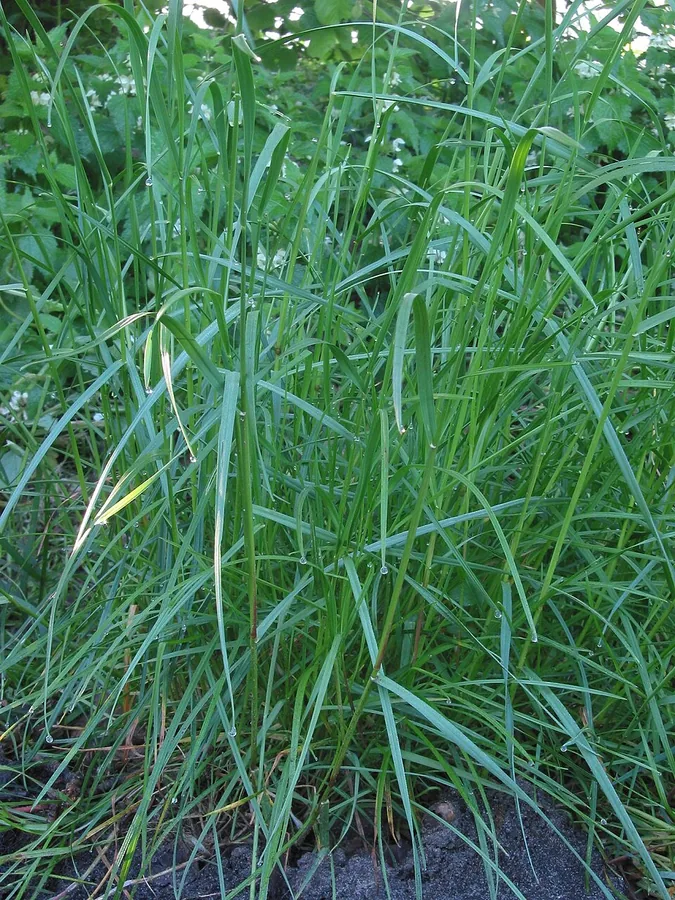
Perennial ryegrass is a cool-season grass whose slender blades push up almost as soon as the seed is down. The first fine green shoots break the soil in 3 to 7 days, faster than any other common lawn grass, which is why it fills so many seed mixes and quick patch kits. Its blades are fine to medium in width and a glossy dark green, smooth and slightly shining, and packed tightly enough that the turf takes hard wear on sports fields and family lawns.
Each plant sits as its own tight tuft rather than creeping outward. As a bunch grass it puts out no thread-like rhizomes or stolons, so the tufts hold their edges and a worn spot stays open between them. That is why it so often shares the ground with Kentucky bluegrass, whose pale rhizomes creep sideways to knit the gaps while the ryegrass supplies its fine, tough blades.
The blades keep their green across a wide swing of cold and heat, from a deep freeze of -20°F (-29°C) up to summer heat near 95°F (35°C), though they dull and thin in a real drought. Across the South those same green blades are sown as a winter overseed, laid over dormant warm-season lawns to hold a living coat of color until spring.
Care
The short version: full sun, steady moisture, and regular mowing that keeps the fine blades to about 1.5 to 2.5 inches (4 to 6 cm). Feed in spring and fall, keep nitrogen light in the summer heat, and reseed thin spots, since the tufts will not creep to fill them.
Light
Perennial ryegrass grows its densest, glossiest blades in full sun and still holds up in some partial shade. The more sun the tufts catch, the thicker and tougher the green stands, while deep shade leaves the blades thin, pale, and weak.
Water
A new seedbed kept consistently moist splits its seeds and raises fine green shoots in 3 to 7 days, with light, frequent watering until the blades stand up. Established turf drinks moderate to high water and thins fast in drought, so the blades should not go dry for long.
Soil
The tufts root best in fertile, moist, well-drained soil. A pH of 6.0 to 7.0 suits them, and ground that drains freely while still holding moisture keeps the blades green and the crowns firm.
Temperature
The blades hold their green across a wide range, from about -20°F (-29°C) in winter up to roughly 95°F (35°C) in summer. They grow fastest and greenest in the cool of spring and fall, then dull and slow through real summer heat.
Humidity
Ordinary outdoor humidity suits the blades, so there is no number to reach. The real risk is long spells of leaf wetness, since blades left damp in warm weather grow the gray, fuzzy film of gray leaf spot.
Feeding
A balanced turf fertilizer in spring and fall feeds the strongest flush of new blades. Keep nitrogen light in late spring and summer, since a rush of soft, succulent blades in the heat is what gray leaf spot moves into.
Pruning
Mow the fine blades on a regular schedule to about 1.5 to 2.5 inches (4 to 6 cm). If the gray, fuzzy film of gray leaf spot shows on them, bag and remove the clippings so the fungus is not carried across the turf.
Repotting
none
Size & spacing
Mown, the blades stand only about 2 inches (5 cm) tall, and each tuft broadens to roughly 6 to 12 inches (15 to 30 cm). Since the tufts grow in bunches and never creep, seed goes down thickly and evenly so the clumps of blades knit into one solid green sheet.
When to plant
Perennial ryegrass is a cool-season grass, so its blades emerge and thicken best in mild weather rather than heat. Sow or overseed in early fall, or in spring in cool regions, and across the South lay it over a dormant warm-season lawn in fall to carry a coat of green blades through the winter.
Northern hemisphere
Southern hemisphere
Typical months for a temperate climate: start earlier in warm zones, later where spring frosts linger.
- Plant: Seed or overseed in early fall (or spring) in cool-season regions; standard winter overseed for dormant warm-season lawns in the South.
- Harvest: Establishes uniform turf within about 2 weeks under ideal conditions.
Hardiness
USDA hardiness zones: 3–7
Temperature: down to -40°C
Troubleshooting
Most ryegrass trouble reads right off the blades and the patches they form, and the weather colors which one you are seeing. Hot and humid points one way, cool and damp another, and a plain open gap points back to the tufted grass itself. Match what the turf shows below, then act before a patch widens.
Matted gray-fuzzy patches on the blades
The blades themselves tell the story of gray leaf spot, a fungus that overtakes perennial ryegrass in hot, humid weather when they sit wet for hours. The affected turf slumps into greasy, matted patches 4 to 12 inches (10 to 30 cm) across, each blade dulled to a gray, fuzzy film across its surface, and whole stretches can fade to collapse within a few days. Clippings bagged off the lawn, watering before sunrise so the blades dry early, and a preventive fungicide every 14 to 21 days through the danger months keep it in check.
Fix:
- Collect clippings when symptoms appear
- Apply preventive fungicide on a 14-21 day interval during high-risk periods
Bare gaps between clumps that stay open
Look closely and perennial ryegrass reveals itself as a bunch grass, each plant a discrete tuft of blades with no thread-like runners snaking outward to bridge a gap. Where wear or hard weather has stripped a spot bare, the surrounding tufts simply hold their own edges and the open soil stays visible between them. Fresh ryegrass seed scattered over that bare ground grows new tufts, or Kentucky bluegrass worked in sends pale rhizomes creeping sideways to knit the opening shut.
Fix:
- Overseed bare areas directly with fresh ryegrass seed
- Blend with Kentucky bluegrass so the bluegrass spreads to fill gaps
Pink-tinged patches strung with red at the tips
Red thread paints the turf in round patches washed a soft pink, each blade tip strung with fine, bright red strands that catch the light. It surfaces in the cool, damp air of spring and fall, and its color usually marks a lawn short on nitrogen rather than a grass in real decline. A balanced feed drives up fresh green growth that overtakes the fungus, while clipping off the reddened tips and drying out the blades by watering less in the evening erases the color.
Fix:
- Apply adequate nitrogen to push recovery growth
- Mow to remove infected tips and reduce leaf wetness
Toxicity
The fine green blades of lawn ryegrass are safe. This is a common turf and pasture grass with no toxic parts, so cats, dogs, rabbits, birds, and children are fine around it. The one thing to know sits hidden inside the plant rather than on it: stands carrying a fungal endophyte can cause ryegrass staggers in grazing horses and livestock, a forage-management caveat and not a danger in the mown blades underfoot.
Safe for
People · Cats · Dogs · Horses · Rabbits · Livestock · Birds
Cats None
Safe for cats. A cat cropping a few slender green blades off the lawn comes to no harm, and the nibbling of grass that many cats do passes without trouble.
Dogs None
Safe for dogs. The fine blades sit on the non-toxic list, so a dog rolling through them and grazing a mouthful runs no risk at all.
Horses None
The green blades themselves are safe to graze. The one caveat is not poison in the plant but a fungal endophyte hidden within it, which on infected stands can trigger ryegrass staggers, seen as muscle tremors and a wobbly, uncoordinated gait when the horse grows excited.
Rabbits None
Safe for rabbits to graze. A few fresh green blades of lawn ryegrass slip in among the other leaves they browse without any harm.
Livestock None
The leafy blades are a safe, widely grown forage. The exception lies in endophyte-infected stands, where lolitrem B and ergovaline can bring on staggering, incoordination, and heat stress on turf grazed down hard in late summer and fall.
Birds None
Safe for birds. They peck the small seeds and cut blades without harm, since the grass carries nothing toxic within it.
People None
A common lawn and pasture grass with no toxic parts anywhere in its fine green blades. Children can play across it freely.
Safe as a pet and family lawn; however, turf-type and forage ryegrass can carry a fungal endophyte (Epichloe festucae var. lolii) producing lolitrem B and ergovaline that cause tremors, incoordination, and heat stress in grazing horses and livestock, especially on overgrazed stands in late summer and fall.
Helpline numbers

United States
ASPCA Animal Poison Control: (888) 426-4435 (fee applies)

United Kingdom
Animal PoisonLine: 01202 509000 (fee applies)

Australia
Animal Poisons Helpline: 1300 869 738
Varieties
A few kinds of perennial ryegrass turn up, and their blades and labels are easy to mix up. These are the ones worth telling apart by eye.
Turf-type cultivars
Improved selections carry blades of fine-to-medium width in a glossy dark green, packing into dense tufts that stand up to wear.
Winter overseeding ryegrass
This kind lays a fresh coat of green blades over a dormant warm-season lawn across the South, holding color right through winter.
Distinct from annual/Italian ryegrass
Its blades run finer than those of annual ryegrass (Lolium multiflorum), a coarser and short-lived grass, and the perennial keeps its texture for years.
Companions
Perennial ryegrass pairs best with a spreading grass that can do the one thing it can't, which is fill its own gaps.
Plant near
Kentucky bluegrass: Spreads by rhizomes to fill the gaps that bunch-type ryegrass cannot self-repair.
How to propagate
Perennial ryegrass comes from its small seeds and almost nothing else, since it grows no runners to root from. The reward is speed, as few grasses raise green blades so soon.
SeedEasy
Early fall (or spring) in cool regions; fall for southern winter overseeding. · Germinates in 3-7 days, the fastest of common lawn grasses; uniform turf in about 2 weeks.
The small seeds are the whole means of increase, since the plant throws out no runners to root fresh tufts from. Sown into early fall or spring soil in cool regions, or in fall for a southern winter overseed, they split and push up green shoots in 3 to 7 days, faster than any common lawn grass. Those shoots thicken into even turf in about 2 weeks. Since each tuft holds its own ground and never creeps outward, thin stands are filled by scattering more seed.
Myths
Perennial ryegrass and annual ryegrass are the same plant.
They are two different grasses under one name. Perennial ryegrass (Lolium perenne) shows fine, narrow blades in a lasting turf, while annual ryegrass (Lolium multiflorum) grows coarser and short-lived, used as a quick temporary cover or a winter overseed. The species name on the bag is the surest way to tell them apart.