Ornamental · Poaceae
Blue Fescue
Festuca glauca
A bristling silver-blue tuft of fine, needle-thin blades for hot, dry, lean ground.
Full sun
Every 7–14 days
USDA 4–8
8–12 in · 20–30 cm
Overview
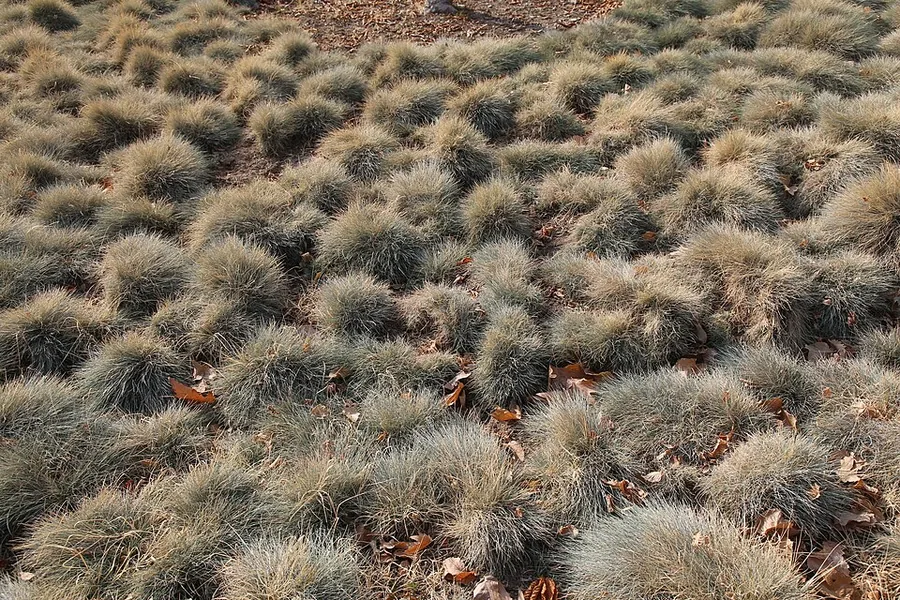
Blue fescue gathers dozens of fine, needle-thin blades into a rounded silver-blue tuft about a foot tall, each blade rolled narrow and tapering to a soft point. The color is a cool, powdery silver-blue carried by a waxy bloom over the surface, and the whole clump curves outward into a tidy, hummock-like dome. It comes from the cooler parts of Europe, and against gravel, dark mulch, or greener plants the silvery cast reads sharp and clear.
The grass keeps that fine, frosted look only in full sun and sharp drainage on lean, even rocky soil, where the blades stay stiff, upright, and brightly blue and the plant takes drought and cold to zone 4. On rich ground or in wet feet the blades slacken and splay, the tuft loses its crisp outline, and the crown can rot through, so lean and dry is what holds the shape.
There is one flaw to expect, tied to its short life: after 2 to 3 years the heart of the clump browns and thins, leaving a hollow center inside a ring of living blue. Splitting it or starting fresh on a regular cycle keeps the dome full. Kept in full sun and renewed on cue, a line of bristling blue mounds holds its fine texture year after year.
Care
The short version: full sun, lean and sharply drained soil, and little water once the roots take hold. The fine blades need almost no feeding, a shear back to stubble in early spring, and division of the clump every 2 to 3 years before the center browns out.
Light
Blue fescue holds its silvery cast only in full sun, which keeps the waxy bloom thick and the blades their brightest blue. In too much shade the blades turn greener and the whole tuft loosens and leans. It survives light shade, but the fine foliage dulls and softens.
Water
The narrow blades draw on a drought-tough root system once established, so the soil should dry out between drinks and water stays sparing. Wet, soggy ground turns the firm blue blades limp, and standing moisture rots the crown at the base of the tuft, so a dry footing keeps the foliage crisp.
Soil
The clump roots best in average to lean, sharply drained soil, even poor, dry, rocky ground that drains fast around the crown. Wet or heavy clay holds water against the base and rots it, so drainage matters more than richness here. The blades hold their color across a pH of 5.5 to 7.5.
Temperature
The fine foliage is genuinely cold-hardy, the blades coming through winters down to about -29°F (-34°C) and standing summer heat up to 86°F (30°C). The harder test is a hot, humid summer rather than temperature alone, which softens the tuft and can brown it from within.
Humidity
Dry air keeps the blades stiff and frosted, in keeping with the plant's dry-soil habit. Hot, muggy summers are when the close-packed blades trap moisture, rot at the crown, and fade, so open airflow and dry roots keep the silver-blue clean.
Feeding
The slender blades need almost no feeding. A single light feeding in spring is plenty, and rich soil pushes soft, floppy blades that splay out and lose the tight dome. Lean ground is where the foliage stays firm and most blue.
Pruning
In early spring, the tuft gets sheared or combed back to about 3 to 4 inches, clearing the old straw-brown blades from the previous year before the new blue blades push up through the stubble. That yearly cut keeps the dome dense and freshly colored.
Repotting
Rather than repotting, the clump is divided every 2 to 3 years to keep the blades thick. When the center browns and goes bare, or the fine tuft thins to scattered blades, it is time to lift and split.
Size & spacing
Each tuft stays small, the blades reaching about 8 to 12 inches (20 to 30 cm) tall and arching out roughly as wide. Set the clumps 10 to 12 inches (25 to 30 cm) apart so each rounded blue dome stands clear of the next.
When to plant
Blue fescue is a cool-season grass that pushes its fresh blades in the milder shoulders of the year. New clumps go out in spring after the last frost or in early fall, and slim flower spikes rise above the foliage from late spring into early summer. Early spring is when the tuft gets sheared and split.
Northern hemisphere
Southern hemisphere
Typical months for a temperate climate: start earlier in warm zones, later where spring frosts linger.
- Sow: Late winter to early spring (species only; named blue cultivars do not come true from seed)
- Plant: Spring after last frost or early fall
- Harvest: Late spring to early summer (June-July)
Hardiness
USDA hardiness zones: 4–8
Temperature: down to -34°C
Troubleshooting
Most of what goes wrong with the blades traces to too much water or too little sun: the first rots the crown, the second drains the blue and slackens the tuft. The browning, hollow center is the other near-certainty as the clump ages. Match the look of the foliage below, and a move, a hard shear, or a division usually restores it.
Limp blades, collapse, and a mushy crown
Wet feet are nearly always behind it. Heavy, rich, or poorly drained soil saturates the base and brings on crown and root rot, turning the stiff blades soft and yellow, and a hot, humid summer drives the same collapse. Move the tuft to lean, sharply drained ground in full sun, ease back the water, and shear the slack foliage so fresh blades return as it cools.
Fix:
- Move or replant in sharply well-drained, lean soil with full sun
- Reduce watering and avoid wet feet
- Cut back declining foliage and allow recovery in cooler weather
Browned, hollow center inside a ring of blue blades
This is the plant's short life written into the tuft, as blue fescue browns and hollows from the middle after 2 to 3 years, leaving live blue blades only around the rim. A crowded clump left long without division empties faster. Lift the whole tuft in early spring, cut away the dead brown center, and replant the firm outer blades.
Fix:
- Dig up the entire clump in early spring
- Discard the dead center and divide the vigorous outer portions into smaller sections
- Replant the divisions in well-drained soil and water in
Silver-blue blades dulling to green
The frosted silver-blue is a sun effect of the waxy bloom, so blades in too much shade green over and the tuft splays loose. Age tells too, with older clumps shifting to a greener summer tone. Move the clump into full sun and divide tired tufts to bring the cool blue back into the blades.
Fix:
- Transplant to a full-sun location
- Divide and replant aging clumps to restore vigor and color
Toxicity
For households with pets or grazing animals, the fine blue blades are not toxic. This is a true grass with no poisonous parts, safe around cats, dogs, horses, rabbits, and grazing stock. A pet that chews a mouthful of the slender leaves may bring them back up as with any grass, and the pollen from its flower spikes can stir hay fever in sensitive people, but nothing in the plant will poison anyone.
Safe for
People · Cats · Dogs · Horses · Rabbits · Livestock · Birds
Cats None
The fine blue blades are safe around a cat and hold nothing harmful. A cat that chews a few of the slender leaves may bring them back up, the way cats do with any grass.
Dogs None
There are no toxins in the foliage, so a dog can nose through the tuft freely. At worst a big mouthful of the blades comes back up a little later.
Horses Safe
The blades are not poisonous to horses. This is a true grass, so grazing on it causes no trouble.
Rabbits Safe
Rabbits browse the soft blades without harm, and rabbits and deer cropping the clumps is one reason gardeners plant it.
Livestock Safe
The foliage is safe for cattle, goats, and sheep. Fescue is a common pasture grass, and this fine ornamental form is no different.
Birds Safe
Nothing in the plant threatens birds, and the slim seed heads draw in finches and other small feeders.
People Safe
The blades are not toxic to people. The only note is the pollen from the flower spikes, which can set off hay fever in anyone already sensitive to it.
Not poisonous, but pets that nibble grass may vomit, and grass pollen can aggravate allergies in sensitive people.
Varieties
Most garden blue fescue is one of a few named selections, set apart mostly by the exact shade of blue in the blades and how well that color holds in heat. These are the ones worth knowing.
Elijah Blue
Elijah Blue is the most widely grown cultivar, named for its soft, silvery powder-blue blades.
Boulder Blue
Boulder Blue carries fine, thread-thin blades in a steely slate-blue and holds that color through heat and drought better than most.
Cool as Ice
Cool as Ice shows an especially icy silver-blue in its blades, the coolest tone among these selections.
Beyond Blue
Beyond Blue is a sport of Elijah Blue whose blades keep their blue longer and resist the heat and humidity that grey out the rest.
How to propagate
Division is the standard way to multiply blue fescue, splitting one fine blue tuft into several, and it also renews a clump whose center has browned. Seed grows the plain species, but it will not reproduce the silver-blue of the named selections.
DivisionEasy
Early spring · 4-8 weeks
Division splits one blue tuft into several, since the named cultivars won't come true from seed and dividing an old clump carries both the silver-blue color and the rounded form into the new plants. Dig and pull the clump apart in early spring, replant the firm outer blades, and they knit in over the next 4 to 8 weeks. The same split clears a tuft that has browned out in the center.
SeedEasy
Late winter to spring · 4-8 weeks
The plain species grows from seed sown late winter into spring, with the first blades rooting in about 4 to 8 weeks. The seedling blades vary widely in color, from green to grey to blue, and the named cultivars won't reproduce their exact blue this way, so seed suits the species rather than a prized silver-blue clone.
Myths
Blue fescue is a plant-once-and-forget grass that lasts for years.
The fine blue tuft is actually short-lived, and its center browns and hollows within 2 to 3 years. Keeping the blades full and silvery means dividing it every few years or replacing it once the clump wears thin.