Ornamental · Poaceae
Bermuda Grass
Cynodon dactylon
Low, fine-bladed, and fast to fill in, bermuda grass weaves a tough, hard-wearing mat that takes heat and foot traffic in stride.
Full sun
Every 3–7 days
60–270 days
USDA 6–10
Overview
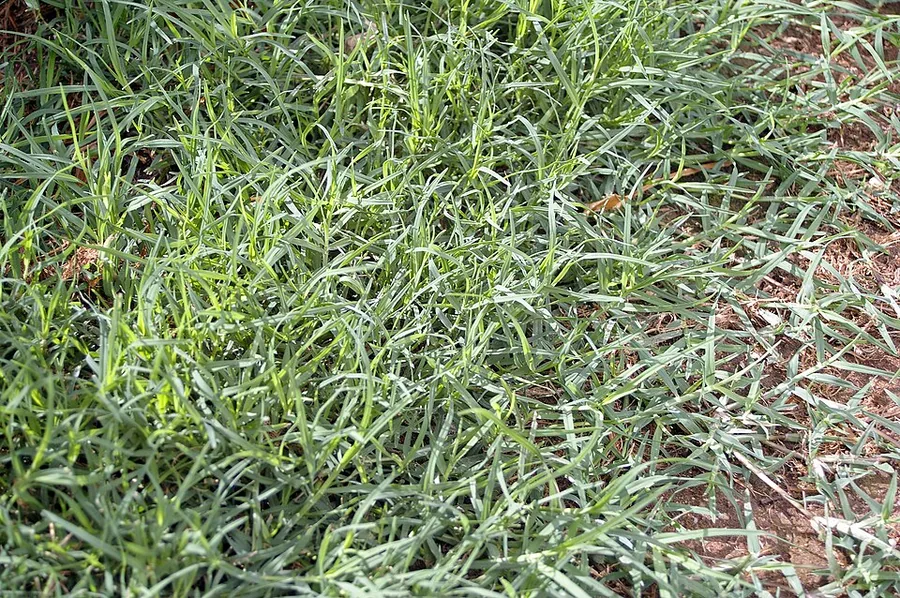
Bermuda grass is a warm-season turf grass whose low blades and creeping stems take heat, drought, and steady wear better than nearly any other lawn. It runs out fast and stays close to the ground, knitting into a dense mat from creeping stems both above and below the soil. Through the warmer zones it is the standard pick for home lawns, sports fields, and golf turf.
That drive to spread is the catch. The plant shoots sideways on stolons and rhizomes, the surface runners visible on the soil and the buried ones unseen, and it slips into flower beds and a neighbor's yard unless something blocks it, which is why some regions tag it as invasive. The blades also demand full sun and grow thin and patchy in shade, making it the wrong choice for ground under heavy tree cover.
Where it suits the spot, bermuda grass asks little. Give it sun, mow the blades low and often, and water deeply now and then, and the mat stays thick through the hardest summer. The blades brown off and go dormant over winter, then push fresh green growth on their own once the warmth comes back.
Care
The short version: full sun, blades mowed low and often, deep but infrequent watering, and a steady feed of nitrogen across the growing season. It revels in heat and traffic but goes thin and quits in the shade.
Light
Bermuda grass demands full sun and shrugs off no real shade. A mat under trees or against a wall, where less than 6 hours of direct light reaches the blades, grows thin and gives out, so keep it to the open, sunlit stretches of the yard.
Water
Once rooted in it is very drought tolerant, so soak it deeply and seldom rather than sprinkling daily. About 1 inch (2.5 cm) a week in active growth keeps the blades green. Let the soil dry between soakings, and don't fret if the blades brown in a dry spell, since they bounce back.
Soil
The roots are not picky, settling into clay, loam, sand, shallow rocky ground, and rich organic dirt alike, so long as it drains well. The pH range runs wide, anywhere from 5.0 to 8.5, which spans most yards.
Temperature
This is a heat lover, at ease across roughly 10°F to 104°F (-12°C to 40°C). The blades flush in summer warmth and fade dormant in the cold, with winterkill a risk below about 10°F (-12°C).
Humidity
Plain outdoor humidity is plenty, so there is no level to fuss over. The blades take humid and dry air alike as long as they get their sun and water.
Feeding
Feed with a nitrogen-based turf fertilizer through the growing season, late spring into summer. Aim for about 3 to 7 lbs of nitrogen per 1000 sq ft a year, spread over several feedings and never more than 1 lb per 1000 sq ft at one go.
Pruning
Mowing stands in for pruning here. Cut the blades low, to about 0.5 to 2 inches (1 to 5 cm), and never shear off more than a third of the blade in one pass. Dethatch when heavy feeding lets the thatch pile up.
Repotting
none
Size & spacing
The mowed mat stays low, only about 0 to 2 inches (1 to 5 cm) tall, but each plant runs 3 to 10 feet (1 to 3 m) across on its creeping stems. Planting from plugs, set them 12 to 24 inches (30 to 60 cm) apart and let the runners stitch the gaps shut.
When to plant
Bermuda grass needs warm soil before its blades will move. Sow seed or lay sprigs, plugs, or sod from spring into early summer once the cold has lifted, and the low mat fills in and keeps its green, growing right through the heat of summer before it browns off for winter.
Northern hemisphere
Southern hemisphere
Typical months for a temperate climate: start earlier in warm zones, later where spring frosts linger.
- Plant: Spring through early summer once soil has warmed; establish common types from seed (1-2 lbs hulled seed per 1000 sq ft) or hybrids from sprigs, sod, or plugs.
- Harvest: Inconspicuous seedheads in summer; grown for turf, not bloom.
Hardiness
USDA hardiness zones: 6–10
Temperature: down to -23°C
Troubleshooting
Most bermuda grass trouble comes down to a handful of things: where the runners reach, where the blades brown, or where the sun never falls. Match what you see below, then act before a small bare patch turns into a season-long fight.
Bleached rings of dead blades in spring
Those crisp pale circles are spring dead spot, a fungus that rots the roots, rhizomes, and stolons under winter cover and only shows its hand when the rest of the lawn greens up around it. Each ring grows a little wider every year, and weeds move into the bare middle if left alone. A fall fungicide program, sharper drainage from dethatching and aeration, and steady potassium with pH held near 5.8 to 6.2 are what rein it back.
Fix:
- Apply fall fungicide programs (around early to late October) alternating active ingredients
- Dethatch or verticut and core aerate to improve drainage
- Limit summer nitrogen to 1 lb per 1000 sq ft per application
- Keep potassium high and pH near 5.8-6.2
Stems that snake sideways into beds and beyond
The grass is built to travel. Slender stolons thread along the soil surface while pale rhizomes burrow down to roughly 18 inches (45 cm), and both keep pushing outward in every direction. Tug at a runner and the buried piece simply snaps off and resprouts. Drop in deep edging to wall off the creeping stems, dig the infested ground out whole, and clip or treat stray shoots before their nodes take hold.
Fix:
- Install deep physical edging or bed borders to block runners
- Completely excavate infested soil, removing all rhizome fragments
- Withhold water to dry stems then repeatedly till to bring rhizomes to the surface to desiccate
- Use repeated applications of a labeled herbicide for established infestations
Blades fading to tan as the cold sets in
Being a warm-season grass, the whole stand slides into a straw-brown dormant state each winter, and an even, all-over browning in fall is the plant resting, not failing. What you do watch for is winterkill from hard freezes, likely below about 10°F (-12°C), which leaves flat dead patches with no green left to return. Carry potassium into fall for cold hardiness, then patch any spots that stay brown with seed, sprigs, or sod.
Fix:
- Wait for spring warm-up and green-up rather than over-treating
- Maintain high potassium levels in fall to improve cold tolerance
- Reseed, sprig, or sod areas killed by severe freezes once soil warms
Thin, threadbare blades wherever shade falls
These blades have very poor shade tolerance and crave full sun, so the mat goes sparse and scraggly anywhere a wall or tree canopy steals 6 or more hours of direct light. Right beside it, the sunlit ground stays thick and full, drawing a sharp line between the two. Open up the canopy to let light through, or hand the shaded ground over to a grass or groundcover that copes with shade.
Fix:
- Prune or thin tree canopy to increase light
- Switch shaded areas to a shade-tolerant grass or groundcover
- Reduce traffic and raise mowing height slightly in marginally shaded spots
Stubby yellow tufts with a witch's-broom shape
Shoots that bunch into stunted, yellowed rosettes are the work of the bermudagrass mite, a speck of a creature about 0.2 mm long that tucks in and feeds under the leaf sheath where you cannot see it. Dry, thirsty turf takes the heaviest hit, so the first move is keeping the grass healthy and well watered. Mow and bag the tufted clippings to haul off the infested tissue, and turn to a labeled miticide only when the damage runs deep.
Fix:
- Mow and bag clippings to remove infested tissue
- Maintain vigorous growth with proper fertility and irrigation
- Apply a labeled miticide if damage is severe
Toxicity
Bermuda grass is a common lawn and pasture grass that is safe for pets and people, and it sits on none of the ASPCA toxic-plant lists. The catches are narrow: its pollen is a major hay-fever trigger, and under drought or fungal stress the blades can turn risky for grazing livestock. None of that touches a maintained home lawn.
Toxic to
Livestock
Safe for
People · Cats · Dogs · Horses · Rabbits · Birds
Livestock Caution
Keep an eye on grazing cattle in drought or stress, when the blades can stockpile nitrates or prussic acid, and a fungus on the seedheads can set off staggers with twitching muscles and a wobbly gait. A maintained lawn holds none of that.
Cats None
Safe. A kept bermuda lawn carries no poisoning risk, and a cat that chews a couple of blades comes to no harm.
Dogs None
Safe. A dog can sprint and roll across the blades freely, and a stray mouthful of grass does nothing.
Horses Safe
A standard pasture and hay grass for horses, with nothing toxic in it under normal grazing.
Rabbits Safe
Rabbits can graze it freely. Healthy, ordinary blades hold nothing harmful.
Birds Safe
No threat to birds, which often peck at the seedheads of a thriving stand.
People Safe
Safe to walk, sit, and play on. The single snag is the pollen, a major hay-fever trigger for anyone who reacts to grass.
Safe for pets and people as a maintained lawn. Note for sensitive people: bermudagrass pollen is a major hay-fever allergen. For grazing livestock there are conditional risks - under drought or stress bermudagrass can accumulate nitrates or prussic acid, and fungal (ergot/Claviceps) infection of seedheads can cause neurological bermudagrass tremors (staggers) in cattle. These are forage/grazing concerns and do not affect the maintained home lawn or household pets.
Helpline numbers

United States
ASPCA Animal Poison Control: (888) 426-4435 (fee applies)

United Kingdom
Animal PoisonLine: 01202 509000 (fee applies)

Australia
Animal Poisons Helpline: 1300 869 738
Varieties
Bermuda grass spans a coarse-bladed seeded species and a string of finer hybrids bred for a denser, smoother mat. These are the ones you will meet most.
Common bermudagrass
The wild seeded species, with a coarser-textured blade than any of the hybrids, and the single type you can sow straight from seed.
'Tifway' (Tifton 419)
A sterile hybrid with fine, densely packed blades, laid down from sprigs or sod, and the usual pick for athletic fields.
'TifGreen' (Tifton 328)
A fine-bladed sterile hybrid set out vegetatively, long favored on golf greens and other top-grade turf.
'TifTuf'
A refined sterile hybrid valued for riding out drought, also put in from sprigs or sod rather than seed.
Improved seeded types (e.g. 'Princess 77', 'Riviera', 'Yukon')
Seeded cultivars with finer, tighter-knit blades bred to match the vegetative hybrids while still sprouting from a packet.
How to propagate
How you start bermuda grass hangs on which type you pick. The seeded kinds drop straight from a packet, while the prized hybrids will only travel from living pieces of the plant.
SeedEasy
Late spring through early summer once soil is warm · Several weeks to a few months for full coverage
Seed only works for the common and improved seeded grasses, never the sterile hybrids. Scatter 1 to 2 lbs of hulled seed per 1000 sq ft from late spring into early summer once the soil has warmed, and the fine blades knit into full cover over several weeks to a few months.
DivisionEasy
Spring through summer · About 3-9 months for full coverage from plugs spaced 12-24 in apart
Hybrids have to come from living pieces, planted as sprigs, sod, or plugs anywhere from spring through summer. Plugs set 12 to 24 inches (30 to 60 cm) apart send out runners that close the gaps in roughly 3 to 9 months, with the stolons and rhizomes carrying the spread on their own.
Myths
Bermuda grass holds up fine as a shade lawn.
It will not. These blades need full sun and tolerate shade very poorly, so the mat goes thin and gives out under trees or against a wall. For shaded ground, plant a shade-tolerant grass instead.