Ornamental · Poaceae
Cereal Rye
Secale cereale
Sow it late, let it green up the off-season, and it builds your soil while smothering winter weeds.
Full sun
USDA 3–8
2–6 ft · 0.5–1.8 m
Overview
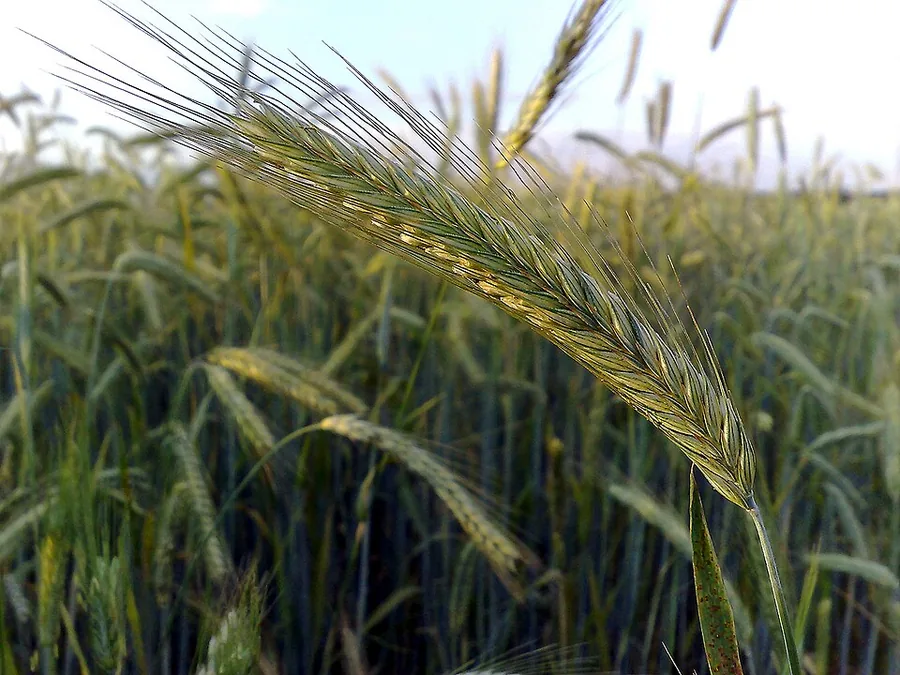
Cereal rye is a tall, slender annual grass in the same family as wheat and barley, all narrow blades and upright stems. Up close it shows why so little defeats it: fine green leaves push up out of cold soil, thin stems firm on poor ground, and the plant overwinters farther north than any other cover crop. Sown across a bare bed in fall, its low mat of blades greens the dead months and holds the ground until spring.
The plant works from root tip to leaf blade. A fine, dense mesh of roots threads the soil and scavenges leftover nitrogen before winter rain carries it off, while the thick tangle of blades above shades weeds into the dark. As those stems and leaves break down in spring they leave crumbly organic matter and a residue that holds back germinating weed seeds, an effect called allelopathy.
The same fast, upright vigor that fills a bed makes timing everything. Cut the green stems on schedule and the soil lies clean under a flat mat of mulch; let them draw up hard and set seed and the plant returns as a weed. Most of the work is reading the plant's stage, not tending it day to day.
Care
The short version: the seed goes in during fall into full sun and almost any soil, rain does the watering, no fertilizer touches it, and the tall stems are cut at flowering before they set seed.
Light
Rye colors up fullest in full sun, throwing the densest stand of blades and the thickest weed-smothering cover. It will tolerate some shade, but an open, sunny bed is where the green growth comes in thick.
Water
Rye lives on natural rainfall and its blades ask for next to no watering once they are up. The plant handles dry spells and drought better than wheat, so a sown bed can be left largely to itself.
Soil
Few cover crops sink roots this readily. Rye grows in loam, sand, heavy clay, even shallow rocky and poorly drained ground, and it outperforms other cover crops on infertile, sandy, or acidic soil. A pH anywhere from 5.0 to 7.0 suits it.
Temperature
Rye is a cold-season grass to the root. Its seed germinates at temperatures as low as 34°F (1°C) and the blades keep lengthening in cool weather up to around 86°F (30°C), which is why it can be sown so late and still green up before winter.
Humidity
Ordinary outdoor humidity is all rye needs, so there is nothing to manage here. Good airflow through the dense blades keeps foliar disease down, though rye rarely shows it in any case.
Feeding
Cereal rye takes no feed at all. Grown as a soil-builder, its fine roots scavenge the nitrogen left in the soil, drawing up nutrients that would otherwise leach away over winter.
Pruning
Rye is not pruned so much as terminated. When the stems flower in spring, they are mowed, rolled or crimped flat, or tilled under to kill the plant before it sets seed, which stops it reseeding and heads off nitrogen tie-up in the following crop.
Repotting
none
Size & spacing
Sown thickly, rye rises as one solid sweep of blades rather than spaced plants. Thin green stems climb from a low fall clump to 1.5 to 6 feet (45 to 180 cm) tall by spring before they are cut down.
When to plant
Rye keeps a fall-to-spring rhythm, the reverse of most garden plants. Sown late, even after the first cold, the seed germinates in chilly soil and the young blades overwinter as a low green clump. When spring warms, thin stems shoot up fast, and that upward surge is the cue to cut the plant before the seed heads swell along the tips.
Northern hemisphere
Southern hemisphere
Typical months for a temperate climate: start earlier in warm zones, later where spring frosts linger.
- Sow: Not started indoors; direct-sown.
- Plant: Late summer through fall (later than most cover crops); to midwinter in zones 8 and warmer.
- Harvest: Bolts and heads in spring; terminated before seed set rather than harvested.
Hardiness
USDA hardiness zones: 3–8
Temperature: down to -40°C
Troubleshooting
Rye is rarely troubled by pests or disease, so most of its problems come from timing rather than care. Cut too late, its soft green stems draw up woody and straw-hard and rob the next planting. Read the signs below and act before the seed heads set along the stem tips.
Rye stiffens into tall, woody, straw-hard stems
Let the crop run past flowering and the once soft green stems draw up hard and fibrous, straw-stiff to the touch, and the plant clings to life against a single kill pass while any seed it drops sprouts back as a weed. Below ground that hardening drives nitrogen tie-up, where the woody residue pulls soil nitrogen into itself as it rots and leaves the next crop short. Cut it at flowering by mowing, rolling, or tilling, hold at least 10 to 14 days before you plant, and give the following crop a little starter nitrogen.
Fix:
- Terminate at the right stage by mowing, rolling/crimping, or tilling at flowering before seed set
- Terminate at least 10-14 days before planting the following crop to allow decomposition
- Add starter nitrogen or apply nitrogen early to the following crop to offset immobilization
Fine seeds sprout thin and sparse over fresh rye
The bare, patchy rows trace to allelopathy, the compounds that seep out as rye residue rots down and hold germination back. The tiniest seeds, the pinhead-small carrot, lettuce, and onion seeds, take the brunt, while chunky seeds and set transplants push straight through. The effect thins out on its own, usually gone within about 30 days. Give it two to three weeks before you press small seeds into that ground, and lean on transplants and large-seeded crops until then.
Fix:
- Wait about 2-3 weeks (allelopathy generally tapers off within roughly 30 days) before sowing small-seeded crops
- Use transplants or large-seeded crops, which are far less susceptible
- Allow rye residue to decompose before direct-seeding small crops
Green rye blades bridge pests to a grass crop
A stand of still-green rye can serve as a green bridge, its living blades a hiding place for insects and pathogens that then crawl onto a following grass crop such as corn or wheat. The trouble runs highest where new seed drops into rye killed only a few days before, its foliage barely browned. Cut the rye well ahead of the next grass crop and let those old blades brown and die back, and nothing green remains for the pests to shelter in.
Fix:
- Terminate rye well ahead of planting the next grass crop to break the green bridge
- Allow time between termination and planting so the host residue declines
Toxicity
Cereal rye is a food grain and forage grass, not a poison, so its green blades are safe around pets, children, and most grazing animals. The single thing to watch is ergot, a fungus that studs the seed heads with dark, hard bodies and makes the grain toxic if eaten in quantity, mainly a concern for livestock and horses on heavily headed rye. Clean green foliage and screened grain carry no such risk.
Safe for
People · Cats · Dogs · Horses · Rabbits · Livestock · Birds
Cats None
Cereal rye is safe around cats. A cat that nips the slim green blades takes no harm, since the leaves hold nothing toxic.
Dogs None
Dogs are safe with it too. The foliage is a food-crop grass, so a dog that crops a mouthful of the leaves faces nothing worse than a mild upset from eating too much grass.
Horses Caution
Clean rye pasture and green forage are fine for horses. The one thing to watch is ergot: seed heads flecked with the fungus carry alkaloids that, eaten in quantity, can cause poor circulation, lameness, and trouble in pregnant mares, so keep horses off heavily headed, ergot-spotted rye.
Rabbits None
Rabbits can graze the tender green blades without harm. The leaves are a safe grass forage carrying no toxic compounds.
Livestock Caution
Cattle, sheep, and goats crop rye as a normal forage. The risk sits in ergot in mature seed heads, where the dark, hard sclerotia hold alkaloids that can cause ergotism, so limit access to ergot-infected grain rather than the leafy growth.
Birds None
Rye grain is a familiar bird food, and the plant is safe for poultry and wild birds alike. Clean seed and green foliage pose no problem.
People Safe
Rye is an everyday food grain, milled into flour for bread and safe to eat. The lone caution is ergot-contaminated grain, screened out of food rye, so any grain showing dark sclerotia should not be eaten.
Like other cereal grasses, rye seed heads can occasionally be infected by ergot (Claviceps purpurea), a fungus whose dark sclerotia produce toxic alkaloids that can cause ergotism in livestock and people if contaminated grain is eaten; this is a grain-consumption concern, not a risk from the cover-crop foliage. Rye pollen can also be a mild seasonal allergen.
Varieties
Most cereal rye is sold simply as cover-crop seed, but a few named cultivars are bred for particular climates and jobs. These are the ones worth knowing.
Aroostook
A very cold-hardy, early-maturing northern cultivar, and one of the most widely used cover-crop ryes across the mid-Atlantic and cooler regions.
Wheeler
A popular mid-Atlantic cover-crop type, a tetraploid bred in Michigan.
Elbon
A southern cultivar suited to Oklahoma and Texas whose roots work as a trap crop against root-knot nematodes, and it heads about two weeks before Abruzzi.
Wrens Abruzzi
Bred in Georgia for the Southeast, where it thrives, though it comes through the cold North poorly.
How to propagate
There is only one way to grow rye, and it is the plain one: the bare seed goes straight onto the soil. The seed is so cold-tolerant that it can be sown long after most plants have finished for the year.
SeedEasy
Direct-sow in late summer to fall, later than most cover crops; germinates and establishes in cold soil. · Germinates quickly in fall and establishes before winter; resumes fast growth in spring.
Rye grows from bare seed pressed straight into the ground, and it is the most cold-hardy cover crop you can plant. Sown in late summer or fall, later than nearly any other cover crop, the seed sprouts fast in cool soil and spreads into a low tuft of green blades before winter closes in. That toughness is why a late sowing still greens up and shoots back into fast growth once spring warms the ground.
Myths
Cereal rye and ryegrass are the same plant.
The two share the word rye and little more. Cereal rye is Secale cereale, the tall, hardy grass that stands as both a cover crop and a bread grain, while ryegrass belongs to the genus Lolium, a shorter grass grown mainly for lawns and forage. They are different grasses, and ryegrass has no place in a vegetable garden.
Sources
- NC State Extension Gardener Plant Toolbox
- USDA SARE - Managing Cover Crops Profitably
- Penn State Extension
- Iowa State University Extension - Integrated Crop Management
- Kansas State University Agronomy eUpdate
- Texas A&M AgriLife Extension - Bexar County
- ASPCA Animal Poison Control - Toxic and Non-Toxic Plants