Ornamental · Poaceae
Kentucky Bluegrass
Poa pratensis
Give it full sun and steady water, and Kentucky bluegrass thickens into a dense, self-healing lawn.
Full sun
Every 3–7 days
14–30 days
USDA 3–7
Overview
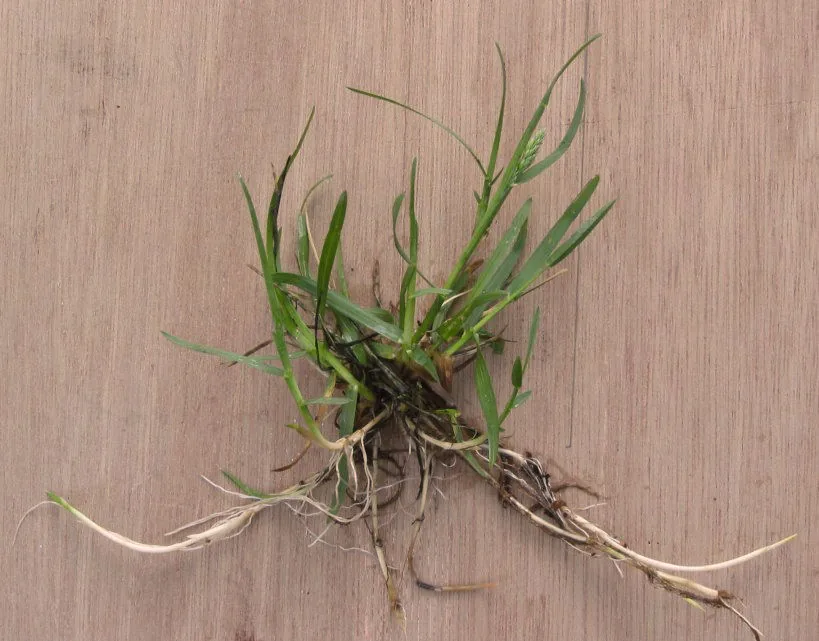
Kentucky bluegrass grows as a fine-bladed turf, its narrow leaves packed close into a dense mat of deep green that carries a soft blue cast in the right light. Each plant runs pale, thread-like rhizomes just under the soil, and those creeping stems send up fresh shoots that close over scuffs and bare spots. Despite the name it came from Europe and northern Asia, brought to North America by early colonists, and it has covered northern ground ever since.
The look owes everything to that self-repairing habit. Where bunch grasses stand in separate tufts, bluegrass creeps sideways and knits its blades into one unbroken sheet, tight enough to spring back under real foot traffic. The catch is time, since it comes up slowly from seed and often takes a full season or two before the blades pack in thick.
It wants sun and cool-weather water to hold its color. In a hot, dry summer the green bleaches to dry straw as the lawn goes dormant, the blades limp and tan while the crowns sit firm and alive at the soil line, then the color floods back with the rain and cooler nights. Left tall and unmown, the stand throws up airy blue-green flower heads in late spring to early summer, the very color that gave the grass its name.
Care
The short version: full sun and a steady 1 to 1.5 inches of water a week, mowed to about 2.5 to 3.5 inches, on fertile well-drained soil, with a feed in spring and fall.
Light
The narrow blades hold their dense, blue-green color only in full sun, reaching to part shade at most. In real shade the stand thins to spindly leaves, weakens, and picks up powdery mildew, so shaded ground is better left to a fine fescue.
Water
Give it about 1 to 1.5 inches (2.5 to 4 cm) of water a week during active growth, in a deep soak rather than light daily sips. Through a hot, dry spell the blades bleach and go dormant, but the crowns stay firm and the green returns once cool, moist weather comes back.
Soil
It roots best in fertile, well-drained loam at a pH of 6.0 to 7.0. Heavy, soggy ground stays wet around the crowns and harbors disease, so drainage counts for more than rich feeding.
Temperature
This cool-season grass keeps its color across about -29°F to 75°F (-34°C to 24°C). The blades come through hard northern winters and green up early, then lose their vigor once high-summer heat sets in.
Humidity
Ordinary outdoor air is enough, so there is no level to chase. Air movement matters more, since still, muggy air over the blades lets dollar spot and mildew settle on the leaves.
Feeding
A nitrogen-rich lawn fertilizer in spring and again in fall deepens the green while the grass is growing hard. Heavy nitrogen in summer only stresses the dormant, straw-tan blades and feeds disease.
Pruning
Cut the blades to about 2.5 to 3.5 inches (6 to 9 cm), raising the mower to 3.5 inches or higher in summer heat. The creeping rhizomes lay down a brown felt of thatch over time, so periodic dethatching keeps the mat thin.
Repotting
none
Size & spacing
Mowed, the blades stand only about 2 to 4 inches (6 to 9 cm) tall, while each plant creeps 6 to 18 inches (15 to 46 cm) wide on its rhizomes. That sideways reach is what draws the separate shoots into one continuous, dense sheet of turf that fills its own bare spots.
When to plant
Kentucky bluegrass roots in most readily once the heat breaks. Scatter seed or lay sod in late summer to early fall, when temperatures ease and rain returns, so the young blades settle in before winter. Spring is the second window. Left unmown, a tall stand lifts airy blue-green flower heads in late spring to early summer.
Northern hemisphere
Southern hemisphere
Typical months for a temperate climate: start earlier in warm zones, later where spring frosts linger.
- Plant: Seed (10 to 14 lb per acre, no deeper than 1/4 in) or lay sod in late summer to early fall when temperatures moderate and rains return; spring seeding is the second-best option.
- Harvest: Grown as mowed turf and normally kept from flowering; if left unmowed it produces blue-green flower heads in late spring to early summer. Establishes as a dense sod over one to two seasons via rhizomes.
Hardiness
USDA hardiness zones: 3–7
Temperature: down to -40°C
Troubleshooting
Most bluegrass trouble reads on the blade itself, in a color that bleaches, a leaf that spots, or a patch that opens to bare soil, and the weather or the mowing and feeding is usually behind it. The trick is reading a straw-tan summer dormancy apart from the lesions of disease or the chewed roots under grub damage. Match what you see below and act while the stand can still knit itself closed.
Dark purple-brown lesions eating down the blade
Dark purplish-brown spots with pale tan centers speckling the blades are the first face of leaf spot and melting-out, a pair of fungi that wake in cool, wet spring weather and bite hardest at short-cut, heavily fed turf. As the disease turns, the rot slides down from the leaves into the crowns and roots, browning and softening them until the stand pulls apart into thin, bare ground. Cutting higher, holding back the spring nitrogen, and drying the leaf surface with better drainage and airflow blunt its progress.
Fix:
- Raise the mowing height to reduce stress on the crowns.
- Avoid heavy quick-release nitrogen in spring.
- Improve drainage and air movement and apply a labeled fungicide if needed.
Loose brown patches that peel up over chewed roots
Brown, ragged patches that lift and roll back like a strip of carpet expose bare soil where the roots have been chewed clean away. The feeders below are usually white grubs, fat, C-shaped white larvae of Japanese beetles, chafers, and June beetles curled in the soil, with billbug larvae boring narrow tunnels through the stems and crowns. Torn, flipped turf where skunks, birds, or raccoons have dug is a clear sign they are after those grubs. A dig through the root zone counts them, and a labeled grub insecticide watered in on time, over a well-watered lawn, lets the blades knit back over the bare ground.
Fix:
- Confirm grub numbers by inspecting the root zone and treat when populations are high.
- Apply a labeled grub-control insecticide at the proper timing and water it in.
- Keep turf well watered to help it outgrow minor damage.
Green blades fade to dry straw in the summer heat
When the blades bleach from deep green to dry, straw-colored tan and stop lengthening, you are seeing summer dormancy rather than a dead lawn. Under heat and drought the grass draws back into itself, and the crowns stay firm and alive down at the soil line. Lay on 1 to 1.5 inches (2.5 to 4 cm) of water a week to keep the color, or let the blades go tan and water lightly every 2 to 3 weeks so the crowns stay plump until cool, wet weather flushes the green back.
Fix:
- Apply about 1 to 1.5 in of water per week to keep the lawn from going dormant, or let it go dormant and water lightly every 2 to 3 weeks to keep crowns alive.
- Avoid heavy traffic on dormant turf.
- Resume normal care when temperatures cool in fall.
Sparse, spindly blades where the shade lies deep
In shade the blades come up thin and spindly and the stand opens into gappy, see-through patches, because this grass wants full sun to stay thick. The gaps deepen under the reach of tree branches and along the shaded north wall of a building, while the sunlit stand stays close-knit and full. A chalky white bloom of powdery mildew may dust the surface of the leaves in those dim, still pockets. Thinning the branches overhead to spill more light down, or seeding in fine-bladed fescue, fills the thin ground back in.
Fix:
- Prune or thin overhead trees to let in more light.
- Overseed shaded spots with more shade-tolerant grasses such as fine fescues.
- Raise mowing height and reduce nitrogen and irrigation in shade.
Bleached tan coins scattered across the green
Round, straw-colored patches the size of a coin scattered across the green mark dollar spot, a fungus that stirs in warm, humid air when the grass runs low on nitrogen. On the individual blade you will find pale, bleached-tan lesions rimmed with a thin reddish-brown line, and on dew-wet mornings a fine white cobwebby thread strung across the leaf. Steady, moderate feeding, watering while the sky is still dark so the blades dry by midday, and a labeled fungicide for spreading damage clear the marks.
Fix:
- Maintain moderate to adequate nitrogen fertility to promote recovery.
- Water deeply in the early morning so foliage dries quickly; remove dew by mowing early.
- Apply a labeled fungicide (alternating modes of action) if damage is severe.
A brown felt of dead stems packed under the blades
Pull the green blades apart and you will find thatch, a dense brown felt of dead stems and old rhizomes packed in a layer between the living leaves and the soil, laid down by this grass as its rhizomes spread. Once that brown mat thickens past about 1/2 inches (5 cm), it gives underfoot like a sponge and stays damp enough to hold disease and drought stress. Tearing it open with a core aerator or power rake in early fall, then easing off the water and nitrogen, thins the felt back out.
Fix:
- Core aerate and/or dethatch (power rake) in early fall.
- Avoid excessive nitrogen and overwatering that speed thatch buildup.
Toxicity
For homes with animals the answer is easy: Kentucky bluegrass is not poisonous. Its soft green blades are a non-toxic lawn and forage grass, safe for cats, dogs, and grazing livestock alike, and the plant does not appear on the ASPCA's toxic-plant lists. The one catch is the fine pollen shed by an unmown, flowering stand, which can set off hay fever in people and pets prone to it.
Safe for
People · Cats · Dogs · Horses · Rabbits · Livestock · Birds
Cats Safe
Nothing in the green blades is poisonous to a cat. One that swallows a fibrous mouthful may cough it back up, but that is a full stomach reacting to the stringy blades, not a toxin.
Dogs Safe
A dog can crush the soft blades in its mouth and roll across them with no harm. The only thing to watch is the fine grass pollen, which can leave a sensitive dog itchy and watery-eyed with hay fever.
Horses Safe
Horses crop the tender green blades of this prized pasture grass freely, with no ill effect at all.
Rabbits Safe
Rabbits can nibble the fresh, soft blades safely. Bring any new forage in slowly, since a sudden change unsettles a rabbit's gut no matter how harmless the plant.
Livestock Safe
Cattle, goats, and sheep graze the leafy blades and do well on them, since it ranks among the most palatable forage grasses.
Birds Safe
Songbirds and poultry pick at the small seed and the tender young shoots without any harm.
People Safe
The soft blades are harmless to run a hand through or walk on. Around a flowering, unmown lawn the fine airborne pollen can make a hay-fever-prone person sneeze, but that is an allergy rather than poisoning.
The grass itself is not poisonous. Grass pollen can trigger hay-fever allergies in sensitive people, and dogs or cats that nibble large amounts of grass may occasionally vomit, but this is not a sign of poisoning.
Varieties
Most lawns are planted to improved turf-type cultivars rather than wild bluegrass, and they differ in the color and density of their blades. These are the names worth knowing for seed or sod.
'Midnight'
A popular improved turf type carrying a very dark, almost inky blue-green color across a low, dense, compact stand of blades that takes a close mow well.
Kentucky bluegrass blends
Mixes of several improved cultivars, often laced with fast, fine-bladed perennial ryegrass, that spread the disease resistance wider and thicken an otherwise slow-establishing lawn faster.
Hybrid (Texas × Kentucky) bluegrasses
Crosses with Texas bluegrass that hold their green-blue color and keep pushing fresh blades through summer heat and drought far better than pure Kentucky bluegrass.
How to propagate
A bluegrass stand begins one of two ways: from fine seed, cheap but slow to show, or from cut sod and plugs of finished turf that fill in fast and then creep outward on their own.
SeedModerate
Late summer to early fall (or spring) · Germinates in about 14 to 30 days and forms a full sod over one to two seasons
Scatter the fine seed in late summer or early fall, or in spring as a second choice, at about 10 to 14 pounds per acre and barely covered, no deeper than 1/4 inch. The first thin green shoots break the soil slowly, over 14 to 30 days, and take one to two full seasons to weave into a tight, dense sod, so many growers blend in faster, coarser perennial ryegrass to green the ground while the bluegrass fills in beneath it.
DivisionEasy
Spring or early fall · A few weeks once roots and rhizomes re-knit
Set sod pieces or plugs of the dense turf in spring or early fall and the roots knit into the soil within a few weeks. From there the grass creeps outward on pale, thread-like underground rhizomes that push into open ground and give the lawn its strong self-repairing habit.
Myths
Kentucky bluegrass is blue and comes from Kentucky.
The narrow blades run green to blue-green and never a true blue, and the name catches instead on the blue-green flower heads a tall, unmown stand lifts in early summer. The grass is no American native either. It crossed from Europe, northern Asia, and the mountains of North Africa with European colonists, so it is neither blue nor rooted in Kentucky.