Houseplant · Piperaceae
Baby Rubber Plant
Peperomia obtusifolia
Under bright indirect light, with the mix drying well down between drinks, those thick glossy leaves keep the plant running nearly on their own.
Bright indirect
USDA 10–12
6–24 in · 15–61 cm
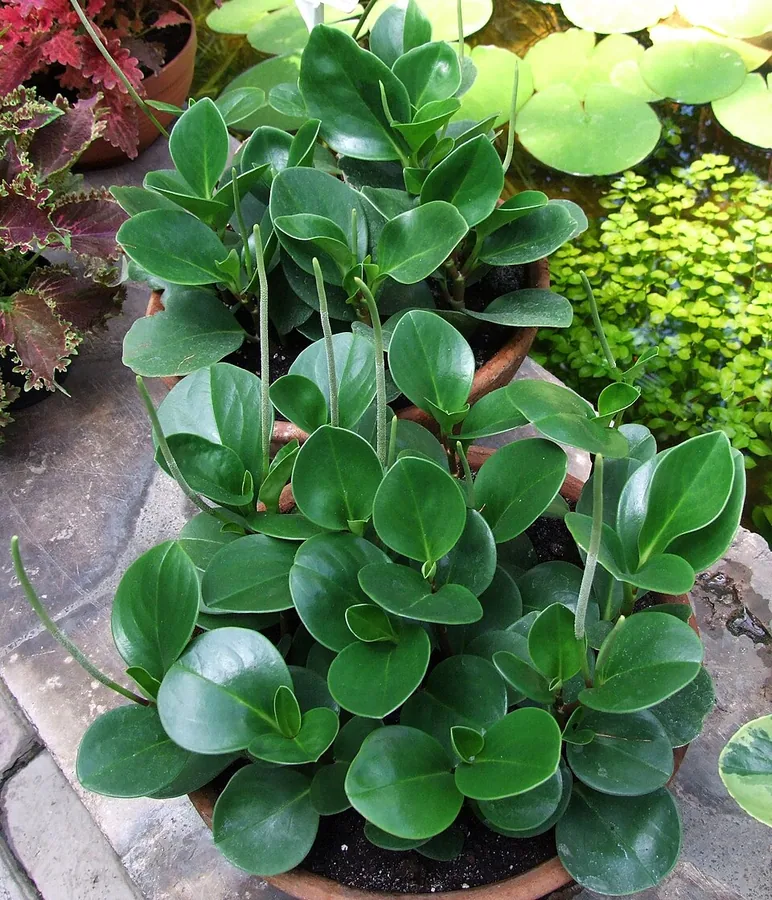
Overview
Up close, the baby rubber plant is all about its leaves: thick, rounded, and blunt at the tip, each one so glossy it looks polished. They sit on short, upright stems and feel firm and plump between the fingers, swollen with the water they store. A member of the pepper family, it grows wild from Florida through tropical America, low across the forest floor, and holds a compact 6 to 24 inches (15 to 61 cm) indoors.
Those fleshy, water-packed leaves are the heart of the plant. They store water like a succulent, which is why the foliage stays firm and stiff to the touch through a missed watering, and why the same leaves soften and yellow when the roots sit wet too long. The overall form is a low, rounded mound of overlapping green.
The variegated forms rework that plain green surface with cream, white, and gold, painted along the margins or marbled through the blade, and the color reads sharpest under brighter light. The plain green types keep the deepest, most uniform tone and hold it even where a variegated leaf would pale and lose its pattern.
Care
The short version: set those plump, water-storing leaves in bright indirect light, watering only after the mix has dried nearly all the way through. Pot in a gritty, fast-draining blend, feed lightly over the spring and summer months, and hold the plant above 50°F (10°C).
Light
Give it bright, indirect light for the fullest growth and the deepest leaf color. It tolerates low light, especially the plain green types, but a variegated leaf pales and its stems stretch thin in a dim spot. Keep it out of direct sun, which bleaches and scorches the glossy surface.
Water
Watering is what makes or breaks this plant. Let the mix dry almost completely before you water again, since the thick, water-filled leaves carry their own reserve and the roots rot fast in wet soil. Ease off further from fall through late winter, when growth slows.
Soil
Plant it in a well-drained houseplant or cactus mix, or a peaty blend that drains freely. It takes any pH from 6.0 to 8.0, but the soil must never stay soggy around those rot-prone roots. A pot with drainage holes matters as much as the mix itself.
Temperature
Treat it as the tropical plant it is and keep it above 50°F (10°C). Ordinary room warmth suits it year-round, but cold drafts and chilly winter windowsills will set the leaves back.
Humidity
Average indoor humidity is plenty, so there is no figure to chase. The thick leaves handle dry rooms better than most tropicals, though a little more moisture in the air helps keep spider mites off the foliage.
Feeding
Feed only through the spring and summer growth, when the plant is pushing new leaves. A diluted liquid houseplant fertilizer once a month works, or a slow-release granular feed once a year. Skip feeding through fall and winter.
Pruning
Pull off old or damaged leaves as they turn dull or soft. To build a fuller, bushier mound, cut a stem just above a leaf node, which pushes fresh side shoots from that point.
Repotting
This plant holds firm in the same pot for several years. Repot only when roots crowd or circle the pot, the soil dries out unusually fast, or new leaves stall.
Size & spacing
Expect a compact plant of 6 to 24 inches (15 to 61 cm) tall and about as wide, its rounded leaves overlapping into a low, dense mound. That small habit sits on a desk, a shelf, or a windowsill without crowding its neighbors.
Troubleshooting
Nearly every problem with this plant traces back to water, and most of those to too much of it. The thick leaves and firm stems show trouble in their color and texture before the roots rot. Match what you see below, then adjust before a small change spreads.
Limp leaves atop stems gone soft and pulpy at the base
When the once-firm stems turn soft and darken at the soil line and the whole plant sags, root and stem rot has taken hold, brought on by soil that stayed wet too long. The plump, water-filled leaves weigh the crown down, so it buckles quickly once the roots go slack. Slide the plant from its pot, cut back every soft brown root and stem to firm tissue, and press it into fresh, fast-draining mix. If the crown has gone to mush, a few crisp, healthy cuttings carry the plant forward.
Fix:
- Remove the plant from wet soil and cut away all soft, brown, rotted roots and stem tissue
- Repot into fresh, well-drained potting or cactus mix in a pot with drainage holes
- Withhold water until the mix is nearly dry, then water sparingly
- If the crown is lost, root healthy stem or leaf cuttings to save the plant
Leaves yellowing and dropping off
When the glossy green fades to a dull yellow and the leaves let go, the plant is signaling too much water. Each thick leaf already holds a reserve inside its swollen tissue, so the mix should turn nearly dry before the next drink. Halt the watering, tip out the saucer, and let the soil dry back. Plumped-up leaves ride out a dry spell far better than a waterlogged one.
Fix:
- Stop watering and allow the soil to dry out almost completely
- Improve drainage and empty any standing water from the saucer
- Resume a let-dry-completely watering routine
Gauzy strands, snowy cottony tufts, or a glistening sticky layer on the leaves
Look closely and the culprits sort themselves out. Spider mites drape fine silk webbing over the leaves and fleck the surface with pale, pinprick stippling, mealybugs gather as soft cottony white tufts tucked into the leaf joints, and whiteflies lift off in a pale flurry when the foliage is touched. Set the plant apart from the rest, touch each cottony mealybug with an alcohol-soaked swab, then rinse the leaves and treat them with insecticidal soap or horticultural oil until the pests are gone.
Fix:
- Isolate the plant to prevent spread
- Wipe off mealybugs with a cotton swab dipped in alcohol
- Rinse foliage and treat with insecticidal soap or horticultural oil, repeating as directed
- Raising humidity discourages spider mites
Hard, scabby blisters erupting across the lower leaf surfaces
Rough, corky bumps studding the underside of a leaf, like tiny scabs or warts raised above the smooth surface, are oedema, not a disease that jumps between plants. They swell up when the roots draw water faster than the leaves can breathe it out, usually after wet soil meets dim light or heavy air. Trim the watering, brighten the light, and stir some air past the plant so the next leaves unfurl smooth and clear. The pocked spots already there stay put, so pull a badly marked leaf only for its looks.
Fix:
- Reduce watering and let the mix dry between waterings
- Increase light levels and air circulation
- Lower ambient humidity around the plant
- Remove badly affected leaves for appearance (damage is permanent on existing leaves)
Gangly stems and leaf patterns bleaching back to plain green
Starved of light, the plant draws its stems out long and thin, and the tidy mound loosens into gaps. The variegated cultivars lose their crisp contrast, the cream and gold washing out as the leaves flood back to plain green. Set the plant in brighter light out of direct midday sun, turn it now and then so it thickens evenly, and pinch the drawn stems above a node to coax fresh, compact side shoots.
Fix:
- Move to a brighter spot with bright indirect light (out of direct midday sun)
- Rotate the plant periodically for even growth
- Pinch or prune leggy stems above a node to encourage branching
Papery bleached scorch spots on the leaves catching direct sun
Pale, papery patches burned into the leaves that face the glass are the mark of direct sun, more than this soft, glossy foliage can bear. Fierce afternoon light is the usual cause, bleaching the green to a dry, brittle tan. Draw the plant back into bright but indirect light, and clip away the worst-scorched leaves, since the burned tissue never greens over again.
Fix:
- Move the plant out of direct sun to a bright indirect location
- Remove severely scorched leaves
Toxicity
Reassuring for a full household: the baby rubber plant is non-toxic and pet-safe. The ASPCA and university extensions list it as harmless to cats, dogs, and horses, so a stray nibble of the thick leaves by a pet or a curious child is nothing to worry about.
Safe for
People · Cats · Dogs · Horses · Rabbits · Livestock · Birds
Cats None
The ASPCA lists this plant as non-toxic to cats, so a curious nibble at those thick leaves brings no poisoning. A cat that gorges on any houseplant may bring a little back up, but the fleshy tissue itself carries nothing harmful.
Dogs None
Dogs are safe too, with the ASPCA confirming no toxic effects. A big mouthful of the succulent leaves might pass through as a soft stool, but there is no poison at work in them.
Horses None
NC State lists it as non-toxic to horses, so a stray taste of the glossy foliage does no harm. As a small indoor plant it seldom crosses a horse's path in the first place.
Rabbits None
No toxins hide in the fleshy leaves, so they pose no worry for rabbits. Greens grown for them still make the better everyday food, but a nibble here does no damage.
Livestock None
The plant is free of the compounds that trouble grazing animals. As a small indoor grower rather than pasture fare, it seldom meets livestock in the first place.
Birds None
Nothing in the thick leaves poisons birds, so a stray peck from a household parrot is fine. That succulent foliage simply is not part of a balanced bird diet.
People None
The leaves hold no toxic compounds, so they are safe around children even if one gets chewed. The plant is not grown to be eaten, so there is no need to serve it and no need to panic over a small taste.
No special handling required for pet households; documented non-toxic
Varieties
Most of the named forms come down to the look of the leaves, ranging from solid, glossy green to bold cream and gold variegation. These are the cultivars you will run across most.
'Variegata'
Grey-green leaves are splashed with darker green at their centers and framed by a broad, creamy-white margin that stays brightest under stronger indirect light.
'Alba'
The freshest leaves open almost pure white to yellow, blushed with bright red at the start, then deepen into greener tones as they age.
'Albomarginata'
A thin, silvery rim traces the edge of each grey-green leaf, and the 'Albomarginata Minima' form miniaturizes the whole plant into a dwarf.
'Minima'
Small, rounded leaves just one to two inches long crowd close together on this compact grower, keeping the whole plant petite.
'Gold Tip'
Marbled streaks of variegation swirl across each leaf, and every one is capped with a warm gold tip.
'USA'
The leaves fracture into patches of several shades at once, giving the foliage a busy, mottled surface.
'Obtipan Green'
Solid emerald-green leaves with no trace of variegation clump low and short on this stocky grower.
How to propagate
Few plants multiply as willingly as this one. A single fleshy leaf, a firm stem tip, or a divided clump all take root with almost no effort, so one healthy plant quickly becomes several.
Leaf cuttingsEasy
Spring to summer · Several weeks to root
Pluck a single thick leaf with about an inch of petiole in spring or summer and press it into moist mix, where slender roots creep out over several weeks and build a new plant. It is one of the simplest ways to grow more.
Stem cuttingsEasy
Spring to summer · Several weeks to root
Snip a firm tip or stem cutting during the spring and summer growth and stand it in water or moist mix. Pale roots push from the cut over a few weeks, and the new shoot grows on identical to the parent.
DivisionEasy
Spring at repotting · Several weeks
At spring repotting, tease a crowded clump apart into smaller sections, each keeping a tangle of its own roots. They knit in over several weeks and stand as full-sized plants from the start.
Myths
Those thick, shiny leaves prove the plant is a scaled-down rubber tree.
The name is the only thread between them. Peperomia obtusifolia belongs to the pepper family, Piperaceae, while the true rubber plant, Ficus elastica, sits in the fig family. The shared name comes from nothing more than those thick, glossy, rubbery-looking leaves, not from any real kinship.
Those thick leaves make it hardy enough for an outdoor bed in a temperate garden.
This is a tropical species, hardy only in USDA zones 10 to 12 and quick to bruise in the cold. Keep it above about 50°F (10°C), which is why it lives as a houseplant nearly everywhere and only summers outdoors where the nights stay warm.
Sources
- ASPCA Animal Poison Control
- NC State Extension Gardener Plant Toolbox
- Missouri Botanical Garden Plant Finder
- Clemson Cooperative Extension HGIC
- University of Missouri Integrated Pest Management
- UF/IFAS Extension (EDIS FPS466/FP466)
- UMass Amherst Center for Agriculture, Food, and the Environment (Greenhouse & Floriculture)
- Plants of the World Online, Royal Botanic Gardens Kew