Vegetable · Fabaceae
Pea
Pisum sativum
Sow them while the soil is still cold, give them something to climb and steady moisture, and the pods come sweet and early.
Full sun
Every 3–7 days
45–75°F · 7–24°C
55–70 days
Overview
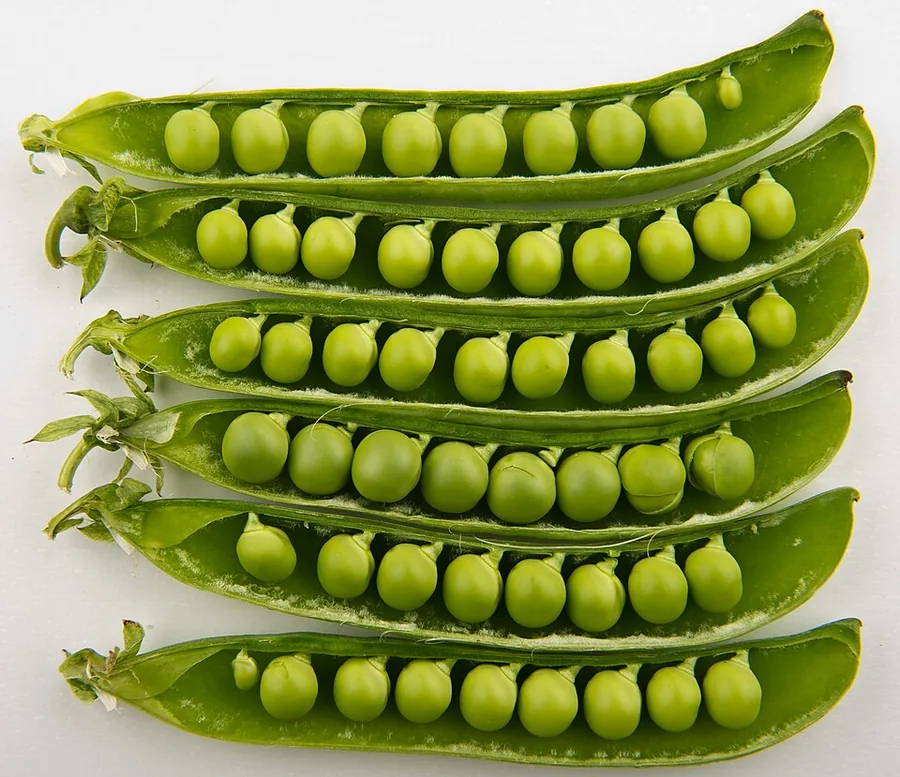
Peas are a cool-season legume and one of the first crops to break ground each spring. Part of the bean family, they throw up slender climbing vines that reach out with thin, coiling tendrils to grip a trellis, and hang it with plump, bright green pods. The garden pea, Pisum sativum, is the familiar shelling pea, its pods split to spill the row of round, sweet green seeds inside.
What marks the plant is how little it takes to keep the vines full. As a legume, it draws its own nitrogen from the air through bacteria set in its roots, so it feeds itself and leaves the soil richer behind it. The seed goes straight into the ground, the reaching vines catch hold of their support, and the soil stays evenly moist while the flowers open and the pods swell.
Timing shapes everything the plant does. The vines run green and lush in the cool weather of early spring and wilt off once summer heat sets in, so the aim is to sow early and pick before the warmth arrives. Catch that window and the pods hang sweet and tender; miss it, and the vines stall and the round peas inside turn hard and starchy.
Care
The short version: peas want full sun and cool weather, the seed pressed straight into rich, well-drained soil as early as the ground can be worked. The moisture stays even while the pods swell, the tendrilled vines get a trellis, and nitrogen feed is left off.
Light
Peas hang the heaviest pods in full sun, though the vines will get by under a little afternoon shade, which in warmer spots keeps the green foliage cool a while longer. The more sun that reaches the leaves, the fuller the pod set.
Water
Peas take about 1 inch of water a week, kept even, above all while the blossoms open and the pods swell and fill. The soil should not lurch from dust-dry to sodden. Waterlogged ground rots the roots brown from below.
Soil
Peas root into well-drained loam worked dark with compost or other organic matter. They take a wide pH of 6.0 to 7.5, but drainage counts for most, since roots left standing in wet soil soften and rot fast.
Temperature
Peas keep their green vigor in cool weather, holding best between 45°F and 75°F (7°C to 24°C). A light frost silvers them without harm, yet once the heat climbs past their range, the blossoms drop and no new pods form.
Humidity
Ordinary outdoor humidity suits peas, so no set level applies. Moving air matters more, since still, crowded, damp foliage is where the chalky bloom of powdery mildew settles.
Feeding
Peas feed themselves. As a legume, the plant fixes its own nitrogen through Rhizobium bacteria set in its roots, so feeding stays light or is skipped. In poor soil, a light dose of low-nitrogen phosphorus and potassium at planting is enough, while heavy nitrogen only swells the leaves in place of pods.
Pruning
Peas need no real pruning. The soft growing tip is pinched when a vine climbs past its support, and any leaf clouded with mildew or disease is picked off early to slow the spread across the foliage.
Size & spacing
The vines climb 2 to 6 feet (60 to 180 cm) tall depending on the type, while each stays slim at just 6 to 12 inches (15 to 30 cm) across. A trellis draws the taller, tendrilled climbers straight up rather than letting them sprawl in a tangle.
When to plant
Peas are a cool-weather crop, their green vines quick to flag in summer heat. The seed goes straight into the garden in very early spring, as soon as the soil can be worked, and the pods hang ready within a couple of months, before the warmth withers the plants.
Northern hemisphere
Southern hemisphere
Typical months for a temperate climate: start earlier in warm zones, later where spring frosts linger.
- Plant: Direct sow in very early spring as soon as soil can be worked, when soil temperature reaches about 45°F; peas tolerate light frost.
- Harvest: Harvest shelling peas about 3 weeks after flowering when pods are well filled, plump, and bright green but before they become tough and starchy.
Hardiness
USDA hardiness zones: 2–11
Temperature: down to -46°C
Troubleshooting
Most of what troubles peas shows on the leaves or among the flowers, and much of it traces back to weather and watering. The early marks on the foliage and blossoms are usually reversible if they are caught in time. Match what shows on the plant below, then act while it still counts.
Young stems slumping over water-soaked roots
Seedlings that never break the soil, or slump over with brown, water-soaked stems above soft, discolored roots, have been taken by root rot from soil fungi such as Fusarium, Pythium, and Aphanomyces. It runs deepest in cold, sodden ground, and once the roots turn brown and mushy the plant is beyond saving, so the limp seedlings are lifted and thrown out. Drier, better-drained soil, a wait for warmth, crop rotation, and treated seed keep the roots firm and pale next time around.
Fix:
- Remove and discard affected plants
- Improve drainage and avoid overwatering
- Replant in well-drained soil once conditions warm
A chalky white film dulling the green leaves
The powdery gray-white film blurring the green surface of the leaves and stems is powdery mildew, a fungus that spreads late in the season when days stay warm and nights turn cool. Pulling off the worst-coated leaves and opening the planting so air moves through slows its creep across the foliage, and a labeled fungicide comes in only if the coating keeps advancing. Sowing early, so the pods are filled and picked before the fungus builds, is the surest way to keep the leaves clean and green.
Fix:
- Remove and destroy heavily infected foliage
- Improve air circulation by proper spacing and trellising
- Apply a labeled fungicide if infection is severe
Soft green specks massed along curling leaves
The tiny soft-bodied specks packed onto the growing tips and the undersides of the leaves, green against green, are pea aphids, and the glossy sticky honeydew they leave behind soon calls in ants and a smudge of black sooty mold. A hard jet of water knocks the clusters loose, insecticidal soap or horticultural oil clears the ones that cling on, and the spotted lady beetles and lacy-winged lacewings that arrive graze them down. Going light on nitrogen matters too, since the soft, pale flush of new growth it forces is exactly the tender tissue the aphids crowd onto.
Fix:
- Dislodge aphids with a strong spray of water
- Use insecticidal soap or horticultural oil
- Encourage natural predators such as lady beetles and lacewings
Open blossoms that fade without swelling pods
When the small pea-shaped blossoms open but drop away without swelling into pods, the cause is usually heat stress, a warm spell carrying the plant past the cool weather it grows in. A heavy hand with nitrogen brings the same result, a bushy tangle of green leaves with almost no pods hanging beneath them. Keeping the soil evenly moist, casting afternoon shade over the vines through a hot stretch, and timing later sowings so the flowers open in cool weather bring the pods back.
Fix:
- Maintain even soil moisture during flowering
- Provide afternoon shade during heat waves where practical
- Time plantings so flowering avoids hot weather
Toxicity
A reassuring note on this plant: the garden pea is completely safe. Its round seeds, green pods, and tender curling shoots are all edible, and no part of it is toxic to people or pets. The one to keep apart is the ornamental sweet pea (Lathyrus), a different plant whose seeds are not safe to eat.
Safe for
People · Cats · Dogs · Horses · Rabbits · Livestock · Birds
Cats None
Garden peas are absent from the ASPCA toxic list, so a cat mouthing a green vine or a smooth pod comes to no harm. A few soft cooked peas are a harmless treat.
Dogs None
Peas are safe for dogs, and the plain round shelled seeds already appear in many dog foods. No part of the leafy plant carries a poisoning risk.
Horses Safe
Horses can crop the green pea foliage without harm. As with any lush green feed, it is folded into the diet by degrees rather than all at once.
Rabbits Safe
Rabbits take readily to the tender leaves, twining vines, and green pods, every part of it safe to offer. The plant holds no toxins that would trouble them.
Livestock Safe
Grown as a forage and fodder crop, the whole leafy plant feeds cattle, goats, and sheep without risk.
Birds Safe
Chickens and other birds peck at the round green seeds with no danger. Each pea makes a wholesome, protein-rich mouthful.
People Safe
Garden peas are a familiar vegetable, the round seeds shelled from the pod, the whole green pods, or the tender curling shoots. Every part of the plant is safe in the kitchen.
Pea seeds, pods, and shoots are commonly eaten; no special handling precautions are required for the edible garden pea.
Varieties
Most home gardeners grow a small handful of reliable shelling peas. These are the ones worth knowing by name.
Little Marvel
A compact, early dwarf shelling pea whose short vines stop at about 18 inches, which suits small gardens and short seasons.
Green Arrow
A heavy cropper hung with long, slender, tightly filled pods, each holding 8 to 11 round peas, and shrugging off many common diseases.
Wando
A shelling pea bred for extra heat tolerance, which allows the smooth seed to go in a little later in spring than most others.
Alaska
A very early type with round, smooth seeds that sprout well in cold soil, earning a place in the earliest plantings.
Companions
Peas grow happily beside quick crops and other vegetables that share the bed well, and they leave the soil richer for the nitrogen they fix. Keep them clear of onions and garlic, which are reported to stunt them.
Plant near
Carrots: Commonly grown with peas as compatible bed companions that use space efficiently.
Radishes: Quick-maturing companion harvested before peas need the space.
Cucumbers: Listed as a compatible companion that benefits from the nitrogen peas contribute to the soil.
Beans: Another legume considered a compatible companion in the vegetable bed.
How to propagate
Peas are among the simplest crops to start. The round seed goes straight into the ground where the vines will crop, and that is the only method used.
SeedEasy
Direct sow in very early spring as soon as the soil can be worked and reaches about 45°F. · Seeds typically germinate in 7 to 14 days depending on soil temperature.
Peas grow from the round dried seed pressed straight into the garden soil, since the roots take poorly to the disturbance of transplanting. The seed sits 1 to 1.5 inches deep once the soil can be worked in early spring, around 45°F (7°C), and in 7 to 14 days a pale shoot uncurls through the warming ground. A trellis or netting stands ready early for the tendril-gripping vines, and on ground new to peas, a rusty-brown dusting of Rhizobium inoculant over the seed sets the plants up to fix their own nitrogen.
Myths
All peas are interchangeable, so the ornamental sweet pea is safe to eat like the garden pea.
The plump green garden pea grown for shelling, Pisum sativum, is a non-toxic vegetable, but the ornamental sweet pea, Lathyrus odoratus, is a separate plant whose seeds are toxic and can cause lathyrism. Never treat a sweet pea as food, however alike the names appear.
Peas need heavy nitrogen feeding to crop well, like other vegetables.
Peas are legumes that draw their own nitrogen from the air through bacteria housed in their root nodules, so they need little feeding. Heavy nitrogen swells the leaves rather than the pods, the opposite of what is wanted.